Tag Archives: Book Reviews

Book Reviews: The Best Scholarly Books Of 2024

Collage of covers of The Review's best books of 2024

THE CHRONICLE OF HIGHER EDUCATION (December 20, 2024): The Best Scholarly Books of 2024 from Michael Clune, Jessica Riskin, Fara Dabhoiwala, and others on their favorites of the year.

Fragile Insights

By Michael Clune

Charles Taylor’s revelatory Cosmic Connections: Poetry in the Age of Disenchantment (Harvard University Press, 2024) draws together different strands from Taylor’s storied philosophical career to present a new account of Romantic poetry. “Philosophy moves us because it convinces us; poetry convinces us because it moves us.” Taylor asks what it would mean to take seriously poetry’s ambition to reveal new dimensions of the world through the resources of image and symbol. Readers of Friedrich Hölderlin or William Wordsworth are familiar with the feeling that a poem is true or right in some deep sense, without being able to defend or even describe that rightness in philosophical terms. Consider the climax of Wordsworth’s “Lines Composed a Few Miles Above Tintern Abbey,” which serves as Taylor’s central example. The poet discerns

A motion and a spirit, that impels
All thinking things, all objects of thought,
And rolls through all things.

A New Theory of Evolution

By Jessica Riskin

Evolution Evolving: The Developmental Origins of Adaptation and Biodiversity (Princeton University Press, 2024) makes for an exhilarating reading. It is not just a book but an intellectual revolution. The authors show that the experiences and behaviors of living beings shape the course of evolution. You might find it strange that this would be a revolutionary idea. You might wonder how it could possibly be otherwise: How could the experiences and behaviors of living beings have no bearing whatsoever on the course of evolution?

Adventures With Books

By Priya Satia

Debate about the role of Western education in Britain’s colonies and former colonies (including the United States) is as old as the British empire itself. Those ever-evolving debates have, in turn, been studied for decades by historians, literary scholars, sociologists, and other scholars trained in the Western system that has become a global inheritance. Saikat Majumdar’s The Amateur: Self-Making and the Humanities in the Postcolony (Bloomsbury Academic, 2024) opens up a startlingly fresh perspective on these debates, attending to the unexpected and agonistic ways in which this education system shaped particular individuals whose work has had profound impact around the world.

Psychedelic Rabbit Holes

By Susan Stryker

I came for the acid, and stayed for the deep roots of gender theory that I found in Benjamin Breen’s Tripping on Utopia: Margaret Mead, the Cold War, and the Troubled Birth of Psychedelic Science (Grand Central Publishing, 2024). Admittedly, gender is not the main focus of Breen’s book. But in using the personal, professional, and intellectual partnership of Margaret Mead and Gregory Bateson to structure the narrative of this work of breathtaking originality, Breen reveals the kernel of a far-flung constellation of ideas and contexts that has rewired my brain’s understanding of the gender concept’s origins.

Read more…

Back to Top

Reality in Revolution

By Hal Foster

What does political revolution require of writers, artists, photographers, and filmmakers? How do they transform their ways of making in order to keep pace with such upheaval? In Soviet Factography: Reality Without Realism (University of Chicago Press, 2024), Devin Fore uncovers an entire archive of radical responses to these questions in the wake of the Russian Revolution of 1917, revealing a fascinating array of original strategies to record a world turned upside down. We follow all manner of “factographic” authors and artists (writer Sergei Tret’iakov and filmmaker Dziga Vertov are only the best known) as they scramble to register the revolution as immediately as possible. Their aim is not to arrest this transformation but, on the contrary, to dynamize it anew, to carry it forward into all areas of life, private and public, subjective and social. This riveting study of “reality in revolution” pressures our understanding of both terms; it also shows us how a reordering of any society involves a refashioning of its individuals.

Read more…

Back to Top

Landscapes of Empire

By Fara Dabhoiwala

Corinne Fowler’s enjoyable and thought-provoking The Countryside: Ten Rural Walks Through Britain and Its Hidden History of Empire (Scribner, 2024) achieves many things with an admirably light touch. Combining her lifelong passion for walking with her pathbreaking work linking England’s buildings and landscapes to the nation’s imperial past, she explores the many ways in which rural Britain was indelibly shaped by its overseas endeavors. She highlights how money, people, and rural industries closely connected the Cotswolds to Calcutta, the Scottish Highlands to Jamaica, Cornwall to West Africa and the Americas, and so on.

Ego, Redux

By Jonathan Lear

It surprised me to discover that The Revised Standard Edition of the Complete Psychological Works of Sigmund Freud (Rowman & Littlefield, 2024) is distinguished by its fidelity to two authors, not just one. Over 30 years in the making — though time was wasted with in-fighting among psychoanalysts — The Revised Standard Edition (RSE) aims to reanimate the distinctive translation into English of James Strachey. This is striking because so many of Strachey’s choices — for example, translating Ich as “Ego,” or Besetzung as “cathexis” — have been the subject of intense criticism. Why, the criticism goes, translate the wonderfully colloquial German that Freud used into a Latinized, “scientific” English? And why not use the occasion of a revised edition to make corrections?

Read more…

Back to Top

Life on the Street

By Shamus Khan

Neil Gong’s Sons, Daughters, and Sidewalk Psychotics: Mental Illness and Homelessness in Los Angeles (University of Chicago Press, 2024) does what the best ethnographies do: provide the reader with an empathetic understanding of its subject. Gong’s comparative work provides a portrait of “sidewalk psychotics” in Los Angeles and compares their experiences to the children of elite families who have similar mental-health struggles.

For those on the street, the aim of most social programs begins with getting them housed. Gong follows people from homelessness into apartments and finds that our social programs of “tolerant containment” do little to tackle mental-health challenges. Policies and programs that focus on housing first are meant to provide a wider range of services, and through detailed observations Gong shows that this rarely happens. The mantra seems to be: get housed, and hopefully the rest will take care of itself. Once housed, people are quite free from intervention or monitoring, including free from programs that might help them address their mental health.

Read more…

Back to Top

The Letters of a Master

By Julianne Werlin

In 1660, the first national post was established in England. By the Victorian age, there were 12 mail deliveries a day in London; friends could dash off a letter in the morning and expect to continue an exchange until late at night. Today, the personal letter in its physical form is largely extinct. But in the era of WhatsApp chats and exchanges on X, its legacy has never been more obvious. Far more than the novel, confession, or diary, the letter is the literary genre at the origins of the modern self: social rather than solitary, reactive rather than reflective, on the cusp of public and private life.

Read more…

Back to Top

Globalism’s Failures

By David Singh Grewal

Wolfgang Streeck’s Taking Back Control?: States and State Systems After Globalism (Verso, 2024) may not make for particularly cheerful reading for the holidays. But it is essential for any scholar seeking to make sense of a range of current trends: the ongoing retreat from 1990s-style globalization, the crisis of liberal democracy, and the rapid return of hot wars, cold wars, and trade wars to a world that just yesterday claimed to have overcome them all. It was written before Donald Trump was re-elected as president of the United States, but it helps make sense not only of the recent U.S. election but the broad trend of elections over the last decade and a half, from roughly the start of the financial crisis of 2007-8 down to the present, and not only in the United States but around the world.

Read more…

Back to Top

Shards of a Life

By Marisa Anne Bass

It is a bold move to write a biography in 2024 of an artist like Josiah Wedgwood, a British man of the 18th century. Iris Moon knows as much. She describes her book Melancholy Wedgwood (The MIT Press, 2024) as an “experimental biography,” by which she implies something more than defiance of the genre’s conventions. Wedgwood is most familiar today as the name attached to your grandmother’s prized vase. To a narrower audience, he is known as the ceramics entrepreneur whose successful factory embodies the emergence of modern capitalism in England. Neither of those stories is at the heart of Melancholy Wedgwood.

Read more…

Back to Top

Researching in Community

By Adia Benton

The circumstances that you bring to read — that bring you to read — shape how you receive a text. It just so happens that I was reviewing a stack of grant applications and planning an ethnographic writing course for next term when I stumbled upon The Ethnographer’s Way: A Handbook for Multidimensional Research Design (Duke University Press, 2024), by the anthropologists Kristin Peterson and Valerie Olson. This research-design manual, whose title is a play on Julia Cameron’s The Artist’s Way, is unconventional in many ways: It eschews a linear, hierarchically constructed style of formulating “scientific” research proposals and encourages a collective, creative, and conceptual approach to research design that pushes back against the demands of the neoliberal university and the idea of the “lone, isolated anthropologist.” It’s even a little woo-woo. (The authors admit as much). Peterson and Olson’s model for building and working in community from the inception of a research project aims to “mitigate disheartening experiences of disconnection that occur throughout institutionalized landscapes, such as those between professors and students, people working inside and outside of bounded organizations, and those with expertise versus those with experience.”

Read more…

Design And Architecture: The Top Ten Books Of 2024

Best architecture and design books

Dezeen (December 17, 2024): The top 10 architecture and design books of 2024 include:

2024 top architecture books: Kiosk by David Navarro and Martyna Sobecka

Kiosk by David Navarro and Martyna Sobecka

Simply named Kiosk, this book features photos of more than 150 modernist, modular kiosks that brighten streets across central and eastern Europe.

Authors David Navarro and Martyna Sobecka aimed to draw attention to the surviving, unusual structures that were constructed in factories in the Eastern Bloc from the 1970s to the 1990s.

Find out more about Kiosk ›


100 Women: Architects in Practice by Harriet Harriss, Naomi House, Monika Parrinder and Tom Ravenscroft

100 Women: Architects in Practice by Harriet Harriss, Naomi House, Monika Parrinder and Tom Ravenscroft

Written by academics Harriet Harriss, Naomi House, Monika Parrinder and Dezeen editor Tom Ravenscroft, 100 Women: Architects in Practice showcases the work of  architects from 78 different countries.

The book contains interviews with some of the world’s best-known architects including Liz Diller, Tatiana Bilbao, Mariam Issoufou Kamara and Lina Ghotmeh, along with numerous women who have not yet received extensive global attention.

Find out more about 100 Women: Architects in Practice ›


2024 top architecture books: Atlas of Mid-Century Modern Masterpieces by Dominic Bradbury

Atlas of Mid-Century Modern Masterpieces by Dominic Bradbury

Published by Phaidon, the Atlas of Mid-Century Modern Masterpieces is an encyclopedia featuring 450 mid-century-modern buildings from all across the world.

The book not only contains many of the key buildings created by the movement’s trailblazers but also those designed by more under-represented architects.

Find out more about Atlas of Mid-Century Modern Masterpieces ›


2024 top architecture books: Humanise by Thomas Heatherwick

Humanise by Thomas Heatherwick

The book that undoubtedly drew the most attention this year was Thomas Heatherwick’s Humanise.

In the book, along with a Radio 4 series and initiative of the same name, British designer Heatherwick takes aim at “boring” buildings.

Find out more about Humanise ›


2024 top architecture books: Sacred Modernity by Jamie McGregor Smith

Sacred Modernity by Jamie McGregor Smith

Sacred Modernity aimed to showcase the “unique beauty and architectural innovation” of brutalist churches across Europe.

The book contains 139 photographs of 100 churches taken by photographer Jamie McGregor Smith over five years, along with essays by writers Jonathan Meades and Ivica Brnic.

Find out more about Sacred Modernity ›


Brutal Wales by Simon Phipps

Brutal Wales by Simon Phipps

Simon Phipps’ follow up to his Brutal North and Brutal London books, Brutal Wales highlights architecture in the brutalist style across the country.

Alongside photography of 60 buildings, the book has explanatory texts in both Welsh and English, as well as an introduction by social historian John Grindrod.

Find out more about Brutal Wales ›


Donald Judd Furniture by Judd Foundation

Donald Judd Furniture by Judd Foundation

The Donald Judd Furniture book contains photos of all the furniture pieces created by the artist for his New York and Marfa, Texas, properties that remain in production.

Along with the photos, the book contains archival sketches by Judd, newly commissioned drawings of each piece and several essays by the artist.

Find out more about Donald Judd Furniture ›


London Estates by Thaddeus Zupančič

London Estates by Thaddeus Zupančič

London Estates documents the modernist council housing built in the UK capital in the post-war period.

Described by publisher Fuel as “the most comprehensive photographic document of council housing schemes in the capital”, the book was photographed by Thaddeus Zupančič.

Find out more about London Estates ›


Made in America by Christopher Payne

Made in America by Christopher Payne

Photographer Christopher Payne’s Made in America book contains images taken over the past decade in the USA’s factories.

Payne created the book as a way of helping to preserve the legacy of industry in America, while documenting the skill of workers who are featured in the photography.

Find out more about Made in America ›


50 Design Ideas You Really Need to Know by John Jervis

50 Design Ideas You Really Need to Know by John Jervis

The latest book in the 50 ideas series, 50 Design Ideas You Really Need to Know contains essays tracking the evolution of design from the 19th century to today.

Written by John Jervis, the book aims to make a broad range of design concepts accessible to a wide audience.

Find out more about 50 Design Ideas You Really Need to Know ›

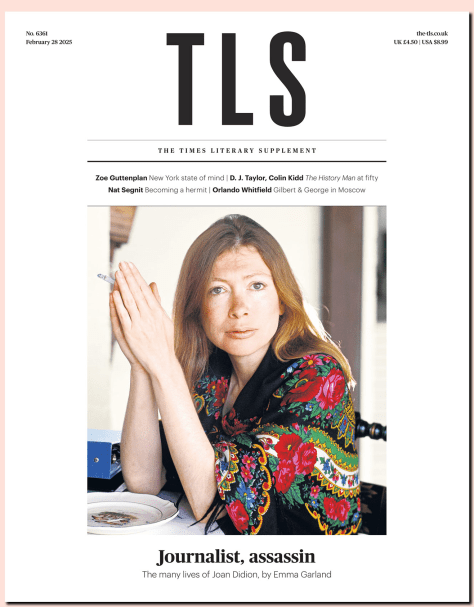
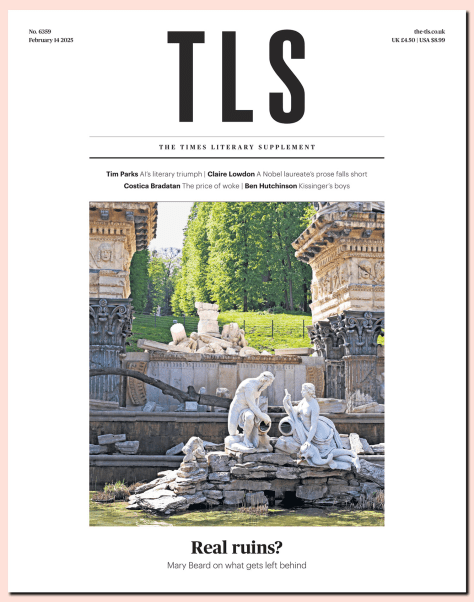
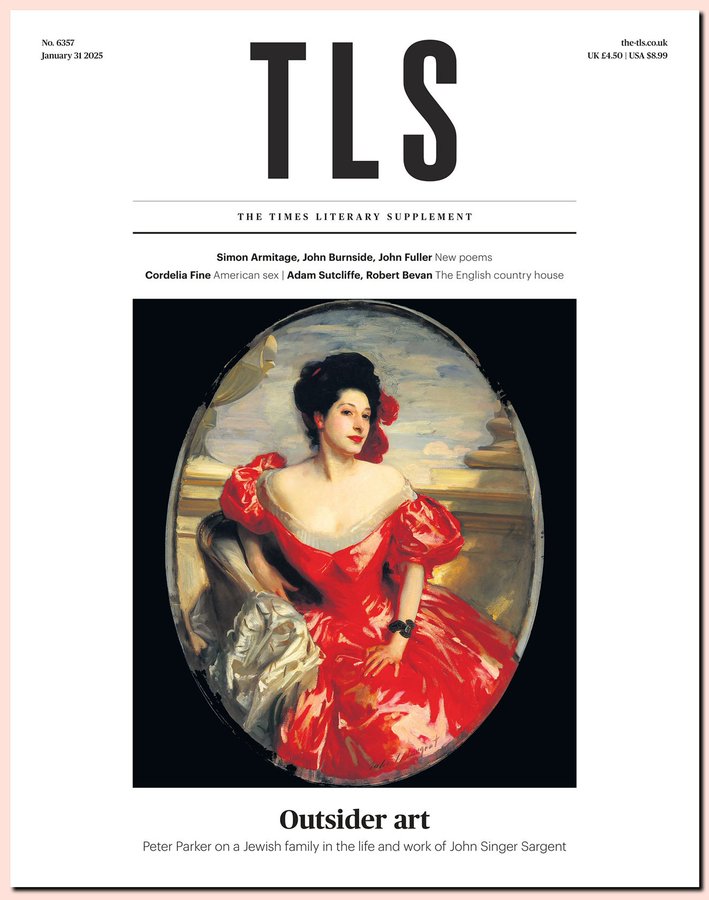
Arts/Books: Times Literary Supplement – Dec. 13, 2024

Image

Times Literary Supplement (December 11, 2024): The latest issue features ‘The tragic Queen of France’ – The legend of Marie Antoinette; William Dalrymple’s Indian empire; Mary Beard – A night at the museum; The coffee house scientist; What Kindle readers want…

Los Angeles Review Of Books – Winter 2024-2025

LA Review of Books (December 11, 2024)The latest issue, #43 – Fixation, features:

Conversation

A Precise Excavation of the Soul: A Conversation with Hilton Als by Melissa Seley

Nonfiction

Mean Mommies: Care in Contemporary Queer Literature by Jenny Fran Davis

Our Ambassadors to the Future: Relics of—and for—ourselves by Christina Wood

The Only Girl in the World: On Madonna and ‘Desperately Seeking Susan’ by Brontez Purnell

Homespun Tiara: A Profile of Model and Activist Geena Rocero by Enzo Escober

Syria’s Forgotten Island of Opposition: A report from the al-Tanf military compound by Charlie Clewis

Bedrock: On gravesites literal and not by Charley Burlock

American Blondes: Are we having more fun yet? by Arielle Gordon

Fiction

Bright by Grace Byron

Finishing Moves by Evan McGarvey

Witches of Fresno and Pigfoot by Venita Blackburn

The Good Life by Brady Brickner-Wood

The Aforementioned Journal by David Hollander

Poetry

Srdičko Bolí by Claressinka Anderson

Has Your Spirit Dried Up? by emet ezell

I Haven’t Heard My Brother’s Voice in Ten Years by Douglas Manuel

Montauk by Connie Voisine

Straining for the Noise by Jenny Xie

Art

Lida Abdul

Country Life Magazine – December 18, 2024 Preview

Country Life Magazine (December 10, 2024): The latest issue features ‘The Christmas Double Issue’…

A story of homeliness

The Revd Dr Colin Heber-Percy considers the Christmas story told in familiar rituals

Earth stood hard as iron

Frost casts a garden’s structure into sharp relief. Tiffany Daneff enters a sparkling world

The Very Revd Jo Kelly-Moore’s favourite painting

The Dean of St Albans chooses a canvas full of uplifting light for dark times

The legacy

Kate Green pays tribute to Dame Ninette de Valois, the ‘godmother of ballet’

Where Britain’s first saint lies

In the first of two articles, John Goodall traces the saintly history of the ancient abbey church of St Albans, Hertfordshire

Love to hear the robin go tweet, tweet, tweet

The feisty robin is the undisputed avian king of Christmas. Mark Cocker wonders why

It’s a most wonderful time of the year

From weaving wreaths to corralling choristers, the work is ramping up for country people, who talk to Kate Green and Paula Lester

Baby, it’s gold outside

Catriona Gray meets the artists capturing Nature’s beauty in gold

Silence is golden

Stop and listen to Nature’s voice, urges John Lewis-Stempel

Each year you bring to us delight

Hanging treasured decorations is all part of the magic. Matthew Dennison opens the bauble box

Look out! Look out! Jack Frost is about

Deborah Nicholls-Lee dares to unveil the mysterious figure

The Editor’s Christmas quiz

Take on our quizmaster — and, more importantly, your family and friends

Anyone for indoor cricket?

Melanie Cable-Alexander buckles up for riotous country-house-corridor games

No Risk, no reward

Harry Pearson takes over the world with the classic board game

Make ’em laugh

Jonathan Self chortles at British comedy

The Christmas Story: ‘Bring me flesh and bring me wine’

The spirit of Christmas works its magic on a curmudgeonly baronet in Kate Green’s tale

Interiors

Natural scents win for Arabella Youens

While shepherds watched their flocks

The sheep and its patient guardians have long delighted artists, finds Michael Prodger

Luxury

Knitting, diamonds and Giles Coren’s treats

It takes a village

Is the perfect rural habitation real, wonders John Lewis-Stempel

Don’t mince your words

Modern mince pies are but pale shadows of the past, believes Neil Buttery

You’re one hot roast potato

Who can resist a roastie? Not Emma Hughes, nor anyone else in their right mind

Kitchen garden cook

Melanie Johnson builds a gingerbread house

That’ll do, pig

Glazed and succulent, the Christmas ham is the king of the feast for Tom Parker Bowles

Lay, lady, lay

Give wine time to age, urges Harry Eyres

Crown Him with many crowns

John Lewis-Stempel gathers in the holly, once divine diadem, now a cow’s Christmas feast

The straw that broke the camel’s back

Labour’s family-farm tax will mean ruin for a beleaguered sector, says Minette Batters

 ‘Growing old is mandatory, but growing up is optional’

Sam Leith opens the well-worn covers of the childhood books we will always cherish

Float like a butterfly, sting like a bee

From frogs to rat armies, the natural world has inspired countless ballets. Laura Parker straps on her pointe shoes for the bunny hop

Highlights, delights and lowlights

Michael Billington awards his accolades to the stars — and the scourges — of the stage

Spectres of the feast

Operas with food and wine may be rousing, but there are perils, warns Henrietta Bredin

Unputdownable: the page turners of 2024

Country Life reviewers select their top books

Literarature: The Paris Review – Winter 2024-2025

Image

Paris Review Summer 2024 (September 10, 2024) — The new issue features:

Fredric Jameson on the Art of Criticism: “Ideological critique has to end up being a critique of the self. You can’t recognize an ideology unless, in some sense, you see it in yourself.”

Hanif Kureishi on the Art of Fiction: “When I was in hospital in Rome, having the experience of being a paralyzed man nearly dead, my only excitement was in the thought that I could write some of this shit down.”

Gerald Murnane on the Art of Fiction: “A fatal question—what are people reading these days? Never mind what people are reading these days. What should I be writing about is the fundamental question.”

Prose by Dan Bevacqua, Caoilinn Hughes, Silas Jones, Alec Niedenthal, Adania Shibli, and Abdulah Sidran.

Poetry by Sargon Boulus, Egill Skallagrímsson, Rachel Mannheimer, Simone White, and Hua Xi.

Art by Ann Craven, Ala Ebtekar, and Josh Smith; cover by Seth Becker.

Arts & Literature Preview: Kenyon Review – Fall 2024

Fall 2024 | Journal

Kenyon Review – December 8, 2024: The 2024 The Fall 2024 issue of The Kenyon Review includes the winner and runners-up for the Patricia Grodd Poetry Prize for Young Writers, selected by Richie Hofmann; the winner of the First Annual Poetry Contests selected by Pádraig Ó Tuama; and a Rural Spaces folio guest-edited by Jamie Lyn Smith, Brian Michael Murphy, and Andrew Grace, with poetry by ethan s. evansJP GrasserFaylita Hicks, and Alberto Rios; fiction by Nick BertelsonChee BrossyKai Carlson-Wee, and Issa Quincy; and nonfiction byapyang Imiq translated by brenda lin; and much more, including interior and cover art by Ming Smith.

Arts/Books: Times Literary Supplement – Dec. 6, 2024

Image

Times Literary Supplement (December 4, 2024): The latest issue features ‘HIs Other Country’ – The James Baldwin revival continues in the 100th anniversary year of his birth. A trickle of biographies has become a flood, and the causes for which he stood, racial equality and gay rights, speak to the times.

Knowing his name – Celebrating the centenary of James Baldwin’s birth

By Fred D’Aguiar

Bring back the big fish

Mississippi River levee, 1940

Record-label scouts chase ‘strange compositions’

By Harry Strawson

No sacred cows

Obelisco de Buenos Aires, Plaza de la República, 1997

A video game challenges the history of Argentina

By Mia Levitin

Country Life Magazine – December 4, 2024 Preview

Country Life Magazine (December 3, 2024): The latest issue features ‘The Full English’ – Why our homegrown style is back….

London Life

  • Richard MacKichan finds Sir Paul Smith rockin’ around Claridge’s Christmas tree
  • Catriona Gray meets the movers and shakers of the capital’s art world
  • All you need to know this month in the capital

Caroline Moorehead’s favourite painting

The author selects a portrait that shows the ‘very essence of what it was to be Sicilian’

The world turned upside down

Carla Carlisle—wife of a farmer and a diversifier extraordinaire— offers an insider’s view on the Government’s ‘Great Betrayal’

What to look for in winter

Now is not the time to hibernate, suggests John Wright, as he encourages us to appreciate the countryside’s stark, intricate beauty in these colder months

Putting in a Good Word

Lucy Denton delves into the remarkable history of Stationers’ Hall, the central London home of the Worshipful Company of Stationers for the past 400 years

The legacy

Amie Elizabeth White hails Henry Cole, inventor of Christmas cards

The rocky-pool horror show

John Lewis-Stempel loves to be beside the seaside as he examines the enduring appeal of England’s glorious coastline

Bowler me over

Matthew Dennison tips his hat to the rural origins of the bowler as he celebrates its 175th birthday

A touch of frost

Beware an ill wind blowing us into 2025, warns Lia Leendertz

Piste de résistance

Joseph Phelan finds a business on an upslope when he visits the last ski-maker in Scotland

Eyes wide shut

Sleep in art is often drunken, deadly or the stuff of nightmares, but rarely is it peaceful, as Claudia Pritchard discovers

Size matters

Charles Quest-Ritson cranes his neck to take in the sheer scale of the specimens at West Sussex’s Architectural Plants

Kitchen garden cook

Melanie Johnson on sprouts

Travel

  • Life in Grenada quickly grows on Rosie Paterson
  • Catamarans and cabanas
  • Jamaica’s Blue Mountains are heaven for Steven King
  • Fine dining is the holy grail for Pamela Goodman

Reviews: The 10 Best Books Of 2024 (New York Times)

New York Times reveals 10 best books of 2024 - Good Morning America

The New York Times Book Review (December 3, 2024): The staff of The New York Times Book Review choose the year’s top fiction and nonfiction.

Fiction

The book cover is an illustration of a sun setting behind a cliff. The title and author’s name are in white.

July’s second novel, which follows a married mother and artist who derails a solo cross-country road trip by checking into a motel close to home and starting an affair with a younger rental-car worker, was the year’s literary conversation piece, dubbed “the talk of every group text — at least every group text composed of women over 40” and “the first great perimenopause novel” in just two of many articles that wrestled with its themes. Sexually frank and laced with the novelist’s loopy humor, the book ends up posing that most universal question: What would you risk to change your life? Read our review.

Local bookstores | Barnes and Noble | Amazon | Apple

The book cover for “Good Material” is modular, with the title and author name appearing in brightly-colored rectangles. There are also two illustrations: one of a person pulling on socks while seated on a bed and another of another person slipping off a pair of socks.

In Alderton’s brisk, witty novel, a 35-year-old struggling comedian in London tries to make sense of a recent breakup at the same moment when the majority of his friends seem to be pairing off for life. Cue snappy dialogue, awkward first dates and a memorable quest for a new home; toss clichéd gender roles, the traditional marriage plot and a ho-hum happily ever after. Not only does Alderton cement herself as a latter-day Nora Ephron, she also puts her own mark on the classic romantic comedy form. There are no second fiddles in “Good Material”; every character sings. And there is a deeper message, revealed in a surprise twist, having to do with independence, adventure and charting your own course. Read our review.

Local bookstores | Barnes and Noble | Amazon | Apple

The cover of “James” is black. The title is in yellow, and the author’s name is in white.

It takes a lot of ambition, skill and vision to reinvent one of the most iconic books in American letters, but Everett demonstrates he possesses those virtues in spades in “James.” The novel is a radical reworking of Mark Twain’s “Huckleberry Finn,” telling the story not from Huck’s perspective, but from the point of view of the enslaved man who accompanies Huck down the Mississippi River: Jim (or, as he clarifies, James). From James’s eyes, we see he is no mere sidekick but rather a thinker and a writer who is code-switching as illiterate and fighting desperately for freedom. Everett’s novel is a literary hat trick — a book that highlights the horrors in American history and complicates an American classic, all while also emerging as a work of exquisite originality in its own right. Read our review.

Local bookstores | Barnes and Noble | Amazon | Apple

The cover of “Martyr!” features the title and author’s name in black type on a mustard background. A small illustration of an armored knight on horseback thrusting his sword into the air sits atop the first letter of the author’s name on the bottom left.

Cyrus Shams, an Iranian American aspiring poet and recovering drug addict, wallows in a post-college malaise in a fictional Midwestern town. He’s working dead-end jobs and halfheartedly attending A.A., while grieving his parents’ deaths and, increasingly, fantasizing about his own. Cyrus is lost and sad, but this captivating first novel, by an author who is himself a poet, is anything but. As Akbar nudges Cyrus closer to uncovering a secret in his family’s past, he turns his protagonist’s quest for meaning — involving a road trip to New York and a revelatory encounter in the Brooklyn Museum — into an indelible affirmation of life, rife with inventive beauty, vivid characters and surprising twists of plot. Read our review.

Local bookstores | Barnes and Noble | Amazon | Apple

The cover of “You Dreamed of Empires,” by Álvaro Enrigue, shows stylized blue lines against a green backdrop, converging in what looks like a whirlpool. At the center of the whirlpool, a horse (visible only from the chest up) struggles to emerge.

History has long been Enrigue’s playground, and his latest novel takes readers to 16th-century Tenochtitlan, or what is now Mexico City. Hernán Cortés and his men have arrived at Moctezuma’s palace for a diplomatic — if tense and comically imbalanced — meeting of cultures and empires. In this telling, it’s Moctezuma’s people who have the upper hand, though the emperor himself is inconveniently prone to hallucinogenic reveries and domestic threats. The carnage here is devilishly brazen, the humor ample and bone-dry. Read our review.

Local bookstores | Barnes and Noble | Amazon | Apple


Nonfiction

The cover of “Cold Crematorium” shows a bleak, sketchy pencil drawing of a dark road lined on one side by bare trees. On the other side, there is a black smear, as if something has been smudged away or a giant, bottomless pit has been dug whose mouth extends out of frame.

Debreczeni, 39 when he was deported from his native Hungary to what he calls “the Land of Auschwitz,” would later memorialize the experience in a book that defies easy classification. First published in 1950, “Cold Crematorium” is a masterpiece of clinical, mordant observation. In a cattle car he watches a fellow deportee whose hand retains the gestures of a chain-smoker; newly arrived at Auschwitz, he encounters the lousy barroom piano player he avoided back home. This is more than gallows humor; it’s a stubborn fight to stay human and place the unimaginable in the context of the known. Look elsewhere for platitudes — Debreczeni witnessed, and reported, the best and worst of mankind and showed it to us to use as we will. Read our review.

Local bookstores | Barnes and Noble | Amazon | Apple

The pale pink cover of “Everyone Who Is Gone Is Here” has an illustration of a bird, collaged from bits of map, what looks like a vintage postcard and a blue U.S. visa stamp.

Blitzer, a staff writer at The New Yorker, presents a timely analysis of the situation at America’s southern border, placing the blame for today’s screaming headlines, detainee camps and unaccompanied minors firmly on post-Cold War U.S. policy. His kaleidoscopic narrative moves between the Central American insurgencies that flooded this country with refugees, and the shifting and frequently incoherent policies that worsened the fallout. We meet morally pragmatic domestic politicians, a tireless activist who’s moved from El Salvador to Chicago, Los Angeles teenagers ensnared in gang pipelines. None of it is simple; all of it has a terrible cost. Blitzer handles his vast topic with assurance and grace, never losing sight of the human element behind the global crisis. Read our review.

Local bookstores | Barnes and Noble | Amazon | Apple

The cover of Lucy Sante’s book, “I Heard Her Call My Name: A Memoir of Transition,” is a sepia-toned photograph of a woman shown covering her face with her hands. The title and the author’s name are in red.

When the veteran literary and cultural critic came out as transgender in 2021 at the age of 66, she described in an email to her loved ones the devastating realization that her “parallel life” — the one presented to her by a “gender-swapping” app that showed her how she would have looked as a girl and then a woman at various junctures in her life — had passed her by. “Fifty years were under water, and I’d never get them back.” As she reflects on her upbringing as the “only child of isolated immigrants,” her early adulthood in 1970s New York and her career of seeking truths through writing while hiding an important truth about herself, Sante fearlessly documents a transformation both internal and external, one that is also a kind of homecoming. Read our review.

Local bookstores | Barnes and Noble | Amazon | Apple

The cover of “Reagan” shows a cutout of a black-and-white photograph of Ronald Reagan striding through toward the viewer. The cutout sits on an off-white background. His shadow can also be seen extending off the frame.

This elegant biography of the 40th president stands out for its deep authority and nimble style. Boot, a historian and foreign policy analyst, grew up idolizing Ronald Reagan, but after a decade of interviews and research, he finds himself asking whether his onetime hero paved the way for Donald Trump, the man whose ascent to power led Boot to abandon the right. The book is a landmark work that shows how Reagan emerged from his New Deal roots to become a practiced Red baiter and racist dog whistler before settling into the role of the optimistic all-American elder statesman. “It is no exaggeration,” Boot writes, “to say that you cannot fully comprehend what happened to America in the 20th century without first understanding what happened to Ronald Reagan.” Read our review.

Local bookstores | Barnes and Noble | Amazon | Apple

The cover of “The Wide Wide Sea” is a photograph of the sun setting over the sea. The title is in white, and the author’s name is in blue.

In this masterly history, Sides tracks the 18th-century English naval officer James Cook’s third and final voyage across the globe, painting a vivid and propulsive portrait that blends generations of scholarship with the firsthand accounts of European seafarers as well as the oral traditions of Indigenous Pacific islanders. The story begins in Britain as the last embers of the Enlightenment are going out, a time when curiosity and empathy gave way to imperial ambition and moral zeal. Between tales of adventure on the open ocean, complex depictions of Polynesian culture and colorful scenes of a subarctic frost littered with animal life, Sides expertly probes the causes of Cook’s growing anger and violence as the journey wears on and the explorer reckons with the fallout of what he and others had wrought in expanding the map of Europe’s power. Read our review.