

“Sunday Morning” visits eaglets at Letchworth State Park, near the town of Castile in western New York State. Videographer: Carl Mrozek.
Tag Archives: Birds
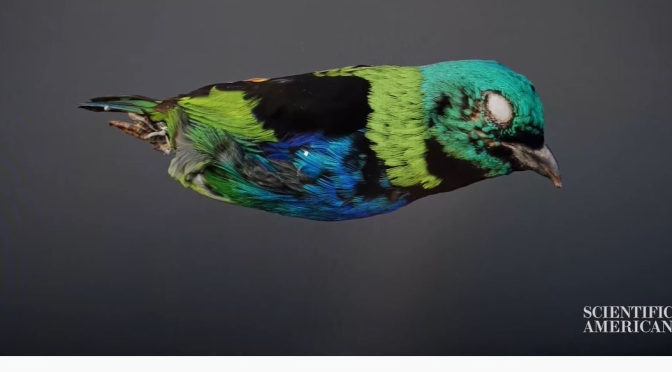
Collections: Viewing Rare Birds In Digital 3-D (Video)
How close have you ever gotten to a wild bird? Can you remember the details of its plumage or the curvature of its beak? Did it sit in one place long enough for you to really study all of its colors and other characteristics? Probably not—at least if it was alive. The avid birders among us sometimes search their whole life for a glimpse of a particularly rare species. But if you are just a casual observer of the winged creatures around us, the ones you do see likely come and go as flashes of color and sound. For ornithologists, the elusive nature of birds is just part of the job. Beyond fieldwork, though, access to rare or extinct species or those with a limited range can be especially difficult to get. If you were, say, hoping to study the green-headed tanager (a riotously multicolored songbird native to South America) and unable to travel to the northeastern region of the continent where it can be found, you would have to ask a museum to send you a specimen in the mail. Access to rare specimens, such as those of extinct birds, can be especially difficult to get.

Science: Birds Navigating With Quantum Mechanics
Some birds can sense Earth’s magnetic field, using it to navigate. But precisely how they do this has long remained a mystery. Now, researchers have confirmed that a protein found in bird eyes displays a quantum mechanical phenomenon which makes it sensitive to magnetic fields. The researchers suggest this mechanism could be behind birds’ magnetoreception abilities.
Read the paper: https://www.nature.com/articles/s4158…
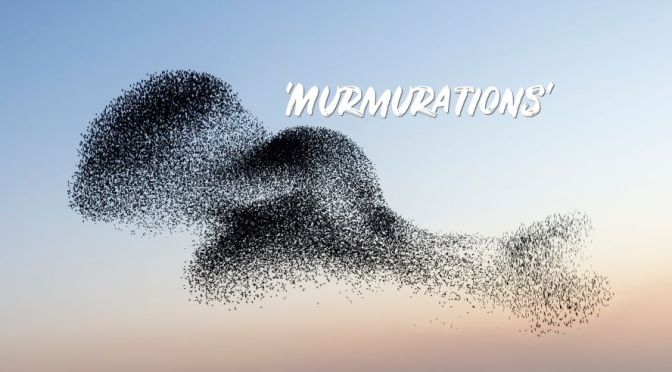
Denmark Views: Starling ‘Murmurations’ (Video)
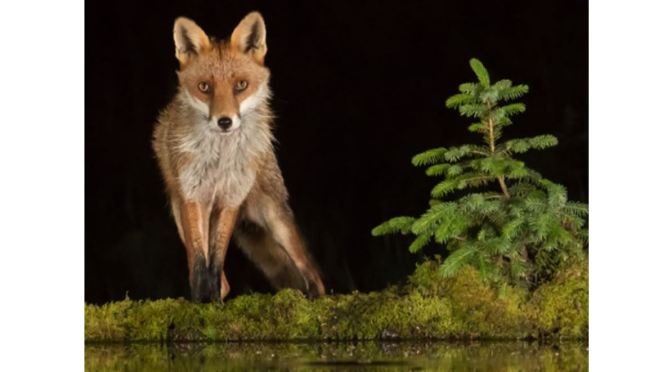
Wildlife Photography: Amazing Scottish Photos

THE KINGFISHER HAS the poise of an Olympic diver. It catches food by plunging head-first into water, wings outstretched and beak pointed keenly at an unsuspecting minnow or stickleback swimming below. The bird dives in the blink of an eye, snatching its prey and flying away in a blur.
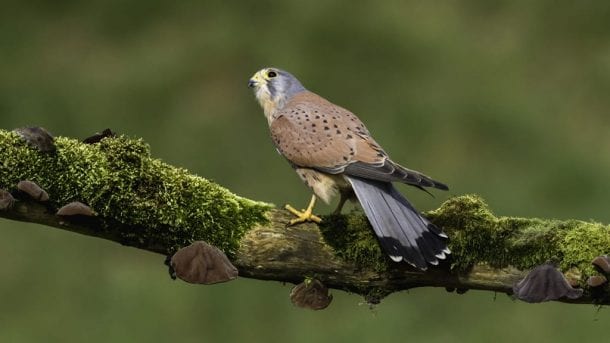

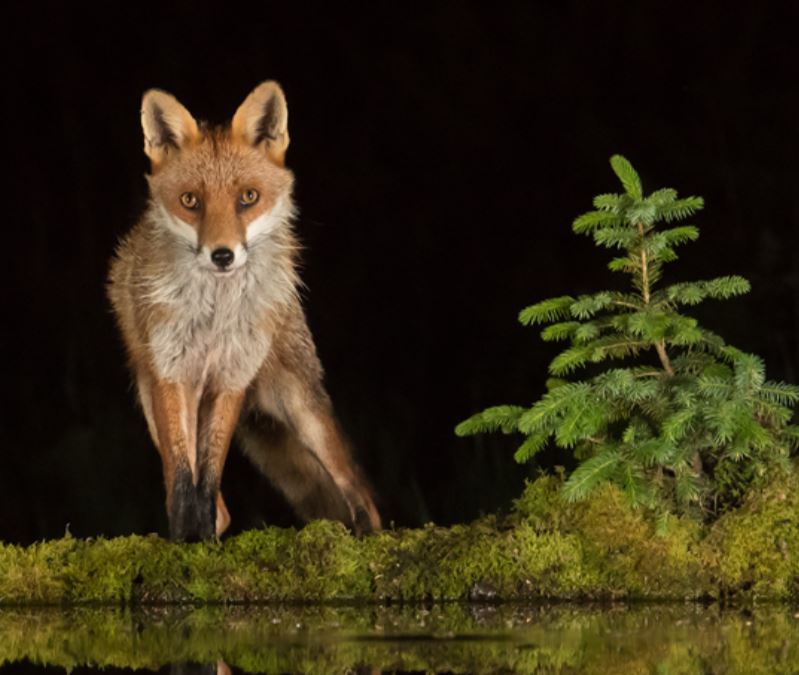
Alan McFadyen recently captured a kingfisher’s riveting dive in a gorgeous photo that shows the bird the moment before it nabs a fish, its body reflected as a mirror image in the water’s surface. The birds, which tend to be small, with large heads and dagger-like beaks, can dive at speeds up to 25 mph, making McFadyen’s photo a difficult shot. “The [kingfisher’s] speed is incredible and fascinating to watch,” he says. “Even at 10 frames per second, sometimes you get nothing in the [photograph]. It’s that fast.”

Views: Ecuador’s ‘Sword-Billed Hummingbirds’
The sword-billed hummingbird has exclusive access to food that other birds simply cannot reach, but having such a long bill does have its drawbacks.
The sword-billed hummingbird is a neotropical species of hummingbird from the Andean regions of South America. It is the sole member of the genus Ensifera and is characterized by its unusually long bill; it is the only bird to have a beak longer than the rest of its body.
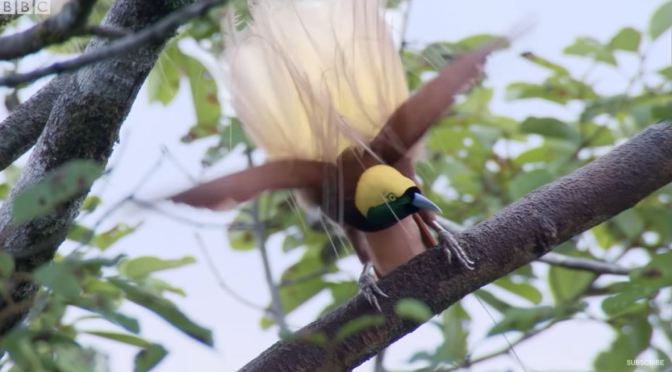
Views: Dancing Birds In The Wild (BBC Earth Video)
Filming birds that dance and pose isn’t easy, but cameraman/producer Paul Stuart reveals how this iconic sequence was captured.
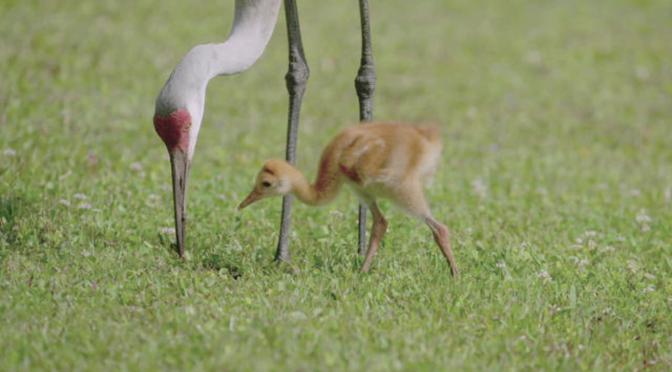
Nature Views: Sandhill Cranes & Chicks Near Titusville, Florida (Video)
On this Mother’s Day “Sunday Morning” takes us among sandhill cranes and their chicks in Titusville, Florida. Videographer: Doug Jensen.
The sandhill crane is a species of large crane of North America and extreme northeastern Siberia. The common name of this bird refers to habitat like that at the Platte River, on the edge of Nebraska’s Sandhills on the American Plains.
Titusville is a city and the county seat of Brevard County, Florida, United States. The city’s population was 43,761 as of the 2010 United States Census. Titusville is located along the Indian River, west of Merritt Island and the Kennedy Space Center, and south-southwest of the Canaveral National Seashore.

Views: ‘Fischer’s Lovebirds’ At Lake Eyasi, Northern Tanzania In Africa (Video)
“Sunday Morning” takes us to the far-away shores of Lake Eyasi in northern Tanzania, home to the aptly-named Fischer’s Lovebirds. Videographer: Lee McEachern.
Fischer’s lovebird is a small parrot species of the genus Agapornis. They were originally discovered in the late 19th century, and were first bred in the United States in 1926. They are named after German explorer Gustav Fischer.
Lake Eyasi is a seasonal shallow endorheic salt lake on the floor of the Great Rift Valley at the base of the Serengeti Plateau, just south of the Serengeti National Park and immediately southwest of the Ngorongoro Crater in the Crater Highlands of Tanzania.
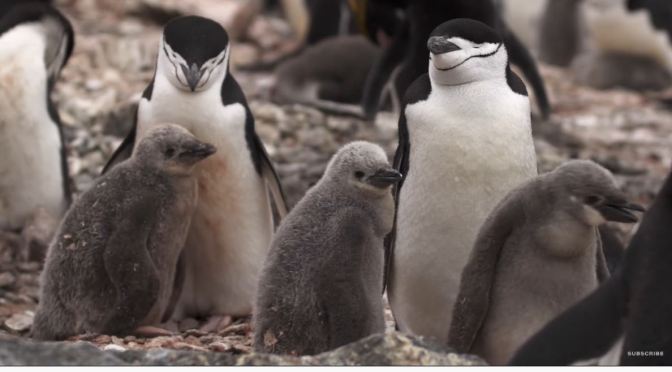
Antarctic View: Counting ‘Chinstrap Penguins’ On Elephant Island (Video)
After 50 years, scientists return to Elephant Island off the coast of the Antarctic peninsula to do the seemingly impossible; count thousands of penguins.
245 kilometers off the frigid coast of Antarctica is an island where populations of chinstrap penguins live in the thousands. But these penguins are more than just cute, the health of the Antarctic ecosystem relies on their well-being. the scientists in this next documentary count them. Yeah. By hand, in the freezing cold, walking on steep cliffs. It’s been years since this last happened, and the data collected now will inform them of how one of the most remote places on earth is fairing.
The chinstrap penguin is a species of penguin that inhabits a variety of islands and shores in the Southern Pacific and the Antarctic Oceans. Its name stems from the narrow black band under its head, which makes it appear as if it were wearing a black helmet, making it easy to identify.
 Boomers Daily