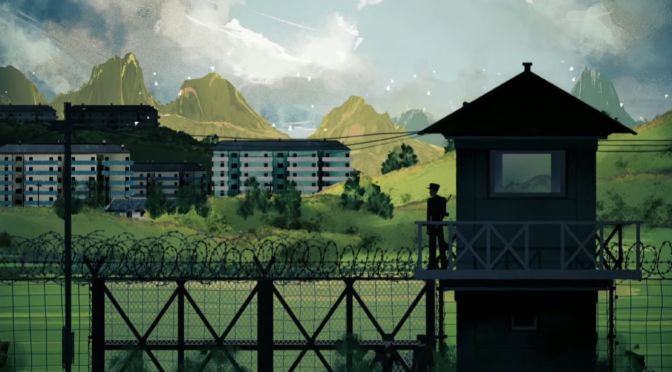

Under the tyrannical rule of Kim Jong Un, North Koreans are forbidden from making contact with the outside world. A spokesperson for the North Korean government has disputed the claims, which they said were “not entirely factual”.

Under the tyrannical rule of Kim Jong Un, North Koreans are forbidden from making contact with the outside world. A spokesperson for the North Korean government has disputed the claims, which they said were “not entirely factual”.
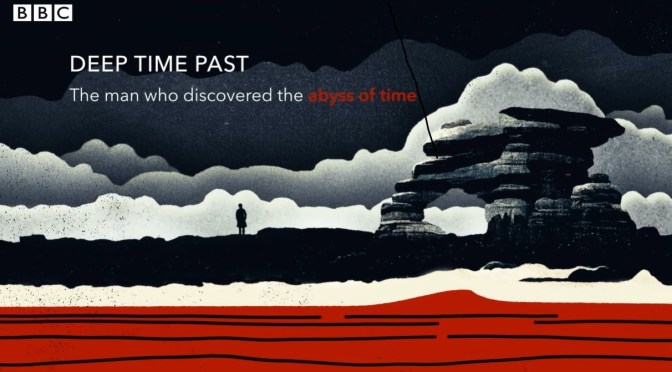
James Hutton (1726–1797), a Scottish farmer and naturalist, is known as the founder of modern geology. He was a great observer of the world around him. More importantly, he made carefully reasoned geological arguments. Hutton came to believe that the Earth was perpetually being formed; for example, molten material is forced up into mountains, eroded, and then eroded sediments are washed away.
He recognized that the history of the Earth could be determined by understanding how processes such as erosion and sedimentation work in the present day. His ideas and approach to studying the Earth established geology as a proper science.
The Ramappa temple, located in Telangana state’s Mulugu district, recently made it to Unesco’s list of World Heritage sites – largely owing to its intricate sandstone and basalt sculptures that have stood the test of time. The temple, dedicated to the Hindu god Shiva, dates back to the early 13th Century when an army commander under the Kakatiya kings had it built. Historians believe that it was built on the site of an older temple that had since become dilapidated. Its sculptures celebrate dance and they are believed to have inspired a famed male dance teacher at the time to revive a warrior dance performed by men.
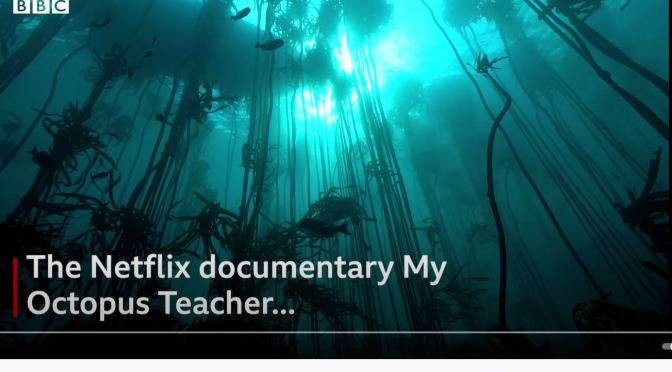
The makers of the Bafta-winning documentary My Octopus Teacher want to preserve the underwater ecosystem it features. The documentary focuses on a film-maker who befriends an octopus – but the unsung star of the show is the kelp forest off the coast of Cape Town. It is one of the richest ecosystems in the world. The makers of the film are part of a campaign to preserve the aquatic forest.
Australia’s Lord Howe Island is famous for its beauty and unique mix of plants and animals. Nowhere is this more evident than in a rare cloud forest atop the island’s two southern mountains. But its environment has faced a battle for survival.
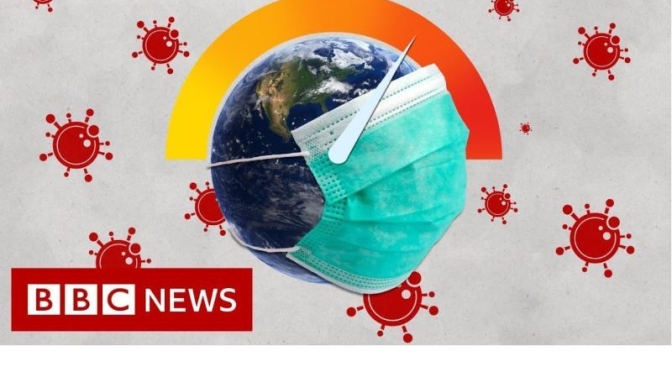
When Covid-19 sparked lockdowns around the world, emissions of one of the greenhouse gases responsible for climate change, atmospheric carbon dioxide, plummeted. But is this record drop a short-term effect of the 2020 pandemic or a ‘new normal’? BBC Weather’s Ben Rich explores the impact of coronavirus on the global climate.
Motion graphics by Jacqueline Galvin
Produced by Soraya Auer
South Koreas Lantern Festival has won the Unesco Intangible Cultural Heritage status. It’s an annual festival that dates back centuries and it marks the birthday of Buddha. All across the country you’ll find colourful lanterns decorating temples, houses and streets and there also are large parades with elaborate floats. Unesco said the spring festival was “a time of joy” which “in times of difficulties, plays an important role in…helping people overcome the troubles of the day.” Unesco’s Intangible Cultural Heritage status aims to protect traditions, knowledge and skills which are often inherited through generations, so they are not lost or forgotten as time moves on.
The Great Barrier Reef is the world’s largest coral reef system composed of over 2,900 individual reefs and 900 islands stretching for over 2,300 kilometres over an area of approximately 344,400 square kilometres. The reef is located in the Coral Sea, off the coast of Queensland, Australia.





 Boomers Daily