
Tag Archives: Audiobooks

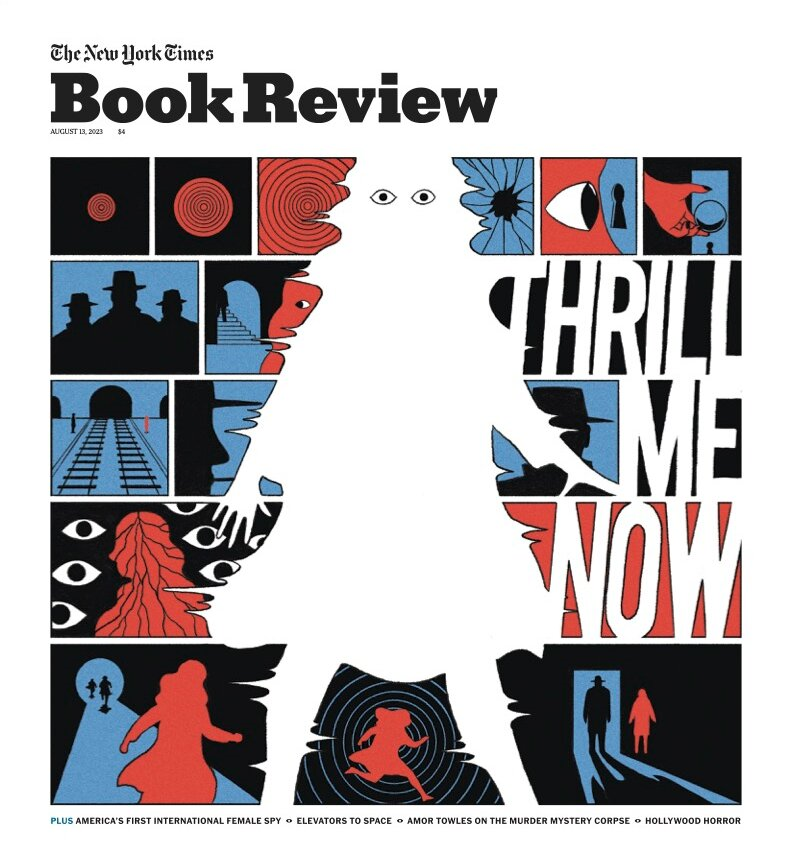
The New York Times Book Review – August 13, 2023

Image

THE NEW YORK TIMES BOOK REVIEW – August 13, 2023: The annual thrillers issue features – a tense murder mystery set aboard a cruise ship; a heist novel involving rough diamonds, crooked lawyers and masters of the double cross; and an especially creepy serial-killer novel, to name just a few.

Being Underestimated Was Her Secret Weapon

A black-and-white photograph portrays the head and shoulders of a woman with dark hair, elegantly dressed in furs.

In “Flirting With Danger,” Janet Wallach tells the story of Marguerite Harrison, who traded a life of privilege to become America’s first international female spy.

By Chloe Malle

FLIRTING WITH DANGER: The Mysterious Life of Marguerite Harrison, Socialite Spy, by Janet Wallach


Anyone complaining about a canceled Delta flight would do well to channel Marguerite Harrison. The United States’ first international female spy, Harrison crisscrossed the globe by rickshaw, propeller plane, camel, inflated goatskin raft and rail freight car and once brightly described a trans-Siberian voyage, in which she was wedged between sacks of tea and oats on the back of a troika in a blizzard, as “a rare and delightful experience.”

Chasing a World Record, They Endured Storms, Sharks and Freak Waves

There are two vintage black-and-white photos next to one another here. The one on the left portrays a man in a white T-shirt squinting past the camera; the one on the right shows a man on a boat giving himself s shave. He is shirtless and his face is covered with shaving cream.
From left: John Fairfax; Tom McCleanCredit…From left: Daily Mail/Shutterstock; Tom McClean

In “Completely Mad,” James Hansen tells the stories of two men who in 1969 vied to be the first to row solo across the Atlantic Ocean.

COMPLETELY MAD: Tom McClean, John Fairfax, and the Epic Race to Row Solo Across the Atlantic, by James R. Hansen


The day before the Apollo mission landed two men on the moon, a British man named John Fairfax waded into Hollywood Beach, Fla., greeted by masses of cheering fans, having been the first person to row solo across the Atlantic Ocean. Eight days later, another Briton, Tom McClean, pulled his dory up a deserted beach in Blacksod Bay, Ireland, having rowed solo across the Atlantic in the opposite direction. While Fairfax was acclaimed and feted, McClean walked to the closest pub, alone.
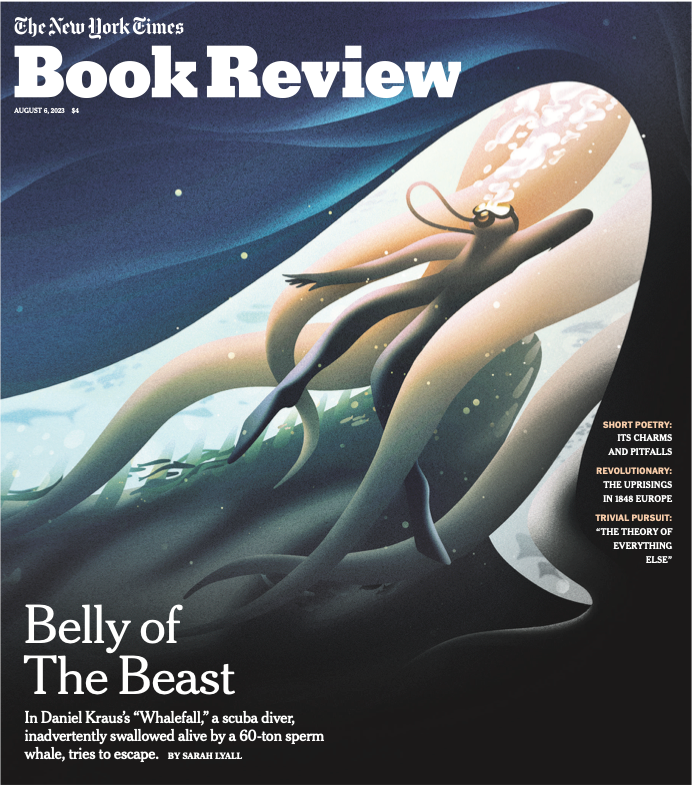
The New York Times Book Review – August 6, 2023

Image

THE NEW YORK TIMES BOOK REVIEW – August 6, 2023: The issue features Daniel Kraus’s new thriller, “Whalefall,” the story of a teenage diver inadvertently swallowed by an 80-foot whale; the reissue of Claude Anet’s provocative 1920 novel, “Ariane: A Russian Girl”; a biography of the Gilded Age heiress and international spy Marguerite Harrisona handful of audiobook recommendations; even the biography of a venerable scam. 

Swallowed by a Sperm Whale, and Mourning His Father

In Daniel Kraus’s novel “Whalefall,” a teenage diver is gulped down by a 60-ton whale and must try to escape.

By Sarah Lyall

In marine biology, a whale fall is the body of a dead whale that has slowly descended to the bottom of the ocean. Scavengers strip its flesh, crustaceans and other creatures colonize its skeleton and its decaying bones help sustain countless organisms for years to come, part of the delicate balance of the undersea ecosystem.

Talking About Love in the Afternoon, Morning, Evening and Night

This black-and-white still from the 1957 film “Love in the Afternoon” portrays Gary Cooper, in white shirt and tie, leaning against a wall where Audrey Hepburn, in a black hat and dress, gazes back from between his arms.
While Billy Wilder’s 1957 film adaptation portrays Ariane (played by Audrey Hepburn) as a doe-eyed ingénue, Claude Anet’s original character is considerably more enigmatic. Credit…Allied Artists/Getty Images

Reading Claude Anet’s provocative 1920 novel “Ariane: A Russian Girl,” the reader may yearn for a little less conversation.

By Gemma Sieff

It would be nice if we had put to bed, so to speak, witless and reductive double standards about female promiscuity. Have you heard the one that goes, “A key that opens many locks is a master key, yet a lock that is opened by many keys” is … unprintably bad? Me neither — until I saw it on TikTok.

Books: The New York Times Book Review – Dec 25, 2022

Image

The New York Times Book Review @nytimesbooks (December 25, 2022):

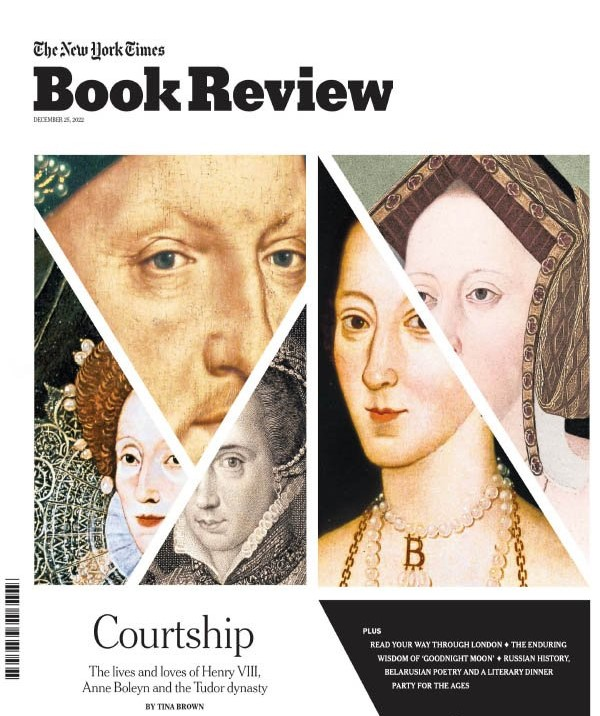
Courtly Love Can Be Deadly

In the historian Sarah Gristwood’s “The Tudors in Love,” for both monarchs and courtiers the stakes are higher than romance.

Newly Published, From Worker Justice to Sound Waves

A selection of recently published books.

AUDIOBOOKS

The Power of a Good Narrative, in Your Ear or Otherwise

CREDITLIBBY VANDERPLOEG

From Bloomsbury to the Billboard Hot 100, these audiobooks will hook you based on story alone.

Reviews: ‘Top Audiobooks’

July Picks

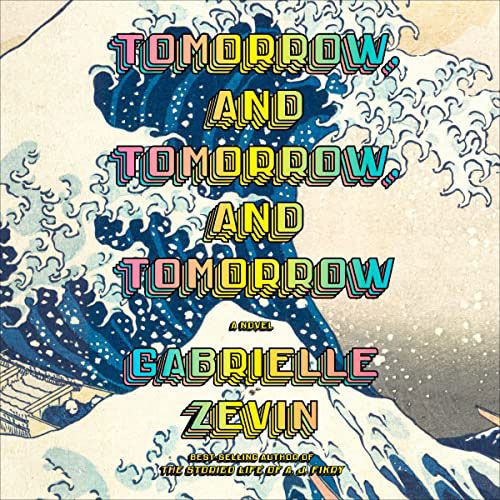
Tomorrow and Tomorrow and Tomorrow by Gabrielle Zevin

Tomorrow, and Tomorrow, and Tomorrow, by Gabrielle Zevin

Read by: Jennifer Kim and Julian Cihi
Length: 13 hrs, 52 mins.
Speed I listened: 1.7x–1.8x

I haven’t savored listening to a book in recent memory quite as much as I did this novel. It’s about two friends — Sadie Green and Sam Masur — who meet as kids in Los Angeles and then reconnect at MIT, where they begin developing experimental video games together. The lead characters (and let’s throw in the supporting ones too) are at times completely relatable, at times bittersweet, and almost always completely heartwarming. The book is mostly read by Kim except for a short fever dream by Cihi. Kim’s delivery might be monotone in places, but I found it steady, deliberate, and clear, so I didn’t have to miss a moment.

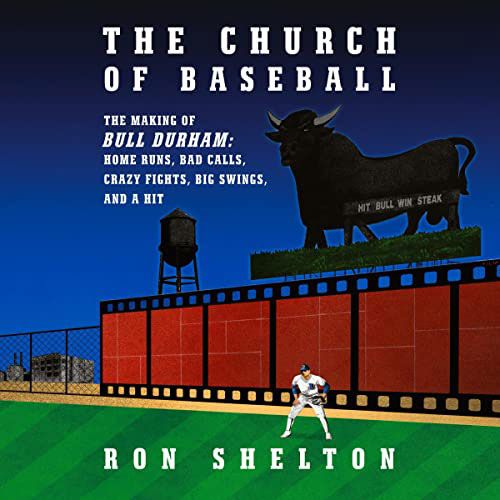
The Church of Baseball by Ron Shelton

The Church of Baseball, by Ron Shelton

Read by: The author
Length: 8 hrs, 12 mins.
Speed I listened: 1.75x

Does there have to be a book about the making of 1988’s Bull Durham? Probably not. Did I get a kick out of this trip down memory lane with the movie’s writer-director? I did. It’s rare you get a glimpse into the making of a Hollywood movie in minute detail, and this one’s pretty soup to nuts, down to Shelton hiring the on-set script supervisor. These kind of books always start and end with the idea that everyone in Hollywood is crazy, and it’s good to be reminded of that. To that end, here, Kevin Costner’s agents tried to prevent him from starring as Minor League Baseball star Crash Davis, which turned out to be one of his most iconic roles. Shelton has a knowing but aw-shucks vibe that makes great company even if his performance of dialogue scenes from the original script could use more oomph.

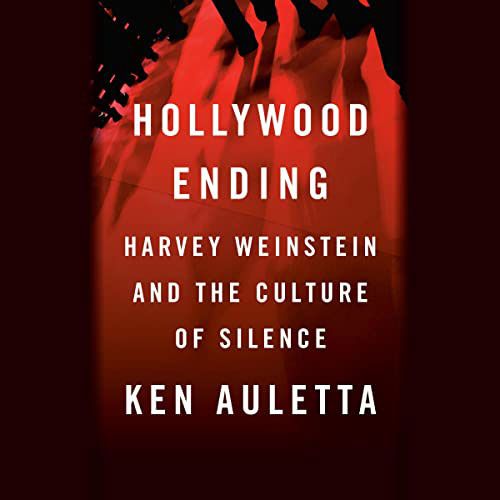
Hollywood Ending by Ken Auletta

Hollywood Ending, by Ken Auletta

Read by: Jonathan Coleman
Length: 19 hrs, 41 mins
Speed I listened: 2x

A darker addition to July’s “Hollywood Is Crazy Files” is this gripping account of Harvey Weinstein’s rise to and fall from power. You’re probably familiar with many of the sordid details in this book, and at 20 hours, it isn’t short. Still, I couldn’t turn off this compendium of the disgraced movie producer’s unbelievable behavior, from his rampant spending on hotel rooms to his truly despicable treatment of so many women. Auletta’s reporting is mostly firsthand, and hearing it cumulatively is jaw-dropping. As the narrator, Coleman is deadpan and direct enough to sometimes make you forget you aren’t listening to an actual thriller. Also kudos to the drippingly ironic title.

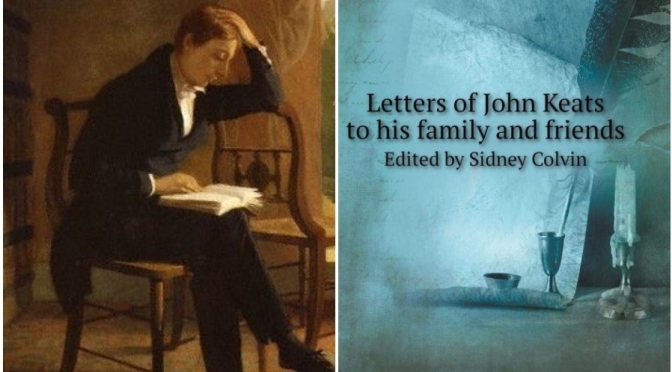
Literature: A Reading Of “Letters Of John Keats To His Family And Friends” – “Inside His Brilliant Mind”

Letters of John Keats to His Family and Friends by John KEATS (1795 – 1821) and Sidney COLVIN (1845 – 1927)

Read by: Nemo and Eva Davis

Chapters: 00:00:00  – 00 – Preface 00:21:11 – 01 – Letter 1 – to Charles Cowden Clarke 00:22:21 – 02 – Letter 2 – to Benjamin Robert Haydon 00:24:06 – 03 – Letter 3 – to Benjamin Robert Haydon 00:25:00 – 04 – Letter 4 – to Charles Cowden Clarke 00:26:57 – 05 – Letter 5 – to John Hamilton Reynolds 00:28:25 – 06 – Letter 6 – to John Hamilton Reynolds 00:29:52 – 07 – Letter 7 – to George and Thomas Keats 00:34:17 – 08 – Letter 8 – to John Hamilton Reynolds 00:42:14 – 09 – Letter 9 – to Leigh Hunt 00:50:13 – 10 – Letter 10 – to Benjamin Robert Haydon 01:00:31 – 11 – Letter 11 – to Messrs. Taylor and Hessey 01:03:50 – 12 – Letter 12 – to Messrs. Taylor and Hessey 01:06:07 – 13 – Letter 13 – to Mariane and Jane Reynolds 01:10:34 – 14 – Letter 14 – to Fanny Keats 01:18:27 – 15 – Letter 15 – to Jane Reynolds 01:26:44 – 16 – Letter 16 – to John Hamilton Reynolds 01:34:49 – 17 – Letter 17 – to Benjamin Robert Haydon 01:37:39 – 18 – Letter 18 – to Benjamin Bailey 01:43:58 – 19 – Letter 19 – to Benjamin Bailey 01:51:33 – 20 – Letter 20 – to Benjamin Bailey 01:54:19 – 21 – Letter 21 – to Charles Wentworth Dilke 01:55:20 – 22 – Letter 22 – to Benjamin Bailey 02:05:23 – 23 – Letter 23 – to John Hamilton Reynolds 02:11:23 – 24 – Letter 24 – to George and Thomas Keats 02:16:25 – 25 – Letter 25 – to George and Thomas Keats 02:26:06 – 26 – Letter 26 – to Benjamin Robert Haydon 02:28:19 – 27 – Letter 27 – to John Taylor 02:29:30 – 28 – Letter 28 – to George and Thomas Keats 02:35:45 – 29 – Letter 29 – to John Taylor 02:37:09 – 30 – Letter 30 – to George and Thomas Keats 02:45:42 – 31 – Letter 31 – to Benjamin Bailey 02:53:40 – 32 – Letter 32 – to John Taylor 02:55:38 – 33 – Letter 33 – to John Hamilton Reynolds 03:00:19 – 34 – Letter 34 – to John Hamilton Reynolds 03:09:32 – 35 – Letter 35 – to John Taylor 03:10:23 – 36 – Letter 36 – to George and Thomas Keats 03:14:06 – 37 – Letter 37 – to John Hamilton Reynolds 03:20:52 – 38 – Letter 38 – to George and Thomas Keats 03:25:16 – 39 – Letter 39 – to John Taylor 03:28:39 – 40 – Letter 40 – to Messrs. Taylor and Hessey 03:29:39 – 41 – Letter 41 – to Benjamin Bailey 03:39:27 – 42 – Letter 42 – to John Hamilton Reynolds 03:46:04 – 43 – Letter 43 – to Benjamin Robert Haydon 03:51:10 – 44 – Letter 44 – to Messrs. Taylor and Hessey 03:52:54 – 45 – Letter 45 – to James Rice 03:58:59 – 46 – Letter 46 – to John Hamilton Reynolds 04:06:50 – 47 – Letter 47 – to Benjamin Robert Haydon 04:12:07 – 48 – Letter 48 – to John Hamilton Reynolds 04:17:53 – 49 – Letter 49 – to John Hamilton Reynolds 04:20:39 – 50 – Letter 50 – to John Taylor 04:24:29 – 51 – Letter 51 – to John Hamilton Reynolds 04:29:41 – 52 – Letter 52 – to John Hamilton Reynolds 04:46:49 – 53 – Letter 53 – to Benjamin Bailey 04:52:06 – 54 – Letter 54 – to Benjamin Bailey 04:57:26 – 55 – Letter 55 – to John Taylor 04:59:14 – 56 – Letter 56 – to Thomas Keats 05:08:57 – 57 – Letter 57 – to Fanny Keats 05:18:23 – 58 – Letter 58 – to Thomas Keats 05:28:49 – 59 – Letter 59 – to Thomas Keats 05:39:49 – 60 – Letter 60 – to John Hamilton Reynolds 05:48:19 – 61 – Letter 61 – to Thomas Keats 06:01:55 – 62 – Letter 62 – to Benjamin Bailey 06:16:12 – 63 – Letter 63 – to Thomas Keats 06:30:05 – 64 – Letter 64 – to Thomas Keats 06:43:57 – 65 – Letter 65 – to Mrs. Wylie 06:50:42 – 66 – Letter 66 – to Fanny Keats 06:53:45 – 67 – Letter 67 – to Fanny Keats 06:55:12 – 68 – Letter 68 – to Jane Reynolds 06:56:23 – 69 – Letter 69 – to Charles Wentworth Dilke

These are the letters of John Keats, as written to family, close friends and others during his brief, eventful years as an artist. (However, the editor chose to exclude love letters to Fanny Brawne, respecting their private nature.) The celebrated Keats letters were written between 1816-1820, and include those colorful entries penned during his 44-day tour with Charles Brown as they rambled through England, Ireland and Scotland. Also included are the famous, lengthy ‘journal letters,’ written to his brother George and sister-in-law in America. Not only a poetic genius, Keats shines in epistolary form. His letters brim with the emotion, wit and intelligence he routinely shared with intimates. – Summary by NemoR

Interviews: 71-Year Old Singer James Taylor On His Audiobook “Break Shot”

NPR Weekend Edition Sunday logoJames Taylor has been a household name for a long time now. Taylor was just 20-years-old when he released his self-titled debut in 1968; in the half century since then, he has sold over 100 million albums and cemented his status as one of the most successful American singer-songwriters.

But in Break Shot: My First 21 Years, his audio memoir on Audible, Taylor narrates his life before fame — including details of his struggle with drugs, alcohol addiction and time in psychiatric institutions. Taylor is also looking back with American Standard, a new album that revives the American Songbook tunes of his childhood.

NPR’s Lulu Garcia-Navarro spoke with Taylor about revisiting his fraught early memories, dealing with fame at an early age and his connection to The Beatles. Listen to their conversation in the player above and read on for highlights from the interview — including a few audio excerpts from Break Shot.