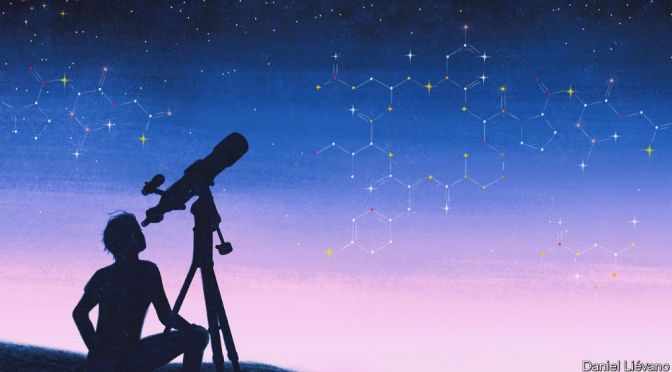
The thought of finding alien life has fascinated people since the time of the ancient Greeks—but developments in astrobiology could be about to turn this possibility into reality. How do you hunt for life beyond Earth—and might this be the decade when we find it?
Chapters: 00:00 – Is there life beyond Earth? 00:56 – How has the search for life evolved? 02:36 – What signs of life are scientists looking for? 03:48 – What are biosignatures? 04:28 – How to find intelligent life 06:03 – How telescopes today have improved our search 07:52 – Expanding the search beyond Earth
Read more of Alok Sharma’s coverage on the search for life in space: https://econ.st/3zw1Hxt
The Hubble Space Telescope celebrated its 32nd year in orbit by premiering a stunning new Hubble image of a collection of five galaxies, known as Hickson Compact Group 40. Even after all these years, Hubble continues to uncover the mysteries of the universe. These are a few science achievements from Hubble’s latest year in orbit.
Precisely ageing subgiant stars gives new insight into the Milky Way’s formation, and uncovering Yellowstone’s hydrothermal plumbing system.
In this episode:
00:45 Accurately ageing stars reveals the Milky Way’s history
To understand when, and how, the Milky Way formed, researchers need to know when its stars were born. This week, a team of astronomers have precisely aged nearly a quarter of a million stars, revealing more about the sequence of events that took place as our galaxy formed.
Yellowstone National Park’s iconic geothermal geysers and volcanic landmarks are well studied, but very little was known about the ‘plumbing system’ that feeds these features. Now a team of researchers have mapped the underground hydrothermal system, showing the specific faults and pathways that supply the park.
We discuss some highlights from the Nature Briefing. This time, 0why an Australian university has been suspended from winning a research foundation’s fellowships, and the ongoing debate about the cause of ‘COVID toes’.
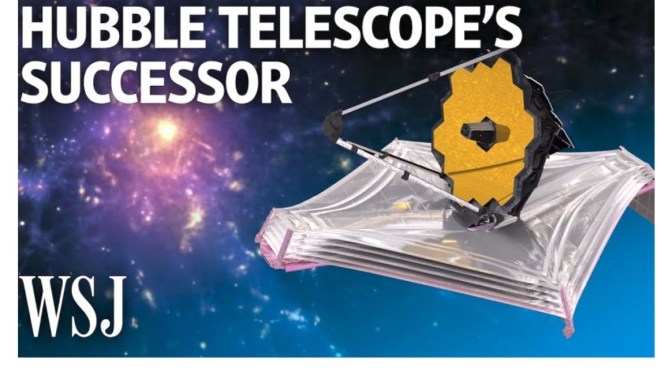
The James Webb Space Telescope, a collaboration between NASA, the European Space Agency and the Canadian Space Agency, is set to launch later this month. Scientists say its technology makes it 100 times more powerful than the Hubble and could give it the ability to see back to the first galaxies in the universe. Illustration: Adele Morgan/WSJ
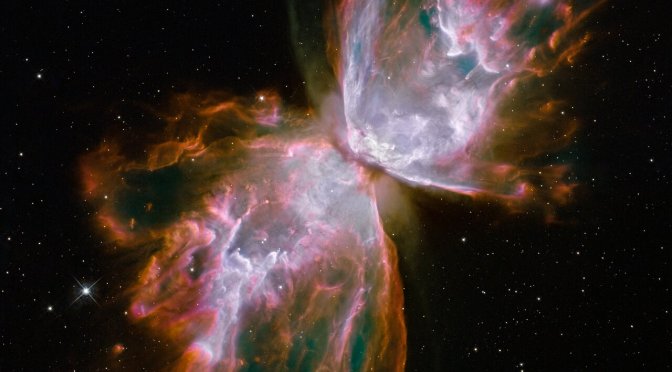
This celestial object looks like a delicate butterfly. But it is far from serene. What resemble dainty butterfly wings are actually roiling cauldrons of gas heated to nearly 20 000 degrees Celsius. The gas is tearing across space at more than 950 000 kilometres per hour — fast enough to travel from Earth to the Moon in 24 minutes! A dying star that was once about five times the mass of the Sun is at the centre of this fury. It has ejected its envelope of gases and is now unleashing a stream of ultraviolet radiation that is making the cast-off material glow. This object is an example of a planetary nebula, so-named because many of them have a round appearance resembling that of a planet when viewed through a small telescope. The Wide Field Camera 3 (WFC3), a new camera aboard the NASA/ESA Hubble Space Telescope, snapped this image of the planetary nebula, catalogued as NGC 6302, but more popularly called the Bug Nebula or the Butterfly Nebula.
WFC3 was installed by NASA astronauts in May 2009, during the Servicing Mission to upgrade and repair the 19-year-old Hubble. NGC 6302 lies within our Milky Way galaxy, roughly 3800 light-years away in the constellation of Scorpius. The glowing gas is the star’s outer layers, expelled over about 2200 years. The “butterfly” stretches for more than two light-years, which is about half the distance from the Sun to the nearest star, Proxima Centauri. The central star itself cannot be seen, because it is hidden within a doughnut-shaped ring of dust, which appears as a dark band pinching the nebula in the centre. The thick dust belt constricts the star’s outflow, creating the classic “bipolar” or hourglass shape displayed by some planetary nebulae. The star’s surface temperature is estimated to be over 220 000 degrees Celsius, making it one of the hottest known stars in our galaxy. Spectroscopic observations made with ground-based telescopes show that the gas is roughly 20 000 degrees Celsius, which is unusually hot compared to a t
The surface of Venus is completely inhospitable for life: barren, dry, crushed under an atmosphere about 90 times the pressure of Earth’s and roasted by temperatures two times hotter than an oven. But was it always that way? Could Venus once have been a twin of Earth — a habitable world with liquid water oceans? This is one of the many mysteries associated with our shrouded sister world. 27 years have passed since NASA’s Magellan mission last orbited Venus. That was NASA’s most recent mission to Earth’s sister planet, and while we have gained significant knowledge of Venus since then, there are still numerous mysteries about the planet that remain unsolved. NASA’s DAVINCI (Deep Atmosphere Venus Investigation of Noble gases, Chemistry, and Imaging) mission hopes to change that. Video credit: NASA’s Goddard Space Flight Center
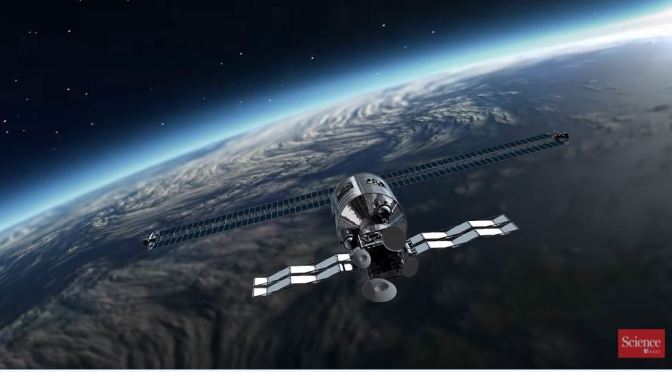
For millennia, bright lights sprinkled across our celestial sphere have guided great explorers, passed on storied traditions, and lent insight into the nature of our universe. Now, they have competition: thousands of satellites circling the globe in low orbit. Read the story: https://www.science.org/content/artic…
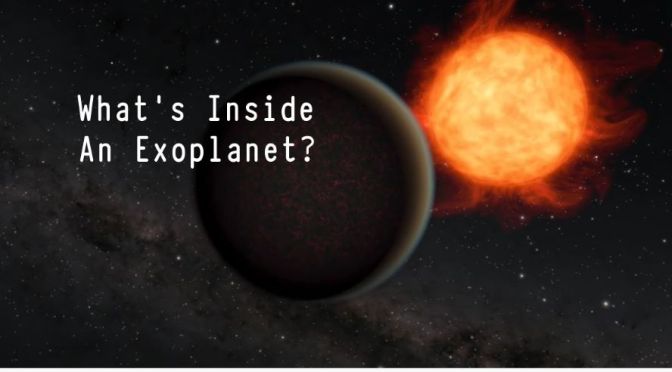
Out in the vast universe, unknown billions of strange worlds drift around other stars. Many of them are quite unlike anything in our solar system. While astronomers hope to use immense upcoming observatories to get a better look at their outsides, Federica Coppari has been using the world’s largest laser to investigate their insides. Coppari compresses familiar substances, including rocks and water, into new forms. Her work has yielded insights into the inner workings of frozen giants such as Uranus and Neptune, as well as the potential habitability of super-Earths — rocky planets that dwarf our own. Read more at Quanta Magazine: https://www.quantamagazine.org/federi…
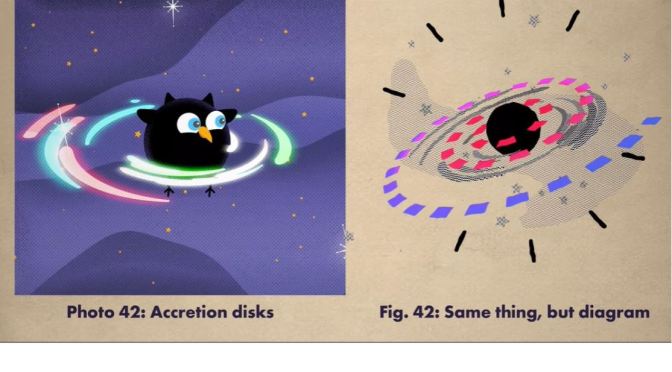
Once you’ve gotten the hang of basic black holes, you might want to search for some fancier ones. That’s great! But, before you do, refer to this convenient chapter to learn just how fancy some black holes can be.
News, Views and Reviews For The Intellectually Curious





 Boomers Daily