4,000-year-old cuneiform tablets illuminate the personal lives of Mesopotamian businesswomen
By DURRIE BOUSCAREN
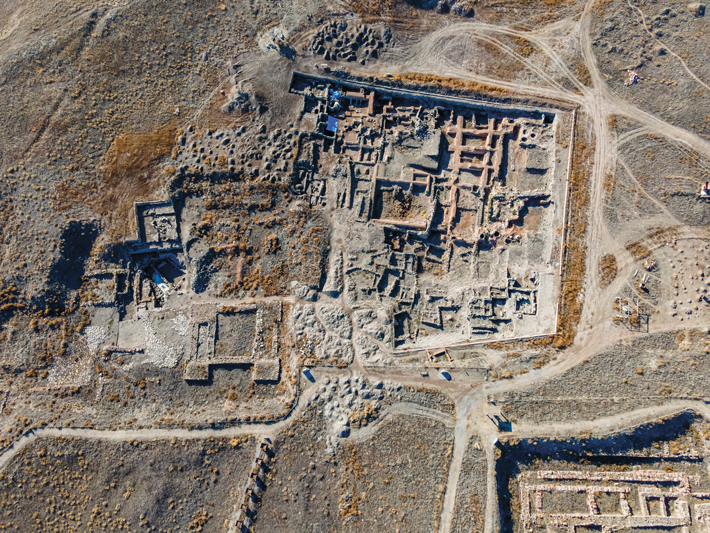
Excavations at the ancient Anatolian city of Kanesh in Turkey have revealed a district where merchants from the distant Mesopotamian city of Assur in Iraq lived and worked. Some 23,000 cuneiform tablets, mostly dating from about 1900 to 1840 B.C., have been found in the merchants’ personal archives in Kanesh.
The parents of an Assyrian woman named Zizizi were furious. Like many of their neighbors’ children, their daughter had dutifully wed an Assyrian merchant. Sometime around the year 1860 B.C., she had traveled with him to the faraway Anatolian city of Kanesh in modern-day Turkey, where he traded textiles. But her husband passed away and, instead of returning to her family, Zizizi chose to marry a local.
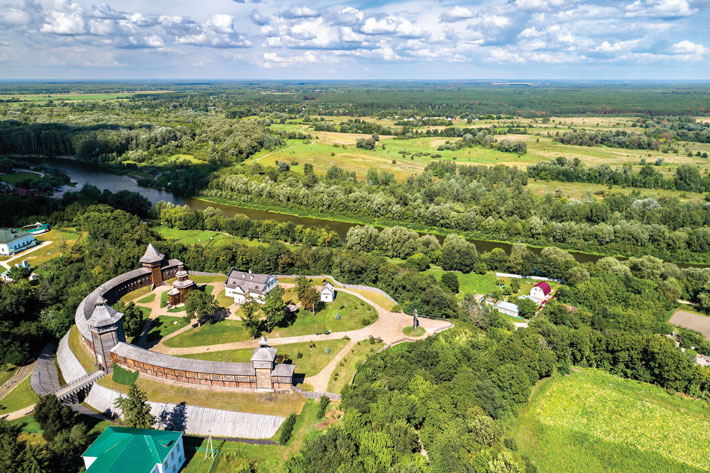
Archaeologists have spent decades excavating the remnants of the Cossack capital of Baturyn in north-central Ukraine. Based on the excavation’s findings, the Ukrainian government has reconstructed the town’s citadel—including the wooden Church of the Resurrection, defensive walls, rampart, and moat—which was destroyed by Russian soldiers in 1708.
In 1708, Peter the Great destroyed Baturyn, a bastion of Cossack independence and culture
By DANIEL WEISS
On November 2, 1708, thousands of Russian troops acting on the orders of Czar Peter I, known as Peter the Great, stormed Baturyn, the Cossack capital in north-central Ukraine. The Cossack leader, or hetman, Ivan Mazepa—who had been a loyal vassal of the czar until not long before—had departed with much of his army several days earlier to join forces with the Swedish king Charles XII, Peter’s opponent in the Great Northern War (1700–1721). The fortified core of Baturyn consisted of a citadel on a high promontory overlooking the Seim River and a larger adjoining fortress densely packed with buildings, above which soared the brick Cathedral of the Holy Trinity. The citadel and fortress were each surrounded by defensive walls, earthen ramparts, and moats whose sides were lined with logs. Although they sustained heavy losses, the Russian forces managed to seize Baturyn, which proved to be a key victory.
Smithsonian Magazine – July/August Issue: American Tapestries- Three artists creating bold new versions of a cherished art form; In search of Willa Cather; Archaeology of the world’s oldest village, and more…
Arresting portraits, now a part of the Smithsonian collections, illuminate the little-known role these artists played in chronicling 19th-century life
“Before daguerreotypes, if you wanted a portrait made, you commissioned a painter,” says John Jacob, SAAM’s director of photography, as we study Rhoda’s portrait. “Photography democratized portraiture because it was significantly cheaper. But until we acquired these images, we weren’t able to show in our collection that African Americans were part of this process, as photographers and subjects, and also as entrepreneurs and innovators, experimenting with the latest technology and investing in it.”
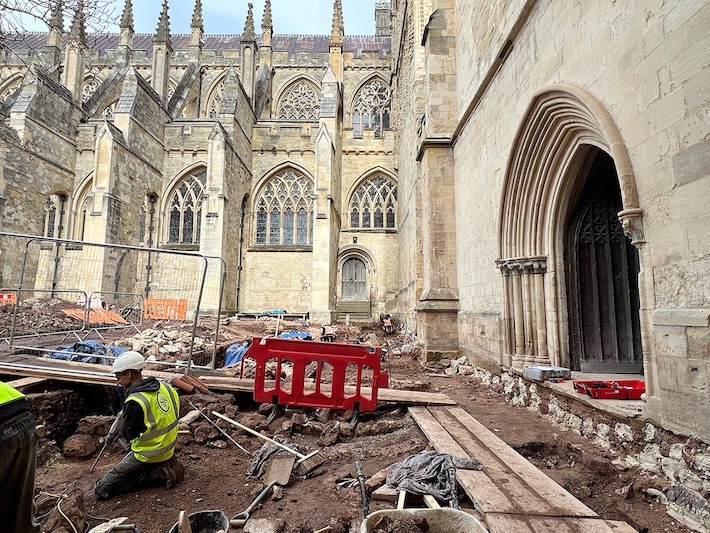
(BBC News reports that traces of a Roman street and timber buildings were uncovered in southwest England at the site of the cloister garden at Exeter Cathedral during an investigation ahead of the construction of a new cloister gallery.
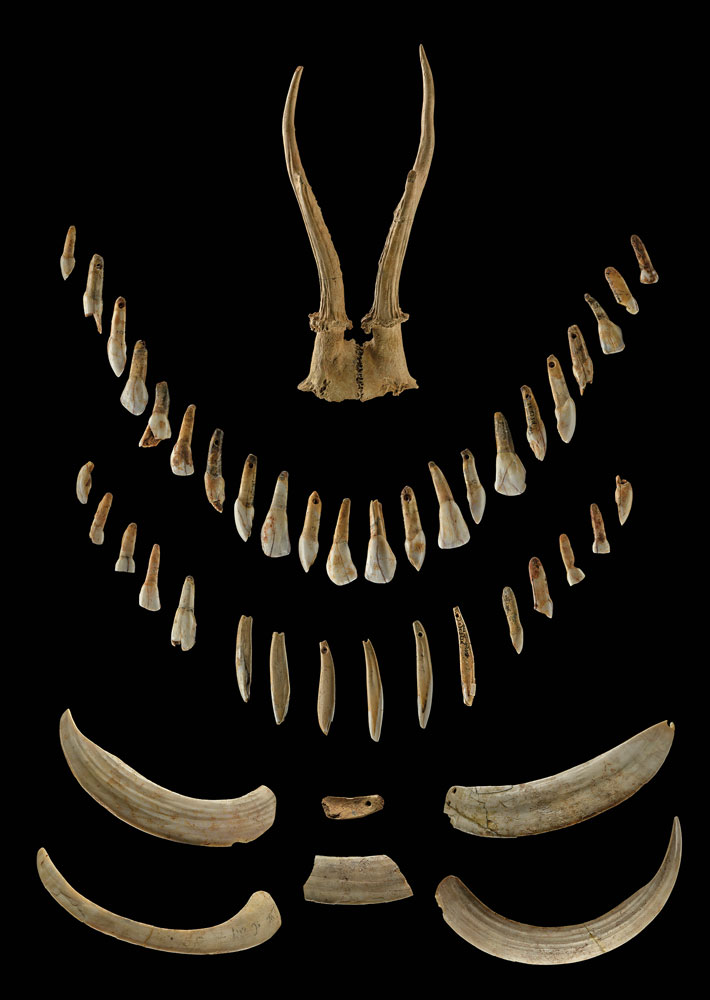
An impressive selection of grave goods including roe deer antlers (top) that could have been worn as a headdress and boars’ teeth (middle) and tusks (above) with holes drilled in them enabling them to be suspended from an animal skin were found in a 9,000-year-old shaman’s burial.
Bad Dürrenberg is a modest spa town in eastern Germany, perched on a bluff overlooking the Saale River. On a Friday afternoon in 1934, workers were laying pipe to supply the spa’s fountain with water when they came across red-tinted earth.





/https://tf-cmsv2-smithsonianmag-media.s3.amazonaws.com/filer_public/fe/e2/fee2954d-03e4-4587-8579-109266029f90/julaug2023_e12_saam-daguerreotypes.jpg)

 Boomers Daily