Ants are social insects which form small to large colonies. A typical colony contains an egg-laying queen and many adult workers together with their brood (eggs, larvae and pupae). Workers are by far the most numerous individuals in the nest. They are responsible for nest construction and maintenance, foraging, tending the brood and queen, and nest defence.
While all workers are female, they are sterile and do not lay eggs. Winged queens and males are present in the nest for only a short period. Soon after emerging they leave the nest to mate and establish new nests. Queens are generally similar to the workers, differing primarily in having larger bodies. In some species, fully winged queens are lacking and egg-laying is undertaken either by typical workers or by individuals which are morphologically intermediate between typical queens and workers (these are called ergatoid queens). Males are generally about the same size as the workers or smaller, and have smaller heads with large ocelli, very short scapes and small mandibles. In many cases males look more like wasps than ants.
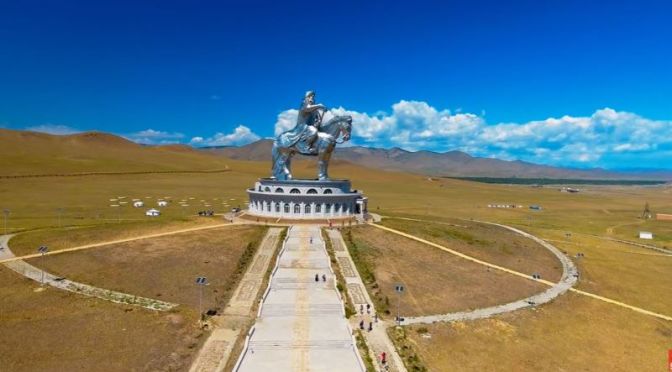
Mongolia, a nation bordered by China and Russia, is known for vast, rugged expanses and nomadic culture. Its capital, Ulaanbaatar, centers around Chinggis Khaan (Genghis Khan) Square, named for the notorious founder of the 13th- and 14th-century Mongol Empire. Also in Ulaanbaatar are the National Museum of Mongolia, displaying historic and ethnographic artifacts, and the restored 1830 Gandantegchinlen Monastery.
New Zealand is an island country in the southwestern Pacific Ocean. It consists of two main landmasses—the North Island and the South Island —and more than 700 smaller islands, covering a total area of 268,021 square kilometres.
Video timeline: 00:57 – Purakaunui Bay 02:26 – Mount Taranaki 04:21 – Mount Cook 05:41 – Roaring Billy Falls 07:44 – Omarama Clay Cliffs 11:06 – Lake Pukaki 12:26 – Lion Rock and Piha Beach 15:49 – Arthur’s Pass 17:40 – Castlepoint Lighthouse 21:21 – Lake Hawea 23:30 – Skippers Road 26:26 – Glacial valley in Southern Alps 27:52 – Kaikoura Seal Colony 29:04 – Ninety Mile Beach 31:16 – Whakarewarewa geothermal area 36:38 – Queenstown 38:37 – Whangarei Falls
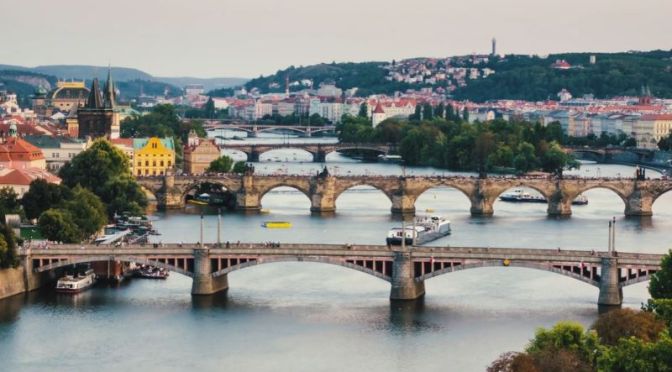
Prague, capital city of the Czech Republic, is bisected by the Vltava River. Nicknamed “the City of a Hundred Spires,” it’s known for its Old Town Square, the heart of its historic core, with colorful baroque buildings, Gothic churches and the medieval Astronomical Clock, which gives an animated hourly show. Completed in 1402, pedestrian Charles Bridge is lined with statues of Catholic saints.
Walk Down Wenceslas Square
The centerpiece of the New Town, and likely your first visit after arriving at the train station, is the monument to the Czech hero Saint Wenceslas. The Good King himself looks down a grand boulevard lined with unique and colorful buildings on its way to the former city walls of the Old Town. The equestrian statue is ringed by four other Czech patron saints. This large square has long been a gathering place for protests and demonstrations, including the peaceful Velvet Revolution that gradually seized power from the Czech communist government in the late twentieth century.
Circle the Old Town Square
At the bottom of Wenceslas Square, you’ll be entering the Old Town of Prague; note the sudden change in street layout and architecture. Old Town Square in the center of the old walled city is an absolute must-see for every Prague visitor; predictably, it is often crowded. Try to visit early in the morning or, even better, late in the evening to enjoy a quiet square. At the top of every hour, tourists gather around the Astronomical Clock to watch its chime. This complex clock marks the hour of the day in a twenty-four hour cycle, phases of the sun and moon, and the passing of the seasons. The hourly chime is small and quiet – it wasn’t originally built to entertain large crowds – so don’t expect a big flashy show.
Make the Climb to Prague Castle
On the other side of the wide Vltava River, on top of a steep hill, is the large compound of Prague Castle. Not named for any one particular building, this fortified mini city has been the center of Czech power for centuries; from medieval kings to modern parliament. From the top ramparts, look out over the contrasting architecture and red roofs of the Prague skyline stretching out below. Try to find the characteristic towers and steeples of the churches and the defense towers along the old city wall. Crowds clear out at night, leaving the square around St. Vitus’ Cathedral and the normally jam-packed Golden Lane all yours for an evening exploration.
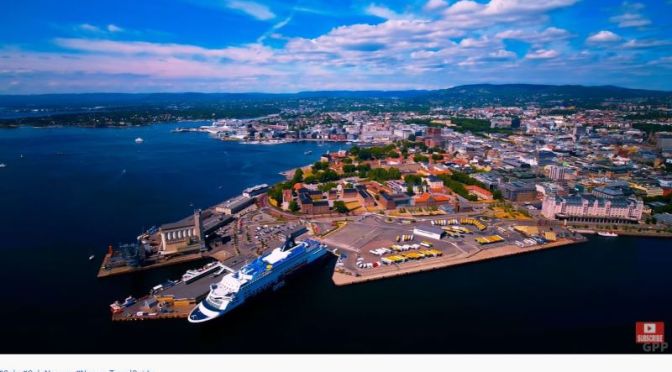
Oslo, the capital of Norway, sits on the country’s southern coast at the head of the Oslofjord. It’s known for its green spaces and museums. Many of these are on the Bygdøy Peninsula, including the waterside Norwegian Maritime Museum and the Viking Ship Museum, with Viking ships from the 9th century. The Holmenkollbakken is a ski-jumping hill with panoramic views of the fjord. It also has a ski museum.
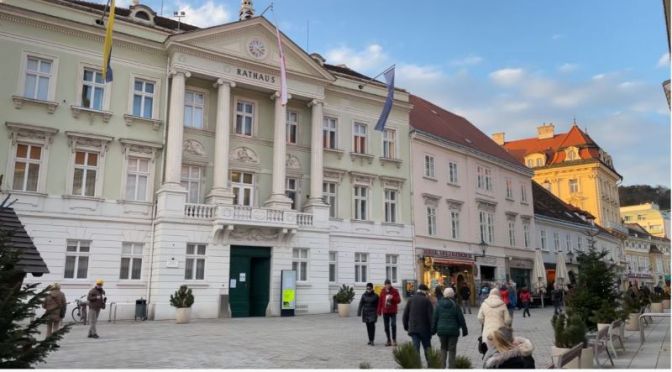
Baden bei Wien is a spa town southwest of Vienna, the Austrian capital. The focus of its main square is the Trinity Column plague memorial. Narrow surrounding streets are known for their 19th-century Biedermeier architecture. The leafy Kurpark features the Casino Baden, memorials to composers like Beethoven and Mozart, and trails leading to Kalvarienberg, a hill where the park transitions into the Vienna Woods.
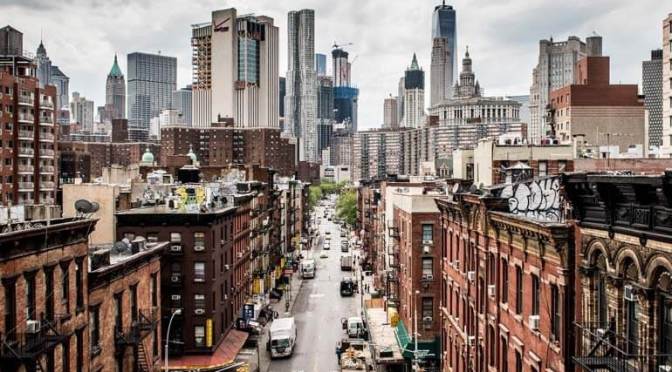
Brooklyn is a borough of New York City, co-extensive with Kings County, in the U.S. state of New York. It is the most-populous county in the state, the second-most densely populated county in the United States, and New York City’s most populous borough, with an estimated 2,648,403 residents in 2020.
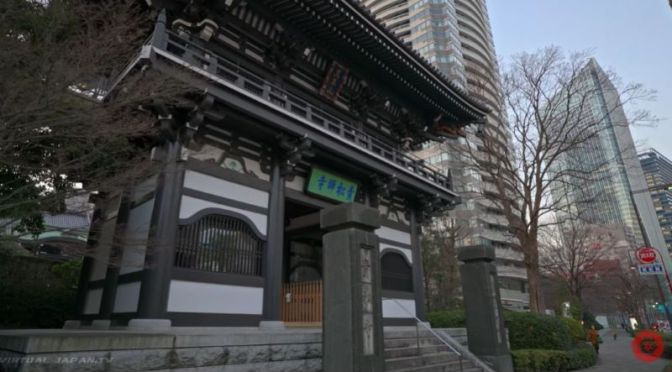
Seisho-ji is a temple located in the Toronomon Hills area of central Tokyo. It is part of the Soto sect of Zen Buddhism and moved to its location on Mount Atago in 1600. It sits among a complex of other Buddhist temples and a Shinto Shrine. The various temples are separated by a set of gardens that wrap in and out of a wealthy urban high-rise office setting.
At the Seisho-ji temple itself, resident monks offer zazen orientation for any level of meditator. Timing is flexible while the temple is open (9:00-17:00). It depends on temple’s schedule; please contact staff (contact below).
Canada is a country in the northern part of North America. Its ten provinces and three territories extend from the Atlantic to the Pacific and northward into the Arctic Ocean, covering 9.98 million square kilometres, making it the world’s second-largest country by total area.
News, Views and Reviews For The Intellectually Curious




 Boomers Daily