

From a TheConversation.com online article:
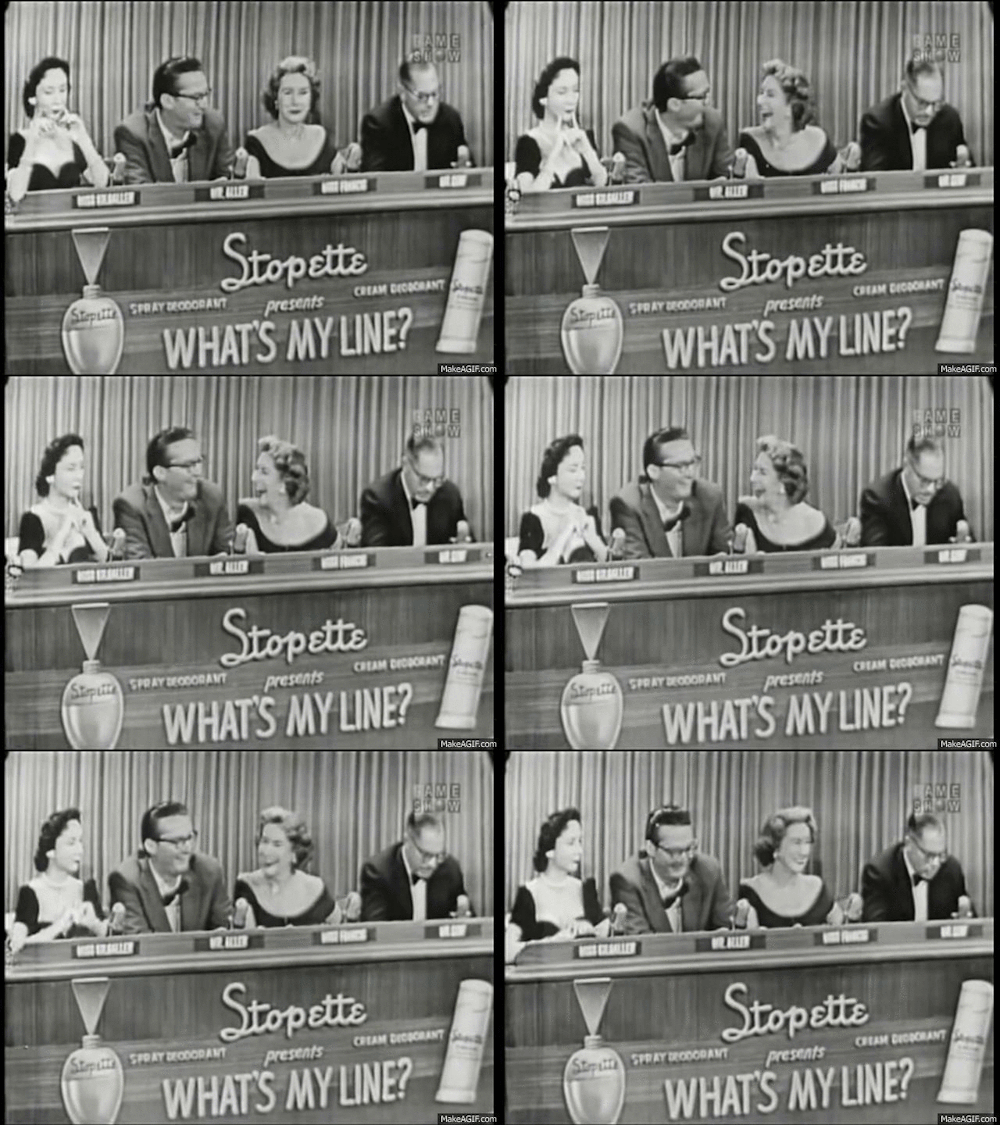 Between 1955 and 1959, America’s prime-time television schedule became dominated by quiz shows.
…(Television executive Frank) Stanton got both Vice President Richard Nixon – who had been a champion debater at Whittier College – and Senator John F. Kennedy to accept invitations to debate live on television. That’s when the really difficult negotiations began.

…Every detail took a long time to agree on, as the election drew ever closer in the late summer of 1960.
…Sure enough, the time pressures pushed everyone to agree on an established TV format Americans were familiar with: the quiz show. The required studios were easily available, the production staff already knew what to do, and journalists could easily moderate discussions in which candidates agreed not to directly question or answer each other.
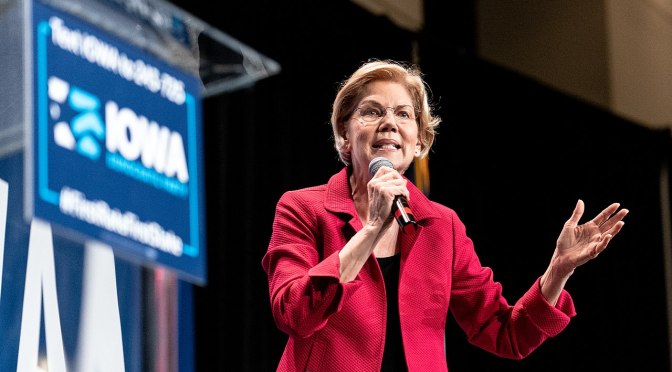
 In Part 3 of our series on pivotal moments in the lives of the 2020 Democratic presidential contenders, we spoke with Elizabeth Warren about how she came to be known as the blow-it-up candidate. The Massachusetts senator describes her transformation from Republican law professor to progressive candidate for the Democratic presidential nomination.
 With help from Andrew Ross Sorkin, a financial columnist at The Times and founder of DealBook; Harry Reid, a former Senate majority leader; and David Axelrod, a former Obama adviser, we explore Ms. Warren’s rise to prominence as an advocate for overhauling the financial system — and why those beliefs can help us understand her run for president now.
 NPR’s Tamara Keith and Amy Walter of the Cook Political Report join Amna Nawaz to discuss the latest political news, including campaign sparring between Sen. Elizabeth Warren and Pete Buttigieg and which candidates might leverage it, how much transparency matters to Democratic voters, lack of racial diversity in the next debate and reaction to the inspector general’s report on the Russia probe.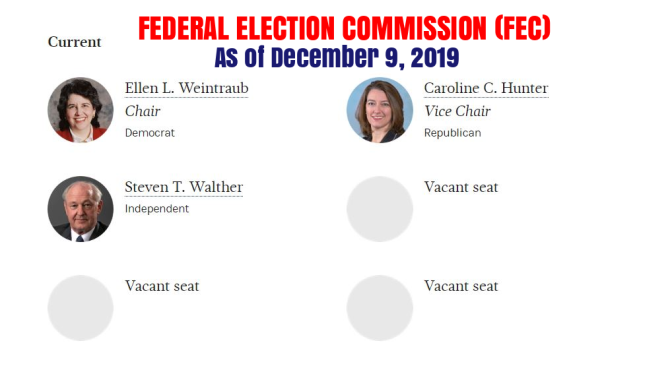
 Political advertising is flourishing online, but federal guidelines regulating those ads are virtually absent. WSJ’s Emily Glazer explains why Facebook, Twitter and Google are making their own rules.
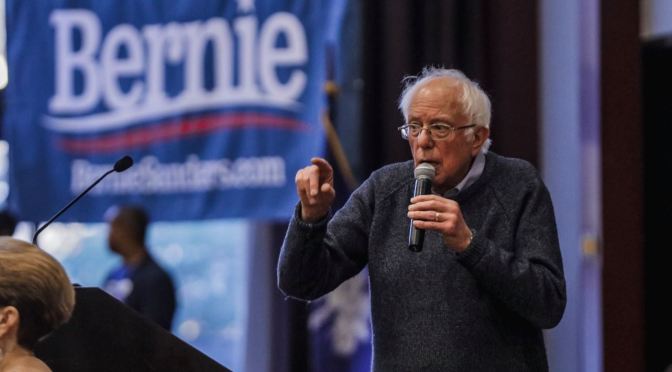
 Part 2 of our series on pivotal moments in the lives of the 2020 Democratic presidential contenders. Michael Barbaro speaks with Bernie Sanders, the democratic socialist senator from Vermont.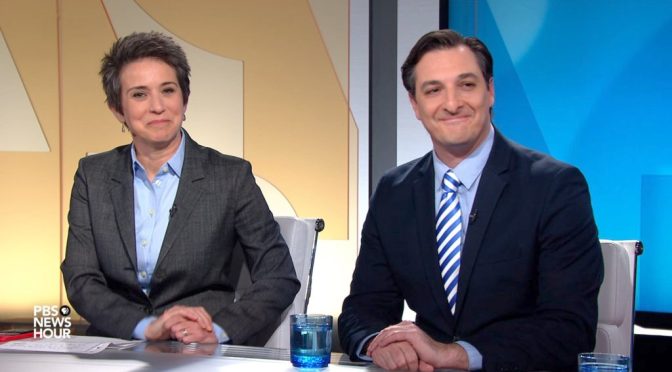
 Amy Walter of the Cook Political Report and Domenico Montenaro of NPR join Yamiche Alcindor to discuss the latest political news, including shifting dynamics in the 2020 Democratic presidential primaries, how congressional Democrats and Republicans view the facts of the impeachment investigation differently, political pressure on moderates and how impeachment could affect the 2020 race.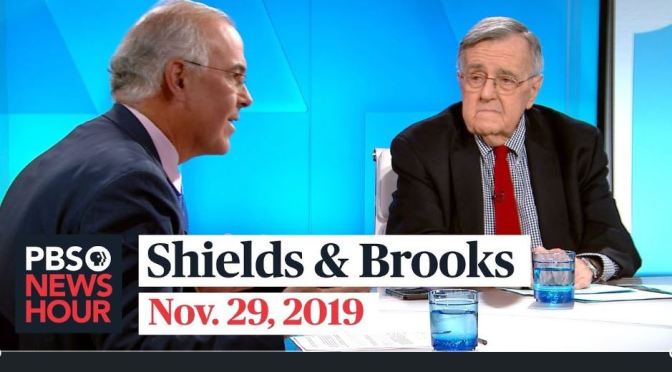
 Syndicated columnist Mark Shields and New York Times columnist David Brooks join Judy Woodruff to discuss the week in politics, including public opinion and legal debate in the impeachment inquiry into President Trump, the shifting race among 2020 Democrats and what we’re thankful for during this holiday week.
 AHEAD OF the 2020 American presidential election, John Prideaux, The Economist‘s US editor, talks to Bill Weld, a former governor of Massachusetts,
 MICHAEL BLOOMBERG, the
 NPR’s Tamara Keith and Amy Walter of the Cook Political Report join Amna Nawaz to discuss the latest political news, including Pete Buttigieg’s surge in Iowa, former Vice President Joe Biden’s lead in South Carolina polls, Sen. Elizabeth Warren’s health care plan update and what another Democratic gubernatorial upset in Louisiana means for President Trump in 2020.
 Boomers Daily