
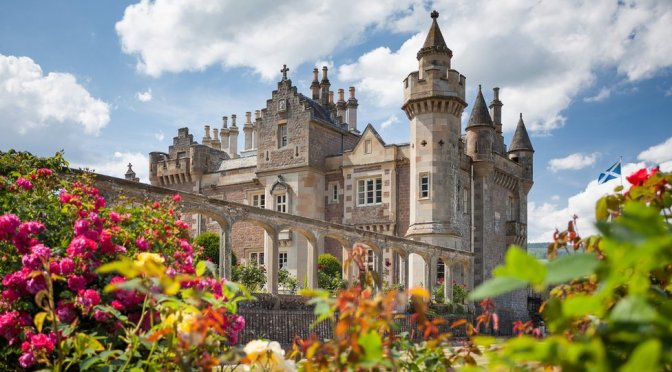
Damian Barr explores Sir Walter Scott’s impressive home, Abbotsford, which is full of a fascinating mix of items owned by the famed Scottish novelist, poet, playwright, and historian.
Abbotsford House was built by Sir Walter Scott as his grand home in the Scottish Borders. The property, set on the banks of the River Tweed, was bought in 1811 and then modified to the tastes of Sir Walter Scott. The writer died here in 1832, and the house was opened to the public just five months after his death.
The rooms that you visit today have been left virtually untouched since his death and a visit to Abbotsford House gives you an intimate insight into the personality and interests of this great man. Some of the most interesting aspects of the house are the personal collections of Sir Walter Scott which include unusual items such as the weapons of Rob Roy, the case book of Napoleon, and even a bullet and piece of oatcake taken from the site of Culloden Battlefield.
Visitors can see Sir Walter Scott’s Study, Library, Drawing Room, Entrance Hall, small Armoury, and the Dining Room where he died on 21st September 1832. The dining room contains paintings of several generations of the Scott family. Unfortunately, the last of his bloodline died in 2004 and the care of the house has now been taken over by the Abbotsford Trust.
 Boomers Daily