BARRON’S MAGAZINE – AUGUST 18, 2025 PREVIEW

BARRON’S MAGAZINE: The latest issue features ‘Powell’s Legacy and the Fed’s Independence Are on the Line at Jackson Hole

Powell’s Legacy and the Fed’s Independence Are on the Line at Jackson Hole

Federal Reserve Chair Jerome Powell will offer an economic outlook at the central bank’s annual symposium. The subtext of this year’s speech is more important.

Big Pharma Has a New Vision for Selling Drugs. It’s Going to the Mattresses.

Amid pressure from the White House, U.S. drug companies are experimenting with direct-to-consumer sales models that cut out the middlemen.

What’s a ‘Safe’ Savings Withdrawal Rate? It May Be More Than You Think.

The inventor of the “4% rule” has revised his math. What to know about giving yourself a pay hike.

The Fed Hasn’t Always Been Independent. Trump Is Testing Its Boundaries.

Before Paul Volcker became an all-powerful Fed chief in 1979, the agency frequently deferred to the White House.

THE NEW YORK TIMES – SATURDAY, AUGUST 16, 2025

Trump Backs Off Cease-Fire Demand in Ukraine War, Aligning With Putin

Breaking with Ukraine and European allies, President Trump adopted Russia’s preference for pursuing a sweeping peace deal after meeting with President Vladimir Putin.

After Alaska Summit, Europeans Worry Trump Will Pressure Ukraine

In a Wider Redistricting War, Republicans Have an Advantage

Republicans have a clear edge over Democrats in the total number of states that could redraw their maps.

SHAKESPEARE’S STAGE: WHEN THE MIND OVERHEARS ITSELF

By Michael Cummins, Editor, August 15, 2025

There is a moment in the history of the theater, and indeed in the history of consciousness itself, when the stage ceased to be merely a platform for action and became a vessel for thought. Before this moment, a character might speak their mind to an audience, but the thoughts were settled, the intentions declared. After, the character began to speak to themselves, and in doing so, they changed. They were no longer merely revealing a plan; they were discovering it, recoiling from it, marveling at it, and becoming someone new in the process.

This revolution was the singular invention of William Shakespeare. The literary critic Harold Bloom, who argued it was the pivotal event in Western consciousness, gave it a name: “self-overhearing.” It is the act of a character’s mind becoming its own audience. For Shakespeare, this was not a theory of composition but the very mechanism of being. He placed a theater inside his characters’ minds, and on that internal stage, they overheard the whispers of their own souls.

This interior drama, this process of a consciousness listening to itself, is the molten core of Shakespearean tragedy. It grants his characters a psychological autonomy that feels startlingly, sometimes terrifyingly, modern. While this technique permeates his work, it finds its most potent expression in three of his greatest tragic figures. Through them, Shakespeare presents a triptych of the mind in conflict. In Hamlet, we witness the intellectual paralyzed by the sheer polyphony of his own consciousness. In Iago, we find the chilling opposite: a malevolent artist who overhears his own capacity for evil and gleefully improvises a script of pure destruction. And in Macbeth, we watch a noble soldier become an audience to his own corruption, mesmerized and horrified by the murderous voice his ambition has awakened. Together, these three characters map the frontiers of human consciousness, demonstrating that the most profound tragedies unfold not in castles and on battlefields, but in the silent, echoing theater of the mind.

Hamlet: The Consciousness in Crisis

Hamlet is not merely a character; he is a consciousness. More than any figure in literature, he exists as a mind in perpetual, agonizing conversation with itself. His tragedy is not that he must avenge his father, but that he must first navigate the labyrinth of his own thoughts to do so. His soliloquies are not statements of intent but sprawling, recursive processes of self-interrogation. He is the ultimate self-overhearer, and the voice he listens to is so articulate, philosophically nuanced, and relentlessly self-critical that it becomes a prison.

From his first soliloquy, we see a mind recoiling from a world it cannot stomach. He laments the “unweeded garden” of the world, wishing:

O, that this too too solid flesh would melt,
Thaw and resolve itself into a dew!

 Hamlet, 1.2.129-130

After his encounter with the Ghost, the theater of his mind becomes a chamber of horrors. He overhears not just a command for revenge, but a shattering revelation about the nature of reality itself, concluding that “one may smile, and smile, and be a villain” (Hamlet, 1.5.108). This overheard truth—that appearance is a stage and humanity is a performance—becomes a cornerstone of his own psyche, prompting his decision to put on an “antic disposition.”

Charged with a task demanding bloody action, Hamlet’s consciousness instead turns inward, staging a debate that consumes the play. In his most famous soliloquy, he puts existence itself on trial: “To be, or not to be: that is the question.” This is not a man deciding whether to live or die; it is a mind listening to its own arguments for and against being. He weighs the “slings and arrows of outrageous fortune” against the terrifying uncertainty of “the undiscover’d country from whose bourn / No traveller returns.” The voice of his intellect, he concludes, is what “puzzles the will,” making it so that “conscience does make cowards of us all” (Hamlet, 3.1.56-83). He overhears his own fear and elevates it into a universal principle.

This intellectual paralysis is born of his relentless self-analysis. After watching an actor weep for the fictional Hecuba, Hamlet turns on himself in a fury of self-loathing, beginning with, “O, what a rogue and peasant slave am I!” He overhears his own inaction and is disgusted by it, mocking his tendency to talk instead of act:

Why, what an ass am I! …
That I, the son of a dear father murder’d,
Prompted to my revenge by heaven and hell,
Must, like a whore, unpack my heart with words.

— Hamlet, 2.2.583-586

He is both the speaker and the critic, the actor and the audience, caught in a feedback loop of thought, accusation, and further thought. Hamlet’s mind is a stage where the drama of consciousness perpetually upstages the call to action; the performance is so compelling he cannot bring himself to leave the theater.

Iago: The Playwright of Evil

If Hamlet’s self-overhearing leads to a tragic paralysis, Iago’s is the engine of a terrifying and creative evil. Where Hamlet’s mind is a debating chamber, Iago’s is a workshop. He is Shakespeare’s most chilling villain precisely because his villainy is an act of artistic improvisation. In his soliloquies, we do not witness a man wrestling with his conscience; we witness a playwright brainstorming his plot, listening with detached delight to the diabolical suggestions of his own intellect. He overhears the whispers of a motiveless malignity and, finding them intriguing, decides to write them into being.

Iago’s supposed motives for destroying Othello are flimsy and interchangeable. He first claims to hate the Moor for promoting Cassio. Then, he adds a rumor: “it is thought abroad, that ‘twixt my sheets / He has done my office” (Othello, 1.3.387-388). He presents this not as fact, but as a passing thought he chooses to entertain, a justification he can try on, resolving to act “as if for surety.” Where Hamlet desperately seeks a single, unimpeachable motive to act, Iago casually auditions motives, searching only for one that is dramatically effective. He is listening for a good enough reason, and when he finds one, he seizes it not with conviction but with artistic approval.

His soliloquies are masterclasses in this dark creativity. At the end of Act I, he pauses to admire his burgeoning plot. “How, how? Let’s see,” he muses, like an artist sketching a scene. “After some time, to abuse Othello’s ear / That he is too familiar with his wife.” The plan flows from him, culminating in the famous declaration:

Hell and night
Must bring this monstrous birth to the world’s light.

 Othello, 1.3.409-410

Later, he marvels at the tangible effect of his artistry, watching his poison corrupt Othello’s mind and noting with clinical detachment, “The Moor already changes with my poison: / Dangerous conceits are, in their natures, poisons” (Othello, 3.3.325-326). He is not just the playwright, but the rapt critic of his own unfolding drama. He steps outside of himself to admire his own performance as “honest Iago,” listening with applause to his own deceptive logic. This is the chilling sound of a consciousness with no moral compass, only an aesthetic one. It overhears its own capacity for deception and finds it beautiful. Iago is the playwright within the play, and the voice he hears is that of the void, whose suggestions he finds irresistible.

Macbeth: The Audience to Corruption

In Macbeth, we witness the most visceral and terrifying form of self-overhearing. He is a man who hears two voices within himself—that of the loyal thane and that of a murderous usurper—and the play charts his horrifying decision to listen to the latter. Unlike Hamlet, he is not paralyzed, and unlike Iago, he takes no pleasure in his dark machinations. Macbeth is an unwilling audience to his own ambition. He overhears the prophecy of his own moral decay and, though it terrifies him, cannot bring himself to walk out. His tragedy is that of a man who watches himself become a monster.

Our first glimpse into this internal battle comes after he meets the witches. Their prophecy is a “supernatural soliciting” that he reveals in an aside, a moment of public self-overhearing: “This supernatural soliciting / Cannot be ill, cannot be good” (Macbeth, 1.3.130-131). He listens as his mind debates the proposition. If it’s good, why does he yield to a suggestion:

Whose horrid image doth unfix my hair
And make my seated heart knock at my ribs,
Against the use of nature?

 Macbeth, 1.3.135-137

He is already a spectator to his own treasonous thoughts. The voice of ambition conjures the murder of Duncan, and his body reacts with visceral terror. The most profound moment of this internal drama is the “dagger of the mind” soliloquy. Here, Macbeth is a captive audience to his own murderous intent. “Is this a dagger which I see before me, / The handle toward my hand?” he asks, knowing it is a “dagger of the mind, a false creation, / Proceeding from the heat-oppressed brain” (Macbeth, 2.1.33-39). He is watching his own mind project its bloody purpose into the world; he overhears his own resolve and sees it take physical form.

After the murder, the voice he overheard as temptation becomes an inescapable torment. His consciousness broadcasts its own verdict—“Sleep no more! / Macbeth does murder sleep” (Macbeth, 2.2.35-36)—and he has no choice but to listen. This torment is soon joined by a chilling, logical self-appraisal. He overhears his own entrapment, recognizing that the only path forward is through more violence:

I am in blood
Stepp’d in so far that, should I wade no more,
Returning were as tedious as go o’er.

 Macbeth, 3.4.136-138

His tragedy culminates in his final soliloquy, where, upon hearing of his wife’s death, he overhears the voice of utter despair: “Tomorrow, and tomorrow, and tomorrow, / Creeps in this petty pace from day to day…” (Macbeth, 5.5.19-20). It is his own soul pronouncing its damnation, the final, devastating judgment on a life spent listening to the wrong voice.

Conclusion

The soliloquy, in Shakespeare’s hands, became more than a dramatic convention; it became a window into the birth of the modern self. Through the radical art of self-overhearing, he transformed characters from archetypes who declared their nature into fluid beings who discovered it, moment by moment, in the echo chamber of their own minds.

Hamlet, Iago, and Macbeth stand as the titanic pillars of this innovation. Hamlet’s mind is a storm of intellectual static, a signal so complex it jams the frequency of action. Iago tunes his ear to a darker station, one that transmits pure malignity, and becomes a gleeful conductor of its chaotic symphony. Macbeth, most tragically, is trapped between stations, hearing both the noble music of his better nature and the siren song of ambition, and makes the fatal choice to listen to the latter until it is the only sound left.

In giving his characters the capacity to listen to themselves, Shakespeare gave them life. He understood that identity is not a fixed point but a constant, fraught negotiation—a dialogue between the self we know and the other voices that whisper of what we might become. By staging this internal drama, he invented a new kind of tragedy, one where the fatal flaw is not a trait, but the very process of thought itself. We return to these plays again and again, not merely as an audience, but to witness the terrifying and beautiful spectacle of a soul becoming an audience to itself.

THIS ESSAY WAS WRITTEN AND EDITED UTILIZING AI

THE NEW YORK TIMES – FRIDAY, AUGUST 15, 2025

D.C. Files Lawsuit Challenging Administration’s Police Takeover

The lawsuit comes after the Trump administration moved to expand its control of the city’s police department by installing an “emergency commissioner.”

Trump Flies to Alaska for High-Stakes Summit With Putin

Feds Turn Into Beat Cops Under Trump’s D.C. Policing Surge

SpaceX Gets Billions From the Government. It Gives Little to Nothing Back in Taxes.

REBUILDING A BROKEN PATH FROM BOYHOOD TO MAN

By Michael Cummins, Editor, August 14, 2025

Imagine a world where, in a single decade, half the laughter shared between friends vanishes. Imagine a childhood where time spent outdoors is cut by a third and the developmental benefits of reading are diminished by two-thirds. This is not a dystopian fantasy. According to social psychologist Jonathan Haidt, in a “Prof G Podcast with Scott Galloway published on August 14, 2025, it is the stark reality for a generation that has been systematically disconnected from the real world and shackled to the virtual. “We have overprotected our children in the real world,” Haidt argues, “and underprotected them in the virtual world.”

This profound dislocation is the epicenter of a “perfect storm” disproportionately harming boys and young men—a crisis fueled by predatory technology, economic precarity, and the collapse of institutions that once guided them into manhood. It is a crisis, as a growing chorus of thinkers like Haidt, Brookings scholar Richard Reeves, and professor Scott Galloway have illuminated, born not from a single cause, but from a collective, intergenerational failure. It is a betrayal of the implicit promise that each generation will leave the world better for the next, a promise broken by a society that has become, in Galloway’s stark assessment, “a generation of takers, not givers.”

The Digital Dislocation: A Generation Adrift Online

The most abrupt change to the landscape of youth has been technological. Haidt identifies the years between 2010 and 2015 as the “pivot point” when a “play-based childhood” was supplanted by a “phone-based childhood.” This was not a simple evolution from the television sets of the past. The smartphone is a uniquely invasive tool—a supercomputer delivering constant, algorithmically curated interruptions. It extracts data on its user’s deepest desires while creating a feedback loop of social comparison and judgment, resulting in a documented catastrophe for mental health. It is no coincidence that between 2010 and 2021, the suicide rate for American boys aged 10-14 nearly tripled, according to CDC data highlighted by Haidt.

The Lure of the Manosphere

This digital vacuum has been eagerly filled by what Scott Galloway calls the “great white sharks” of the tech industry. The most insidious outcome of their engagement-at-all-costs model is the weaponization of social validation into a system of industrialized shame. “Imagine growing up in a minefield,” Haidt suggests. “You would walk really carefully.” This pervasive fear suppresses healthy risk-taking, a crucial component of adolescent development, particularly for boys who learn competence through trial, error, and recovery.

This isolation is especially damaging for boys who, as scholar Warren Farrell argues, already suffer from a crisis of “dad-deprivation” and a lack of positive male mentorship. “A boy’s search for a father,” Farrell writes in The Boy Crisis, “is a search for a purpose-driven life.” Into this void step not fathers or coaches, but the algorithmic sirens of the “manosphere.” These figures thrive because they offer a counterfeit version of the very thing Farrell identifies as missing: a strong, authoritative male voice providing direction, however misguided. Figures like Andrew Tate have built empires by offering lonely or insecure young men a seductive, off-the-shelf identity, often paired with dubious get-rich-quick schemes that prey directly on their economic anxieties. The algorithms on platforms like TikTok and YouTube are ruthlessly efficient, creating a pipeline that can push a boy from mainstream gaming content to nihilistic or misogynistic ideologies in a matter of weeks. This is not a moral failing of young men; it is the predictable result of a human need for guidance meeting a machine optimized for radicalizing engagement.

The Economic Squeeze: A Broken Promise of Prosperity

This digital betrayal is compounded by an economic one, as the foundational promises of prosperity have been broken for an entire generation. The traditional path to stability—education, career, family, homeownership—has become fractured. As Galloway argues, older generations have effectively “figured out that the downside of democracy is that old people… can continue to vote themselves more money,” leaving the young to face a brutal housing market and stagnant wages. He describes it as a conscious “pulling up of the ladder,” where asset inflation benefits the old at the direct expense of the young.

From Precarious Work to Deaths of Despair

This economic anxiety shatters the “get rich slowly” ethos and replaces it with a desperate search for a shortcut. And in 2018, the state effectively handed this desperate generation a loaded gun in the form of frictionless, legalized sports betting. The Supreme Court decision placed, as Reeves describes it, a “casino in everyone’s pocket,” making gambling dangerously accessible to a demographic of young men who are biologically more prone to risk-taking and socially more isolated than ever. The statistics are damning: young men are the fastest-growing group of problem gamblers, and in states that legalize online betting, bankruptcy filings often spike.

The consequences are existential. This trend is the leading edge of the “deaths of despair” phenomenon identified by economists Anne Case and Angus Deaton, who documented rising mortality among men without college degrees from suicide, overdose, and alcohol-related illness. Their research concluded these deaths were “less about the sting of poverty and more about the pain of a life without meaning.” When a young man, steeped in economic anxiety and disconnected from real-world support, takes a huge financial risk and fails, the shame can be unbearable. Haidt delivers a chillingly direct warning of the foreseeable consequences: “you’re gonna have dead young men.”

The Social Vacuum: An Abandonment of Guidance and Guardrails

Underpinning both the technological and economic crises is a deeper social one: the systematic dismantling of the institutions, norms, and rituals that once guided boys into healthy manhood. Society has become deinstitutionalized, removing the “guardrails” that once channeled youthful energy.

The Crisis in the Classroom

This is acutely visible in education. The modern classroom, with its emphasis on quiet compliance and verbal-emotive skills, is often a poor fit for the learning styles more common in boys. As author Christina Hoff Sommers has argued for years, “For more than a decade, our schools have been enforcing a zero-tolerance policy for any behavior that suggests boyishness.” The result is a widening gender gap at every level. Women now earn nearly 60% of all bachelor’s degrees in the U.S. Boys are more likely to be diagnosed with a learning disability, more likely to face disciplinary action, and have largely abandoned reading for pleasure. We are, in effect, pathologizing boyhood and then wondering why boys are checking out of school.

The Search for Structure

This deinstitutionalization extends beyond the schoolhouse. The decline of institutions like the Boy Scouts, whose membership has plummeted in recent decades, local sports leagues, and church groups has removed arenas for mentorship and character formation. From an anthropological perspective, this is a catastrophic failure. “Wherever you have initiation rights,” Haidt notes, “they’re always harsher, stricter, tougher for boys because it’s a much bigger jump to turn a boy into a man.” This journey requires structure, discipline, and challenge. Yet modern society, in its quest for safety, has stripped away opportunities for healthy risk, leaving boys to “just vegetate.”

Into this vacuum has rushed a toxic cultural narrative that pits the sexes against each other. But the hunger for meaning has not disappeared. Reeves’s powerful anecdote of visiting a Latin Mass in Denver on a Sunday night and finding it “full of young men, most of them on their own,” speaks volumes. They are not seeking chaos; they are desperately searching for “structure and discipline and purpose and institutions that will help them become men.” They are looking for the very things society has stopped providing.

Forging a New Path: A Framework for Renewal

Recognizing this betrayal is the first step. The next is to act. This requires moving past the gender wars and embracing a bold, pro-social agenda to rebuild the structures that turn boys into thriving men.

1. Rebuild the Guardrails: Institutional and Economic Solutions The most immediate need is to create viable, non-collegiate pathways to success and dignity. We must champion a massive expansion of vocational and technical education, celebrating the mastery of a trade as equal in status to a four-year degree. As Mike Rowe, a vocal advocate for skilled labor, has stated, “We are lending money we don’t have to kids who can’t pay it back to train them for jobs that no longer exist. That’s nuts.” Imagine a modern Civilian Conservation Corps, where young men from all backgrounds work side-by-side to rebuild crumbling infrastructure or restore national parks—learning a trade while forging bonds of shared purpose and earning a tangible stake in the country they are helping to build.

2. Create Modern Rites of Passage: Community and Mentorship Communities must step into the void left by failing institutions. This means a national push to fund and expand mentorship programs. Research from MENTOR National shows that at-risk youth with a mentor are 55% more likely to enroll in college and 130% more likely to hold leadership positions. It means local leaders creating their own modern “rites of passage”—challenging, team-based programs that teach resilience, problem-solving, and civic responsibility through tangible projects. As Reeves bluntly puts it, “pain produces growth,” and we must reintroduce healthy, structured struggle back into the lives of boys.

3. A Pro-Social Vision: Redefining Honorable Masculinity The most crucial task is cultural. We must stop telling boys that their innate nature is toxic and instead offer them a noble vision of what it can become. We must define honorable manhood not as domination or material wealth, but as competence, responsibility, and protectiveness. This means redefining competence not just as physical strength, but as technical skill, emotional regulation, and intellectual curiosity. It means redefining protectiveness not just against physical threats, but against the digital and psychological dangers that poison our discourse and harm the vulnerable. It is a masculinity defined by what it builds and who it cares for—the courage to be a provider for one’s family, a pillar of one’s community, and a steward of a just society.

Conclusion: Repairing the Intergenerational Compact

We have stranded a generation of boys in a digital “Guyland,” a perilous limbo between a childhood they were forced to abandon and an adulthood they see no clear path to reaching. We have told them their natural instincts are a problem while simultaneously exposing them to the most predatory, high-risk temptations ever devised. This is more than a crisis; it is a profound societal malpractice.

The choice we face is stark. We can continue our slide into a zero-sum society of horizontal, gendered conflict, or we can recognize this crisis for what it is: a vertical, intergenerational failure that harms everyone. We must have the courage to declare that the well-being of our sons is not in opposition to the well-being of our daughters. As Richard Reeves has said, the goal is to “get to a world which is better for both men and women.” This is not a zero-sum game; it is a positive-sum imperative.

This requires a new intergenerational compact, one rooted in action, not grievance. It demands we stop pathologizing boyhood and start building the institutions that mold it. It requires that we offer our young men not frictionless temptation, but meaningful struggle. It insists that we provide them not with algorithmic influencers, but with real-world mentors who can show them the path to an honorable life.

The hour is late, and the damage is deep. But in the quiet hunger of young men for purpose, in the fierce love of parents for their children, and in the courage of thinkers willing to speak uncomfortable truths, lies the hope that we can yet forge a new path. The work is not to turn back the clock, but to build a better future—one where we finally keep our promise to the next generation.

THIS ESSAY WAS WRITTEN AND EDITED UTILIZING AI

THE ECONOMIST MAGAZINE – AUGUST 16, 2025 PREVIEW

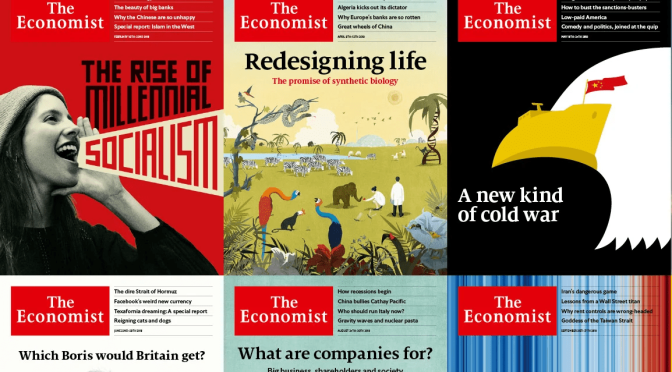
THE ECONOMIST MAGAZINE: The latest issue features How to win at foreign policy

How to win at foreign policy

Donald Trump’s capricious dealmaking destabilizes the world

Xi Jinping’s weaponisation of rare-earth elements will ultimately backfire

How the West can break China’s grip on these vital minerals

America and its Asian allies need to spend more to deter China

It should be a two-way street

The shutdown of ocean currents could freeze Europe

When climate change poses a strategic threat, it needs a strategic response

Why South Africa should scrap Black Economic Empowerment

The ruling party’s flagship policy is a cause of the country’s problems, not a solution

THE NEW YORK TIMES – THURSDAY, AUGUST 14, 2025

Why Putin Thinks Russia Has the Upper Hand

As he heads to Alaska for talks with President Trump, Vladimir Putin is projecting confidence that his edge on the battlefield will secure a peace deal on his terms.

How a Call From President Trump Ignited a Frantic Week of Diplomacy by Ukraine

Once a vague proposal for a territorial swap gained clarity, a worried President Volodymyr Zelensky worked to rally allies before Friday’s Trump-Putin summit.

Fed Faces High Bar for Big Cuts Despite White House Pressure

The Federal Reserve is poised to lower interest rates in September. But signs of stickier inflation could limit how much relief officials can ultimately provide.

Trump Wants to ‘Take Back’ D.C., but the Federal Government Controls Much of It

President Trump and his allies have berated local officials. Yet the federal government has often made it harder for those officials to manage the capital.

NATURE MAGAZINE – AUGUST 14, 2025 RESEARCH PREVIEW

Volume 644 Issue 8076

NATURE MAGAZINE: The latest issue features ‘Troubled Waters’ – Iceberg formation sparks wave-driven melting at glacier fronts.

Globally recognized island is losing its trademark glaciers

Ice coverage is shrinking on Heard Island — a UNESCO World Heritage Site and a haven of biodiversity.

Tiny motor uses heat to perform molecular magic

A nanoscopic machine transforms a molecular chain into interlocking loops.

How animal paw pads got their toughness

In creatures that walk on land, a protein called Slurp1 protects skin cells from stress.

Mystery of billions of sea-star deaths solved at last

Experiments identify a bacterium as the cause of sea-star wasting disease, which has devastated populations along the western coast of North America.

THE GUARDIAN WEEKLY – AUGUST 15, 2025 PREVIEW

THE GUARDIAN WEEKLY: The latest issue features Sudan’s hidden horror: The inside story of a refugee camp massacre. Plus: The films that capture a nation’s soul

While the wars raging in Ukraine and Gaza have dominated global news agendas for months turning into years, relatively little attention has been paid to the ongoing civil war in Sudan – which for many western media outlets remains out of sight and largely out of mind.

This can’t be said of the Guardian’s Mark Townsend, who has reported tirelessly on the effects of the war between the Arab-led Rapid Support Forces and Sudanese military since it broke out in April 2023. It’s a conflict that has been characterised by repeated atrocities, forcing millions from their homes and causing the world’s largest humanitarian crisis.

In April this year, just as a British-led conference was being held in London to explore how to end the war, one such atrocity was unfolding in Zamzam refugee camp in North Darfur. Details were at first sketchy, but only now – thanks to the piecing together of intelligence reports and witness testimony – can it be revealed what happened during the attack on the camp by RSF forces and why it was not stopped.

As Mark’s remarkable account reveals, the 72-hour rampage in April may have taken the lives of more than 1,500 civilians in one of the most notorious war crimes of Sudan’s catastrophic conflict.

Five essential reads in this week’s edition

The big story | The ruins of Gaza, as seen from above
Guardian international correspondent Lorenzo Tondo joins a Jordanian military airdrop for a rare chance to observe a landscape devastated by Israel’s offensive. With photography by Alessio Mamo

Science | The truth about sunscreen
Too much exposure to the sun has traditionally been seen as a danger. Now claims that sunscreen is toxic flood the internet. Our science editor, Ian Sample, weighs up the evidence

Interview | Demis Hassabis, the cautious AI optimist
The head of Google’s DeepMind tells Steve Rose how artificial intelligence could usher in an era of ‘incredible productivity’ and ‘radical abundance’. But who will it benefit?

Opinion | The world is in flames. But I’ve found some hope amid the gloom
Columnist Jonathan Freedland makes a moral case for escapism, as a means of retaining the ability to see the world – and the people – around us

Culture | The films that capture a nation’s soul
What single film best represents a nation? Twelve writers choose the one work they believe most captures their home’s culture and cinema – from a bold cricket musical to a nine-hour documentary, gritty crime dramas to frothy tales of revenge

News, Views and Reviews For The Intellectually Curious