Category Archives: Wildlife

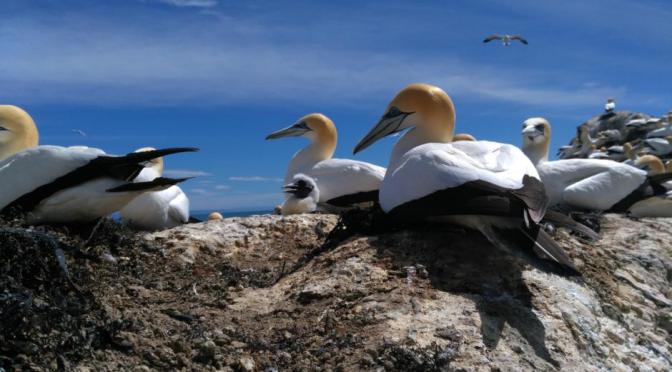
Views: Gannets In Cape Kidnappers, New Zealand

We leave you this Sunday morning at Cape Kidnappers in New Zealand, with gannets, who mate for life. Videographer: Jaime McDonald.

Australasian gannets nest in dense breeding colonies on the New Zealand mainland and coastal rocks and islands, as well as off south-east Australia and Tasmania. Although gannets can be seen occasionally from most places along the coasts of the New Zealand main islands, most gannetries are situated off the North Island. The largest mainland gannetry is at Cape Kidnappers, with around 5,000 breeding pairs. Other mainland breeding sites include Muriwai and Farewell Spit.

Australasian gannets mostly feed on waters over the continental shelf. They prefer flat ground for nesting, rather than cliff ledges. Breeding colonies are mostly situated at sites that are completely or largely surrounded by the sea, i.e. on islands or headlands.

Cape Kidnappers, also known as Te Kauwae-a-Māui and officially known as Cape Kidnappers / Te Kauwae-a-Māui, is a headland at the southeastern extremity of Hawke’s Bay on the east coast of New Zealand’s North Island and sits at the end of an 8 kilometres peninsula which protrudes into the Pacific Ocean.

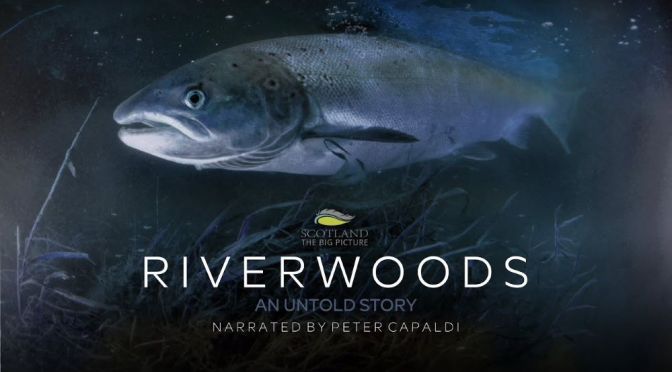
Nature: ‘Riverwoods – An Untold Story’ (Video)

Throughout Scotland, the fractured connections between salmon and the landscapes through which their rivers flow, are gradually being repaired through the foresight and positive actions of many different people. This spring, the Riverwoods documentary will embark on a 12-venue screening tour across Scotland, bringing this untold story to life.

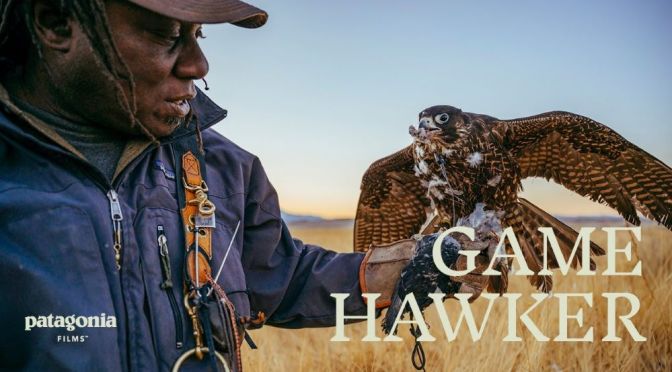
Short Film: ‘Game Hawker’ The Art Of Falconry (2022)

For Shawn Hayes, the ancient practice of falconry is more than a deep connection with raptors. It’s his life’s work. As an American falconry ambassador, he’s carved a space for himself where people of color haven’t always been welcome.

In collaboration with Patagonia Films.

Director: Brett Marty & Josh Izenberg
Cinematography: Owen Bissell
Editor: Traci Loth

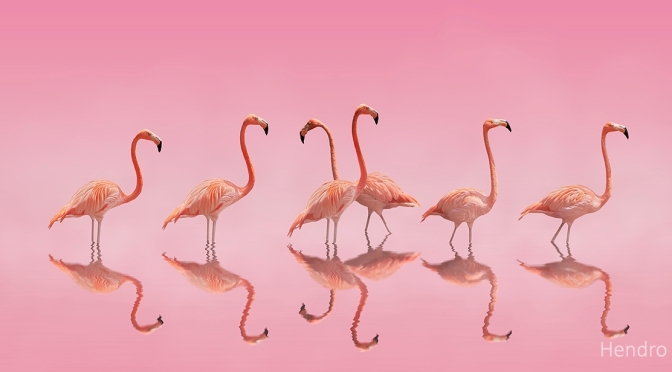
Nature Photography: The Art Of Hendro Soetrisno

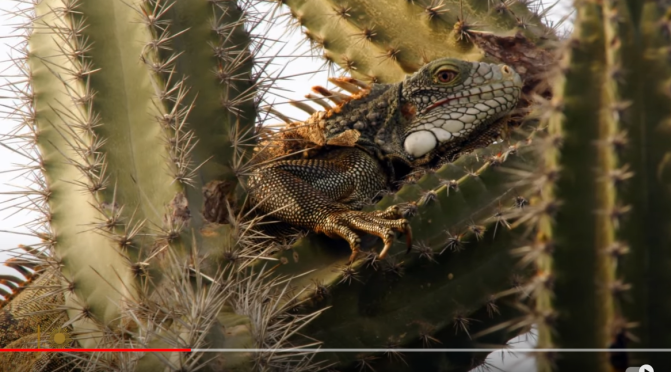
Curacao Views: Iguanas At Christoffel National Park

We leave you this Sunday at Curacao’s Christoffel National Park, where it’s the day of the iguanas. Videographer: Mauricio Handler.

Curaçao, island in the Caribbean Sea and a country within the Kingdom of the Netherlands. It is situated some 37 miles (60 km) north of the coast of Venezuela. Although physiographically part of the South American continental shelf, Curaçao and neighbouring islands off the northern coast of South America are usually considered to constitute the southwestern arc of the Lesser Antilles. The capital is Willemstad.

Christoffelpark is the largest national park of Curacao and a must see for everyone. The park has a rich variety of local flora and fauna. Nature lovers will find the park teeming with local birds and plants, including species, which are not easily seen elsewhere on the island. For example wild orchids, the Palabrua, the rare native barn owl. The Curacao White Tailed deer (of which there are only about 250 left) and much more.

Nature: Trumpeter Swans Near Cayuga, New York

We leave you this Sunday among trumpeter swans braving winter’s chill near Cayuga, New York. Videographer: Carl Mrozek.

The trumpeter swan (Cygnus buccinator) is a species of swan found in North America. The heaviest living bird native to North America, it is also the largest extant species of waterfowl, with a wingspan of 185 to 250 cm (6 ft 2 in to 8 ft 2 in). It is the American counterpart and a close relative of the whooper swan (Cygnus cygnus) of Eurasia, and even has been considered the same species by some authorities. By 1933, fewer than 70 wild trumpeters were known to exist, and extinction seemed imminent, until aerial surveys discovered a Pacific population of several thousand trumpeters around Alaska’s Copper River. Careful reintroductions by wildlife agencies and the Trumpeter Swan Society gradually restored the North American wild population to over 46,000 birds by 2010.

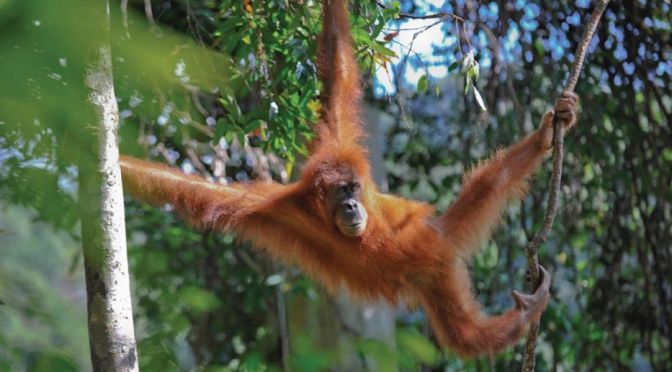
Wildlife: Orangutans On The Island Of Borneo

Learning survival skills is a must for baby orangutans to live in the rainforest among their predators, however, not all of them are natural acrobats!

The Bornean orangutan is a species of orangutan endemic to the island of Borneo. Together with the Sumatran orangutan and Tapanuli orangutan, it belongs to the only genus of great apes native to Asia.

Borneo, a giant, rugged island in Southeast Asia’s Malay Archipelago, is shared by the Malaysian states of Sabah and Sarawak, Indonesian Kalimantan and the tiny nation of Brunei. It’s known for its beaches and ancient, biodiverse rainforest, home to wildlife including orangutans and clouded leopards. In Sabah is 4,095m-tall Mount Kinabalu, the island’s highest peak, and, offshore, the famed dive site Sipadan Island. 

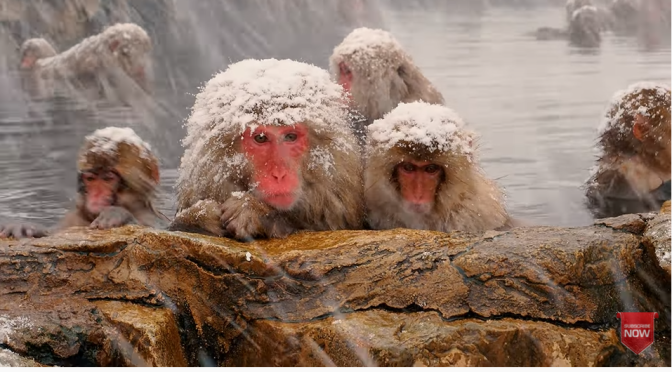
Japan Views: Snow Monkey Park In Heavy Snowfall

Located at the base of Joshinetsu Kogen National Park, the Jigokudani Monkey Park – often referred to as the Snow Monkey Park – is home to a very special troop of monkeys. Created in 1964, the park was established as a conservation area in which the monkeys, Japanese macaques to be exact, would have a refuge within what was already their natural habitat. Once in the park, the naturally-curious monkeys observed humans using the hot spring of a nearby guesthouse and before long, started copying the behaviour. The rest as they say, is history.

Antarctic Views: Emperor Penguin Chicks Early Life

Narrated by Kate Winslet, Snow Chick – A Penguin’s Tale tells the story of an emperor penguin chick’s first precarious months of life as it grows up in the world’s most extreme nursery.

Emperor penguins are the only animals to breed in the Antarctic winter, and after months of blizzards and temperatures of -60C, male emperor penguins are watching and waiting for their chicks to hatch. Snow Chick is the last to emerge into this harsh, frozen world.

As he takes his first steps, he tries to fit in with the baby penguin gang, but when you’re so small it’s hard to be accepted by the bigger chicks. Soon he ventures too far from his mother for comfort and gets lost in a storm. Later, he’s chased by chick-snatching penguins and escapes a scavenging petrel by the fluff of his back – all the while slipping and skating on treacherous ice. With the arrival of the comical and pugnacious adelie penguin, colony life is turned upside down. But it signals a bigger change – the parents who braved long and treacherous journeys across the sea ice to bring back food eventually return no more. With his band of penguin brothers, Snow Chick has no choice but to make his own way to the sea. A few more adventures lie ahead before he gets tossed unceremoniously into the open ocean – his new home for the next four years.

An enchanting and action-packed dramatised Christmas treat, featuring one of the cutest and toughest creatures on Earth. Filming over a whole Antarctic year, the crew endured some of the toughest conditions on earth to capture these astonishing moments of intimate behaviour.