
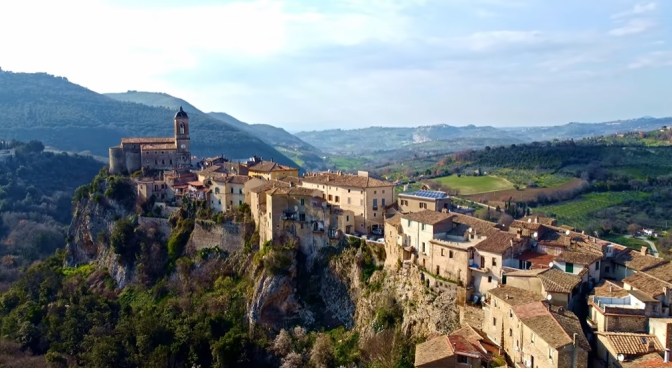
Toffia is a comune (municipality) in the Province of Rieti in the Italian region Latium, located about 40 kilometres (25 mi) northeast of Rome and about 25 kilometres (16 mi) southwest of Rieti. Toffia borders the following municipalities: Castelnuovo di Farfa, Fara in Sabina, Nerola, Poggio Nativo. The church of Santa Maria Nova stands on the hill above the town.
Category Archives: Views
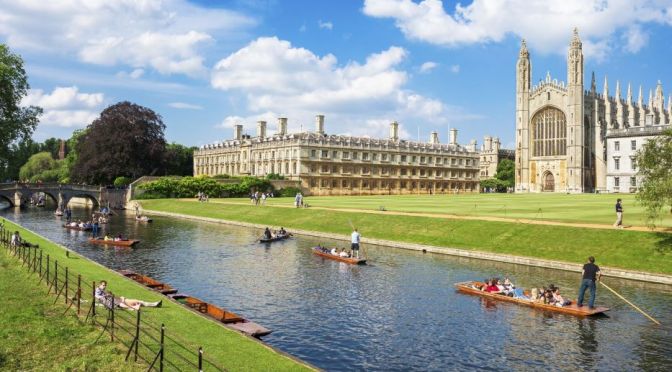
Tours: The University Of Cambridge In England
University of Cambridge, English autonomous institution of higher learning at Cambridge, Cambridgeshire, England, on the River Cam 50 miles (80 km) north of London.
The start of the university is generally taken as 1209, when scholars from Oxford migrated to Cambridge to escape Oxford’s riots of “town and gown” (townspeople versus scholars). To avert possible troubles, the authorities in Cambridge allowed only scholars under the supervision of a master to remain in the town. It was partly to provide an orderly place of residence that (in emulation of Oxford) the first college, Peterhouse, was founded in 1284 by Hugo de Balsham, bishop of Ely. Over the next three centuries another 15 colleges were founded, and in 1318 Cambridge received formal recognition as a studium generale from Pope John XXII.

Museum Tour: ‘Van Gogh And The Olive Groves’ (4K)
‘Van Gogh and the Olive Groves’ (11 March 2022 – 12 June 2022).
Van Gogh made fifteen paintings of olive groves, constantly experimenting with various approaches. Fascinated by the gnarly shapes of the olive trees and their ever-changing colours, he painted them over and over. He painted at different times of the day and used colours inspired by the season. Vincent himself considered his paintings of olive trees to number amongst the best he had made in the South of France.
This exhibition reunites Van Gogh’s paintings of olive groves and exhibits them together for the first time, thanks to unique loans from museums in Europe and the United States.
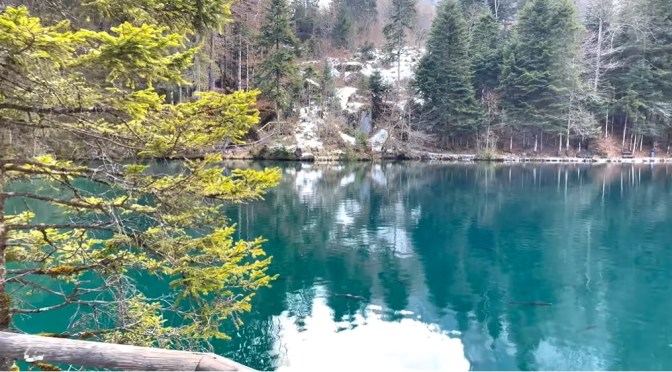
Lake Walks: Blausee In Western Switzerland
Blausee, Switzerland is a beautiful lake where the water is crystal clear with a lot of fish with relaxing music and nature sounds. Blausee is a lake in Bernese Oberland, Kandergrund, Switzerland. It is located near the Kander river. The lake has an elevation of 887 metres and an area of 0.64 hectares. The eyes of the beautiful maiden who died of a broken heart were deep blue. The Blue Lake is also deep blue, in eternal memory of the love of the maiden, which persists beyond death. The small Blausee, steeped in legend, is located in the midst of a small nature park.

Front Page View: The Wall Street Journal – March 11
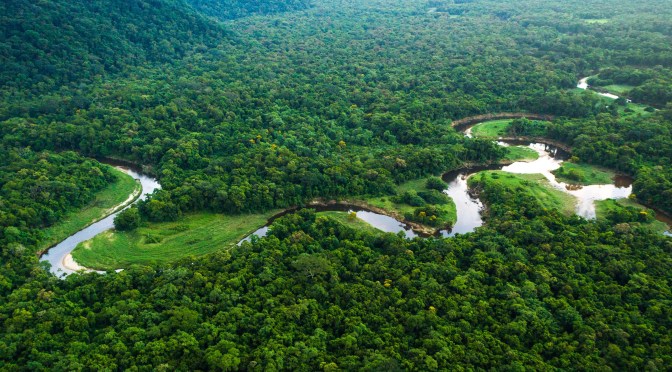
Rainforests: Indigenous People Struggle In Brazil
“They used to kill us with guns, now they kill us with deforestation and dams.” The Brazilian government’s failure to protect the Amazon forest is forcing the Munduruku indigenous people to take action against land grabs and illegal logging – and try to save the rain forest on their own.
In an unprecedented movement led by Chief Juarez Saw Munduruku, for the last six years indigenous people have been fighting the theft and destruction of their forest home. Since 1970, 20% of the Brazilian Amazon has been deforested. Logging and forest fires are threatening a further 20%. Scientists say that at 40% deforestation, we will reach the point of no return. The forest will be lost forever, replaced by savannahs – and the environmental consequences will be catastrophic.
The Amazon is often known as ‘the lungs of the planet,’ producing 6% of the world’s oxygen. It is no secret that the rainforest has been losing a dramatic fight against an array of threats, encouraged by capitalism, consumerism and greed – both legal and illegal.
In today‘s Brazil, some 600,000 square kilometers of land – an area about the size of France — are farmed by farmers who don’t officially own it. The military dictatorship (1964-1985) encouraged them to settle on state-owned land, but the farmers never became legal owners. As a result, speculators now seize the areas, clear the forests, then resell the plots with forged title deeds. This land grab, known as “grilagem” in Portuguese, has led to uncontrolled forest clearing and fierce conflicts.
The documentary was shot from 2014 to 2020, under three different Brazilian governments. It provides deep insights into the drama of the illegal occupation of state land and forest areas by organized crime groups. Several indigenous peoples have united under Juarez Saw Munduruku, leader of the Munduruku people, in a last-ditch bid to save the planet’s most important forest.
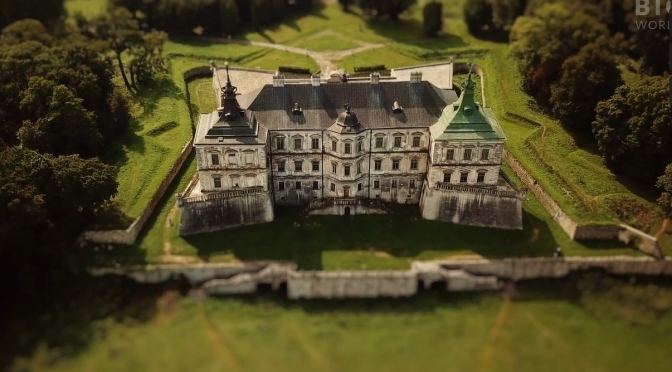
Tributes: The ‘Unreal Beauty’ Of Ukraine (4K)
A time lapse & tilt shift & aerial video by Joerg Daiber.
I was visiting Ukraine by the end of last summer and finished this edit a few weeks back. This was about the time when the news started reporting about Putin deploying his troops around the border of Ukraine. Ever since then I was hesitant to publish this film and it got worse every day with events proceeding.
So I know it’s a very difficult time to post a film that shows a beautiful and picturesque Ukraine, that looks like it’s straight out of a magical fairytale, while there are currently tanks surrounding the major cities, residential areas being shelled and millions of refugees trying to get out of the country.
It’s heartbreaking to think about all the lovely people there and the suffering that they have to endure now. Something like this was unthinkable just a few months back. Of course the Donbas war was ongoing and everybody was still mad about Crimea, but regular and daily life was as normal as it could possibly be.
I spoke with many people about their opinion on Russia and none of them was in favour of Russian politics and literally everybody felt much closer to Europe than to Russia. Most of them didn’t even want their kids to learn Russian in school. I felt that the public mood towards Russian politics was even more negative as in many other former Soviet countries like Georgia, Moldova or Armenia. At least among younger people that I ran into.
I know its difficult to enjoy these images from another time, but it’s a reminder how fragile and precious peace is and that we should not take it for granted.
This film was shot mainly around the Carpathian Mountain area.
Shooting locations: Lviv, Lutsk, Tarakaniv Fort, Olesko Castle, Pidhirtsi Castle, Tunnel of Love, Dovbush rocks, Kamianets-Podilskyi Castle, Chernivtsi, Yaremche, Vorokhta, Yasinya, Drahobrat, Hoverla

Front Page View: The New York Times – March 10


Africa Views: Ivory Coast Agriculture Goes Digital
Climate change, land degradation and deforestation have severely damaged Côte d’Ivoire’s natural surroundings. Many farmers are worried about their future. But Digitalization is bringing new hope.
Côte d’Ivoire is a West African country with beach resorts, rainforests and a French-colonial legacy. Abidjan, on the Atlantic coast, is the country’s major urban center. Its modern landmarks include zigguratlike, concrete La Pyramide and St. Paul’s Cathedral, a swooping structure tethered to a massive cross. North of the central business district, Banco National Park is a rainforest preserve with hiking trails.
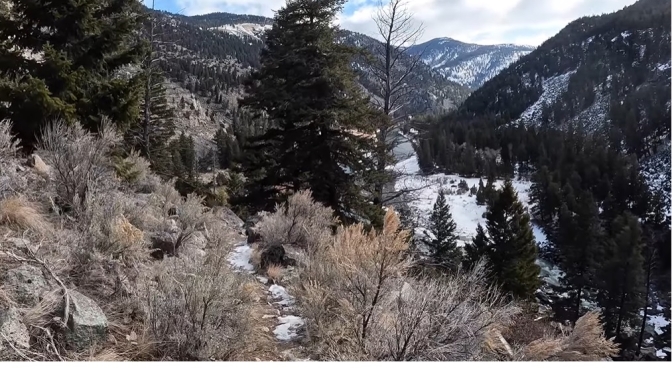
Hikes: Black Canyon Of The Yellowstone (4K)
The Black Canyon of the Yellowstone covers an extensive stretch of the Yellowstone River near the northern border of Yellowstone National Park. This is a hiking and backpacking canyon, not a canyoneering destination. It’s characterized by spectacular scenery along the Yellowstone River, with interesting geology at the upstream sections.
 Boomers Daily