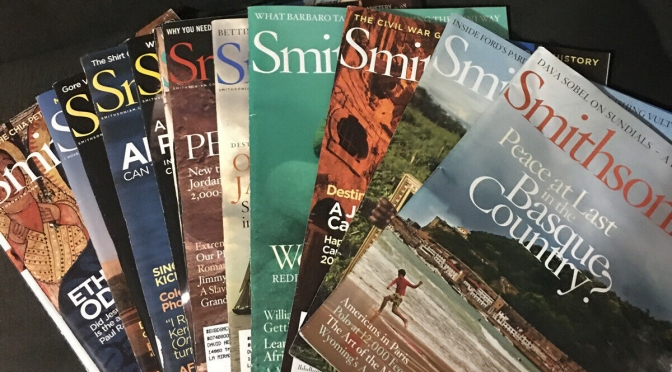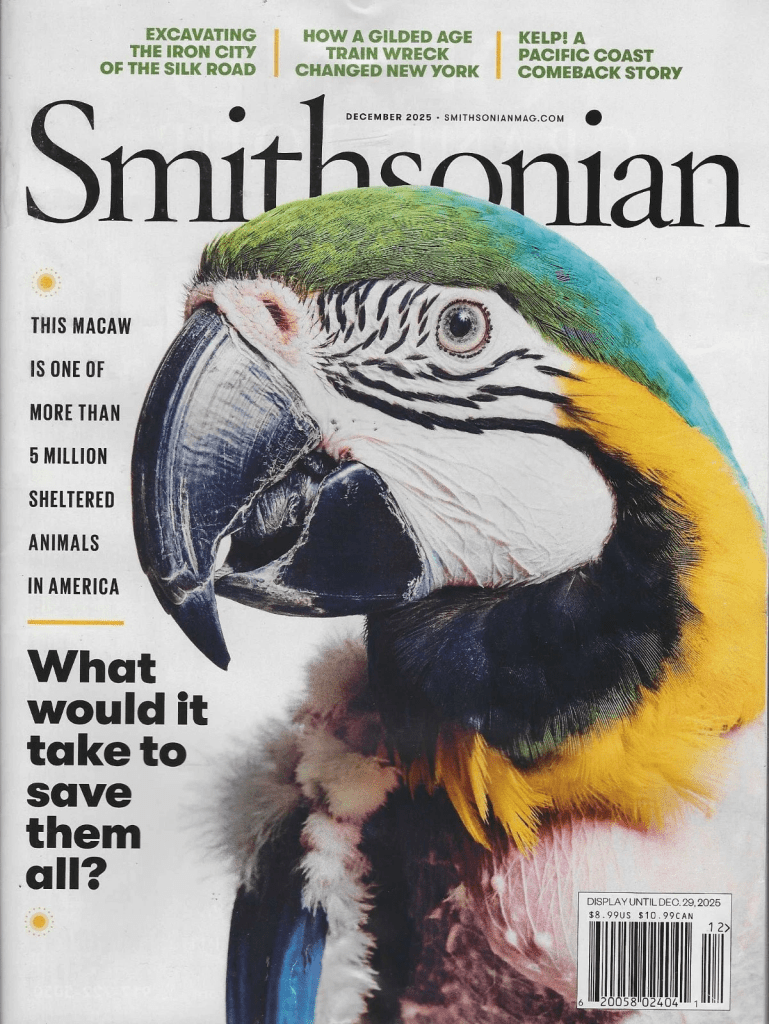
In the remote highlands of Uzbekistan, archaeologists are uncovering the remains of a vast metropolis that may rewrite the history of the fabled trading route’s origins By Andrew Lawler | Photographs by Simon Norfolk
After a 1902 train wreck in the heart of Manhattan, one self-taught engineer proposed an improbable urban transformation. His vision reshaped the face of American cities
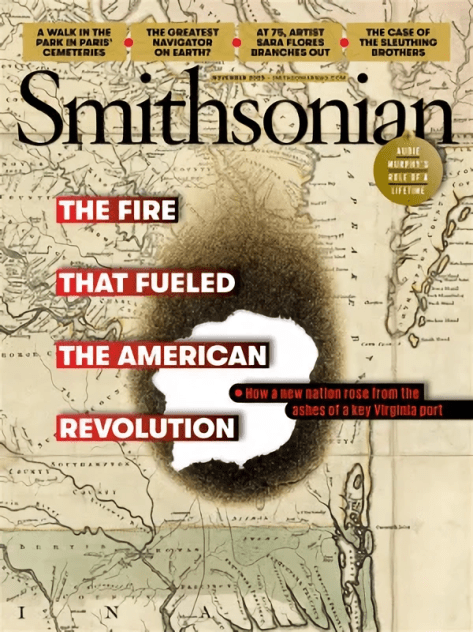
In January 1776, Virginia’s Port City of Norfolk Was Set Ablaze, Galvanizing the Revolution. But Who Really Lit the Match?
Blaming the British for the destruction helped persuade some wavering colonists to back the fight for independence. But the source of the inferno was not what it seemed
Scientists and community members in Altadena are testing ways that California species can assist efforts to rebuild
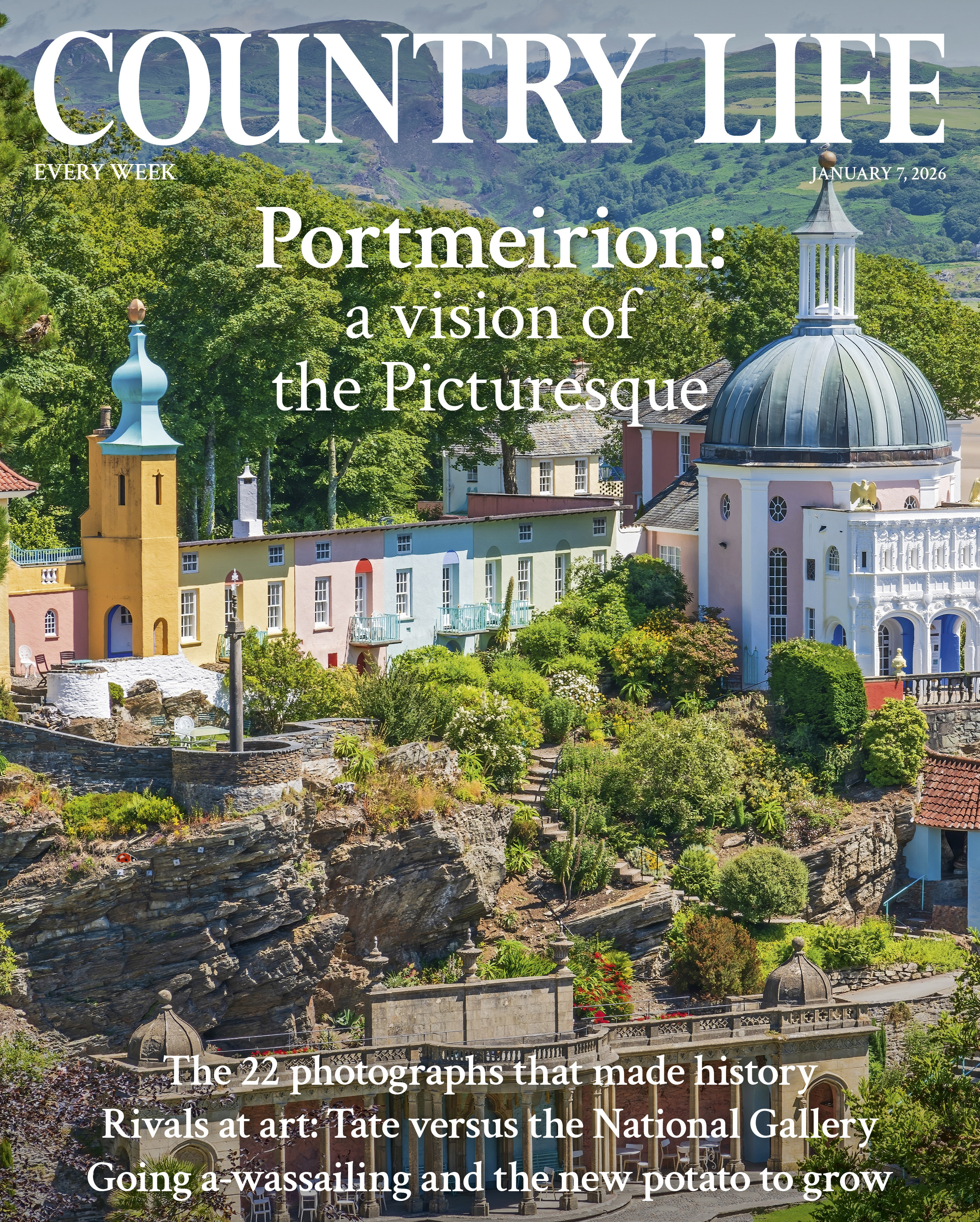
You Can See the Parthenon Without Scaffolding for the First Time in Decades
The temporary structures will return next month—but in the meantime, visitors will enjoy rare unobstructed views of the ancient hilltop temple in Athens
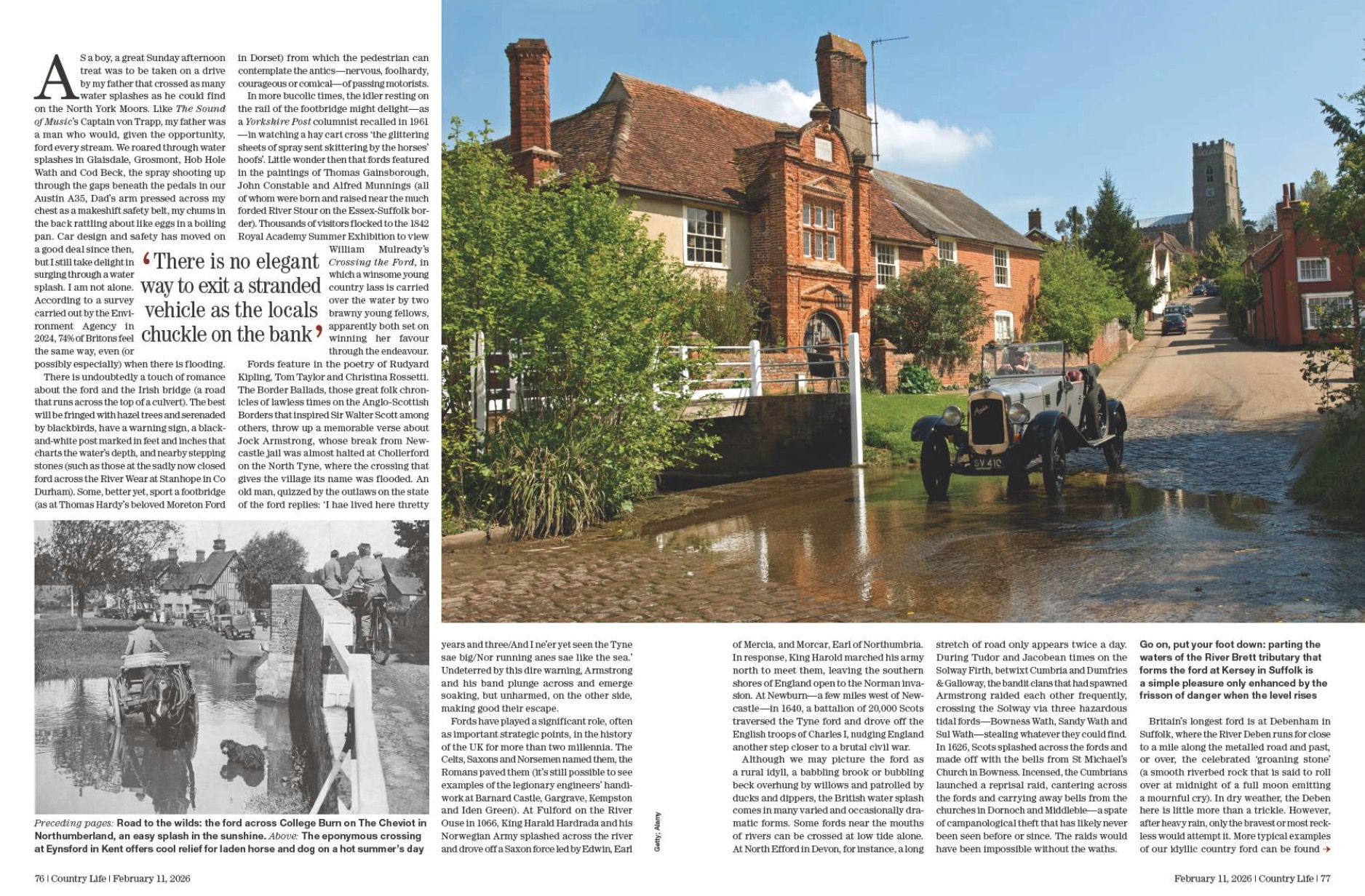
Now you see them, now you don’t: Roger Morgan-Grenville treads the ephemeral sea paths of Britain, those often-ancient routes at the mercy of the tides
A stitch in time
Deborah Nicholls-Lee unearths Mr Darcy’s shirt, Bertie Wooster’s dressing gown and Poldark’s tricorn hat in a fascinating trawl through the Cosprop wardrobes
Property market
A quartet of significant West Country houses is seeking buyers, reports Penny Churchill
Properties of the week
A Devon longhouse, Cornwall cottage and Somerset thatch catch Arabella Youens’s eye
When your art is in the right place
To whom do the experts turn for the best in framing, restoring and valuing? Leading art and antique dealers open their little black books for Amelia Thorpe
Leslie MacLeod Miller’s favourite painting
The impresario picks a portrait of a 19th-century singing sensation
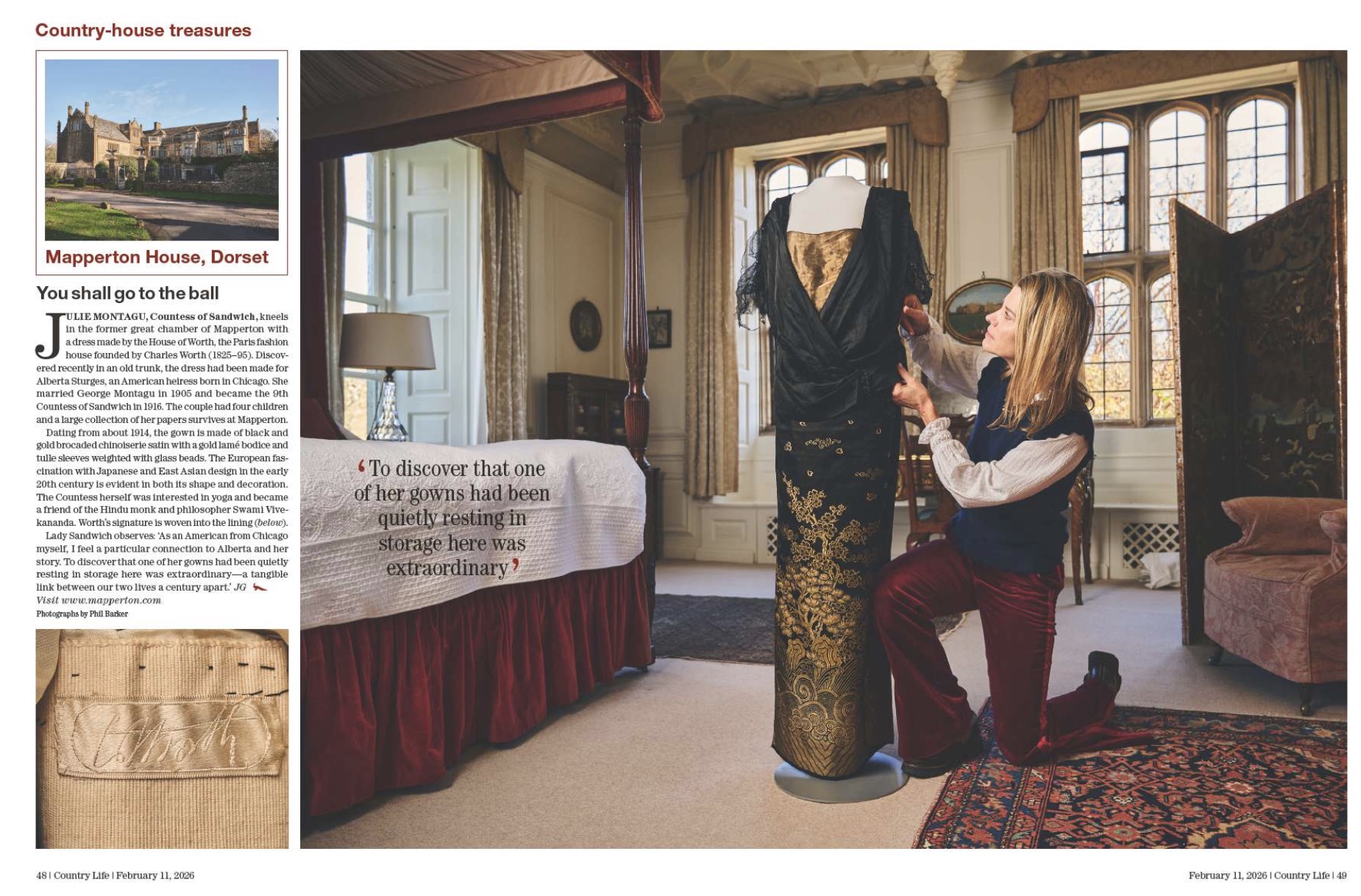
Country-house treasures
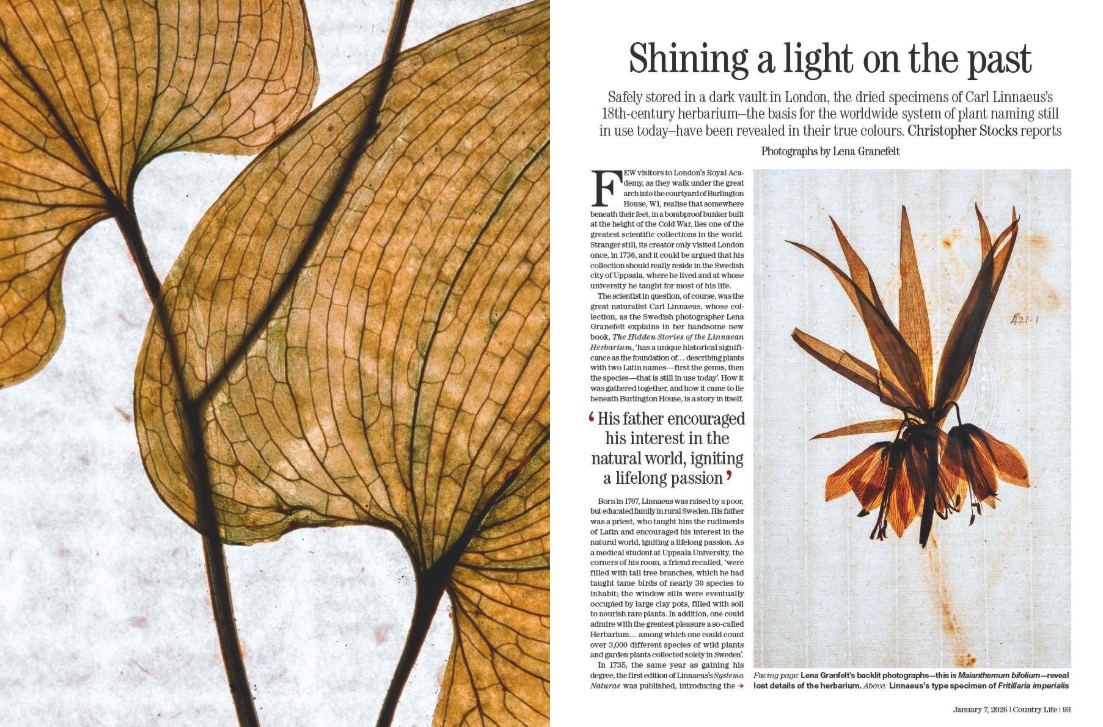
The fortunes of a Cumbrian castle rest with the ‘Luck of Muncaster’, finds John Goodall
A Regency prospect
Steven Brindle looks at the remarkable story behind a fine Georgian creation — Samuel Wyatt’s Belmont House in Kent
The legacy
Emma Hughes toasts the genius of Dennis Potter, the man who gave us the darkly comic and gritty Singing Detective
Beginning to see the light
John Lewis-Stempel and his dogs are up with the skylark to witness the dawning of a spectacular September day
Luxury
Amie Elizabeth White on tartan, tweed, timepieces and fruity jewels, plus a few of Victoria Pendleton’s favourite things
Interiors
Amelia Thorpe admires the makeover of a guest bedroom at a Scottish country house and picks the best bedside tables
Plum advice
Charles Quest-Ritson shares his favourite forms of plum, gage, mirabelle and damson from the 20-plus varieties he has grown
Slightly foxed
Second-hand bookshops can be a goldmine of gardening wisdom, says John Hoyland
Scale model
David Profumo is transported back to childhood by the spiny, swashbuckling stickleback
Travel
Mark Hedges takes a break from reality on Bryher, a heather-clad haven in the Isles of Scilly
Arts & antiques
Art dealer John Martin tells Carla Passino why he can never part with a panel he stumbled upon by Nigerian sculptor Asiru Olatunde
From Nietzsche’s wanderings to Brodsky’s winters in Venice, identity loops like a Möbius strip—and augmented reality may carry those returns to us all.
By Michael Cummins, Editor, August 25, 2025
It begins, as so many pilgrimages of mind and imagination do, in Italy. To step into one of its cities—Florence with its domes, Rome with its ruins, Venice with its waters—is to experience time folding over itself. Stones are worn by centuries of feet; bells still toll hours as they did five hundred years ago; water mirrors façades that have witnessed empires rise and fall. Italy resists linearity. It does not advance from one stage to another; it loops, bends, recurs. For those who enter it, identity itself begins to feel less like a straight line than like a Möbius strip—a single surface twisting back on itself, where past and present, memory and desire, fold into one another.
Friedrich Nietzsche felt that pull most keenly. His journeys through Italy in the 1870s and 1880s were more than therapeutic sojourns for his fragile health; they were laboratories for thought. He spent time in Sorrento, where the Mediterranean air and lemon groves framed his writing of Human, All Too Human. In Genoa, he walked the cliffs above the port, watching the sun rise and fall in a rhythm that struck him as recurrence itself. In Turin, under its grand porticoes, he composed letters and aphorisms before his final collapse in 1889. And in Venice, he found a strange equilibrium between the city’s music, its tides, and his own restlessness. To his confidant Peter Gast, he wrote: “When I seek another word for ‘music,’ I never find any other word than ‘Venice.’” The gondoliers’ calls, the bells of San Marco, the lapping water—all repeated endlessly, yet never the same, embodying the thought that came to define him: the eternal return.
For Nietzsche, Italy was not a backdrop but a surface on which recurrence became tangible. Each city was a half-twist in the strip of his identity: Sorrento’s clarity, Genoa’s intensity, Turin’s collapse, Venice’s rhythm. He sensed that to live authentically meant to live as though each moment must be lived again and again. Italy, with its cycles of light, water, and bells, made that philosophy palpable.
Henry James —an American expatriate author with a different temperament—also found Italy less a destination than a structure. His Italian Hours (1909) reveals both rapture and unease. “The mere use of one’s eyes in Italy is happiness enough,” he confessed, yet he described Venice as “half fairy tale, half trap.” The city delighted and unsettled him in equal measure. He wandered Rome’s ruins, Florence’s galleries, Venice’s piazzas, and found that they all embodied a peculiar temporal layering—what he called “a museum of itself.” Italy was not history frozen; it was history repeating, haunting, resurfacing.
James’s fiction reflects that same looping structure. In The Aspern Papers, an obsessive narrator circles endlessly around an old woman’s letters, desperate to claim them, caught in a cycle of desire and denial. In The Portrait of a Lady, Isabel Archer discovers that the freedom she once thought she had secured returns as entrapment; her choices loop back on her with tragic inevitability. Even James’s prose mirrors the Möbius curve: sentences curl and return, digress and double back, before pushing forward. Reading James can feel like walking Venetian alleys—you arrive, but only by detour.
Joseph Brodsky, awarded the 1987 Nobel Prize in Literature after being exiled from the Soviet Union in 1972, found in Venice a winter refuge that became ritual. Each January he returned, until his death in 1996, and from those returns came Watermark (1992), a prose meditation that circles like the canals it describes. “Every January I went to Venice, the city of water, the city of mirrors, perhaps the city of illusions,” he wrote. Fog was his companion, “the city’s most faithful ghost.” Brodsky’s Venice was not Nietzsche’s radiant summer or James’s bustling salons. It was a city of silence, damp, reflection—a mirror to exile itself.
He repeated his returns like liturgy: sitting in the Caffè Florian, notebook in hand, crossing the Piazza San Marco through fog so dense the basilica dissolved, watching the lagoon become indistinguishable from the sky. Each January was the same, and yet not. Exile ensured that Russia was always present in absence, and Venice, indifferent to his grief yet faithful in its recurrence, became his Möbius surface. Each year he looped back as both the same man and someone altered.
What unites these three figures—Nietzsche, James, Brodsky—is not their similarity of thought but their recognition of Italy as a mirror for recurrence. Lives are often narrated as linear: childhood, youth, adulthood, decline. But Italy teaches another geometry. Like a Möbius strip, it twists perspective so that to move forward is also to circle back. An old anxiety resurfaces in midlife, but it arrives altered by experience. A desire once abandoned returns, refracted into new form. Nietzsche’s eternal return, James’s recursive characters, Brodsky’s annual exiles—all reveal that identity is not a line but a fold.
Italy amplifies this lesson. Its cities are not progressions but palimpsests. In Rome, one stands before ruins layered upon ruins: the Colosseum shadowed by medieval houses, Renaissance palaces built into ancient stones. In Florence, Brunelleschi’s dome rises above medieval streets, Renaissance paintings glow under electric light. In Venice, Byzantine mosaics shimmer beside Baroque marble while tourists queue for modern ferries. Each city is a surface where centuries loop, never erased, only folded over.
Philosophers and writers have groped toward metaphors for this looping. Nietzsche’s eternal return insists that each moment recurs infinitely. Derrida’s différance plays on the way meaning is always deferred, never fixed, endlessly circling. Borges imagined labyrinths where every turn leads back to the start. Gloria Anzaldúa’s Borderlands describes identity as hybrid, cyclical, recursive. Italy stages all of these. To walk its piazzas is to feel history as Möbius surface: no beginning, no end, only continuous return.
But the Möbius journey of return is not without strain. Increasing overcrowding in Venice has made Piazza San Marco feel at times like a funnel for cruise-ship day trippers, raising questions of whether the city can survive its admirers. Rising costs of travel —inflated flights, pricier accommodations, surcharges for access—place the dream of pilgrimage out of reach for many. The very recurrence that writers once pursued with abandon now risks becoming the privilege of the few. And so the question arises: if one cannot return physically, can another kind of return suffice?
The answer is already being tested. Consider the Notre-Dame de Paris augmented exhibition, created by the French startup Histovery. Visitors carry a HistoPad, a touchscreen tablet, and navigate 850 years of the cathedral’s history. Faux stone tiles line the floor, stained-glass projections illuminate the walls, recordings of tolling bells echo overhead. With a swipe, one moves from the cathedral’s medieval construction to Napoleon’s coronation, then to the smoke and flames of the 2019 fire, then to the scaffolds of its restoration. It is a Möbius strip of architecture, looping centuries in minutes. The exhibition has toured globally, making Notre-Dame accessible to millions who may never step foot in Paris.
Italy, with its fragile architecture and layered history, is poised for the same transformation. Imagine a virtual walk through Venice’s alleys, dry and pristine, free of floods. A reconstructed Pompeii, where one can interact with residents moments before the eruption. Florence restored to its quattrocento brilliance, free of scaffolding and tourist throngs. For those unable to travel, AR offers an uncanny loop: recurrence of experience without presence.
Yet the question lingers: if one can walk through Notre-Dame without smelling the stone, without hearing the echo of one’s own footsteps, have they truly arrived? Recurrence, after all, has always been embodied. Nietzsche needed the Venetian fog to sting his lungs. James needed to feel the cold stones of a Florentine palazzo. Brodsky needed the damp silence of January to write his Watermark. The Möbius loop of identity was sensory, mortal, physical. Can pixels alone replicate that?
Perhaps this is too stark a contrast. Italy itself has always been both ruin and renewal, both stone and scaffolding, both presence and representation. Rome is simultaneously crumbling and rebuilt. Florence is both painted canvas and postcard reproduction. Venice is both sinking and endlessly photographed. Italy has survived by layering contradictions. Augmented reality may become one more layer.
Indeed, there is hope in this possibility. Technology can democratize what travel once restricted. The Notre-Dame exhibition allows a child in Kansas to toggle between centuries in an afternoon. It lets an elder who cannot fly feel the weight of medieval Paris. Applied to Italy, AR could make the experience of recurrence more widely available. Brodsky’s fog, Nietzsche’s bells, James’s labyrinthine sentences—these could be accessed not only by the privileged traveler but by anyone with a headset. The Möbius strip of identity, always looping, would expand to include more voices, more bodies, more experiences.
And yet AR is not a replacement so much as an extension. Those who can still travel will always seek stone, water, and bells. They will walk the Rialto and feel the wood beneath their feet; they will stand in Florence and smell the paint and dust; they will sit in Rome’s piazzas and feel the warmth of stone in the evening. These are not illusions but recurrences embodied. Technology will not end this; it will supplement it, add folds to the Möbius strip rather than cutting it.
In this sense, the Möbius book of identity continues to unfold. Nietzsche’s Italian sojourns, James’s expatriate wanderings, Brodsky’s winter rituals—all are chapters inscribed on the same continuous surface. Augmented reality will not erase those chapters; it will add marginalia, footnotes, annotations accessible to millions more. The loop expands rather than contracts.
So perhaps the hopeful answer is that recurrence itself becomes more democratic. Italy will always be there for those who return, in stone and water. But AR may ensure that those who cannot return physically may still enter the loop. A student in her dormitory may don a headset and hear the same Venetian bells that Nietzsche once called music. A retiree may walk through Florence’s restored galleries without leaving her home. A child may toggle centuries in Notre-Dame and begin to understand what it means to live inside a Möbius strip of time.
Identity, like travel, has never been a straight line. It is a fold, a twist, a surface without end. Italy teaches this lesson in stone and water. Technology may now teach it in pixels and projections. The Möbius book has no last page. It folds on—Nietzsche in Turin, James in Rome, Brodsky in Venice, and now, perhaps, millions more entering the same loop through new, augmented doors.
The self is not a line but a surface, infinite and recursive. And with AR, more of us may learn to trace its folds.
From eating better-quality meat to buying seasonal and local produce, Jane Wheatley suggests how we can shop smart to aid the environment
Solar, so good
Banks of solar panels covering farmland have sparked much opposition, but, with local input, could they be a force for good, wonders William Kendall
No job too big
Kate Green trumpets the native breeds best suited to grazing Britain’s green and pleasant land, as our farmers walk a fine line balancing food production and biodiversity recovery
‘It’s terrifying, but also an absolute dream’
Henrietta Bredin talks to Errollyn Wallen, Master of the King’s Music, about composing in a lighthouse and going on stage
Liz Fenwick’s favourite painting
The novelist picks a trailblazing nude by the first female RA
A passion for plasterwork
John Goodall discovers a neo-Classical delight when he takes a peek behind the unassuming frontage of a Swansea terrace
The legacy
Kate Green admires Rachel Carson’s seminal Silent Spring
A wing and a prayer
Hannah Bourne-Taylor extols the importance of feeding over the ‘hungry gap’ to help our beleaguered farmland birds
Country Life’s Little Green Book
We all want to shop well, but how to decipher the marketing? Madeleine Silver picks a handful of brands that do what they say
The good stuff
Let those bangles jangle, urges Hetty Lintell, with her bracelet pick
Interiors
Arabella Youens admires the rich refurbishment of a Scottish fishing lodge and laments the scarcity of trusty English oak
True grit
Gravel gardens are becoming ever more popular, but what are the secrets to making them a success, wonders Non Morris
Winging it
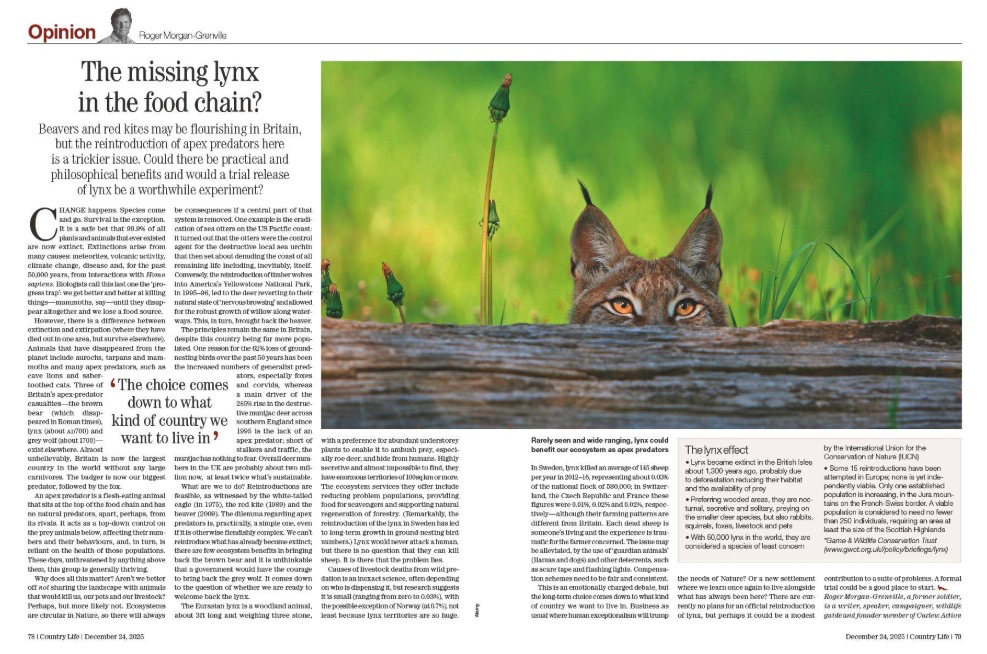
The ‘flying barn door’ that is the magnificent white-tailed eagle is returning to our shores. Mark Cocker, for one, is very glad
Arts & antiques
A lost technique is being revived by a Swiss sculptor, as pioneer-ing women of science are celebrated, reveals Carla Passino
War and peace
Tom Young’s intricate, powerful paintings capture the beauty and the heartbreak of Lebanon. Octavia Pollock meets him
All the world on one stage
Michael Billington finds Ralph Fiennes at his brooding best as Sir David Hare’s engrossing new play premieres in Bath
Some of the highlights of this week’s Country Life.
Meet the coastal superheroes
John Lewis-Stempel celebrates the depth and breadth of sea-birds spotted over British waters, from the dive-bombing gannet to the pick-pocket herring gull
Heavy petal
Catriona Gray meets artist Rachel Dein, whose botanical bas-reliefs really stand out from the crowd
I’ve got chills, they’re multiplying
Tom Parker Bowles savours the ultimate thirst quencher — a fruity and refreshing sorbet
Arts & antiques
Kenilworth Castle is reliving its central role in the 19-day wooing of Elizabeth I exactly 450 years on, as Carla Passino discovers
Back to Brideshead
Britain’s historic country houses are the much-loved stars of a host of films and television dramas, often leaving big-name actors in the shade, finds Ben Lerwill
The Experts’ Experts
Designers and architects from Country Life’s Top 100 throw open their contacts books to reveal the specialists they turn to when seeking inspiration for a country-house project
Peter Jones’s favourite painting
The chair of the British-Italian Society chooses a compelling and mysterious portrait of Christ
SAVE at 50
Founding trustee Simon Jenkins reflects on 50 years of SAVE Britain’s Heritage and the charity’s battles to safeguard a string of historic buildings
The legacy
Dedication’s what you need and Ross and Norris McWhirter, the twins behind the Guinness World Records, had it in abundance, as Amie Elizabeth White learns
Suits you!
When did the sodden knitwear cossie give way to the glamorous bikini? Deborah Nicholls-Lee dives into the history of swimwear
The good stuff
Hetty Lintell is beach ready with a collection of coastal favourites
Sheer bliss
Caroline Donald hails the blend of love and laissez-faire that has created a spectacular garden on an escarpment overlooking the sea at Ash Park in Devon
A smell by any other name
Ian Morton profiles the flora and fauna causing a stink in the natural world, some to attract a meal or mate, others to repel a predator
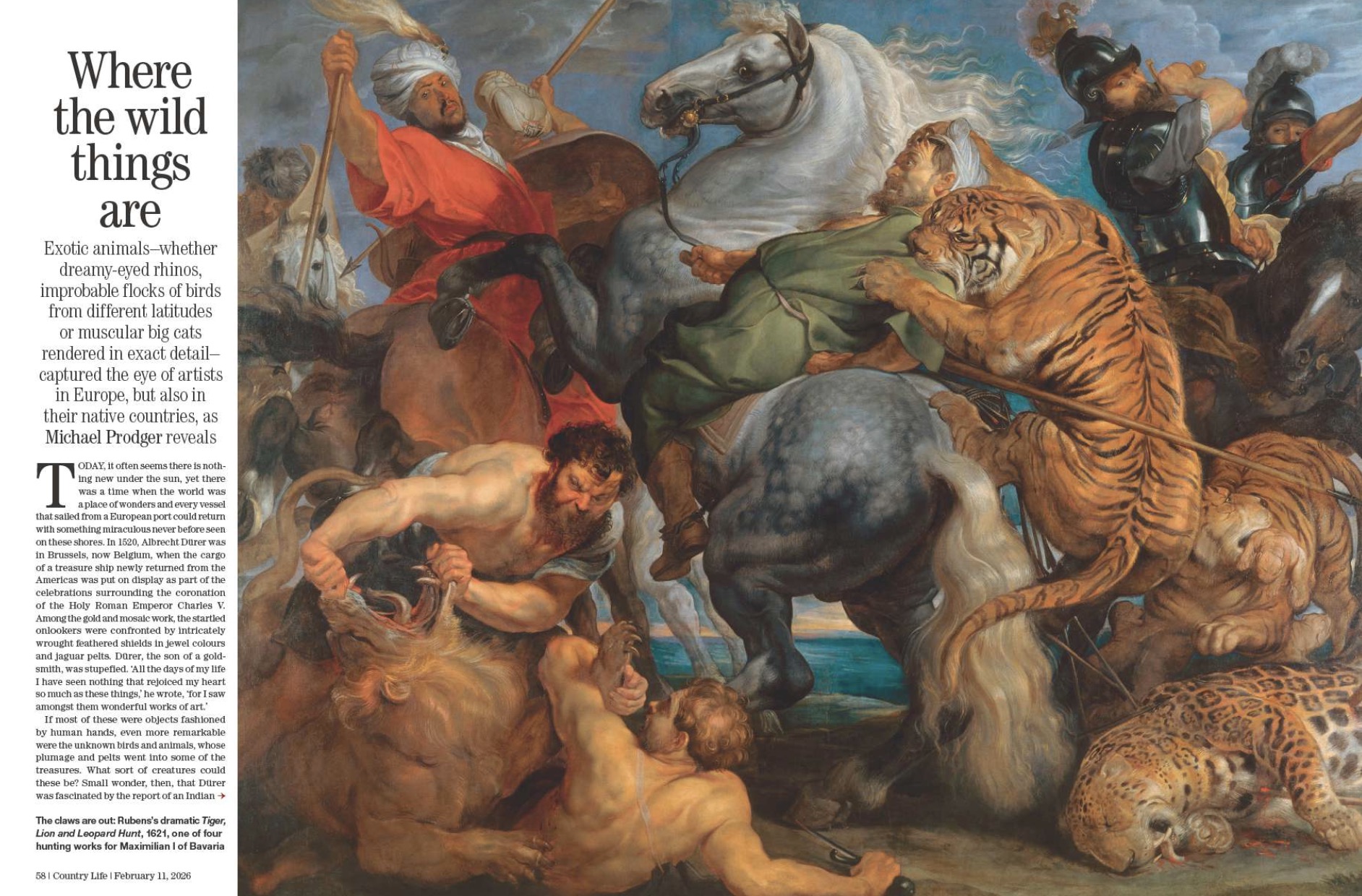
Tyger, tyger burning bright
Tipu Sultan threw a spanner in the works of Britain’s Imperial ambition, but the Tiger of Mysore was an inspiration to Blake and Keats, reveals Lucien de Guise
Winging it
Mark Cocker pays tribute to the beauty, elegance and laser-like predatory precision of the kestrel
The seaside lido is enjoying a fresh wave of popularity a century and more after its first appearance on the British coast. Kathryn Ferry dives in
Winging it
Watch out, watch out, there’s a thief about! Mark Cocker warns that no undergarment is safe from the resurgent red kite, a bird soaring back from near extinction
Travel
• Christopher Wallace checks in to a new opening in Marrakech, Morocco’s Mecca for luxury hotels
• Teresa Levonian Cole blazes a trail in the Spanish Pyrenees
• Pamela Goodman gets on her bike to explore the Welsh border country
Life’s a pretty picnic
Deborah Nicholls-Lee shares a hamper-full of tasty morsels from the long and varied history of alfresco dining on canvas
Ricardo Afonso’s favourite painting
The musical-theatre actor chooses an ‘otherworldly’ work that stirs complex emotions
The legacy
Amie Elizabeth White salutes Sir James Clark Ross, the vastly experienced naval officer who discovered Antarctica in 1841
In God’s acre we trust
Laura Parker learns how the absence of interference over centuries enabled our wildlife-rich graveyards to become a ‘Noah’s Ark of species’
Keeping a low profile
The countryside is littered with storm-damaged trees that simply refuse to die. Jack Watkins celebrates great arboreal survivors
The good stuff
Hetty Lintell puts her best foot forward with a selection of sandals
Interiors
Arabella Youens commends an elegant townhouse kitchen and Amelia Thorpe picks out rhubarb accessories to brighten the home
London Life
• Will Hosie assesses the cost of our partying in the parks
• How the style set are reaffirming that west is best
Lost, but not forgotten
George Plumptre applauds the masterful restoration of the Arts-and-Crafts garden at Knowle House in East Sussex
Arts & antiques
Laura Dadswell believes her pair of 18th-century Venetian mirrors is the fairest of them all, as she tells Carlo Passino
CBS Sunday Morning (June 29, 2025): Explore things to see and do in Glacier National Park. Established as a National Park in 1910 it is a land of mountain ranges carved by prehistoric ice rivers. It features alpine meadows, deep forests, waterfalls, about 25 glistening glaciers and 200 sparkling lakes. The vistas seen from Going-To-The-Sun Road are breathtaking, a photographer’s paradise. Relatively few miles of road exist in the park’s 1,600 square miles of picturesque landscape, thus preserving its primitive and unspoiled beauty.
DW TRAVEL (June 29, 2025): Ever heard of Wittenberg? This small, German city is where the theologian Martin Luther sparked a revolution against the Catholic Church in the late Middle Ages.
Video Timeline: 00:00 Intro 00:30 Where is Wittenberg? 00:44 Wittenberg and Martin Luther, meet Pastor Bridget Gautieri from ELCA Wittenberg Center 01:00 Wittenberg Castle Church, Luther’s 95 theses 03:58 Wittenberg360 05:36 The Luther House, meet tour guide Oliver Friedrich van der Linde 07:45 The Bugenhagen House 08:50 The Cranach House 11:26 Martin Luther’s grave in the Castle Church
We’ll take you to the place where Luther is said to have nailed up his famous 95 theses that led to the Reformation movement.