
 This week, Nature looks at a new method to grow hairy skin in a dish, and new research takes aim at the RNA world hypothesis.
In this episode:
00:45 Hairy Skin
Researchers may have developed a way to make skin that can grow hair in the lab, paving the way for treatment of a variety of skin disorders, and perhaps even baldness. Research Article: Lee et al.; News and Views: Regenerative medicine could pave the way to treating baldness
08:56 Research Highlights
How mercury moved during the ‘Great Dying’, and the link between mobile phones and gender equality. Research Highlight: Giant eruptions belched toxic metal during the ‘Great Dying’; Research Article: Rotondi et al.
11:21 Does DNA predate life?
The RNA world hypothesis posits that RNA formed spontaneously leading eventually to life. Now new research suggests that RNA and DNA formed together, before life. Research Article: Xu et al.; News and Views: How DNA and RNA subunits might have formed to make the first genetic alphabet
19:25 Pick of the Briefing
We pick our highlights from the Nature Briefing, including the recent SpaceX launch, and the earliest fossil of a land animal. CBC: Scientists find oldest fossil of a land animal; Nature News: SpaceX to launch astronauts — and a new era of private human spaceflight
Other links
Video: We test a home antibody kit for tracking Covid-19 transmission
 President Trump’s preferred coronavirus treatment is the focus of a new study suggesting it could cause more harm than good, but not everybody agrees. We discuss the fallout as trials around the world are paused and countries diverge over policy advice.
 First up this week, Staff Writer Jennifer Couzin-Frankel talks with host Sarah Crespi about a rare inflammatory response in children that has appeared in a number of COVID-19 hot spots.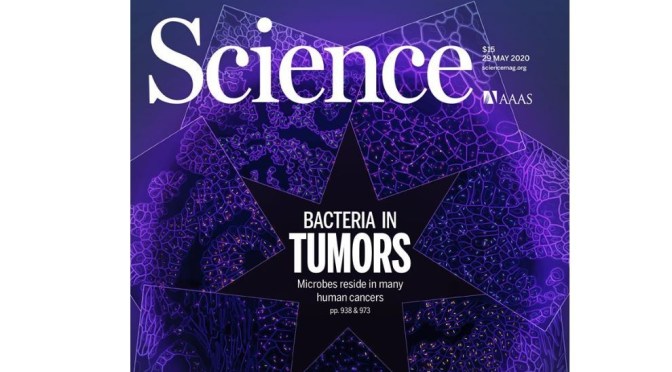
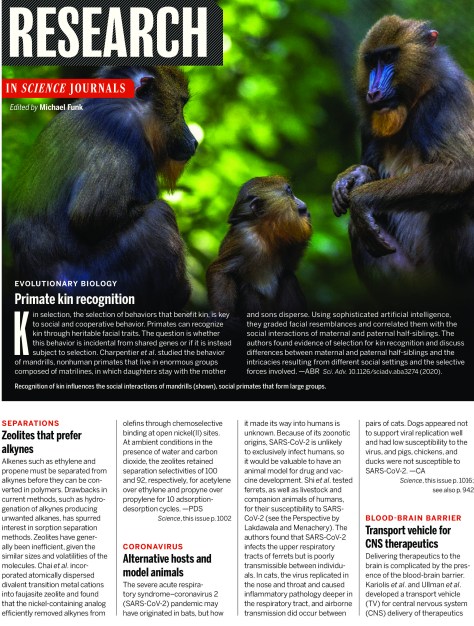
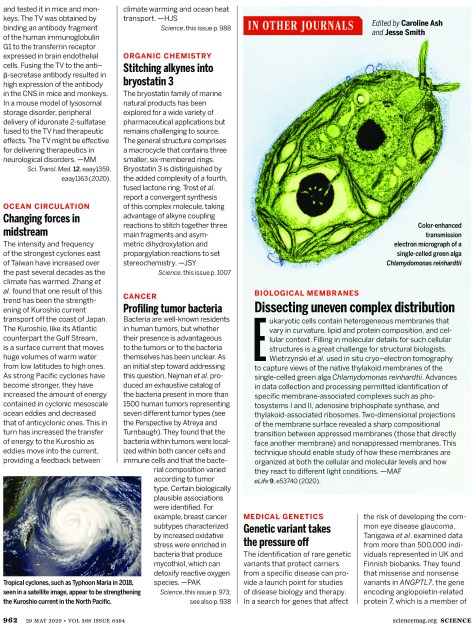
 This week, perfecting catalysts that split water using light, the mystery of missing matter in the Universe and how working memory ‘works’ in children.


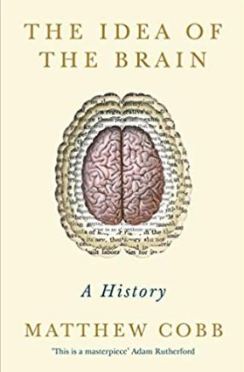 Although it might seem to be a story of ever-increasing knowledge of biology, Cobb shows how our ideas about the brain have been shaped by each era’s most significant technologies. Today we might think the brain is like a supercomputer. In the past, it has been compared to a telegraph, a telephone exchange, or some kind of hydraulic system. What will we think the brain is like tomorrow, when new technology arises?

 Boomers Daily