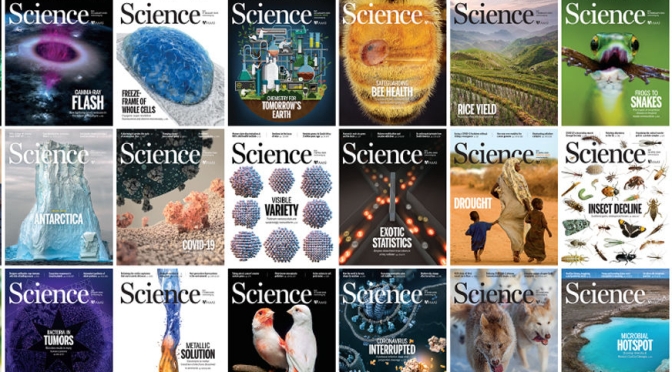

‘
Micrometer-sized robotic chameleons
A multifunctional metamaterial can change shape and steer light simultaneously
Contemporary hominin locomotor diversity
Footprints in Kenya show that hominin bipedalism had a complex evolutionary history

‘
A multifunctional metamaterial can change shape and steer light simultaneously
Footprints in Kenya show that hominin bipedalism had a complex evolutionary history

Stimulating certain brain cells in mice seems to ease anxiety without causing hallucination-like effects.
A pall of smoke from burning cropland each year decreases rainfall in the annual monsoon.
Understanding how human neurons cope with the energy demands of a large, active brain could open up new avenues for treating neurological disorders.

‘
Robert F. Kennedy Jr. has vowed to scrutinize proven vaccines and slash staff at research and regulatory agencies
$1 billion SinoProbe II will map the depths with drill rigs and instrument arrays


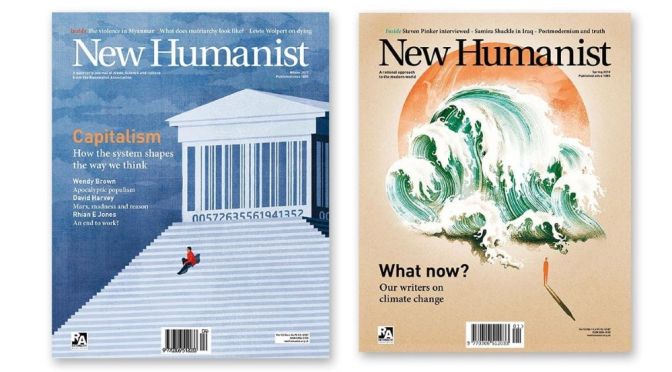
NEW HUMANIST MAGAZINE – WINTER 2024/2025 ISSUE: The new issue features ‘Our Cyborg Future?’
Neurobiologist and journalist Moheb Costandi explores the rapidly-developing world of brain-computer interfaces. For some people, these devices are already transforming lives – but the technology is quickly overtaking the ethics.
Peter Ward unpicks the dark philosophy of the tech billionaires and how it is infiltrating some of our most powerful organisations.
A recent film, The Substance, explored the growing pressure on all of us – particularly women – to modify our bodies, not only through make-up and cosmetic procedures but also through digital filters. Clare Chambers, professor of political philosophy at the University of Cambridge, talks to us about the power of resistance and allowing our bodies to be “good enough”.
Peter Salmon recounts the bizarre history of blood transfusion – and why the super-rich remain fascinated by its possibilities.

The Economist (November 21, 2024): AI is driving a transformation across all fields of science, from developing drugs for incurable diseases and improving the understanding of animal communication to self-driving labs.
Video timeline: 00:00 – How AI is revolutionising science 02:53 – Drug discovery 04:31 – AlphaFold 05:30 – Adoption of AI in science 07:08 – Animal communication 09:26 – Scientific fraud 11:03 – Self-driving labs 14:36 – Future of AI in science
Could this prompt a new golden age of discovery? Video supported by @mishcon_de_reya

‘
An immune cell treatment that fights cancer is now taking aim at autoimmune disease
Piecing together the body’s cellular puzzle

Oil palm plantations replace diverse tropical forests with monocultures, but restoration can bring biodiversity and ecosystem services back to these highly modified landscapes.
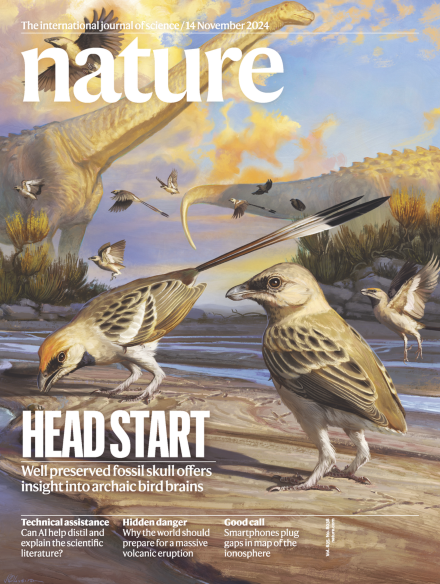
‘
Analysis of billions of pages of results from searches using the Bing algorithm suggests that reliable sites appear in search results 19 to 45 times more often than do sites with low-quality content.
Satellite observations validate national reports on forest coverage and carbon storage.
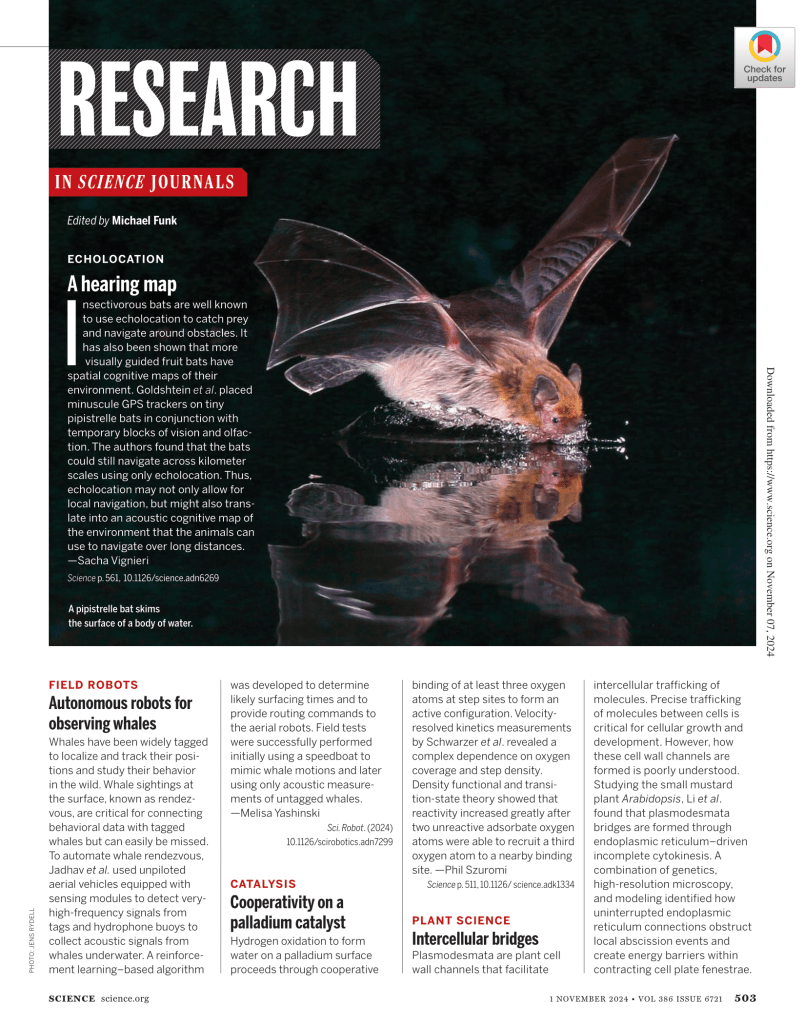
Elderly big brown bats showed little sign of age-related degradation in the inner ear.
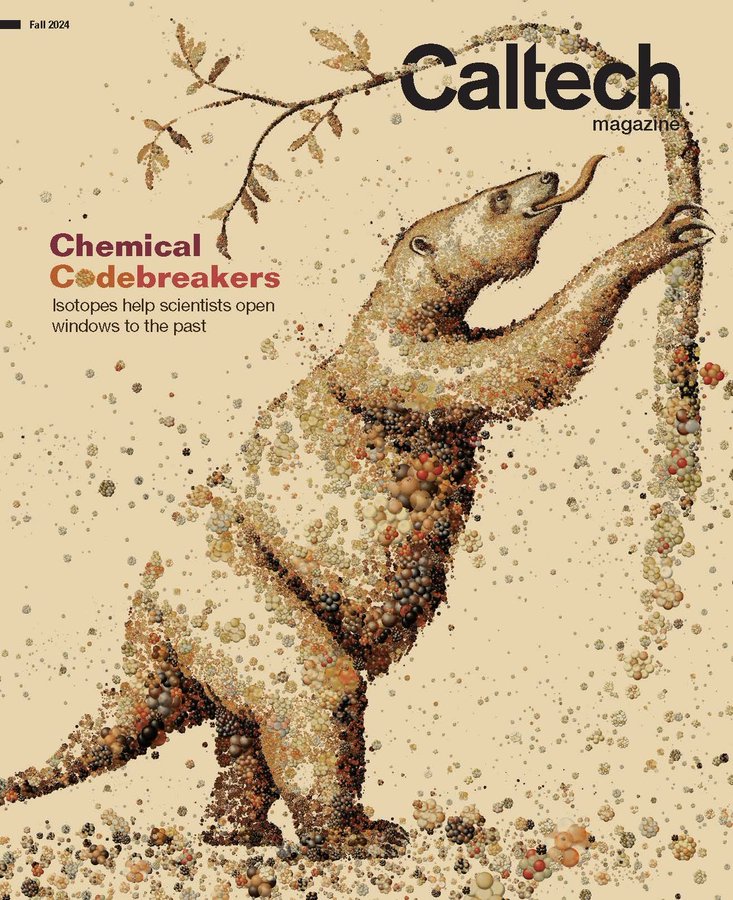

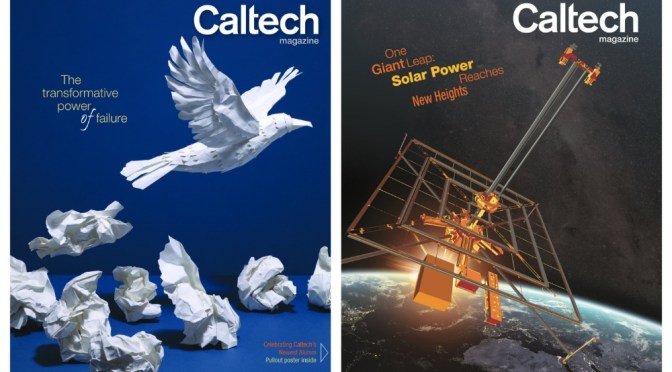
Caltech Magazine (November 8, 2024): The FAll 2024 issue features ‘Chemical Codebreakers’ – Isotopes help scientists open window to the past….
Journeys to the Past: Isotope geochemistry is helping scientists reveal secrets about the molecular histories of Earth, the cosmos, the human body, and more.
An Intriguing Red Planet Rock: The Mars Perseverance rover has found a “compelling” rock that could indicate the planet hosted microbial life billions of years ago.
The 2024 Distinguished Alumni: Meet this year’s awardees: David Brin (BS ’73), Louise Chow (PhD ’73), Bill Coughran (BS, MS ’75), and Timothy M. Swager (PhD ’88).
The Evolution of Trolling: A new theoretical framework explains why social media discourse can be so toxic.
Inside Look: Joe Parker: Step into the office of this evolutionary biologist, whose research nest is filled with real—and illustrated— insects.
Ripples from the Heart: Mory Gharib (PhD ’83) has leveraged his aerospace expertise to tease out some of the heart’s greatest secrets and use them to develop life-saving medical devices.
The Lab in the Sky Says Goodbye: A NASA DC-8 airplane that carried Caltech students around the globe for science has been retired.

‘
High-level resistance to methicillin requires a distinct form of cell division
‘
Comparison of the hairless animals’ genomes with those of several other mammals shows low activity of certain sequences.
Study of thousands of people in rural communities shows that many do not experience a slump in well-being during their forties and fifties.
Sea-surface data show that the average sea-level rise in 2023 was more than double that in 1993.
Survey pinpoints pyramids, rural settlements and a large city in an unstudied stretch of Mexico.


 Boomers Daily