Category Archives: Research

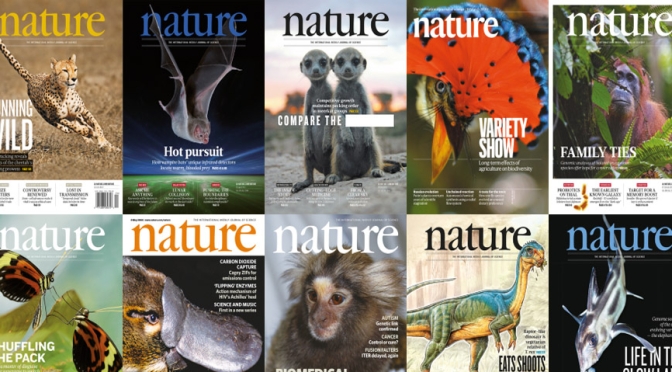
Science Preview: Nature Magazine – July 14, 2022

 Volume 607 Issue 7918

Nature Magazine – July 14, 2022 Issue

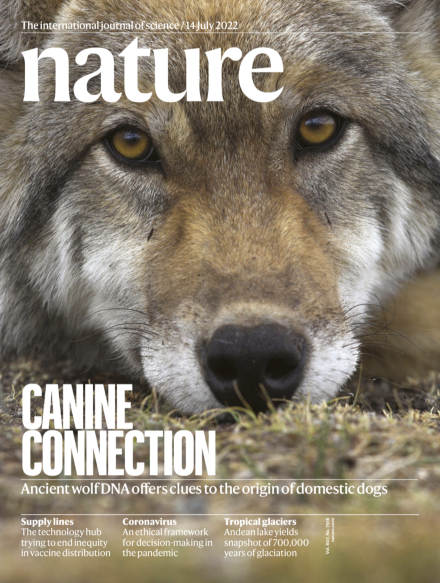
Canine connection

Although the domestic dog can trace its origins to the grey wolf (Canis lupus), exactly when, where and how domestication happened has remained a source of debate. In this week’s issue, Anders Bergström, Pontus Skoglund and their colleagues, take a step towards resolving this question. The researchers analysed the genomes of 72 ancient wolves from across Europe, Siberia and North America, and spanning the past 100,000 years. They found that dogs are most closely related to ancient wolves from eastern Eurasia but that dogs in the Near East and Africa derive

 up to half their ancestry from a distinct population related to modern southwest Eurasian wolves. Although none of the genomes analysed was a direct match for either dog ancestry, the researchers say that it has narrowed down where next to look for the ancestors of domestic dogs.

Preview: New Scientist Magazine – July 16, 2022

New Scientist Default Image

COVER STORIES

  • FEATURES – Bees vs wasps: Which insect is really worthy of all the buzz?
  • FEATURES – How many knots exist? A new computing trick is untangling the answer
  • FEATURES – How to go rock pooling: The surprising science on your nearest beach

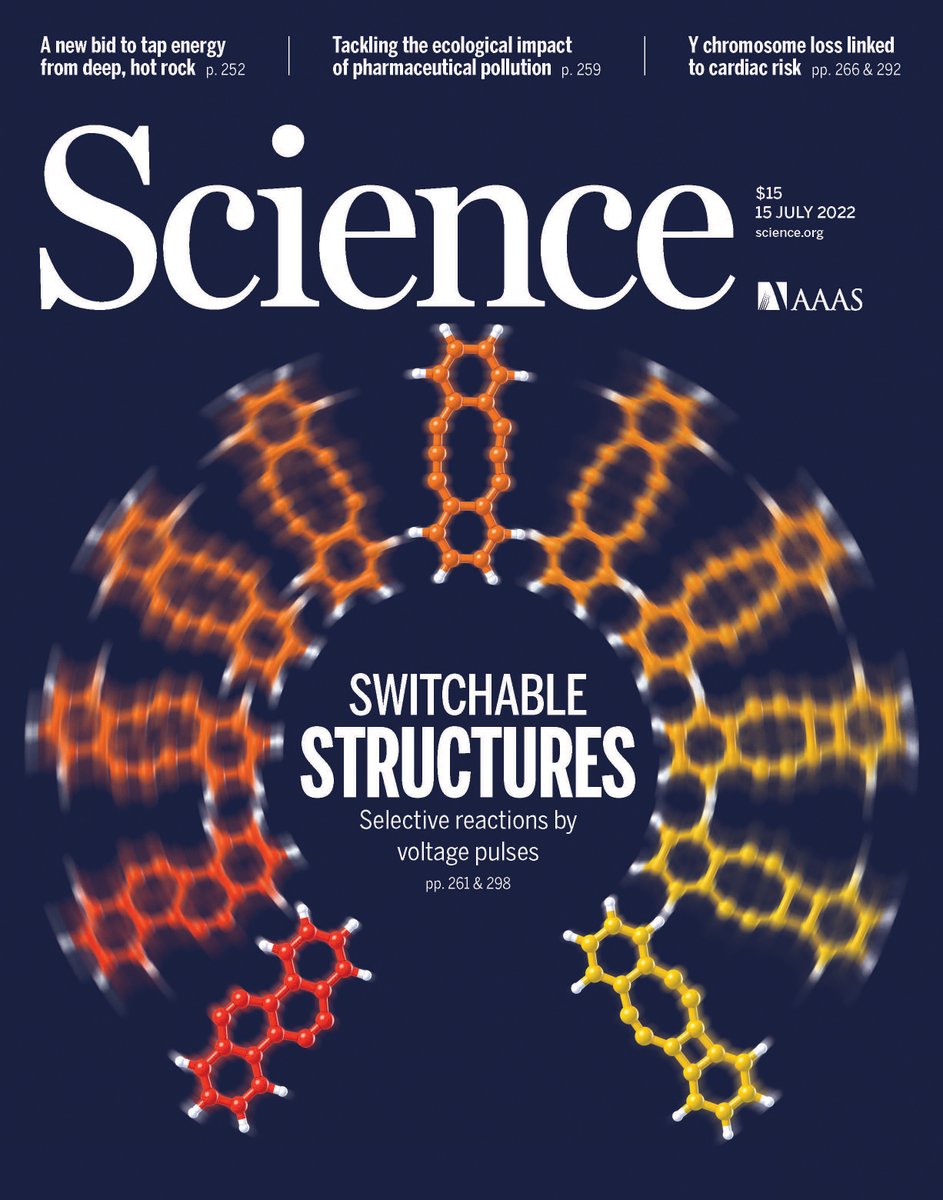
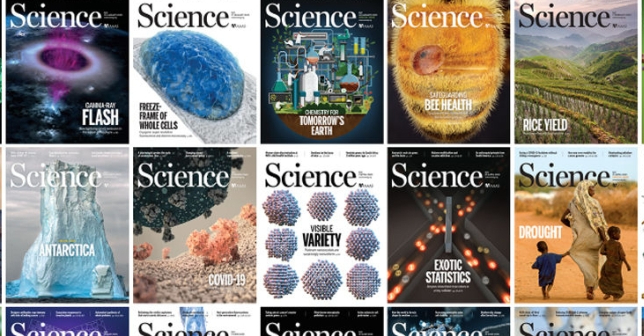
Cover Preview: Science Magazine – July 8, 2022

Current Issue Cover

CHILE’S VILLARRICA NATIONAL PARK—As a motley medley of mycologists climbed the basalt slopes of the Lanín volcano earlier this year, the green foliage at lower elevations gave way to autumnal golds and reds. Chile’s famed Araucaria—commonly called monkey puzzle trees—soon appeared, their spiny branches curving jauntily upward like so many cats’ tails.

Scientists decry reversal of U.S. abortion rights

Download PDFKATIE LANGIN

For some, the ruling limits professional mobility and conference attendance

Dengue and zika viruses turn people into mosquito bait

Download PDFMITCH LESLIE

To spread, pathogens drive mice, people to make odorant

Bad news for Paxlovid? Resistance may be coming

Download PDFROBERT F. SERVICE

In lab studies, SARS-CoV-2 finds ways to evade key drug. Some of the viral mutations are already found in people

It takes a (microbial) village to make an algal bloom

Download PDFELIZABETH PENNISI

More than nutrient levels may drive toxic lake growths

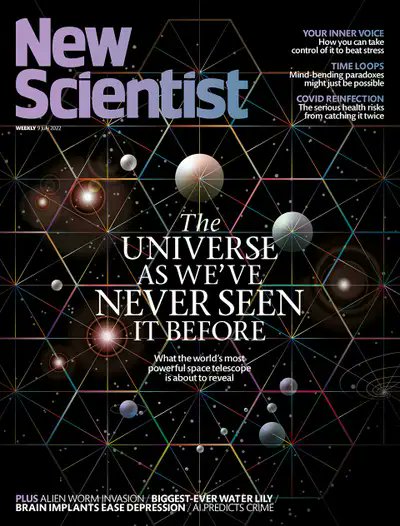
Preview: New Scientist Magazine – July 9, 2022

Cover of this week's New Scientist magazine - 'The universe as we've never seen it before'

COVER STORIES

  • FEATURES – How to understand your inner voice and control your inner critic
  • FEATURES – 7 big questions the James Webb Space Telescope is about to answer
  • NEWS– Covid-19: What are the risks of catching the virus multiple times?

In this week’s issue: We’re about to see the first full-colour images from the James Webb Space Telescope – here’s what we can expect Available at newsstands and via our app for digital and audio editions. https://newscientist.com/issue/3394/

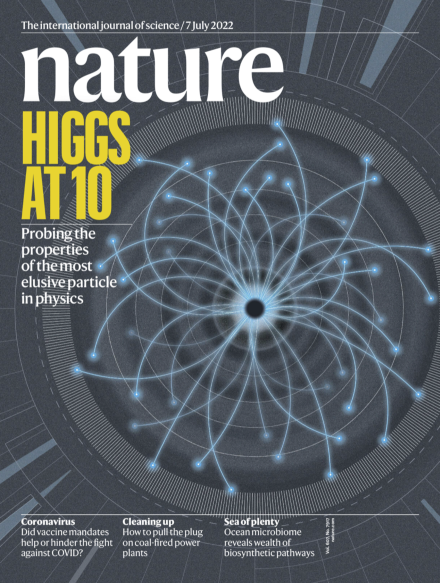
Cover Preview: Nature Magazine – July 7, 2022

Volume 607 Issue 7917

This week in Nature: Higgs at 10 – Probing the properties of the most elusive particle in physics.

Research Highlights

Browse the full issue: https://go.nature.com/3ReNGLb

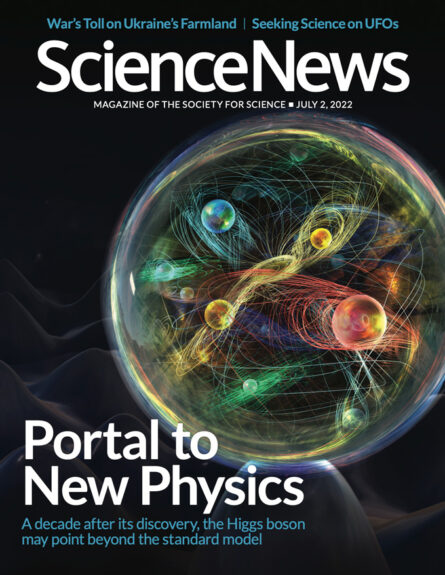
Covers: Science News Magazine – July 2, 2022

cover of the July 2, 2022 Science News

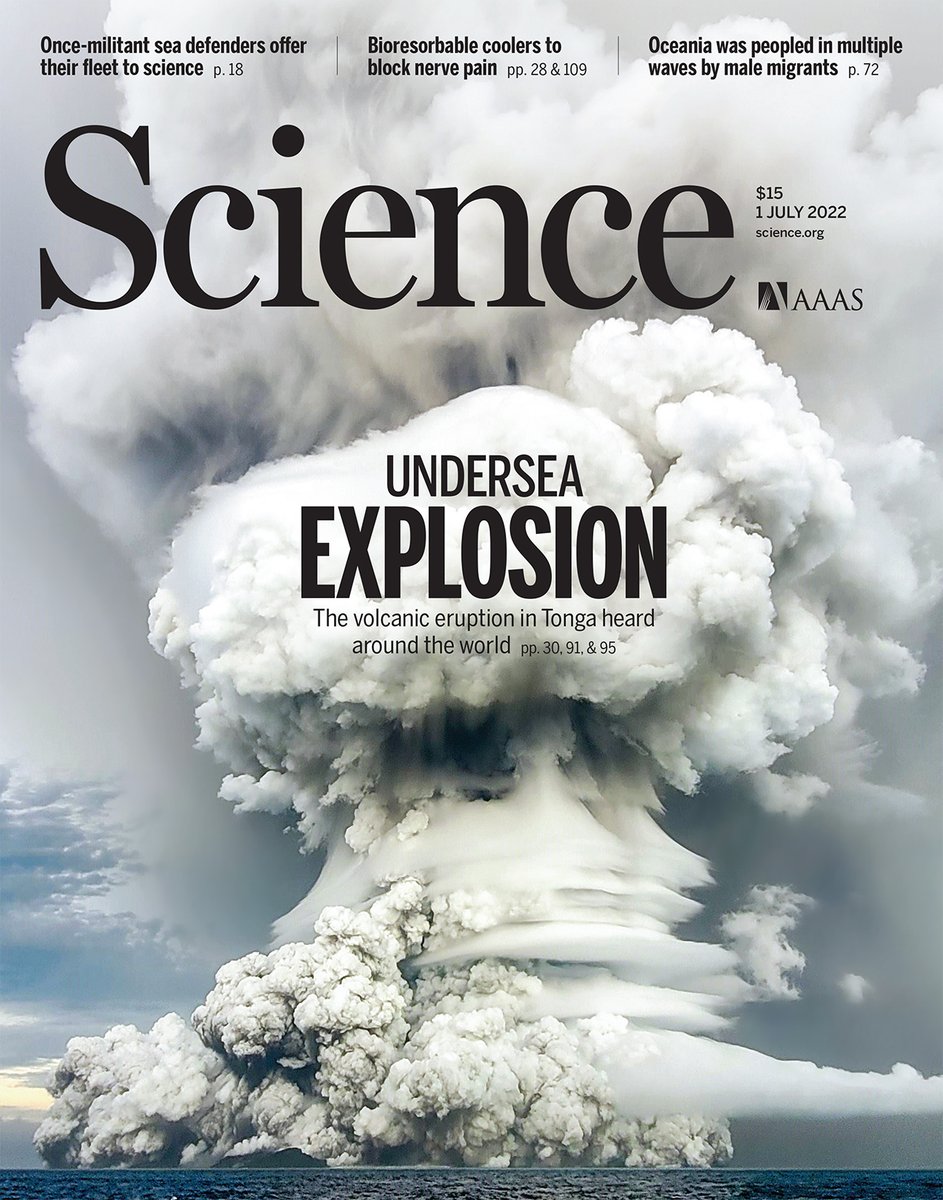
Cover Preview: Science Magazine – July 1, 2022

Image

An ash and gas plume rises from Hunga volcano, Tonga, on 14 January 2022. Global geophysical observations reveal that the climactic eruption that followed on 15 January produced a broad range of atmospheric waves, with pressure wave amplitudes comparable with those from the 1883 Krakatau eruption. While propagating over the world’s oceans, the remarkable atmospheric waves generated complex fast-traveling tsunamis. See pages 3091, and 95.

Photo: Taaniela Kula, Tonga Geological Services

United Kingdom set to abandon EU funding and go it alone
  • Horizon Europe grants held hostage over Brexit dispute

Silence greets requests to flag retracted studies

Authors and editors ignored warnings about citing noted fraudster, exposing a problem in scholarly publishing

Hidden carbon layer sparked ancient bout of global warming

Deep carbon exhumed by volcanic rift between Greenland and Europe implicated in 56-million-year-old hothouse

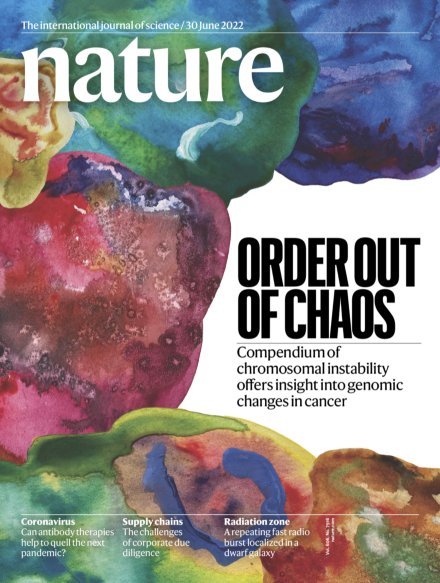
Cover Preview: Nature Magazine – June 30, 2022

Volume 606 Issue 7916

Order out of chaos

The cover shows an artistic representation of various cancer cells. The large-scale gains, losses and rearrangements of DNA seen in chromosomal instability are a typical feature of cancer — but there is no comprehensive framework to decode the causes of this genomic variability and their possible links to disease. In this week’s issue, Florian Markowetz, Geoff Macintyre and their colleagues present such a framework with a compendium of 17 signatures of chromosomal instability that can be used to predict how tumours might respond to drugs and that help to identify future therapeutic targets. The team created the compendium by examining 7,880 tumours representing 33 types of cancer. In a separate paper, Nischalan Pillay and colleagues examined 9,873 cancers to generate 

Science: Enteric Viruses Spread Via Saliva, Jupiter’s Rocks, Megalodon Teeth

Enteric viruses, such as norovirus, cause a significant health burden around the world and are generally considered to only spread via the faecal-oral route.

However, new research in mice suggests that saliva may also be a route of transmission for these viruses, which the authors say could have important public health implications.

Research Article: Ghosh et al.

08:59 Research Highlights

How devouring space rocks helped Jupiter to get so big, and what analysing teeth has revealed about the diet of the extinct super-sized megalodon shark.

Research Highlight: The heavy diet that made Jupiter so big

Research Highlight: What did megalodon the mega-toothed shark eat? Anything it wanted

11:24 Making the tetraneutron

For decades there have been hints of the existence of tetraneutrons, strange systems composed of four neutrons, and now researchers may have created one in the lab. This breakthrough could tell us more about the strong nuclear force that holds matter together.

Research article: Duer et al.

News and Views: Collisions hint that four neutrons form a transient isolated entity

18:46 After Roe v. Wade

Last Friday the US supreme court struck down the constitutional right to abortion. In the wake of this ruling, Nature has been turning to research to ask what we can expect in the coming weeks and months.

News: After Roe v. Wade: US researchers warn of what’s to come

Editorial: 

Cover Preview: Scientific American – July 2022

SPACE EXPLORATION

Record-Breaking Voyager Spacecraft Begin to Power Down

The pioneering probes are still running after nearly 45 years in space, but they will soon lose some of their instruments

By Tim Folger

EDUCATION

Subverting Climate Science in the Classroom

Oil and gas representatives influence the standards for courses and textbooks, from kindergarten to 12th grade

By Katie Worth

PSYCHOLOGY

How Parents’ Trauma Leaves Biological Traces in Children

Adverse experiences can change future generations through epigenetic pathways

By Rachel Yehuda

EVOLUTION

Toxic Slime Contributed to Earth’s Worst Mass Extinction–And It’s Making a Comeback

Global warming fueled rampant overgrowth of microbes at the end of the Permian period. Such lethal blooms may be on the rise again

By Chris Mays, Vivi Vajda and Stephen McLoughlin

COSMOLOGY

Astronomers Gear Up to Grapple with the High-Tension Cosmos

A debate over conflicting measurements of key cosmological properties is set to shape the next decade of astronomy and astrophysics

By Anil Ananthaswamy

COMPUTING

‘Momentum Computing’ Pushes Technology’s Thermodynamic Limits

Overheating is a major problem for today’s computers, but those of tomorrow might stay cool by circumventing a canonical boundary on information processing

By Philip Ball