Category Archives: Preservation

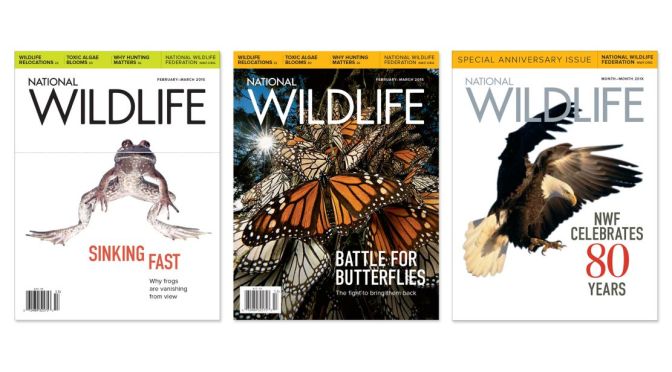
Cover: National Wildlife Magazine – Aug/Sep 2022

Surrounded by golden light, a mule deer stands in grasslands.

National Wildlife Magazine – August/September 2022

Burning Up

Heat, drought and wildfires are ravaging western wildlife while conservationists try to help ecosystems adapt

By Brianna Randall – Conservation, Aug 02, 2022

Dead mussels lie along the Pacific shore of Vancouver, British Columbia, during 2021’s summer heat wave. Scientists estimate that the record-breaking heat killed more than 1 billion marine animals off the coasts of British Columbia and Washington state.
(Photo by Christopher Harley/University of British Columbia)

GASPING SALMON WITH INFECTED LESIONS. Emaciated deer searching sagebrush flats for water. Clams and mussels boiled to death in their shells. Last summer, temperatures in the Northwest soared to record highs in the triple digits, killing more than 1 billion marine animals in the Salish Sea and stressing wildlife from the Pacific to the Rocky Mountains. Simultaneously, ongoing drought in the Southwest—which began in 2000 and is the region’s driest 22-year period in 1,200 years—is causing plants to wither, springs to dry up and wildfires to engulf entire landscapes.
Preservation: Cairngorms National Park, Scotland

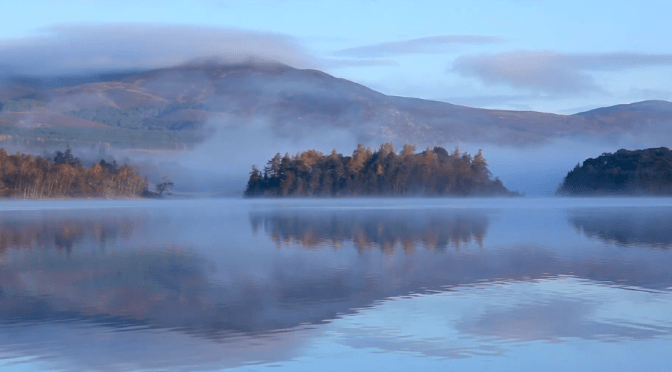
“When it comes to climate change, scale is essential. We need to be scaling up our work and being really bold and ambitious, and that’s exactly what Cairngorms Connect is.” Find out how Scotland’s largest landscape-scale restoration project is fighting back against climate change in our new film for Cairngorms Connect.

Cairngorms National Park is a national park in northeast Scotland, established in 2003. It was the second of two national parks established by the Scottish Parliament, after Loch Lomond and The Trossachs National Park, which was set up in 2002. The park covers the Cairngorms range of mountains, and surrounding hills. Already the largest national park in the United Kingdom, in 2010 it was expanded into Perth and Kinross.

Roughly 18,000 people reside within the 4,528 square kilometre national park. The largest communities are Aviemore, Ballater, Braemar, Grantown-on-Spey, Kingussie, Newtonmore, and Tomintoul. Tourism makes up about 80% of the economy.[4] In 2018, 1.9 million tourism visits were recorded. The majority of visitors are domestic, with 25 per cent coming from elsewhere in the UK, and 21 per cent being from other countries.

Analysis: Drinking Water – Is The World Drying Up?

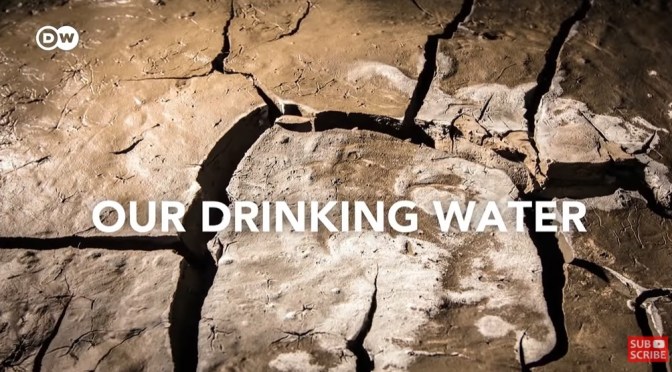
Only 0.3 percent of the Earth’s total water supply is suitable for human consumption. Ominously, this precious resource is beginning to shrink. Natural water reservoirs are drying up due to climate change.

Glaciologist Daniel Farinotti surveys melting glaciers in the Swiss Alps. If glaciers continue to melt at the current rate, he says, there will be no ice left by the end of the century. The disappearance of glacial meltwater would have fatal consequences. From the heights of the Swiss Alpine glaciers, the documentary travels down to the seafloor, off the coast of Malta. Here, the crew of the German expedition ship “Sonne” wants to track down mysterious freshwater deposits in the Mediterranean.

Next up is Peru where, in a bid to counteract the threat of water shortages, work is underway on projects that use ancient Incan methods.

Views: Saving The White Rhinos Of South Africa

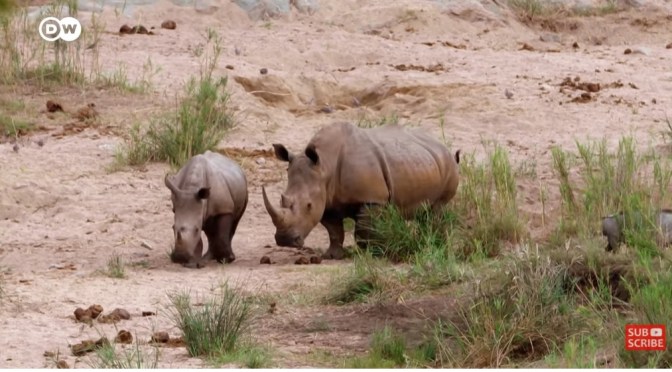
Poachers kill at least one rhino a day in South Africa. Their horns are in huge demand on the black market, and are worth more than gold. Anti-poaching squads are now increasingly better equipped: with night-vision equipment, drones and thermal imaging cameras.

Covering some 20,000 km2, Kruger National Park is one of the largest game reserves in Africa. It’s home to the biggest population of white rhinos in South Africa – and also the highest number of rhinos killed by poachers. One major problem for ranger teams is their small size in comparison to the vast area of territory involved. Another is the widespread poverty in the many villagers bordering the park – and it’s here that you ultimately have to begin if you want to win the battle to save the rhinos.

Vince Barkas has 30 years’ experience working in wildlife conservation, and little confidence in the current system’s effectiveness in protecting rhinos. In 1992 he founded the anti-poaching unit “Protrack”. Its teams operate in the Greater Kruger, which includes private wildlife reserves neighboring the national park.

Over the decades he says he’s seen no change, despite rangers being better armed and equipped, and wants to see new options: “We’ve shot poachers, arrested poachers, beaten up poachers. Everything. But we’ve never sat down and spoken.” Vince Barkas believes in the power of dialog rather than violence. He and his son Dylan made their way to Mozambique – where many of the poachers who kill rhinos in the Kruger National Park hail from.

Their journey takes them to the town of Massingir, where Barkas Snr. first began talking to poachers a number of years ago. The problem, he says, is rooted in the very concept of wildlife conservation: “We’ve made wildlife a rich white man’s thing – where white people hunt and benefit from it, and go to lodges etc. And we’ve kept black people out of it – behind a fence. We’ve got to change that approach.”