Category Archives: Politics

REVIEW: “Donald Trump, Zohran Mamdani, and Posting as Politics”

An AI Review: “Donald Trump, Zohran Mamdani, and Posting as Politics”

In The New Yorker essay “Donald Trump, Zohran Mamdani, and Posting as Politics,” Kyle Chayka explores how social media has become not merely a communication tool for political figures but the primary arena in which politics itself now unfolds. The piece contrasts the digital personas of Donald Trump and Zohran Mamdani to illustrate how posting has evolved into a core exercise of power and a new form of political identity.

Chayka begins by chronicling former President Trump’s frenetic use of Truth Social, the platform he created after leaving Twitter. Trump does not merely announce decisions online; he appears to make them there. For instance, in June 2025, Trump unilaterally declared and publicized a ceasefire between Israel and Iran on Truth Social after having ordered strikes on Iranian nuclear facilities only days earlier. He issued warnings and taunts in the same all-caps style he once used to brag about the size of his nuclear arsenal compared to Kim Jong Un’s. The essay argues that this real-time posting has compressed world-shaking events into casual, ephemeral updates, trivializing violence and policy into the equivalent of viral content.

Yet Trump is not alone in harnessing the power of constant broadcasting. Chayka turns to Zohran Mamdani, a 33-year-old New York State assembly member and Democratic nominee for New York City mayor, who embodies a different approach to digital politics. Where Trump’s style is bombastic and combative, Mamdani’s presence on TikTok and Instagram is more polished and warm. His short-form videos—some produced by the creative agency Melted Solids—blend documentary realism with the aesthetics of viral influencer content. Clips of Mamdani walking through Manhattan or spontaneously greeting his filmmaker mother, Mira Nair, have garnered millions of views. His collaborations with high-profile digital creators like the Kid Mero and Emily Ratajkowski reflect an understanding that modern campaigns are not only about policy but about generating a steady stream of engaging material.

Chayka underscores that both politicians are symptoms of the same phenomenon: social media has swallowed the traditional infrastructure of political communication. No longer is there a clear boundary between a politician’s private musings and official pronouncements. The medium has become the message—and often the entire substance. Even memes have turned into flash points of political conflict. The article recounts how U.S. border officials detained a Norwegian tourist, Mads Mikkelsen, who carried a satirical meme of Vice President J.D. Vance on his phone, suggesting that political images have acquired the power to implicate their holders in ideological battles.

This transformation, Chayka argues, has significant consequences. Trump’s unfiltered posts, once viewed as a sideshow, have become a primary instrument of governance, with the potential to inflame conflicts or disrupt alliances. Meanwhile, Mamdani’s refined authenticity—crafted through video diaries and collaborations—illustrates how even progressive candidates must adopt the same always-online posture to cultivate a political following. While Mamdani’s style is less aggressive than Trump’s, it similarly depends on projecting a version of authenticity that is inseparable from performance.

The essay closes by reflecting on the future of American politics in this environment. The Democratic Party has struggled to counter Trump’s cultural dominance, as shown by tone-deaf spectacles like a Pride concert at the Kennedy Center with anti-Trump parodies of Les Misérables. In contrast, Mamdani’s campaign has generated genuine enthusiasm. Yet Chayka raises an open question: can the idealistic energy of this new digital-first politics survive the compromises of actual governance? If online performance has become the main credential for leadership, it is unclear whether any politician—no matter their ideology—can avoid the pressures of perpetual self-promotion.

In the end, Chayka’s essay offers a clear warning: social media has transformed politics into a theater of the immediate, where every post carries the weight of policy and every meme can become an instrument of power. Whether this dynamic can be reconciled with the demands of responsible government remains the central challenge of the digital age.

Strengths of the Essay

  1. Compelling Illustrations of Digital-First Governance
    • The article effectively juxtaposes Trump’s all-caps proclamations with Mamdani’s handheld videos.
    • Vivid examples: Trump’s posts about Iranian bombings feel almost satirical in their triviality—like “food grams”—yet they are deadly serious.
    • The Vance meme incident (Norwegian tourist Mikkelsen denied entry partly over a meme) underscores how digital artifacts can become politically consequential.
  2. Clear Argument
    • Chayka convincingly demonstrates that posting is no longer merely a marketing tactic—it is a form of exercising power.
    • The phrase “influencer-in-chief” encapsulates this new paradigm succinctly.
  3. Timeliness and Relevance
    • The piece captures the unsettling normalcy of this phenomenon—how we now expect statecraft to be conducted via apps.
    • It connects to broader anxieties about the erosion of institutional boundaries between governance and entertainment.
  4. Balanced Comparison
    • The contrast between Trump’s aggression and Mamdani’s optimism avoids simple equivalence.
    • The essay suggests that while style differs, both are beholden to the same dynamics: immediacy, spectacle, and performative authenticity.

Areas For Further Exploration

  1. A Critique of Consequences
    • While Chayka notes the trivialization of serious decisions (e.g., bombings posted like selfies), he stops short of examining the systemic dangers—the erosion of deliberative processes, the collapse of public trust, and the incentivizing of extremism.
    • A deeper dive into why social media rewards such maximalist performances—and how this affects democracy—would have been valuable.
  2. An Exploration of Audience Complicity
    • The essay portrays politicians as the main actors, but it could interrogate how audiences co-produce this environment: what are the incentives to consume, share, and reward this content?
    • Do voters really want “authenticity,” or simply entertainment masquerading as politics?
  3. Further developed Historical Context
    • While the piece references Trump’s first term, it could have drawn richer parallels with earlier media transformations:
      • Roosevelt’s radio “Fireside Chats”
      • Kennedy’s TV charisma
      • Obama’s early social media campaigns
    • This would help readers situate today’s moment within a longer trajectory.

Broader Implications

The essay ultimately raises unsettling questions:

  • If the performance of authenticity is now the primary qualification for political power, how do policy substance and institutional competence survive?
  • Is there any way for governance to reassert seriousness, or will the logic of virality always prevail?
  • What happens when online theater collides with offline consequences—wars, economies, civic life?

These questions feel especially urgent given that the piece suggests this dynamic is not limited to Trump’s right-wing populism but has also infiltrated progressive candidates.

*THIS ESSAY WAS WRITTEN BY CHAT GPT AND EDITED BY INTELLICUREAN.

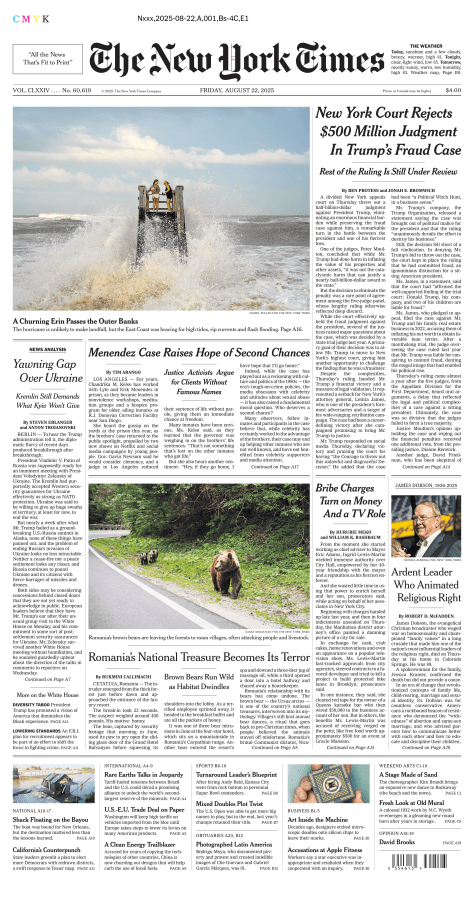
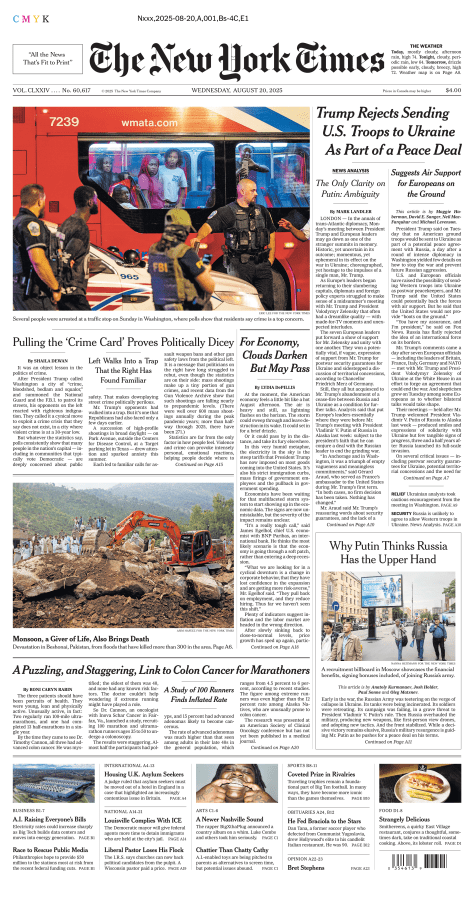
THE NEW YORK TIMES – THURSDAY, JULY 3, 2025

Image

Policy Bill Moves Toward Final House Vote Amid G.O.P. Resistance

Republicans overcame conservative holdouts to bring President Trump’s domestic policy bill to the House floor. A final vote is still needed to approve the legislation.

Sean Combs’s Winning Defense: He’s Abusive, but He’s Not a Racketeer

In defusing much of the case, the music mogul’s lawyers did not dispute that he did bad things. They disputed that they matched the crimes he was charged with.

Tax Cuts Now, Benefit Cuts Later: The Timeline in the Republican Megabill

Where Do Israel-Hamas Truce Negotiations Stand?

Hamas wants to ensure that the latest cease-fire proposal has sufficient guarantees that negotiations will lead to a permanent end to the Gaza war.

Israel and Syria in U.S.-Brokered Talks to End Border Conflict, Trump Envoy Says

THE GUARDIAN WEEKLY – JULY 4, 2025 PREVIEW

THE GUARDIAN WEEKLY: The latest issue features ‘Is This The Death of International Law?’…

Once viewed as a safeguard against global injustice, international law has become increasingly politicised and dysfunctional in recent years. As Linda Kinstler writes in a fascinating essay for the cover story of this week’s Guardian Weekly magazine, the norms, institutions and good faith essential to the system functioning effectively have been badly eroded, and it’s hard to see how the problems can be reversed.

Institutions like the UN security council and international criminal court (ICC) are now often simply ignored or manipulated by powerful member states. The ICC in particular has struggled with legitimacy and enforcement, delivering only a few convictions, amid resistance from big powers such as the US and Russia. The unilateralism of Trump has further undermined the system, while China’s growing influence is shifting the international focus away from human rights.

Spotlight | How the rise of Zohran Mamdani is dividing Democrats
Many believe the New York mayoral hopeful signals time for the national party to evolve but others say his brand of politics will not appeal in key battlegrounds. Lauren Gambino and Alaina Demopoulos report

Environment | Tipping points, doomerism and catastrophic risks
Climate expert Genevieve Guenther talks to Jonathan Watts on the importance of correcting the false narrative that climate threat is under control – and why it is appropriate to be scared

Feature | The politics of breasts
Breasts have always been political – and now they’re front and centre again. Is it yet another way in which Trump’s worldview is reshaping the culture? By Jess Cartner-Morley

Opinion | The global order is being dismantled by an ageing generation
Just when the world desperately needs wise elders, its fate is in the hands of old and ruthless patriarchs, argues David Van Reybrouck

Culture | The Herds: The animal marathon stampeding to the Arctic
Why is a huge pack of puppet animals, from tiny monkeys to towering elephants, making a 20,000km cross-planet odyssey? Kate Wyver spent a week as an antelope to find out

THE NEW YORK TIMES – WEDNESDAY, JULY 2, 2025

Image

Trump’s Finances Were Shaky. Then He Began to Capitalize on His Comeback.

Contrary to President Trump’s assertions, records filed in a fraud case against him suggest that his riches are not the product of a steady and strong empire.

What We Know (and Can’t Know) About Trump’s Wealth

Though some aspects of President Trump’s net worth are murky, it has unmistakably soared in the early months of his second term.

Trump Faces the Biggest Test Yet of His Second-Term Political Power

If President Trump gets his domestic policy bill over the finish line, it will be a vivid demonstration of his continuing hold over the Republican Party.

Divided G.O.P. to Decide Fate of President’s Policy Bill

THE NEW YORK TIMES – TUESDAY, JULY 1, 2025

Image

Republicans Try to Wrangle Votes as Senate Debates Policy Bill for 3rd Day

Vice President JD Vance arrived at the Capitol prepared to cast a tiebreaking vote on the bill, but it was not clear when Republicans would call a final vote.

What’s in the Trump Policy Bill?

California Rolls Back Its Landmark Environmental Law

Gov. Gavin Newsom and state lawmakers scaled back a law that was vilified for its role in California’s housing shortage and homelessness crisis.

Under a Drone-Swarmed Sky: Surviving in Eastern Ukraine

Towns and troops long accustomed to merciless bombardment are adjusting to an even denser pattern of attacks.

Top Russian General Is Convicted in High-Profile Corruption Case

FOREIGN POLICY MAGAZINE – SUMMER 2025 PREVIEW

FOREIGN POLICY MAGAZINE (06.30.25): The latest issue features ‘The Historical Presidency’ – Nine essays on what the global past reveals about our confounding present…

The End of Modernity

A crisis is unfolding before our eyes—and also in our heads. By Christopher Clark

Why Compare the Present to the Past?

Thinking via historical analogy has become the preferred way to confront our anxieties. Ivan KrastevLeonard Benardo

Is This an American Cultural Revolution?

Liberal critics charge Trump with creating a cult of personality not unlike Mao Zedong’s. Julia LovellNicholas Guyatt

Russia Has Started Losing the War in Ukraine

The military tide may have turned against Putin. Michael Kimmage

THE NEW YORKER MAGAZINE – JULY 7 & 14, 2025 PREVIEW

The cover for the July 7  14 2025 Fiction Issue of The New Yorker in which a building cleaner hangs from a harness off...

THE NEW YORKER MAGAZINE: The latest issue features Malika Favre’s “Literary Heights”…

Trump, Congress, and the War Powers Resolution

How we got to a situation where a President can reasonably claim that it is lawful, without congressional approval, to bomb a country that has not attacked the U.S. By Jeannie Suk Gersen

Anne Enright’s Literary Journeys to Australia and New Zealand

The Booker Prize-winning author recommends three works by writers who, thanks to geography, may have never received their due.

What Happens After A.I. Destroys College Writing?

The demise of the English paper will end a long intellectual tradition, but it’s also an opportunity to reëxamine the purpose of higher education. By Hua Hsu

THE NEW YORK TIMES – MONDAY, JUNE 30, 2025

Image

Senate to Begin Voting on Policy Bill, as G.O.P. Grasps for Support

The Senate will vote on a sweeping Republican-drafted economic and domestic policy bill, with President Trump’s legislative agenda hanging in the balance.

A List of Nearly Everything in the Bill, and How Much It Would Cost or Save

Canada Will Scrap Tax That Prompted Trump to Suspend Trade Talks

The government said on Sunday night that it would cancel its tax on American technology companies, handing a victory to President Trump.

Tariffs May Push This American Company to Move Jobs to China

THE NEW YORK TIMES – SUNDAY, JUNE 29, 2025

Image

After War With Israel and U.S., Iran Rests on a Knife Edge

The Islamic Republic limps on after the 12-day conflict. Where will the nation go from here?

Israel’s Military Appears Poised to Expand into Gaza City Amid Cease-Fire Calls

Senate Takes Up Trump’s Policy Bill, as G.O.P. Scrounges for Votes to Pass It

Republican leaders barely scaled a key procedural hurdle to bring up the bill. It was unclear whether the G.O.P. had the votes to pass it.

How the G.O.P. Bill Saves Money: Paperwork, Paperwork, Paperwork

THE NEW YORK TIMES MAGAZINE – JUNE 29, 2025

Current cover

THE NEW YORK TIMES MAGAZINE: The 6.29.25 Issue features C.J. Chivers on the hundreds of cheap, long-range drones Russia is launching at Ukranian civilians at night; Nikole Hannah-Jones on the Trump administration’s dismantling of civil rights protections within the federal government; Parul Sehgal on the state of the modern biography; David Marchese interviews Andrew Schulz; and more.

How Trump Upended 60 Years of Civil Rights in Two Months

An assault on federal protections may bring about a new era of unchecked discrimination.

The Weapon That Terrorizes Ukrainians by Night

How Russia’s terrifying long-range drone program has brought about a deadly new phase in the war. By C.J. Chivers and Finbarr O’Reilly

Trump Got the Fight He Wanted. Did It Turn Out the Way He Expected?

Read this issue