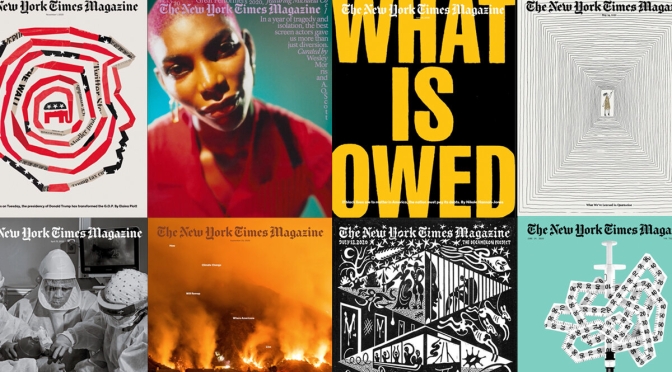
THE NEW YORK TIMES MAGAZINE (February 7, 2025): The 2.9.25 Issue (The Love and Sex Issue) features Mireille Silcoff on Generation X womens’ improving sex lives; Lisa Miller on how weight loss drugs can upset a couple’s intimacy; Daniel Oppenheimer on his realization through couples therapy that the problem in his marriage was him; Stella Tan on confessions from those who ghosted their dates; The Ethicist answers a series of sex related queries; and more.
FOREIGN AFFAIRS MAGAZINE (February 6, 2025): In the months since Donald Trump won the U.S. presidential election in November, policymakers in Beijing have been looking to the next four years of U.S.-Chinese relations with trepidation. Beijing has been expecting the Trump administration to pursue tough policies toward China, potentially escalating the two countries’ trade war, tech war, and confrontation over Taiwan. The prevailing wisdom is that China must prepare for storms ahead in its dealings with the United States.
Trump’s imposition of ten percent tariffs on all Chinese goods this week seemed to justify those worries. China retaliated swiftly, announcing its own tariffs on certain U.S. goods, as well as restrictions on exports of critical minerals and an antimonopoly investigation into the U.S.-based company Google. But even though Beijing has such tools at its disposal, its ability to outmaneuver Washington in a tit-for-tat exchange is limited by the United States’ relative power and large trade deficit with China. Chinese policymakers, aware of the problem, have been planning more than trade war tactics. Since Trump’s first term, they have been adapting their approach to the United States, and they have spent the past three months further developing their strategy to anticipate, counter, and minimize the damage of Trump’s volatile policymaking. As a result of that planning, a broad effort to shore up China’s domestic economy and foreign relations has been quietly underway.
Greenland: Meet the communities working to preserve Inuit culture for future generations Portugal: Roman relics and pagan festivities on a road trip through the untamed north Kerala: A photographer’s journey among the tranquil backwaters and perfumed spice farms of Kochi Southern Mexico: A guide to the region’s immense jungles, ancient settlements and distinct cuisine Hong Kong: Beyond the urban sprawl, adventures abound in the form of kayaking and intrepid hikes Glasgow: Warm yourself in the Scottish city’s art galleries and era-defining music venues Essaouira: Myriad cultures have made this Moroccan port city a hub for art and music Cognac: A change is under way in the French region’s restaurants and distilleries Salzburg: Fairytale stays for every taste, from lovers of old-school luxury to fans of TheSound of Music
Plus, new travel routes for spring; fresh hiking opportunities on Australia’s Whitsunday Islands; Bradford’s year as the UK City of Culture; a taste of Amorgos, Greece; a lighthouse retreat on Italy’s Tuscan coast; an insider’s guide to Ibiza Town; island adventures in Brač, Croatia; globetrotting books about love and obsession, running essentials to put a spring in your step; and a historical getaway in the Welsh Marches.
One of Jupiter’s biggest moons has the potential to harbour life in a subsurface sea. The nature of its core will provide information about that ocean.
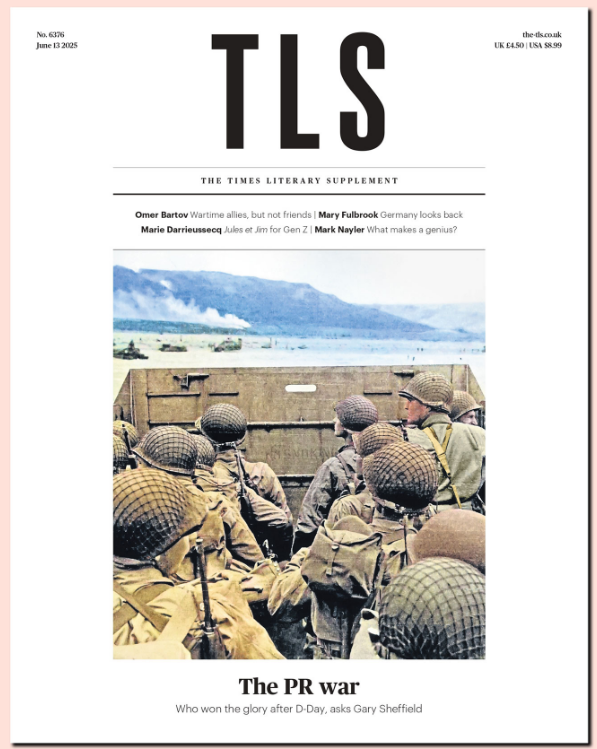
TIMES LITERARY SUPPLEMENT (February 5, 2025): The latest issue features ‘Turbulent Priest’ – Pope Francis’s autobiography; Richard Flanagan in the atomic age; Poetry from Gaza; Richard Ayoade’sdoppelganger and Eimear McBride on repeat…
This week’s @TheTLS, featuring A. N. Wilson on Pope Francis; @funesdamemorius on Richard Ayoade; @lindseyhilsum on writing from Gaza; Adam Mars-Jones on The Brutalist; Damon Galgut on Eimear McBride; Beejay Silcox on Richard Flanagan – and more pic.twitter.com/Ks0liMNF0k
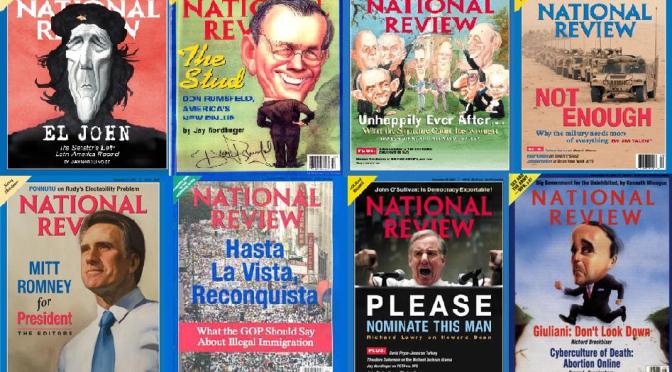
Baby boomers have safeguarded and perpetuated a grand myth through which they interpret past and present events, and derive motivations. Myth is one hell of a drug.
Baby boomer conservatism arose during the salad days of American capitalism, the apex of American military might, and the drama of the Cold War. That’s all gone and the young right stands at a crossroads.
FOREIGN AFFAIRS MAGAZINE (February 3, 2025): Donald Trump begins his presidency with ambitions of being a peacemaker. He laid out this vision in his inaugural address, declaring that his administration “will measure our success not only by the battles we win but also by the wars we end, and perhaps most importantly, by the wars we never get into.” Later that day, he basked in the success of the hostage cease-fire deal in Gaza, including by bringing the families of Israeli hostages to the inaugural parade. “We’re getting a lot of people out in a short period of time,” he proclaimed.
There is no doubt that Trump helped secure the cease-fire deal. But to be a peacemaker who transforms the Middle East, he has more work to do. The main issues he confronts are Gaza and Iran. In Gaza, Israel and Hamas have different views of what is required to achieve the second phase of the deal, which would save the remaining hostages and produce a permanent cease-fire. Iran, meanwhile, is accelerating its nuclear program—with its “foot on the gas pedal” according to Rafael Grossi, the head of the International Atomic Energy Agency. Tehran thus continues to existentially threaten Israel. Both issues are likely to dominate upcoming talks between Trump and Israeli Prime Minister Benjamin Netanyahu at the White House.
DAVID MAKOVSKY is the Director of the Program on Arab-Israel Relations at the Washington Institute of Near East Policy and an Adjunct Professor of Middle East Studies at Johns Hopkins University School of Advanced International Studies. He served as a Senior Adviser to the special envoy of Israeli-Palestinian negotiations in the Office of the Secretary of State during the Obama administration.
DENNIS ROSS is Counselor at the Washington Institute for Near East Policy and a Professor at Georgetown University. A former U.S. Envoy to the Middle East, he served in senior national security positions in the Reagan, George H. W. Bush, Clinton, and Obama administrations.