

Category Archives: Homes
English Cottages: ‘Micro-Hamlet’ Of Dulwich, UK
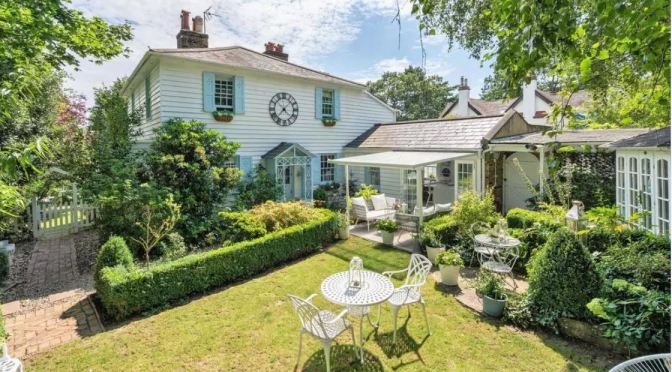
With its white weather boarded exterior, blue plantation shutters, lush sprawling garden and exquisite interiors, you may well think that this enchanting Georgian property was situated by the coast in Cornwall, or even tucked away amongst the lavender in Provence.


Situated in ‘its own private micro hamlet’ in the Sydenham Hill Conservation Area of Mount Gardens, the property has undergone a complete renovation, having been transformed into a ‘bright and airy four bedroom detached home that is full of character.’
The results really will inspire – with a kitchen/dining room that flows seamlessly out into the leafy garden, that leads to a covered outdoor terrace. Also helping to create a flow between indoor and outdoor living is a garden room plus a detached art studio/ separate annexe.
Scottish Baronial Estates: Abbotsford House – Built By Sir Walter Scott (1820’s)
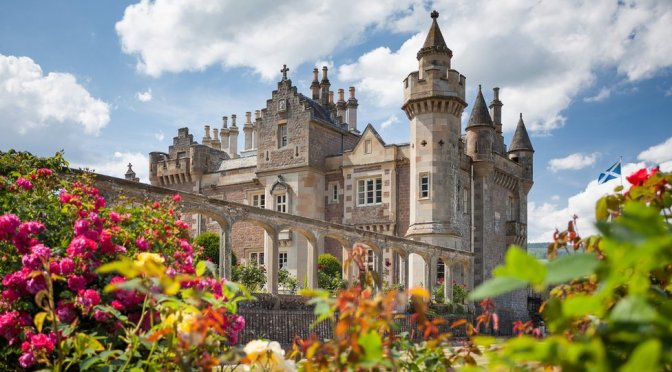
Damian Barr explores Sir Walter Scott’s impressive home, Abbotsford, which is full of a fascinating mix of items owned by the famed Scottish novelist, poet, playwright, and historian.
Abbotsford House was built by Sir Walter Scott as his grand home in the Scottish Borders. The property, set on the banks of the River Tweed, was bought in 1811 and then modified to the tastes of Sir Walter Scott. The writer died here in 1832, and the house was opened to the public just five months after his death.
The rooms that you visit today have been left virtually untouched since his death and a visit to Abbotsford House gives you an intimate insight into the personality and interests of this great man. Some of the most interesting aspects of the house are the personal collections of Sir Walter Scott which include unusual items such as the weapons of Rob Roy, the case book of Napoleon, and even a bullet and piece of oatcake taken from the site of Culloden Battlefield.
Visitors can see Sir Walter Scott’s Study, Library, Drawing Room, Entrance Hall, small Armoury, and the Dining Room where he died on 21st September 1832. The dining room contains paintings of several generations of the Scott family. Unfortunately, the last of his bloodline died in 2004 and the care of the house has now been taken over by the Abbotsford Trust.
Design: ‘Cocoon Cottage’ In New York By Architect Nina Edwards Anker
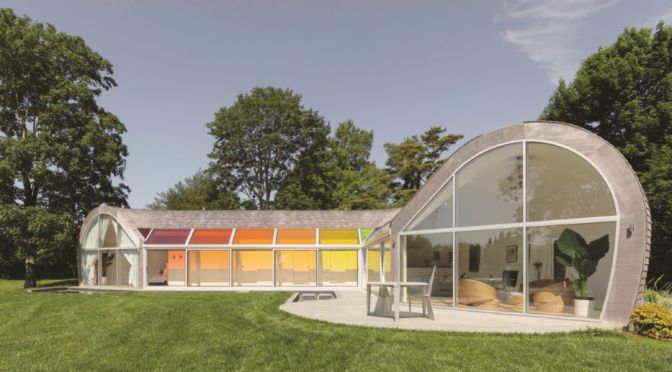
After earning her doctorate at the Oslo School of Architecture and Design and working in Norway’s capital as a teacher and research fellow, architect Nina Edwards Anker came home to the U.S. with a refreshed perspective on environmental sensitivity. When the opportunity arose to build an eco-cottage on family land in Southampton, Long Island, Edwards Anker’s thought experiments resulted in a 1,738-square-foot vacation home completed in 2017, made striking for the combination of curved, shingle-clad walls that meet planes of glass, with some cast in bright, unexpected color.

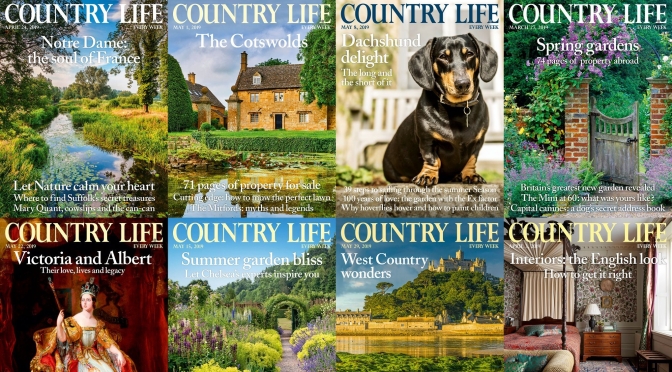
Front Covers: Country Life UK Magazine – Aug 18

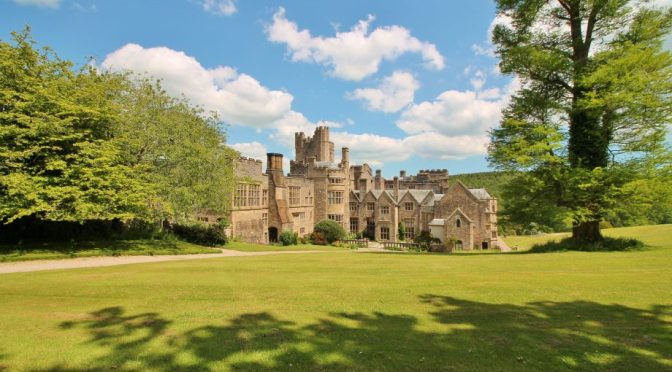
English Country Estates: Flete House In Holbeton
Twelve glorious acres of manicured grounds surround partly Elizabethan Flete House, former seat of the Mildmay family, which overlooks Ermington and Dartmoor, enjoying ‘probably the finest situation in Devonshire’ according to Cornish poet and historian Richard Polwhele (1797).

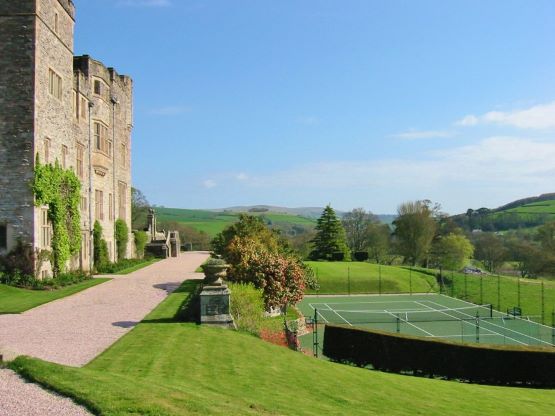


At Holbeton in the South Hams, not far from Georgian Modbury, it was used as a maternity hospital in the Second World War and has now been converted into 29 apartments, retaining the principal rooms (library, dining, drawing and billiard rooms and others) for communal use, exclusively for over 55s.
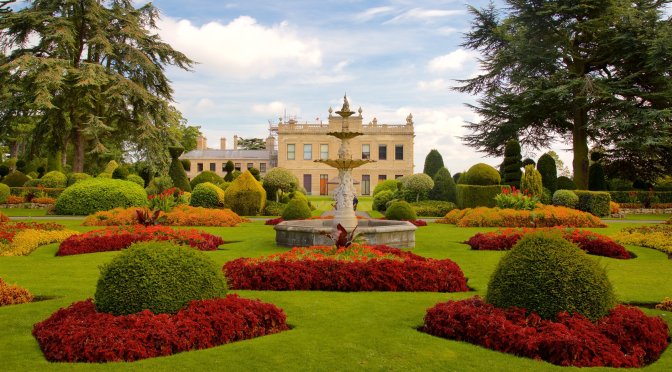
English Gardens: 19th-Century Brodsworth Hall In South Yorkshire
The mid-19th-century Gardens of Brodsworth Hall in South Yorkshire are striking. House and grounds are a perfect complement of Italianate green architecture and are linked by formal terraces with three staircases decorated by marble urns and recumbent — probably Italian — greyhounds acquired by the Italian sculptor Chevalier G. M. Casentini.
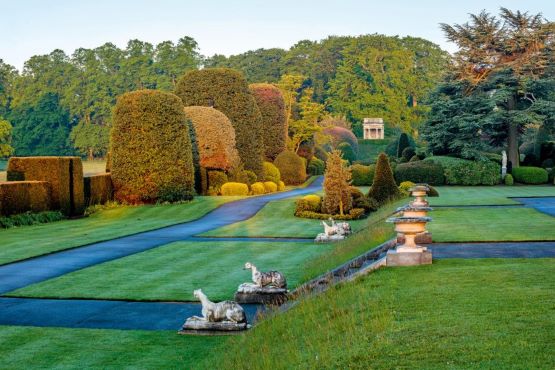

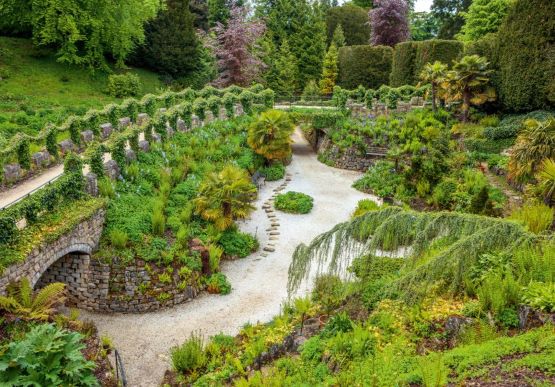
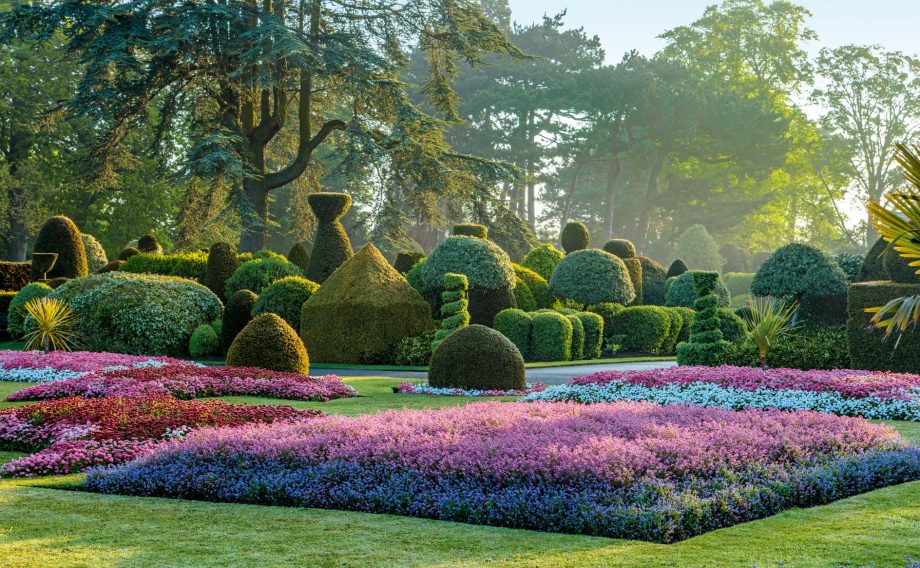
If this all feels rather unlikely in Yorkshire, that is because it reflects the taste of one man, Charles Sabine Augustus Thellusson, who came into an extraordinary inheritance in 1858 and devoted much of it to creating the hall and its gardens in his own personal style.
‘Today, he would be an oligarch,’ says Michael Klemperer, senior gardens advisor for the North and Midlands regions at English Heritage (EH), which now looks after house and gardens. ‘The money he received from the will was £700,000, which, with interest, equates to £140 million today.’ With the cash came the estate that had belonged to his great-grandfather Peter Thellusson, a Swiss financier, who had moved to London in 1760 and built up a fortune as a merchant and banker.
Charles Thellusson was an avid traveller, sailor and photographer. ‘He was a big, robust Victorian gentleman, a patrician walrus,’ notes Dr Klemperer, who sees Brodsworth as representing a transition between Continental styles and the Victorian era. ‘It is a garden that is interesting on a number of levels,’ he adds, citing influences as varied as Caspar David Friedrich (1774–1840) and Blackpool pier.
Previews: Country Life Magazine – August 11

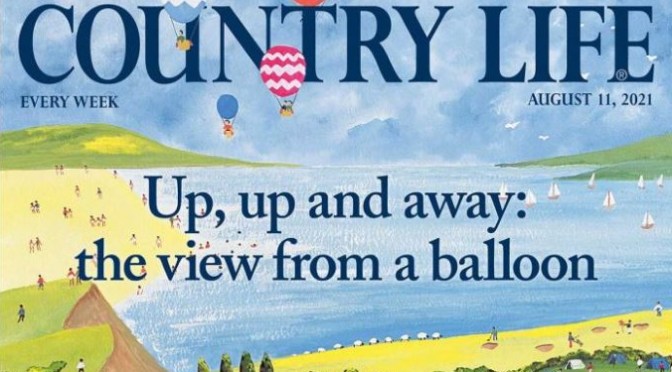
SPA TOWNS: A mineral-laced spring could lead to a profitable resort for Georgian landowners. Clive Aslet dips into spa towns.
HOT AIR BALLOONS: Levi jeans, Van Gogh’s head and a dinosaur — they’ve all taken flight through Cameron Balloons in Somerset.
WALTER SCOTT: Despite inventing the historical novel, Walter Scott’s books are often left on the shelf. Why is that, asks Jack Watkins, on the writer’s 250th anniversary.
CARLA CARLISLE: Carla on dogs raging at the dying of the light.
GREEK ARCHITECTURE: Marking the 200th anniversary of the completion of St Pancras Church, Harry Mount considers the 19th-century enthusiasm for Greek architecture.
INTERIORS: Romantic sash windows have their fans and detractors.
LUXURY: Hetty Lintell is by the pool.
CHILLI: Tom Parker Bowles was drawn into the chilli’s fiery embrace from a young age.
ELTON HALL: Tilly Ware visits the transformed historic gardens of Elton Hall in Huntingdonshire, where much of the past is a mystery.
English Manor Houses: 15th Century ‘Rymans’ In Appledram, West Sussex
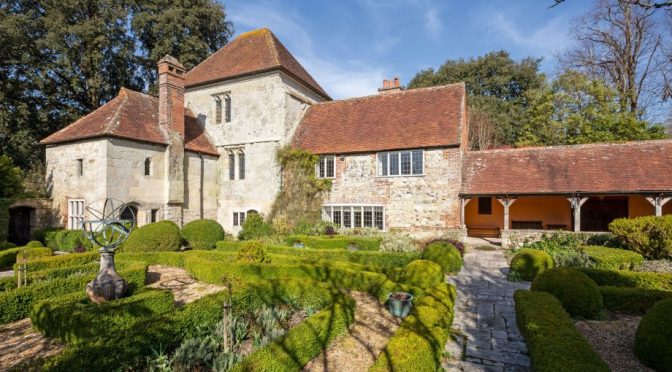
Rymans Manor House in Appledram, West Sussex, a picturesque coastal area three miles south-west of Chichester, is bounded to the west by the main channel of Chichester Harbour, to the north by the River Lavant and to the south by a stream that runs into the harbour below Birdham Mill.


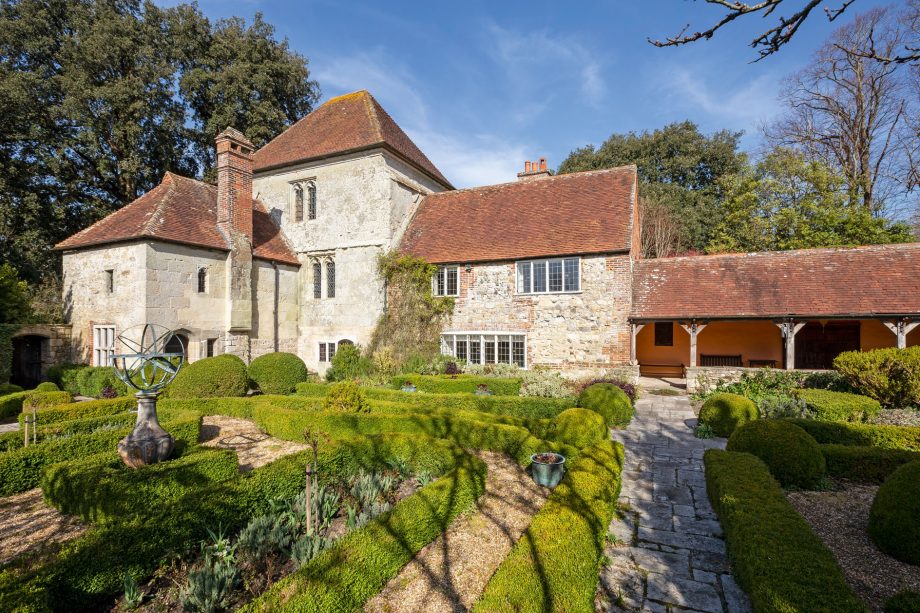
It is described by Pevsner as ‘a delightful small 15th-century manor house’, which takes its name from William Ryman, a prominent merchant and lawyer who was knighted in 1420 and appointed Sheriff of Sussex in 1434. He built the house of stone from the Bembridge and Ventnor quarries in about 1410.
This oldest part of the T-shaped house, which remains largely unaltered, comprises a three-storey stone tower with trefoil windows and a south wing of two storeys under a tiled roof.
English Country Homes: The Old Watermill In Clophill, Bedfordshire
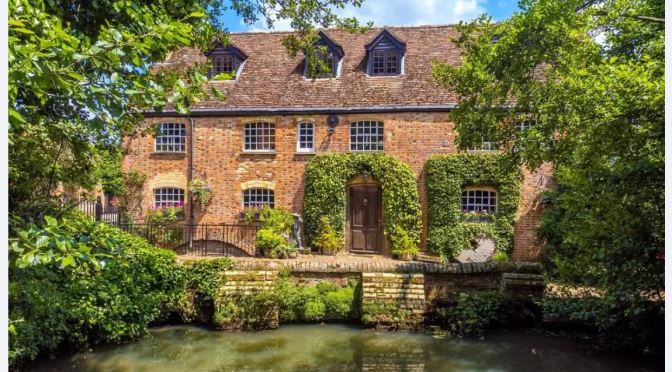
The word ‘idyllic’ doesn’t seem quite enough for some properties — and the Old Watermill in Clophill, Bedfordshire, with water rights over the River Flit and waterfalls in the garden, is a prime example of just how magical a house can be.


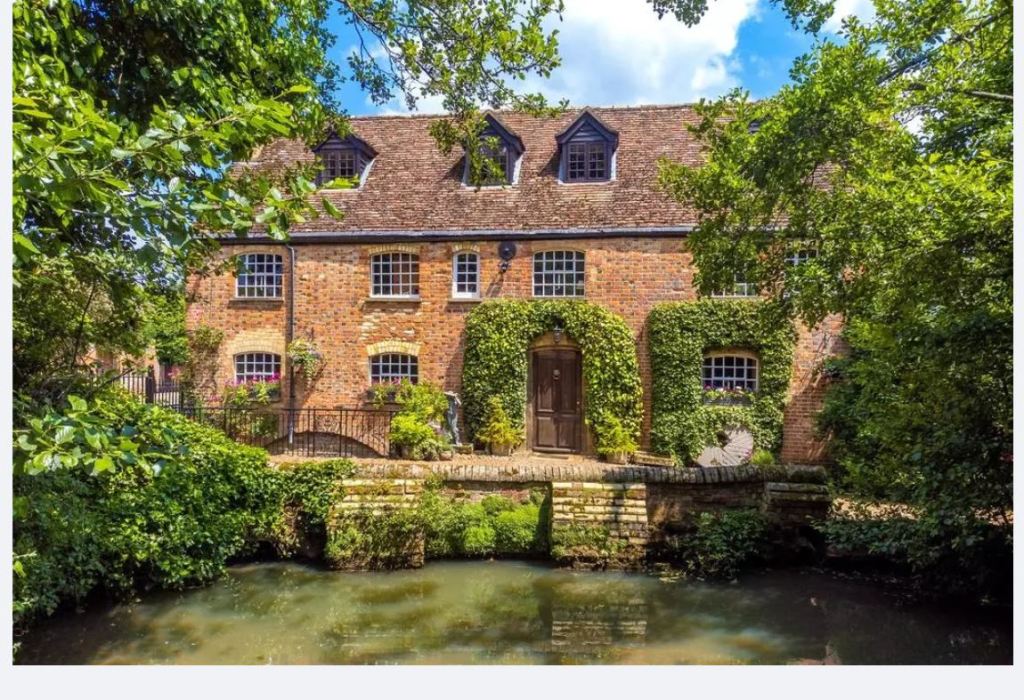

The stunning property is thought to date from the 18th century, with many of the bricks transcribed with the date 1725. However, as expected, the bricks are just the beginning of the many period features retained in this property.
Within the house is ‘an undershot wheel which drove three pairs of stones, grinding both wheat for flour and grain for animal feed’. Although, perhaps the most obvious feature are the exposed ceiling timbers, which run throughout every room, and juxtapose effortlessly with the exposed red brick work.
 Boomers Daily