Category Archives: Essays

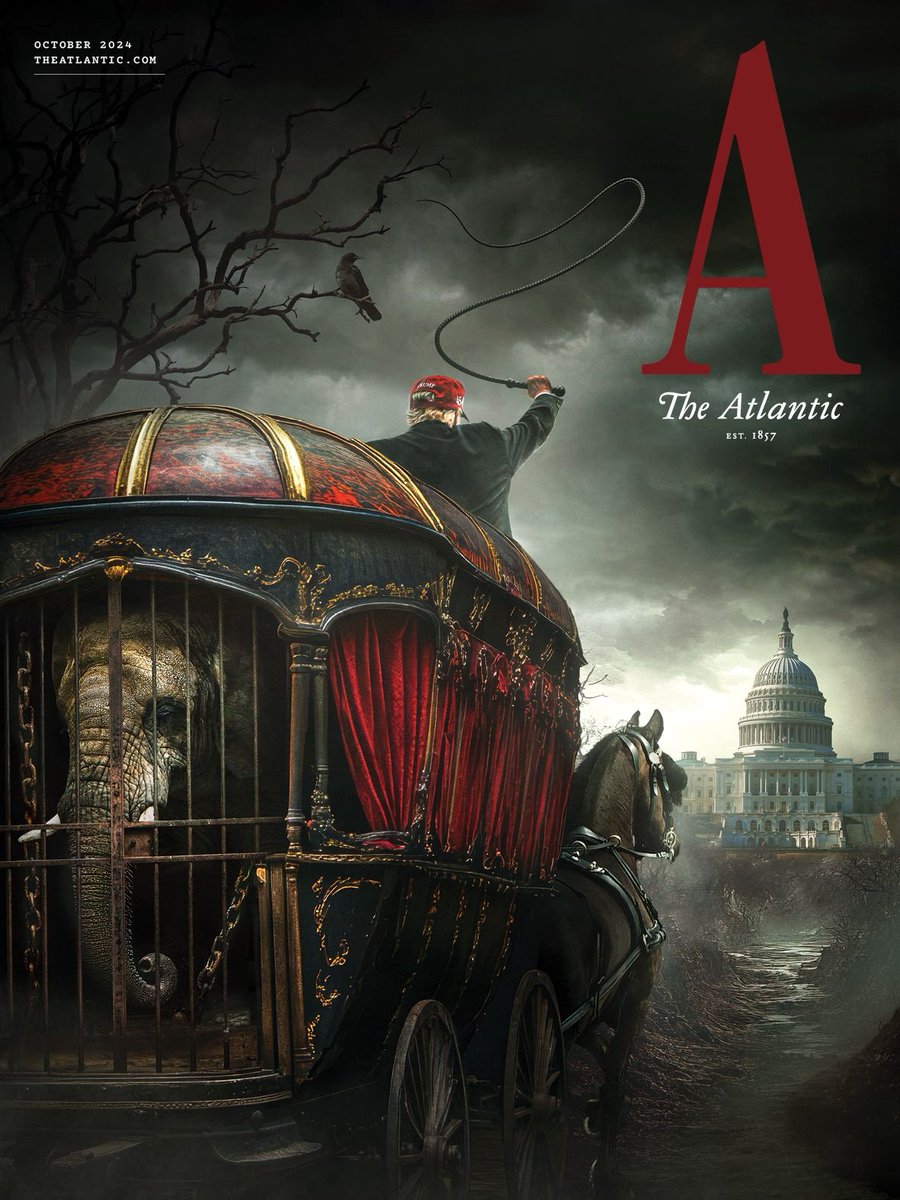
Arts/Politics: The Atlantic Magazine – October 2024

Image

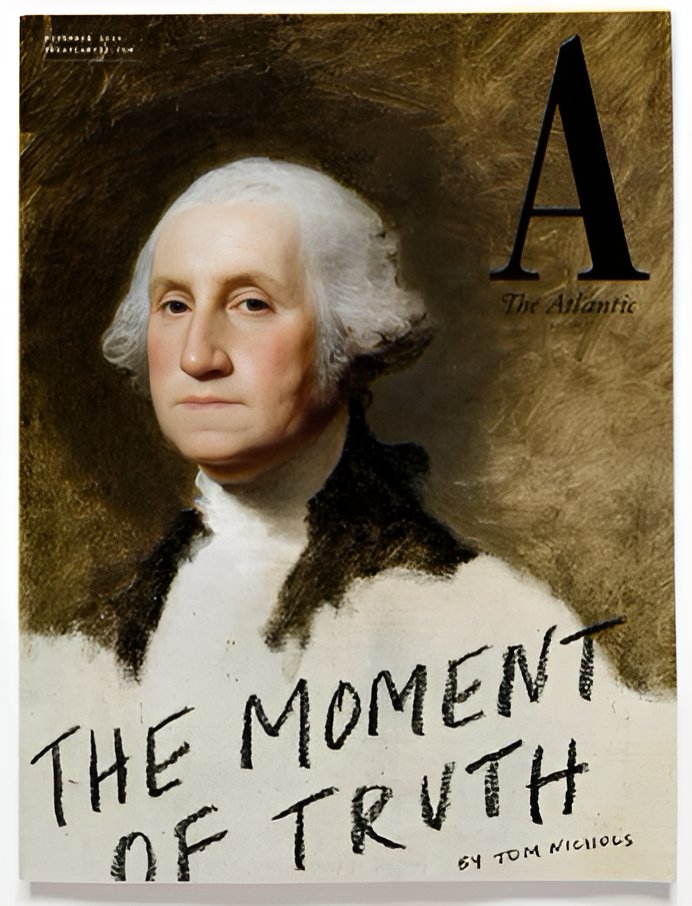
The Atlantic Magazine – September 9, 2024: The latest issue features Trump’s antidemocratic actions, and the Republican politicians who bent to his will

Hypocrisy, Spinelessness, and the Triumph of Donald Trump

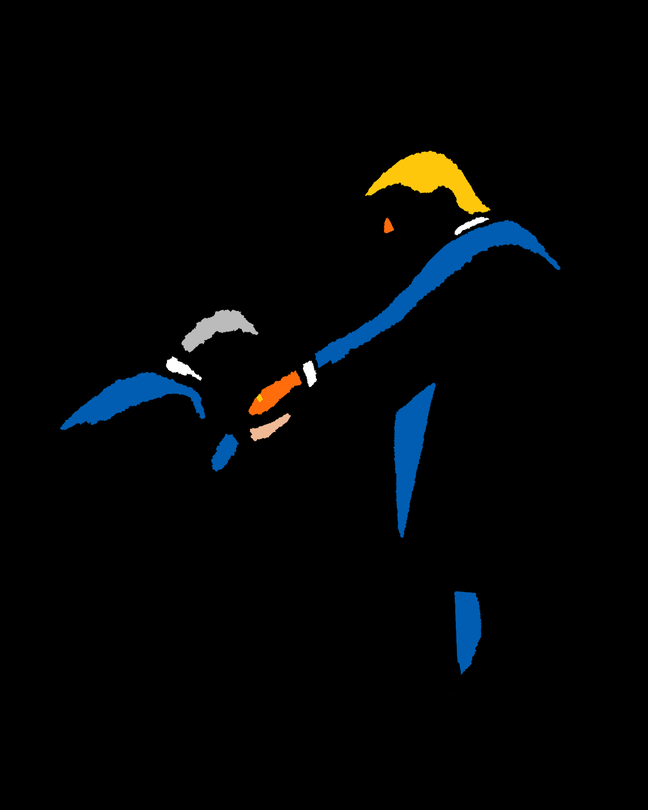
illustration with abstract figures of yellow-haired figure in blue suit standing and extending orange hand with ring for kneeling figure in blue suit to kiss, on black background

He said Republican politicians would be easy to break. He was right.

Trump Promises a ‘Bloody Story’

His latest comments about mass deportation are a revelation about how he feels—and a troubling reminder of the sources of his appeal.

Finding Philanthropy’s Forgotten Founder

Julius Rosenwald understood that charity is not just about giving, but about fixing the inequalities that make giving necessary.

Culture/Politics: Harper’s Magazine – September 2024

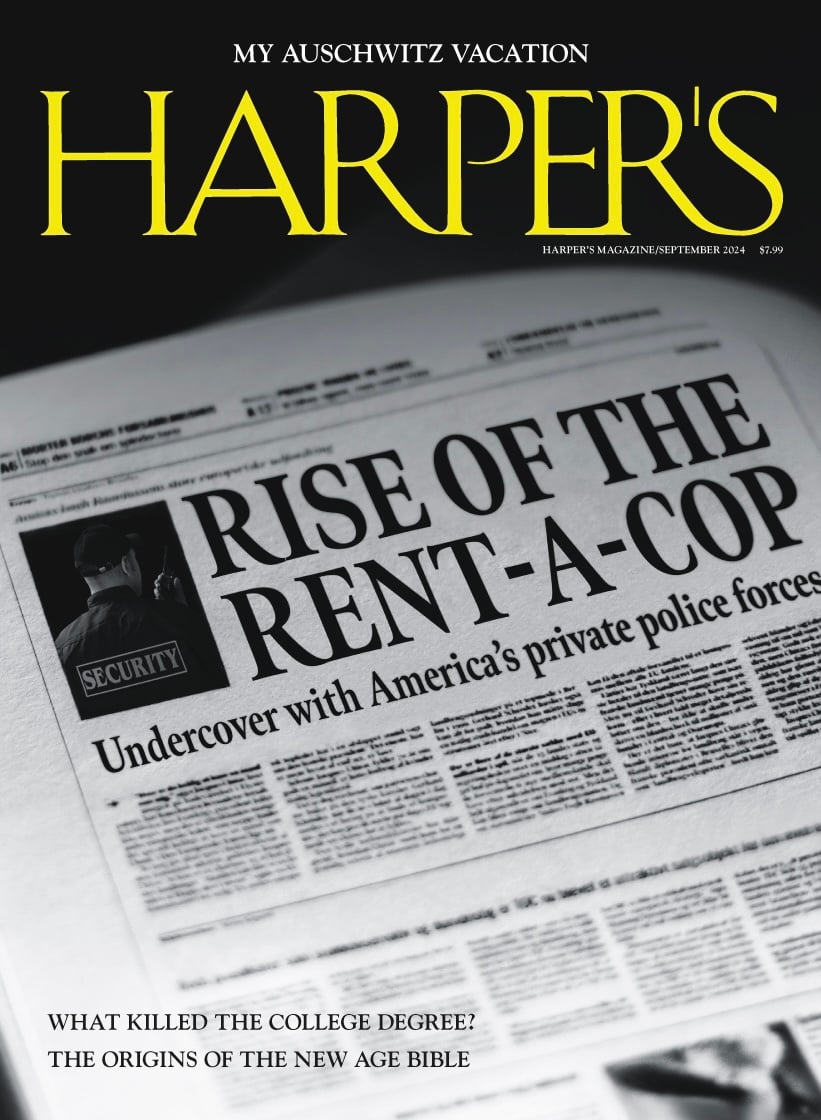
HARPER’S MAGAZINE – August 19, 2024: The latest issue features ‘Rise Of The Rent-A-Cop” – Undercover with America’s private police forces…

The Thin Purple Line

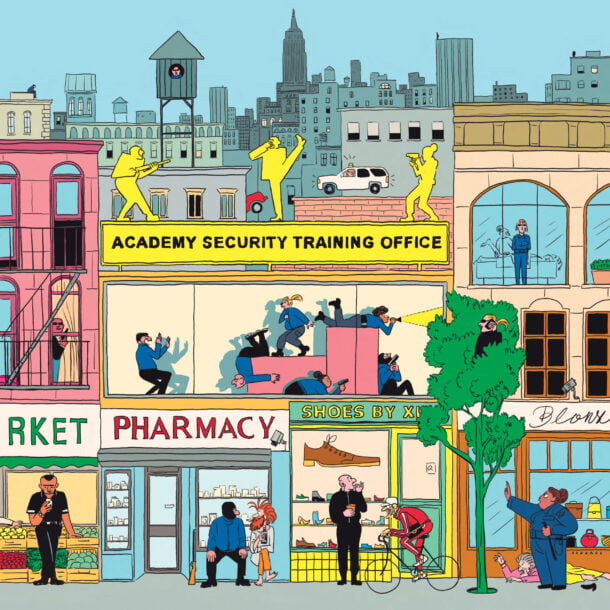
The dubious rise of the private-security industry by Jasper Craven

For millennia, the figure of the guard has inspired as much derision as demand. An early antecedent to the modern security guard can be found in ancient Egypt. Nobles employed “doorkeepers” to protect palaces and tombs. The performance of such duties was accorded a measure of reverence even as guards were often cast as apathetic or incompetent. Some hieroglyphs depict doorkeepers as those “who ward off all evil ones”; others show them as sleepy, drunk, or blind.

Many still believe in this image of guards as feckless agents in spaces not in need of protecting. And yet, in a moment of peculiarly American volatility, certain places that guards patrol—like schools, bars, grocery stores, and retail outlets—are increasingly prone to seeing outbursts of violence. These trends might justify a guard’s usefulness if not for the fact that most guards lack the training or legal authority to do much of anything.

Poison Ivy

From Burdened: Student Debt and the Making of an American Crisis, which will be published this month by Dey Street. by Ryann Liebenthal

The Instant Monet Enters the Studio

From L’instant précis où Monet entre dans l’atelier, which was published in 2022 by Éditions de Minuit. Translated from the French in May by Pauline Cochran. by Jean-Philippe Toussaint

Literary Preview: n+1 Magazine – Fall 2024

Image

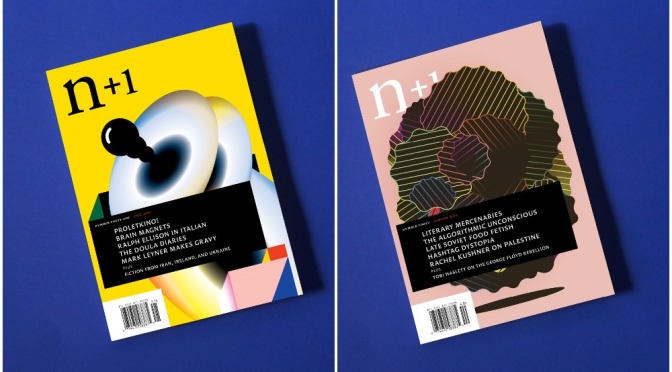
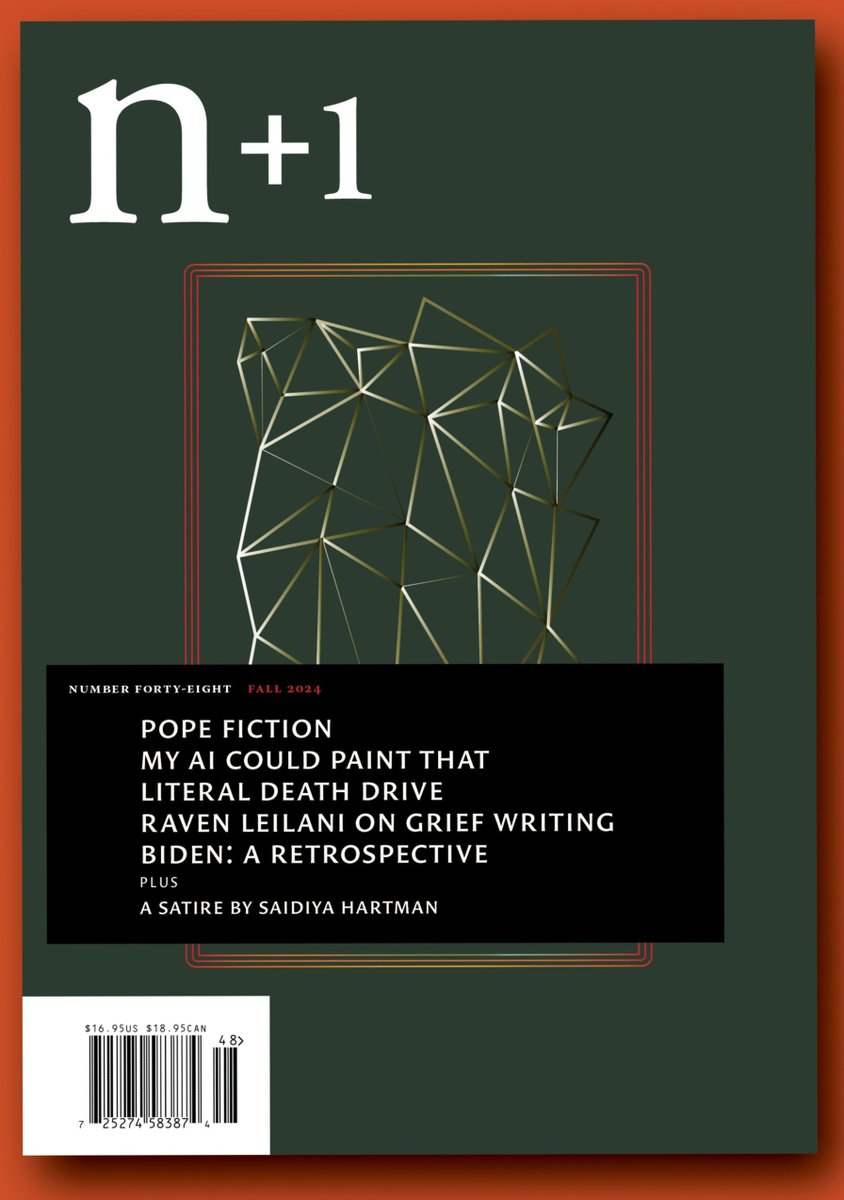
@nplusonemag (August 16, 2024): The ‘Inside Job’ issue features Pope Fiction, My AI Could Paint That, Literal Death Drive, Raven Leilani on Grief Writing; Biden – A Retrospective and A Satire by Saidiya Hartman…

Los Angeles Review Of Books – Summer 2024

Image

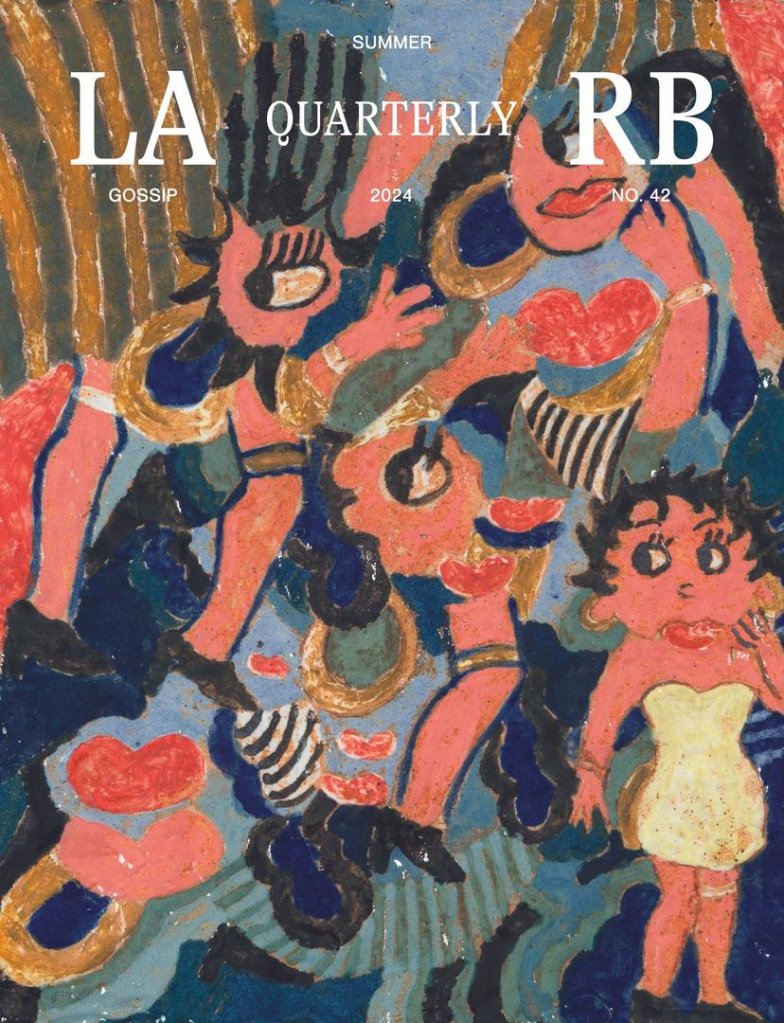
LA Review of Books (August 13, 2024) – The latest issue, No. 42, features Gossip. The editors start a group chat on group chats, inviting Daniel Lavery, Summer Kim Lee, Whitney Mallett, Natasha Stagg, Sarah Thankam Mathews, Tal Rosenberg, Sophie Kemp, Hillary Brenhouse, Sophia Stewart, and Jamie Hood;

Zoe Mendelson puts a dollar sign and a public spin on the phrase “daddy issues” in an online-only exclusive;

Rhian Sasseen swipes right on behalf of a fictional porn addict;

Francesca Peacock roots through the archives for a deeper understanding of scandal and speech;

Ruth Madievsky closes the gate on her college rumor mill;

and Emmeline Clein recounts an “American Icarus story” spelled out in diet pills and rhinestones.

Gossip as a Literary Genre, or Gossip as “L’Écriture feminine”?

Francesca Peacock roots through the archives for a deeper understanding of scandal and speech in an essay from the LARB Quarterly issue no. 42, “Gossip.”

Arts/Politics: The Atlantic Magazine – September 2024

Image

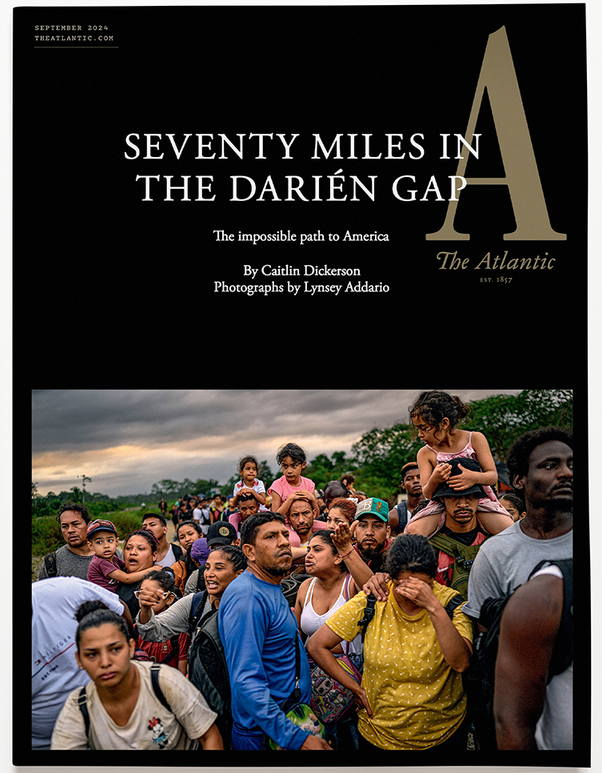
The Atlantic Magazine – August 6, 2024: The latest issue features “Seventy Miles in the Darién Gap,” and the Impossible Path to America….

Seventy Miles in Hell

The Darién Gap was once considered impassable. Now hundreds of thousands of migrants are risking treacherous terrain, violence, hunger, and disease to travel through the jungle to the United States.

Iranian Insiders Warn That Attacking Israel Is a Trap

Some say a big war will help the country’s enemies. But is anyone listening?

The Well-Off People Who Can’t Spend Money

Tightwads drag around a phantom limb of poverty, no matter what their bank account says.

Culture/Politics: Harper’s Magazine – August 2024

Image

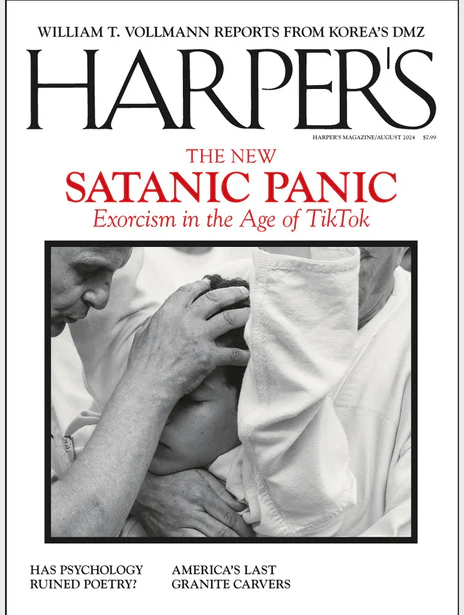
HARPER’S MAGAZINE – July 15, 2024: The latest issue features ‘The New Satanic Panic’ – Exorcism in the Age of TikTok; Has Psychology ruined Poetry; America’s Last Granite Carvers; William T. Vollmann reports from Korea’s DMZ, Matthew Karp on the decline of the American left, Jonathan Lethem on museums, Hisham Matar on the dangers of not knowing, Christian Wiman on Seamus Heaney, and more.

The Demon Slayers

The new age of American exorcisms by Sam Kestenbaum

The pastor is pacing back and forth, a cordless microphone in one hand, the other extended before him. He says, “This is the awakening the American church has been waiting on,” and keeps pacing. He has readied himself before taking the elevated stage, donning a paisley shirt, top button undone, and speaks now from the wood pulpit of his revival tent. 

Music and Mystery  

Seamus Heaney and the end of the poetic career

The Letters of Seamus Heaney, edited by Christopher Reid. Farrar, Straus and Giroux. 848 pages. $45.

This buoyant anvil of a book has brought me to the edge of a nervous breakdown. Night after night I’m waking with Seamus Heaney sizzling through—not me, exactly, but the me I was thirty-four years ago when I first read him, in a one-windowed, mold-walled studio in Seattle, when night after night I woke with another current (is it another current?) sizzling through my circuits: ambition. Not ambition to succeed on the world’s terms (though that asserted its own maddening static) but ambition to find forms for the seethe of rage, remembrance, and wild vitality that seemed, unaccountably, like sound inside me, demanding language but prelinguistic, somehow. I felt imprisoned by these vague but stabbing haunt-songs that were, I sensed, my only means of freedom.

Culture/Politics: Harper’s Magazine – July 2024

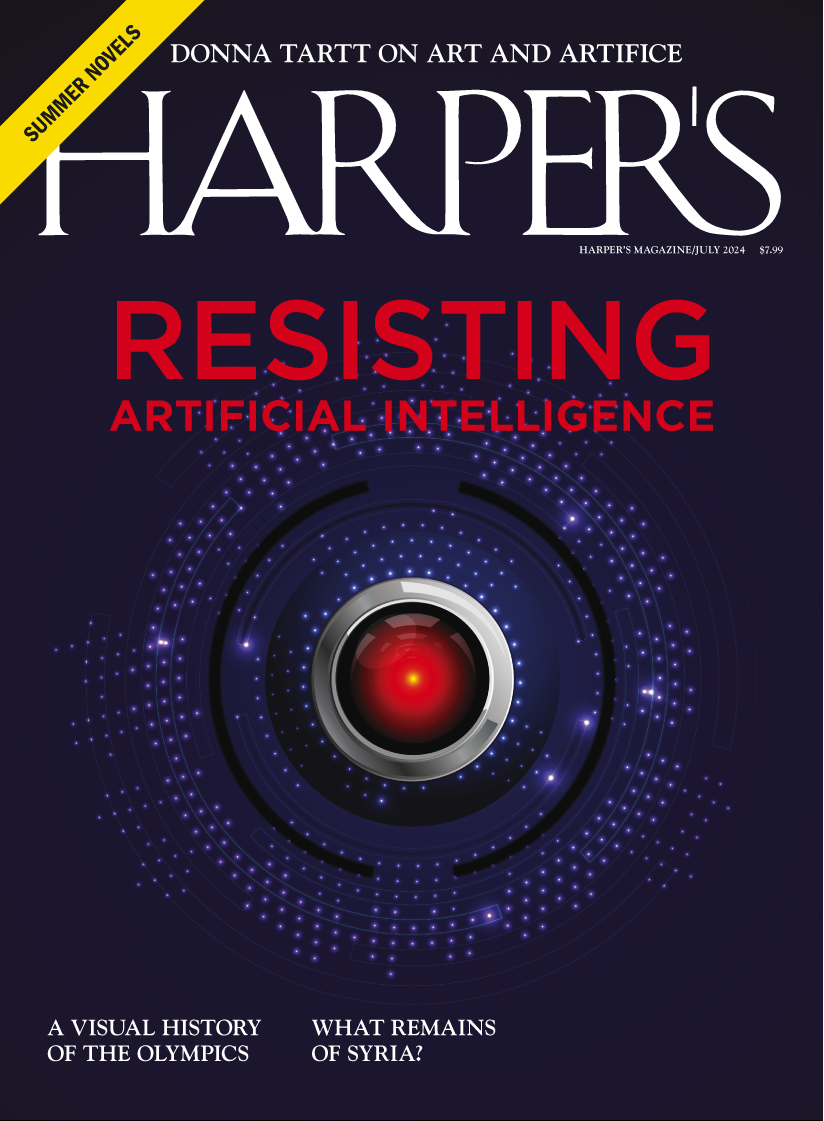
HARPER’S MAGAZINE – June 17, 2024: The latest issue features Resisting Artificial Intelligence; A visual history of the Olympics and What remains of Syria…

The Gods of Logic

AI images generated by Phillip Toledano for Harper’s Magazine © The artist/Institute. Toledano’s book Another America was published in May by L’Artiere Edizioni.

Before and after artificial intelligence

We will never know how many died during the Butlerian Jihad. Was it millions? Billions? Trillions, perhaps? It was a fantastic rage, a great revolt that spread like wildfire, consuming everything in its path, a chaos that engulfed generations in an orgy of destruction lasting almost a hundred years. A war with a death toll so high that it left a permanent scar on humanity’s soul. But we will never know the names of those who fought and died in it, or the immense suffering and destruction it caused, because the Butlerian Jihad, abominable and devastating as it was,…

Metal Machine Music

Can AI think creatively? Can we?

“Far as the east from even, / Dim as the border star, / Life is the little creature / That carries the great cigar.” So wrote Emily Dickinson, with some unfortunate help from a computer. As I read that stanza in February 2022, I was more than six months into a scientific experiment I was conducting with my friend and colleague Morten Christiansen, a cognitive psychologist at Cornell, where he and I are professors. In 2021, two years before ChatGPT would become a household name, Christiansen had been impressed by the initial technical descriptions of GPT-3, the recently released version of the generative large language…

Culture/Politics: Harper’s Magazine – June 2024

Home | Harper's Magazine

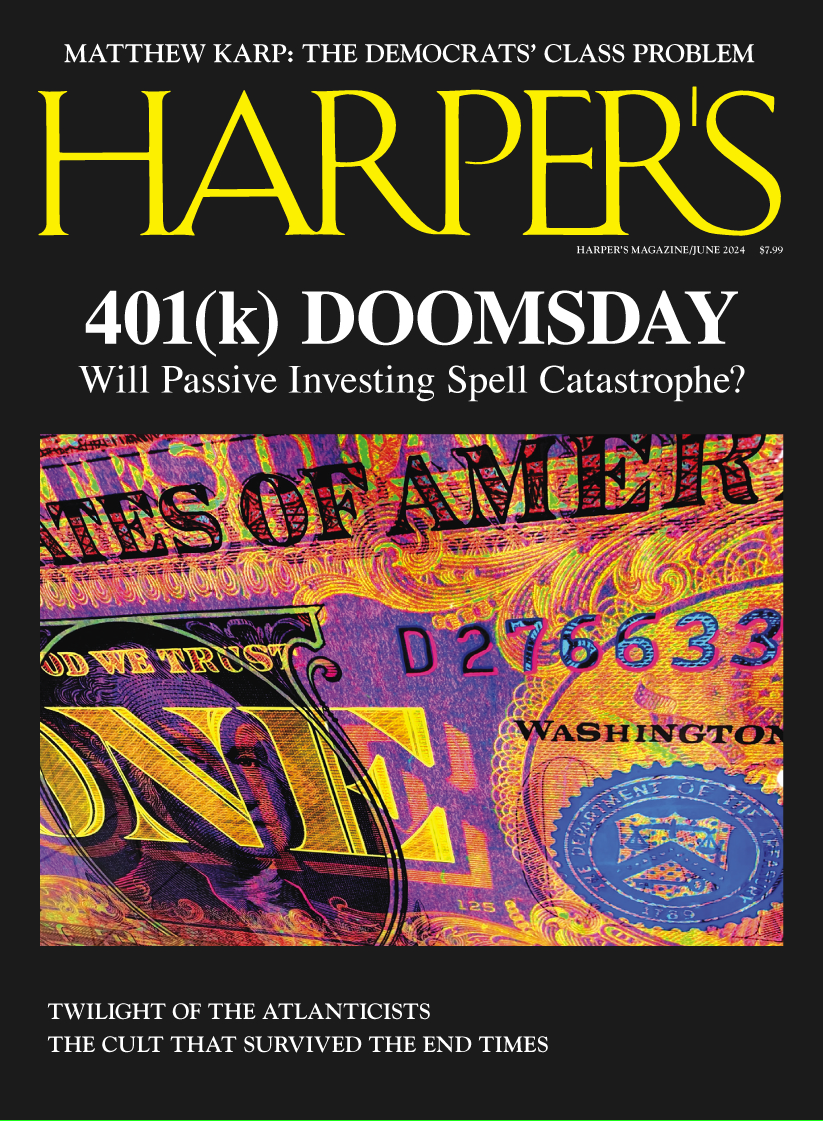
HARPER’S MAGAZINE – May 20, 2024: The latest issue features 401K Doomsday – Will passive investing spell catastrophe?; Twilight of the Atlanticists; The cult that survived the end times…

Masters of War

In search of the new world order in Munich

Naturally, I too will be staying at the Bayerischer Hof.
—Franz Kafka

The Hotel Bayerischer Hof in Munich is an indestructible fortress of Mitteleuropean culture where tour guides like to pause. Richard Wagner repaired to the Hof for tea after his opera performances in Munich; Sigmund Freud fell out with Carl Jung in the Hof over the status of the libido; Kafka stayed at the Hof when he gave his second, and final, public reading to a hostile audience. A decade later, Hitler learned to crack crabs at the Hof under the supervision of a society hostess, and Joseph Goebbels counted on its rooms for a good night’s rest. The Hof weathered the revolutions of 1848; it withstood the revolution of 1918–19, in which the socialist leader Kurt Eisner was assassinated in front of the hotel and Bavaria briefly became a workers’-council republic; it rebuffed the Nazis’ attempts to buy it in the Thirties; and, after it was nearly destroyed by an Allied bombing raid in 1944, it was reconstructed with beaverlike industry. Today its wide façade of three hundred and thirty-seven rooms imposes itself over the small Promenadeplatz like a slice of meringue cake too large for its plate. Every February, hundreds of diplomats, politicians, academics, and arms dealers convene here for the Munich Security Conference.

What Goes Up  

Does the rise of index funds spell catastrophe?

Money—where it comes from, where it goes—was on my mind as I drove from Brooklyn to Philadelphia last fall, a Friday the thirteenth. I spent most of the trip on a Zoom call with my wife and our doula, discussing what combination of night nurses, babysitters, and nannies we’d need come the birth of our twins, our second and third sons. Nary a dollar figure was uttered, seemingly out of respect, just as those attending a funeral avoid naming the actual cause of death.

Literary Preview: n+1 Magazine – Spring 2024

Image

@nplusonemag (April 23, 2024): The latest issue features ‘Passage’ – Fast fashion nation. Six months of genocide in Gaza. Human_Fallback_2: 2 Human 2 Fallback. Martin Amis, re-reassessed. Border stories by Nicholas Hamburger and Paul Soto.

Who Sees Gaza?

A genocide in images


OCTOBER 7 MARKED the beginning of a new economy of war imagery. At first there was a video of a bulldozer plowing through the border fence between Israel and Gaza—an astonishing image, captured in a familiar way. Then things turned horribly surreal. The events of that day were beamed to the world in real time via body-cam, dashcam, cell phone, drone. A Hamas fighter wearing a GoPro stalked the highway with his automatic rifle jutting up from the bottom of the frame, first-person-shooter style. A dashboard camera showed a car zooming forward as a bullet pierced its windshield and the car began to drift, veering left, until it crashed into the rear end of a parked Toyota; you knew exactly when the person behind the wheel could no longer drive, was probably dead. 

Culture/Politics: Harper’s Magazine – May 2024

HARPER’S MAGAZINE – April 15, 2024: The latest issue features The Life and Death of Hollywood – Film and television writers face an existential threat; The Race for Second Place – The Republican primaries as farce

The Life and Death of Hollywood

Photo illustration by Nicolás Ortega

Film and television writers face an existential threat

by Daniel Bessner

In 2012, at the age of thirty-two, the writer Alena Smith went West to Hollywood, like many before her. She arrived to a small apartment in Silver Lake, one block from the Vista Theatre—a single-screen Spanish Colonial Revival building that had opened in 1923, four years before the advent of sound in film.

Smith was looking for a job in television. She had an MFA from the Yale School of Drama, and had lived and worked as a playwright in New York City for years—two of her productions garnered positive reviews in the Times. But playwriting had begun to feel like a vanity project: to pay rent, she’d worked as a nanny, a transcriptionist, an administrative assistant, and more. There seemed to be no viable financial future in theater, nor in academia, the other world where she supposed she could make inroads.

The Race for Second Place

Illustration by Nate Sweitzer

The Republican primaries as farce

by Kyle Paoletta

On the Saturday before the Iowa caucuses, the super PAC supporting Florida governor Ron DeSantis staged a “drop by” for the candidate at its headquarters in West Des Moines. Outside the modernist office park, much of the Upper Midwest was under a deep freeze brought on by a low-pressure system that had deposited more than a foot of snow in advance of a surge of arctic air that brought the wind chill into the negative thirties. Despite the atrocious road conditions, DeSantis was keeping his schedule as a “special guest” of the Never Back Down PAC, beginning the day at the far western end of Iowa, in Council Bluffs, and concluding it three hundred miles east, in Davenport.