“The risk for dementia is elevated about twofold in people who have diabetes or metabolic syndrome (a group of risk factors that often precedes diabetes),” Holtzman says.
…poor sleep is a known risk factor for Alzheimer’s. So maintaining normal blood sugar levels in Alzheimer’s patients could improve their sleep and might even slow down the disease, she says.
Syndicated columnist Mark Shields and New York Times columnist David Brooks join Judy Woodruff to discuss the week’s political news, including how the impeachment inquiry is affecting President Trump’s support among Republicans, fallout from Trump’s handling of northern Syria and the military advance by Turkish President Recep Tayyip Erdogan and the changing dynamics of the 2020 presidential race.
We don’t know where consciousness comes from. And we don’t know whether animals have it, or whether we can detect it in patients in comas. Do neuroscientists even know where to look? A new competition aims to narrow down the bewildering number of theories of consciousness and get closer to finding its biological signs by pitting different theories against each other in experimental settings. Freelance journalist Sara Reardon talks with host Sarah Crespi about how the competition will work.
In our second segment, we talk about how we think about children. For thousands of years, adults have complained about their lack of respect, intelligence, and tendency to distraction, compared with previous generations. A new study out this week in Science Advances suggests our own biased childhood memories might be at fault. Sarah Crespi talks with John Protzko of the University of California, Santa Barbara, about how terrible people thought kids were in 3800 B.C.E. and whether understanding those biases might change how people view Generation Z today.
Our 3D deep-learning system performed well in both primary and external validations, suggesting that it could potentially be used for automated detection of glaucomatous optic neuropathy based on SDOCT volumes. Screening with the deep-learning system is much faster than conventional glaucoma screening methods (ie, by experienced specialists), can be done automatically, and does not require a large number of trained personnel on site. Further prospective studies are warranted to estimate the incremental cost-effectiveness of incorporating this artificial intelligence-based model for screening for glaucoma, both in the general population and among at-risk people.
Listen to the latest from the world of science, with Benjamin Thompson and Shamini Bundell. This week, investigating child mortality rates at a local level, and building genes from non-coding DNA.
Syndicated columnist Mark Shields and New York Times columnist David Brooks join Judy Woodruff to discuss the week’s political news, including President Trump’s attitude toward Kurds in Syria and stance toward Turkey’s Syria offensive, testimony from the former U.S. ambassador to Ukraine and how the prospect of impeachment affects the race among 2020 Democrats.
Syndicated columnist Mark Shields and Ramesh Ponnuru of The National Review join Judy Woodruff to discuss the week’s political news, including President Trump’s insistence that foreign leaders should investigate the Biden family, how the White House is responding to the subsequent House investigation and the newest fundraising and poll numbers among 2020 Democrats.
Scott Burger, MITEI Energy Fellow and researcher, discusses rooftop solar economics, net metering, energy poverty, and electricity costs. Show notes and transcript: https://energy.mit.edu/podcast/16
News, Views and Reviews For The Intellectually Curious

 “The risk for dementia is elevated about twofold in people who have diabetes or metabolic syndrome (a group of risk factors that often precedes diabetes),” Holtzman says.
  Brian Kalt, an expert on US constitutional law and the presidency, talks to Jonathan Kay about the 25th Amendment and whether it can be used to remove a president. Professor Kalt recently published a book called
 Syndicated columnist Mark Shields and New York Times columnist David Brooks join Judy Woodruff to discuss the week’s political news, including how the impeachment inquiry is affecting President Trump’s support among Republicans, fallout from Trump’s handling of northern Syria and the military advance by Turkish President Recep Tayyip Erdogan and the changing dynamics of the 2020 presidential race.
 In our second segment, we talk about how we think about children. For thousands of years, adults have complained about their lack of respect, intelligence, and tendency to distraction, compared with previous generations. A new study out this week in Science Advances suggests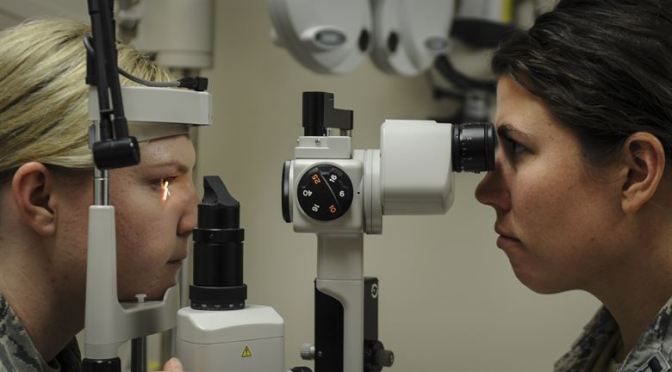
 Our 3D deep-learning system performed well in both primary and external validations, suggesting that it could potentially be used for automated detection of glaucomatous optic neuropathy based on SDOCT volumes. Screening with the deep-learning system is much faster than conventional glaucoma screening methods (ie, by experienced specialists), can be done automatically, and does not require a large number of trained personnel on site. Further prospective studies are warranted to estimate the incremental cost-effectiveness of incorporating this artificial intelligence-based model for screening for glaucoma, both in the general population and among at-risk people.
 Listen to the latest from the world of science, with Benjamin Thompson and Shamini Bundell. This week, investigating child mortality rates at a local level, and building genes from non-coding DNA.
 Syndicated columnist Mark Shields and New York Times columnist David Brooks join Judy Woodruff to discuss the week’s political news, including President Trump’s attitude toward Kurds in Syria and stance toward Turkey’s Syria offensive, testimony from the former U.S. ambassador to Ukraine and how the prospect of impeachment affects the race among 2020 Democrats.
 This week, a method for predicting follow-up earthquakes, and the issues with deep learning systems in AI.
 Syndicated columnist Mark Shields and Ramesh Ponnuru of The National Review join Judy Woodruff to discuss the week’s political news, including President Trump’s insistence that foreign leaders should investigate the Biden family, how the White House is responding to the subsequent House investigation and the newest fundraising and poll numbers among 2020 Democrats.
 Scott Burger, MITEI Energy Fellow and researcher, discusses rooftop solar economics, net metering, energy poverty, and electricity costs. Show notes and transcript:
  Boomers Daily