Piecemeal criminal-justice reforms following last year’s protests are coming up against hard numbers: violent crime is up. We ask what can, and should, be done.
The man who led a coup in Mali last year has done it again; our correspondent considers how the tumult affects the wider, regional fight against jihadism. And the global spread of Japan’s beloved anime.
The western US is in the middle of one of the worst droughts in at least the past 1,200 years. And as soon as this week, Lake Mead, the largest reservoir in the country, could reach its lowest point since it was first created in the 1930s.
Plus, Secretary of State Tony Blinken talks China with Mike Allen.
And, Jonathan Swan takes us inside the progressive fight over voting rights.
Guests: Axios’ Andrew Freedman, Jonathan Swan and Mike Allen.
Emma Nelson and guests set the tone for the weekend with Florian Egli on the day’s papers and our editor in chief Andrew Tuck’s weekend column. Plus: a check-in at Monocle’s Badi Market in Zürich.
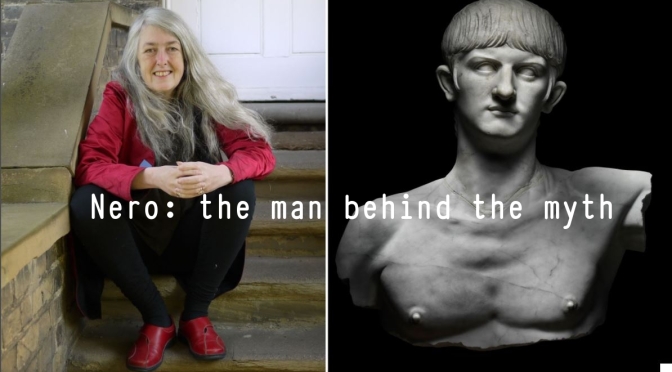
This week: Mary Beard on Nero, one of the most infamous Roman emperors. Was he the sadistic murderer of legend, the emperor who fiddled as Rome burned, or has he been a victim of spin and myth?
As well as getting Mary’s take on this infamous figure and Nero: the man behind the myth, the exhibition about him that’s just opened at the British Museum in London, Ben Luke also talks to the exhibition’s curator Thorsten Opper.
Also this week, as the first London Gallery Weekend begins—with 140 galleries from Mayfair to Mile End taking part—The Art Newspaper‘s editor-at-large Georgina Adam speaks to Jeremy Epstein, co-founder of Edel Assanti gallery and one of the founders of London Gallery Weekend initiative. And in this episode’s Work of the Week, we talk to the artist Nina Katchadourian about a very personal piece of embroidery, created by her adopted grandmother, which has inspired a new work by the artist in her show at Pace in New York.
The Saudi-backed government is hobbled; separatism is spreading; a humanitarian crisis grows by the day. A rebel advance on a once-safe city will only prolong a grinding war.
We look at the scourge of doping in horse racing ahead of this weekend’s Belmont Stakes. And the last surviving foreign fighter in Spain’s civil war was a revolutionary to the end.
The bloc seems at last to have a firm hand on inoculation and recovery—but efforts to engineer even progress among member states are not quite panning out.
In recent years Bangladesh’s government has been cosy with a puritanical Islamist group; we ask why the relationship has grown complicated. And a genetic-engineering solution to the problem of mosquito-borne disease.
The cross-discipline effort to work our how ancient humans learned to count.
In this episode:
00:45 Number origins
Around the world, archaeologists, linguists and a host of other researchers are trying to answer some big questions – when, and how, did humans learn to count? We speak to some of the scientists at the forefront of this effort.
We discuss some highlights from the Nature Briefing. This time, an upper limit for human ageing, and could tardigrades survive a collision with the moon?
After experiencing a spring surge, Michigan is easing COVID restrictions. The Tokyo Olympics are still weeks away but some fear it could turn into a superspreader event.
News, Views and Reviews For The Intellectually Curious







 Boomers Daily