



From a The Lancet online article (January 18, 2020):
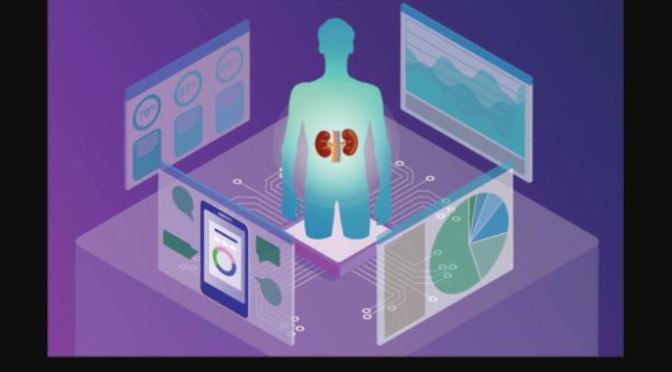
 Smartphone app-based platforms for urine testing could improve adherence to albumin creatinine ratio (ACR) testing. One study showed screening of at-risk patients almost doubled with a home urine test kit that uses a smartphone camera to easily and accurately quantify ACR from a user-performed urine dipstick. If independently validated in a large, diverse population, this low-cost strategy could change the often dim trajectory for individuals with declining kidney function.
In the outpatient setting, a Japanese team used machine learning and natural language processing to predict disease progression and need for dialysis over 6 months in patients with diabetic nephropathy. And while the increased risk of contrast-induced acute kidney injury has been long appreciated, a machine learning algorithm trained and tested on 3 million adults effectively quantified the degree of kidney injury on the basis of the volume of contrast used and individual patient-level characteristics.
 Benjamin Thompson brings you the latest science news. This week, an antibiotic that targets difficult to treat bacteria, and a roundup of the latest science news.
In this episode:
Researchers looked inside nematode guts and have identified a new antibiotic with some useful properties. Research Article: Imai et al.
Using urine as a health metric, and sniffing out book decay with an electronic nose. Research Article: Miller et al.; Research Article: Veríssimo et al.
Adding an element of chance to grant funding, a continental butterfly-sequencing project, and tracking endangered animals via traces of their DNA. News: Science funders gamble on grant lotteries; News: Every butterfly in the United States and Canada now has a genome sequence; News: Rare bird’s detection highlights promise of ‘environmental DNA’
To read more: https://www.nature.com/articles/d41586-019-03588-z
From a New York Times online article:
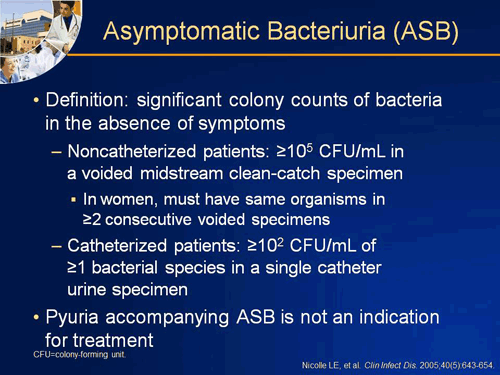 At Dr. Soong’s hospital, withholding the results of urine cultures, unless doctors actually called the microbiology lab to request them, reduced prescriptions for asymptomatic bacteriuria to 12 percent from 48 percent of non-catheterized patients, with no loss of safety.
“The extra step of having the clinician call eliminated a lot of frivolous testing,” Dr. Soong said.
In patients who have none of the typical symptoms of a urinary tract infection — no painful or frequent urination, no blood in the urine, no fever or lower abdominal tenderness — lab results detecting bacteria in the urine don’t indicate infection and thus shouldn’t trigger treatment.
Older people, and nursing home residents in particular, often have urinary systems colonized by bacteria; they will have a positive urine test almost every time, but they’re not sick.
To read more: https://www.nytimes.com/2019/10/14/health/urine-tests-elderly.html

 Boomers Daily