Axios Today reports: We’re halfway through September which means members of Congress are shifting their focus towards their own re-election campaigns, and now a Supreme Court Justice pick. After months of back and forth on a new stimulus bill, it’s now even less likely one will pass before the election.
Plus, some not-bad news about our economic recovery.
And, on the road with the Biden campaign.
Guests: Axios’ Alayna Treene, Felix Salmon and Hans Nichols.
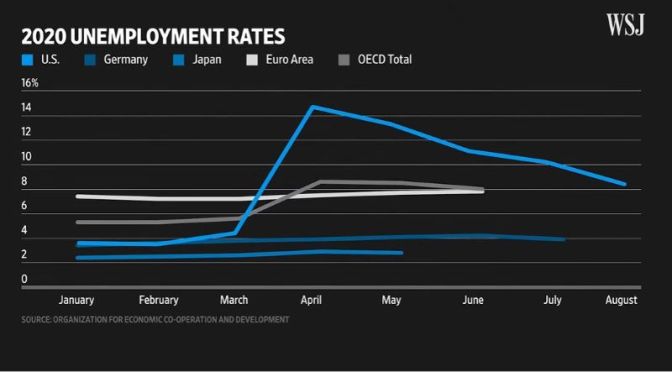
The U.S. unemployment rate shot up faster than in any other developed country during the pandemic. WSJ explains how differences in government aid and labor-market structures can help predict how and where jobs might recover.
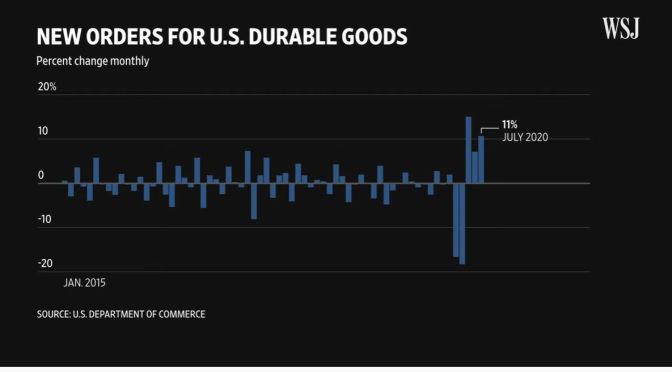
The survey of new orders for long-lasting goods contains one of the most closely watched U.S. economic indicators. WSJ explains durable goods, and why investors look beyond the headline number for a better read on business activity.
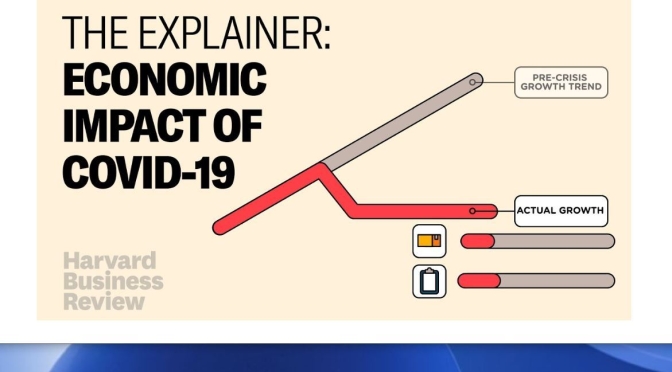
Predicting the path ahead has become nearly impossible, but we can speculate about the size and scale of the economic shock. Economic contagion is now spreading as fast as Covid-19 itself. Social distancing, intended to physically disrupt the spread, has severed the flow of goods and people, stalled economies, and is in the process of delivering a global recession.
Predicting the path ahead has become nearly impossible, as multiple dimensions of the crisis are unprecedented and unknowable. Pressing questions include the path of the shock and recovery, whether economies will be able to return to their pre-shock output levels and growth rates, and whether there will be any structural legacy from the coronavirus crisis.
This Explainer explores several scenarios to model the size and scale of the economic shock and the path ahead.
Based on the HBR article by Philipp Carlsson-Szlezak, Martin Reeves and Paul Swartz
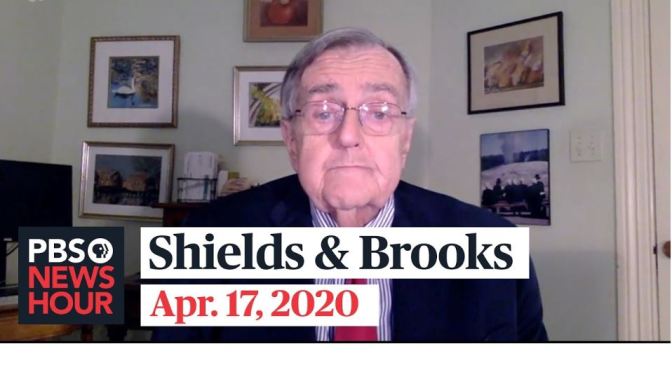
Syndicated columnist Mark Shields and New York Times columnist David Brooks join Judy Woodruff to discuss the week’s news, including the Trump administration’s guidance to states about when to reopen amid the pandemic, the ongoing struggle to conduct more COVID-19 tests, Trump’s criticism of Democratic governors and what Sen. Bernie Sanders’ endorsement means for former Vice President Joe Biden.
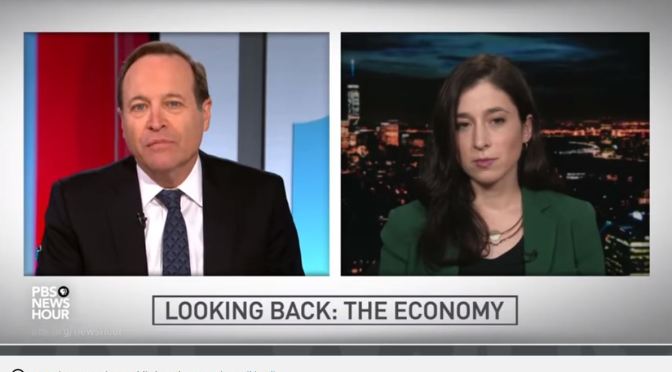
As the year comes to a close, we look back at the past decade in the American economy — the first without a recession since record-keeping began in the 1950s. While unemployment remains at a historic low, wage growth has been sluggish, and inequality continues to divide the country. David Wessel of the Brookings Institution and The Washington Post’s Catherine Rampell join Jeffrey Brown.
News, Views and Reviews For The Intellectually Curious



 Boomers Daily