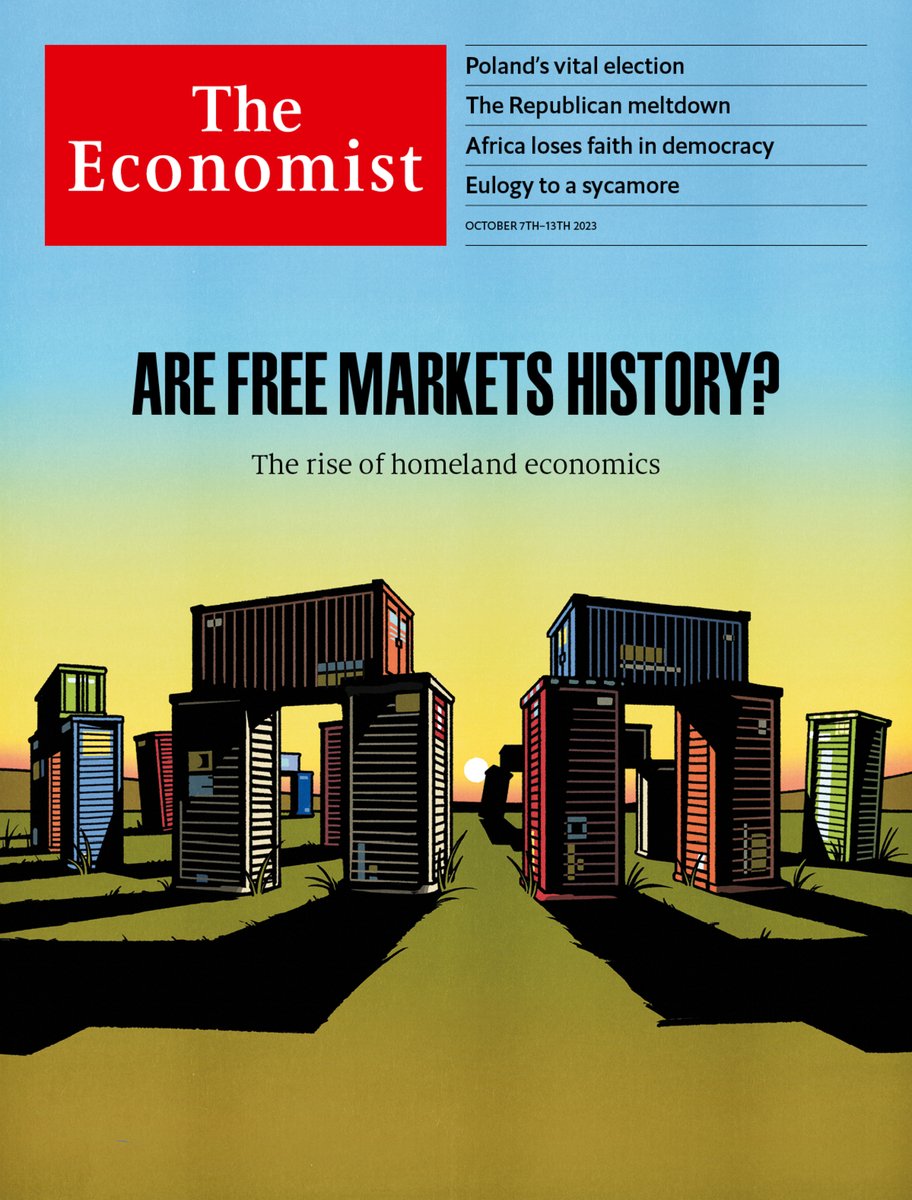
The Economist Magazine (October 7, 2023): The latest issue features Governments jettisoning the principles of free markets; Africans losing faith in democracy and how the ousting of House Speaker Kevin McCarthy is bad for America and worse for Ukraine….
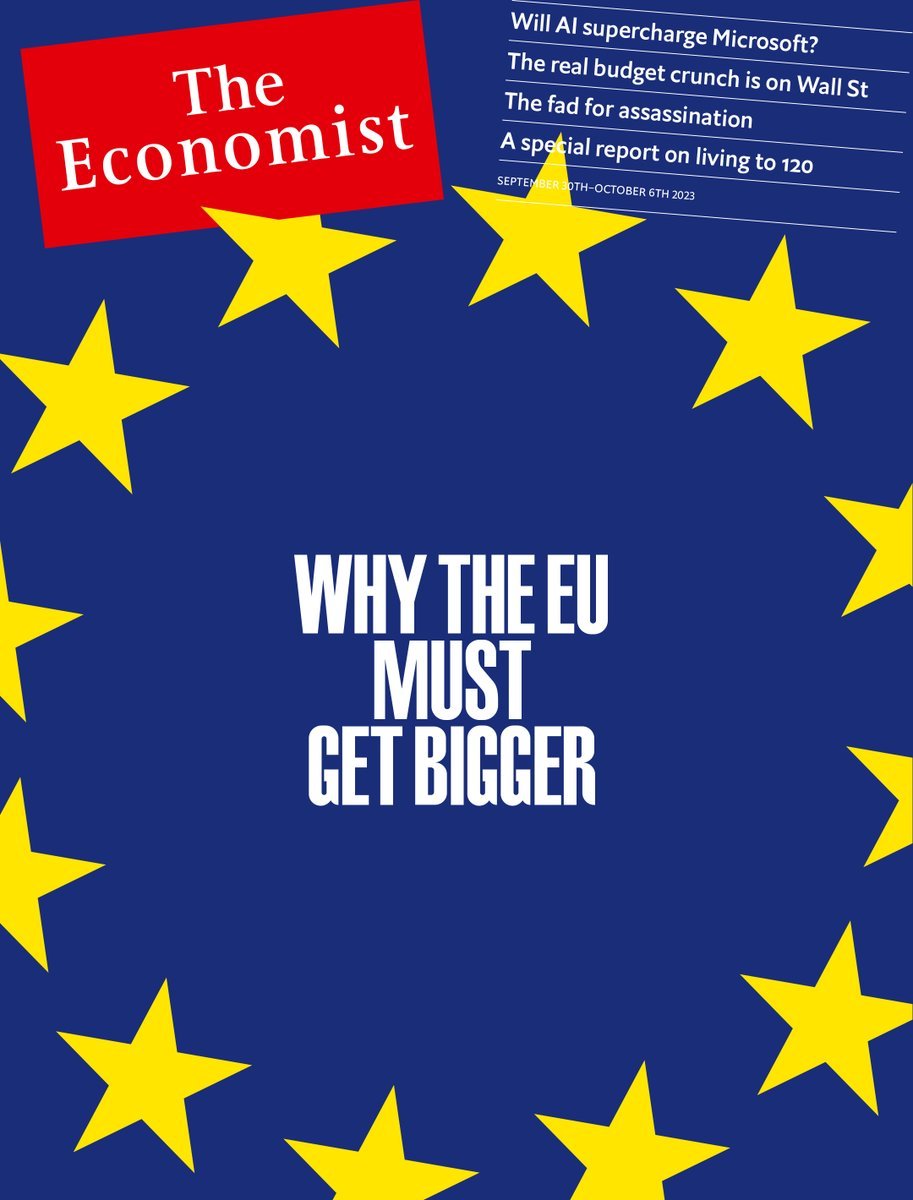
The Economist Magazine (September 30, 2023): The latest issue features The war in Ukraine is a powerful reason to enlarge—and improve—the EU; Why fear is spreading in financial markets; A humanitarian disaster is under way in Nagorno-Karabakh…
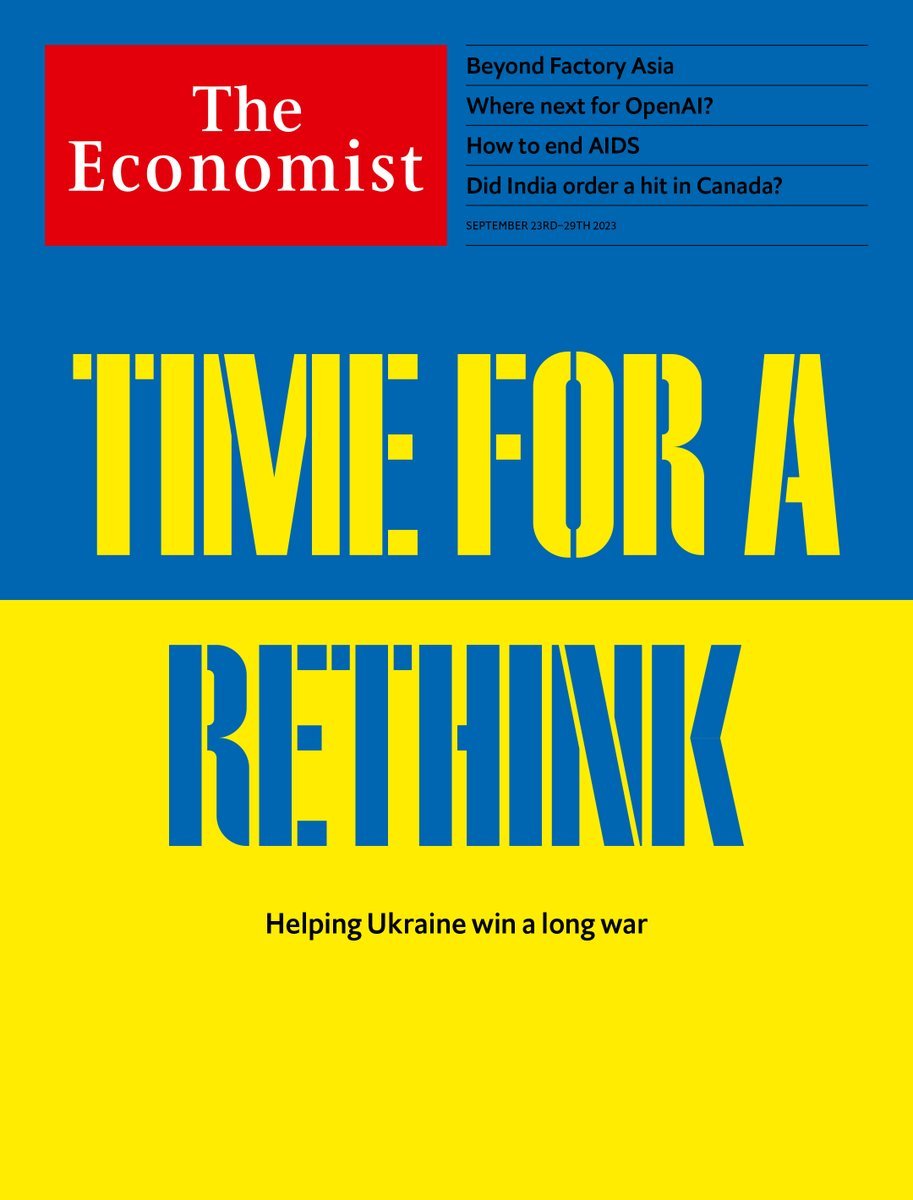
The Economist Magazine (September 23, 2023): The latest issue features ‘Ukraine faces a long war’ – A change of course is needed; Its backers should pray for a speedy victory—but plan for a long struggle.
Its backers should pray for a speedy victory—but plan for a long struggle
The war in Ukraine has repeatedly confounded expectations. It is now doing so again. The counter-offensive that began in June was based on the hope that Ukrainian soldiers, equipped with modern Western weapons and after training in Germany, would recapture enough territory to put their leaders in a strong position at any subsequent negotiations.
Western countries have for too long acquiesced to the Indian government’s abuses
For years, India objected to Western strategists lumping it together with its violent and chaotic neighbour in the phrase “Indo-Pakistan”. Now recognised as a fast-growing giant and potential bulwark against China, India claims to have been “de-hyphenated”. Yet the explosive charge aired this week by Justin Trudeau suggests that diplomatic recalibration may have gone too far. Canada’s prime minister alleges that Indian agents were involved in the murder in Vancouver of a Canadian citizen sympathetic to India’s Sikh separatist movement.
The Economist Magazine (September 16, 2023): The latest issue reviews How AI can revolutionize science; Donald Trump will “never” support Putin, says Volodymyr Zelensky; The hard right is getting closer to power all over Europe, and more…
Debate about artificial intelligence (ai) tends to focus on its potential dangers: algorithmic bias and discrimination, the mass destruction of jobs and even, some say, the extinction of humanity. As some observers fret about these dystopian scenarios, however, others are focusing on the potential rewards. ai could, they claim, help humanity solve some of its biggest and thorniest problems. And, they say, ai will do this in a very specific way: by radically accelerating the pace of scientific discovery, especially in areas such as medicine, climate science and green technology.
In the next decade regional tensions will build in India
The world has been seeing the bright side of India. In August it landed a spacecraft on the Moon. In the latest quarter gdp grew at an annual rate of 7.8%, making it the world’s perkiest big economy. Narendra Modi, the prime minister, has just hosted a g20 summit where other leaders, including Joe Biden, courted Asia’s rising behemoth. Yet inside India the talk has turned to whether Mr Modi’s hunger for power and dreams of national renewal could lead him to bend the constitution.
The Economist Magazine (September 9, 2023): The new Middle East has more money and less mayhem. For now…; America’s Supreme Court should adopt new ethics standards How artificial intelligence will affect the elections; Javier Milei would be a danger for democracy in Argentina….
Economies are booming and wars are fading. But climate change is looming
If you thought the Middle East was stagnant, think again. The Gulf economies are among the richest and most vibrant on the planet, helped by a Brent crude oil price that rose back to over $90 per barrel this week. A $3.5trn fossil-fuel bonanza is being spent on everything from home-grown artificial intelligence models and shiny new cities in the desert, to filling the coffers of giant sovereign-wealth funds that roam the world’s capital markets looking for deals.
Next term will be agonising for the Supreme Court. Some combination of voters and courts will determine whether Donald Trump becomes president again and whether he goes to prison. President Joe Biden’s son has a case before the courts. Dozens of states have changed their voting laws since 2020 and the nine justices on the Supreme Court may be asked to look at them. If the presidential election in 2024 is close, the court may have to step in and adjudicate. With so much at stake, America needs a Supreme Court that is broadly seen as legitimate and, ideally, impartial. Regrettably, trust in the court is at its lowest point since pollsters began asking about it.
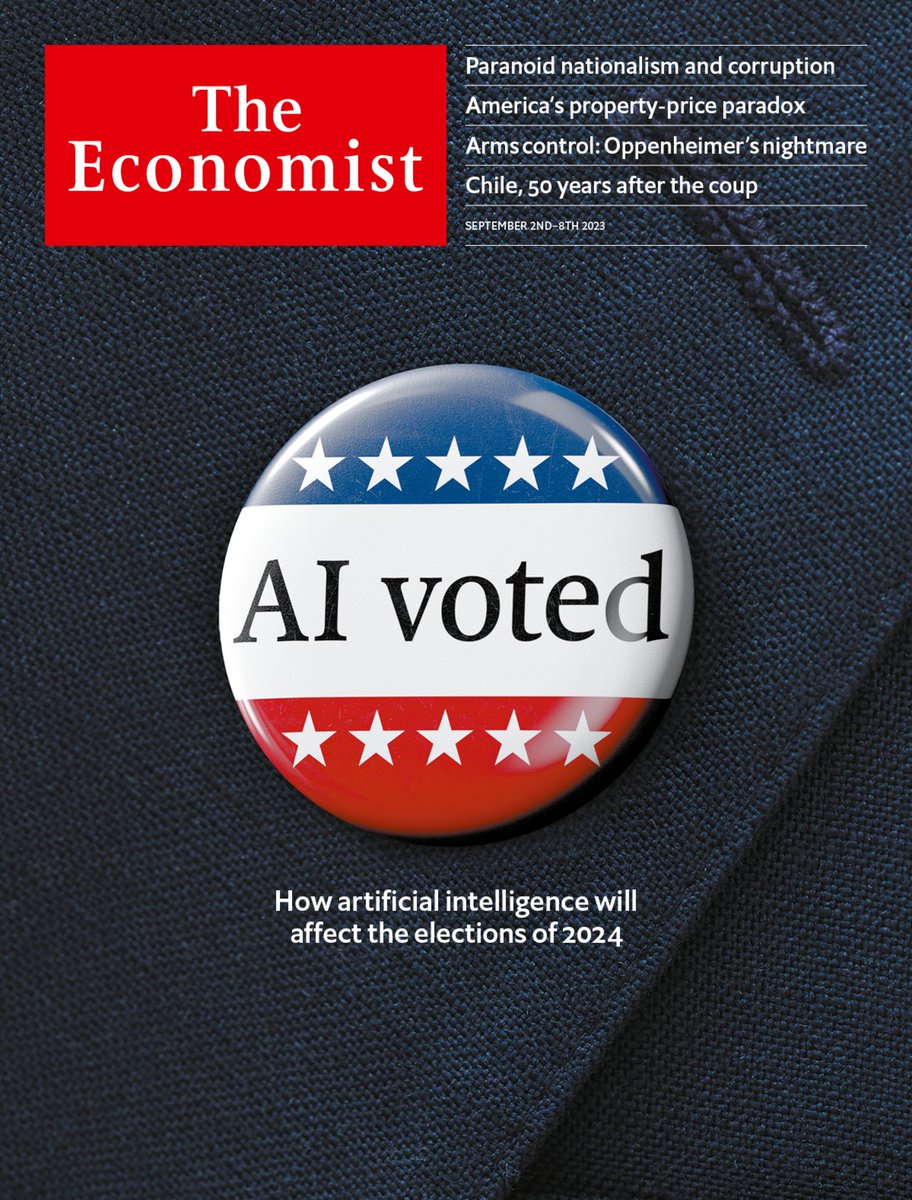
The Economist Magazine (September 2, 2023): This week’s issue features AI voted: How artificial intelligence will affect the elections of 2024; How paranoid nationalism corrupts; How to stop a three-way nuclear arms-race, and more…
Disinformation will become easier to produce, but it matters less than you might think
Politics is supposed to be about persuasion; but it has always been stalked by propaganda. Campaigners dissemble, exaggerate and fib. They transmit lies, ranging from bald-faced to white, through whatever means are available. Anti-vaccine conspiracies were once propagated through pamphlets instead of podcasts. A century before covid-19, anti-maskers in the era of Spanish flu waged a disinformation campaign. They sent fake messages from the surgeon-general via telegram (the wires, not the smartphone app). Because people are not angels, elections have never been free from falsehoods and mistaken beliefs.
Cynical leaders are scaremongering to win and abuse power
People seek strength and solace in their tribe, their faith or their nation. And you can see why. If they feel empathy for their fellow citizens, they are more likely to pull together for the common good. In the 19th and 20th centuries love of country spurred people to seek their freedom from imperial capitals in distant countries. Today Ukrainians are making heroic sacrifices to defend their homeland against Russian invaders.
An increasingly autocratic government is making bad decisions
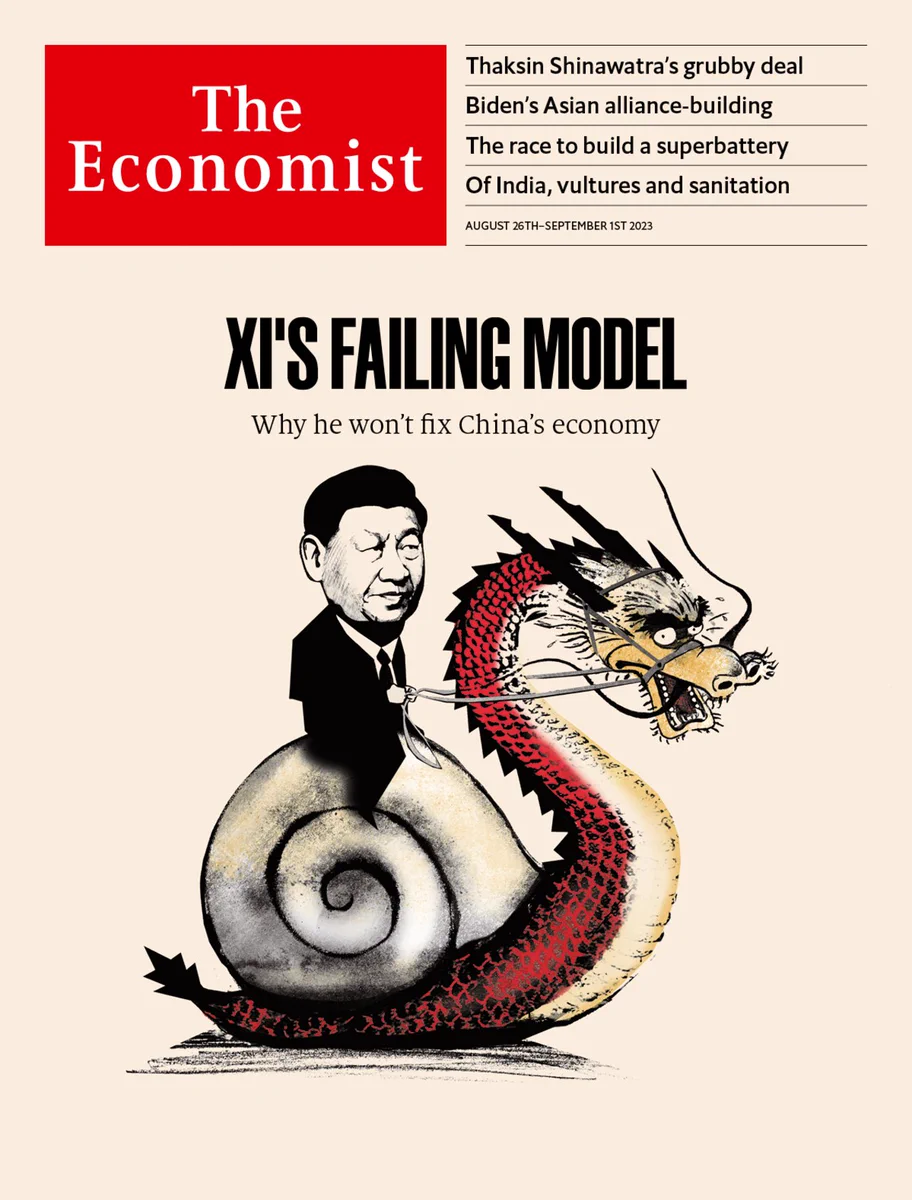
Whatever has gone wrong? After China rejoined the world economy in 1978, it became the most spectacular growth story in history. Farm reform, industrialisation and rising incomes lifted nearly 800m people out of extreme poverty. Having produced just a tenth as much as America in 1980, China’s economy is now about three-quarters the size. Yet instead of roaring back after the government abandoned its “zero-covid” policy at the end of 2022, it is lurching from one ditch to the next.
A healthy country uses justice to restore order. Mr Putin uses violence instead
As we published this editorial, it was not certain that Yevgeny Prigozhin’s private jet was shot down by Russian air-defences, or that the mutineer and mercenary boss was on board. But everyone believes that it was and that his death was a punishment of spectacular ruthlessness ordered by Russia’s president, Vladimir Putin. And that is the way Mr Putin likes it.
Xi Jinping wants them to focus on the party’s goals. Many cannot see why they should
The crowd did not seem excited to see George Michael and Andrew Ridgeley. When Wham! became the first Western pop group to perform in Communist China, the audience was instructed to stay in their seats. It was 1985 and, despite appearances, the young people in attendance were in fact joyous. The country around them was by no means free, but it was starting to reform and open up. Over the next three decades the economy would grow at a rapid pace, producing new opportunities.
Young Chinese have little hope for the future. Xi Jinping wants them to toughen up
In the southern city of Huizhou an electronics factory is hiring. The monthly salary on offer is between 4,500 and 6,000 yuan (or $620 and $830), enough to pay for food and essentials, but not much else. The advertisement says new employees are expected to “work hard and endure hardship”. The message might have resonated with Chinese of an older generation, many of whom worked long hours in poor conditions to give their children a brighter future. But many of those children now face similar drudgery—and are unwilling to endure it. “I can’t sit on an assembly line,” says Zhang, a 20-something barista with dyed-red hair at a local tea shop. He scoffs at the idea of making such sacrifices for so little gain. The job at the tea shop pays just 4,000 yuan a month, but he enjoys chatting up customers.
The Economist Magazine (August 12, 2023 issue): Why Biden’s China strategy is not working; Saudi Arabia upends sport; The attack on universal values; Twitternomics lives on; How green is your EV and more…
Supply chains are becoming more tangled and opaque
On august 9th President Joe Biden unveiled his latest weapon in America’s economic war with China. New rules will police investments made abroad by the private sector, and those into the most sensitive technologies in China will be banned. The use of such curbs by the world’s strongest champion of capitalism is the latest sign of the profound shift in America’s economic policy as it contends with the rise of an increasingly assertive and threatening rival.
The countries’ economic ties are more profound than they appear
image: alberto miranda
When it comes to tracing the geography of global supply chains, few companies provide a better map than Foxconn, the world’s largest contract manufacturer. This year the Taiwanese giant has built or expanded factories in India, Mexico, Thailand and Vietnam. The Chinese production sites once loved by Western companies are firmly out of fashion. Souring relations between the governments in Washington and Beijing have made businesses increasingly fretful about geopolitical risks. As a consequence, in the first half of the year, America traded more with Mexico and Canada than it did with China for the first time in almost two decades. The map of global trade is being redrawn.













 Boomers Daily