
Tag Archives: Technology Magazines

MIT Technology Review – The Top Stories (11.24.24)

a person with luggage walks through and airport setting

MIT Technology Review (Novemer 24, 2024): This week’s round up includes Google DeepMind has a new way to look inside an AI’s “mind”. Inside Clear’s ambitions to manage your identity beyond the airport. Who’s to blame for climate change? And more.

Inside Clear’s ambitions to manage your identity beyond the airport
The company that has helped millions of people cut security lines wants to give you a frictionless future—in exchange for your face.

Read more →

Google DeepMind has a new way to look inside an AI’s “mind”
Autoencoders are letting us peer into the black box of artificial intelligence. They could help us create AI that is better understood, and more easily controlled.

Read more →

How this grassroots effort could make AI voices more diverse
A massive volunteer-led effort to collect training data in more languages, from people of more ages and genders, could help make the next generation of voice AI more inclusive and less exploitative.

Read more →

Who’s to blame for climate change? It’s surprisingly complicated.The world’s biggest polluters, by the numbers.

Read more →

The rise of Bluesky, and the splintering of social
You may have read that it was a big week for Bluesky. If you’re not familiar, Bluesky is, essentially, a Twitter clone that publishes short-form status updates.

Read more →

MIT Technology Review – The Top Stories (11.17.24)

Ai gaping maw with teeth and two clawed hands swallows artworks which tiny artists have put poison symbols on the reverse side. One carries a flag with Ben Zhao's face
Ben Zhao remembers well the moment he officially jumped into the fight between artists and generative AI: when one artist asked for AI bananas. 

MIT Technology Review (Novemer 17, 2024): This week’s round up includes Generative AI taught a robot dog to scramble around a new environment; The AI lab waging a guerrilla war over exploitative AI; Life-seeking, ice-melting robots could punch through and Europa’s icy shell.

The AI lab waging a guerrilla war over exploitative AI

The tools Glaze and Nightshade are giving artists hope that they can fight back against AI that hoovers internet data to train. Are they enough?

Generative AI taught a robot dog to scramble around a new environment

A new system could help train robots entirely in generated worlds.

Why AI could eat quantum computing’s lunch

Rapid advances in applying artificial intelligence to simulations in physics and chemistry have some people questioning whether we will even need quantum computers at all.

AI search could break the web

Life-seeking, ice-melting robots could punch through Europa’s icy shell

Researchers are working on technology that could follow NASA’s Europa Clipper mission and hunt for life in the ocean of Jupiter’s moon.

Preview: MIT Technology Review – November 2024

MIT Technology Review

MIT Technology Review (October 23, 2024): The Food issue November/December 2024 – Is technology helping—or harming—our food supply? Featuring: The ominous rise of superweeds, the quest to grow food on Mars, and the surprising ways your refrigerator may be making your food less nutritious. Plus robots that do experiments, jumping spiders, digital forestry, and The AI Hype Index.

The quest to figure out farming on Mars

white line drawing of an agricultural scene with orchard, barn, crops and farm animals drawn over a photo of the Martian landscape

If we’re going to live on Mars we’ll need a way to grow food in its arid dirt. Researchers think they know a way.

These companies are creating food out of thin air

Exploded view of a burger bun with lettuce, tomato, onion and a cloud floating in a blue sky

A new crop of biotech startups are working on an alternative to alternative protein.

Preview: MIT Technology Review – September 2024

MIT Technology Review (August 17, 2024): The 125th Anniversary issue features ‘Greetings from the Future’ – Personalized AI, Genetically-Engineered Immunity and Digital Immortaility. We’ll see it all in the next century.

Preview: MIT Technology Review – July/August 2024

MIT Technology Review (June 26, 2024): The new issue features The Play issue – Did you know you could surf in the desert? New pools make it possible–but at what cost? Learn how AI is bringing an unprecedented expansiveness to computer and video games and how high-tech supershoes are helping athletes run faster and more safely. Plus: Gamification was always a dubious concept–so how did it take over the world?

How gamification took over the world

Gamification was always just behaviorism dressed up in pixels and point systems. Why did we fall for it?

Supershoes are reshaping distance running

Kenyan runners, like many others, are grappling with the impact of expensive, high-performance shoes.

How generative AI could reinvent what it means to play

AI-powered NPCs that don’t need a script could make games—and other worlds—deeply immersive.

Preview: MIT Technology Review – May/June 2024

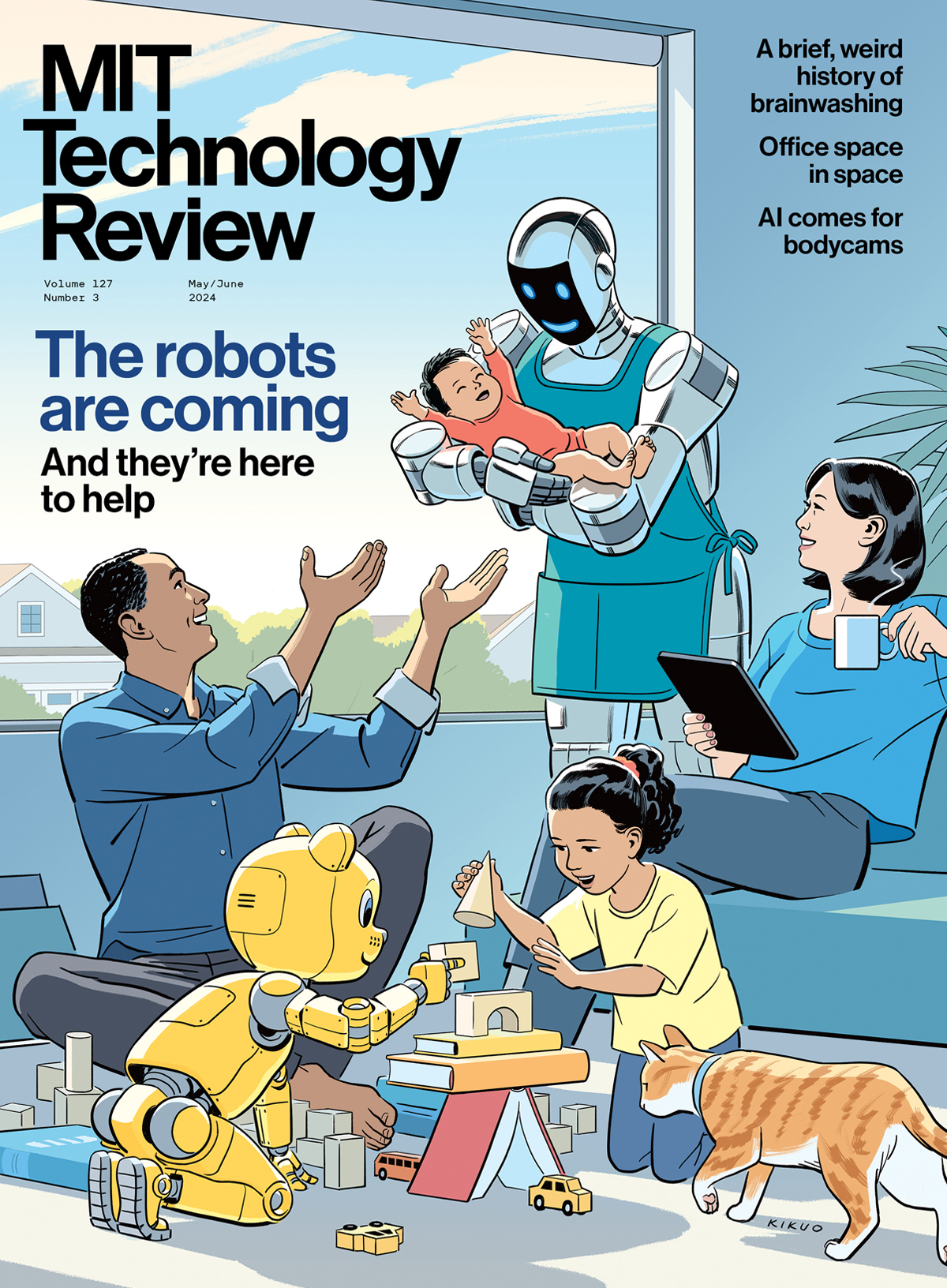
MIT Technology Review (April 29, 2024): The new issue features ‘The Robots Are Coming’ – And they’re here to help; A brief, weird history of brainwashing; Office space in space; AI comes for bodycams…

The Build issue

Who says we can’t still build things? In this issue: a look at the robots we’ve always wanted; a new model for space exploration; and efforts to flood-proof Louisiana’s coastline. Plus a wild, weird history of brainwashing; designing cheese with AI; and glow-in-the dark petunias.

Is robotics about to have its own ChatGPT moment?

Researchers are using generative AI and other techniques to teach robots new skills—including tasks they could perform in homes.Stretch Robot Presents Rose in its gripper

Preview: MIT Technology Review – March/April 2024

Image

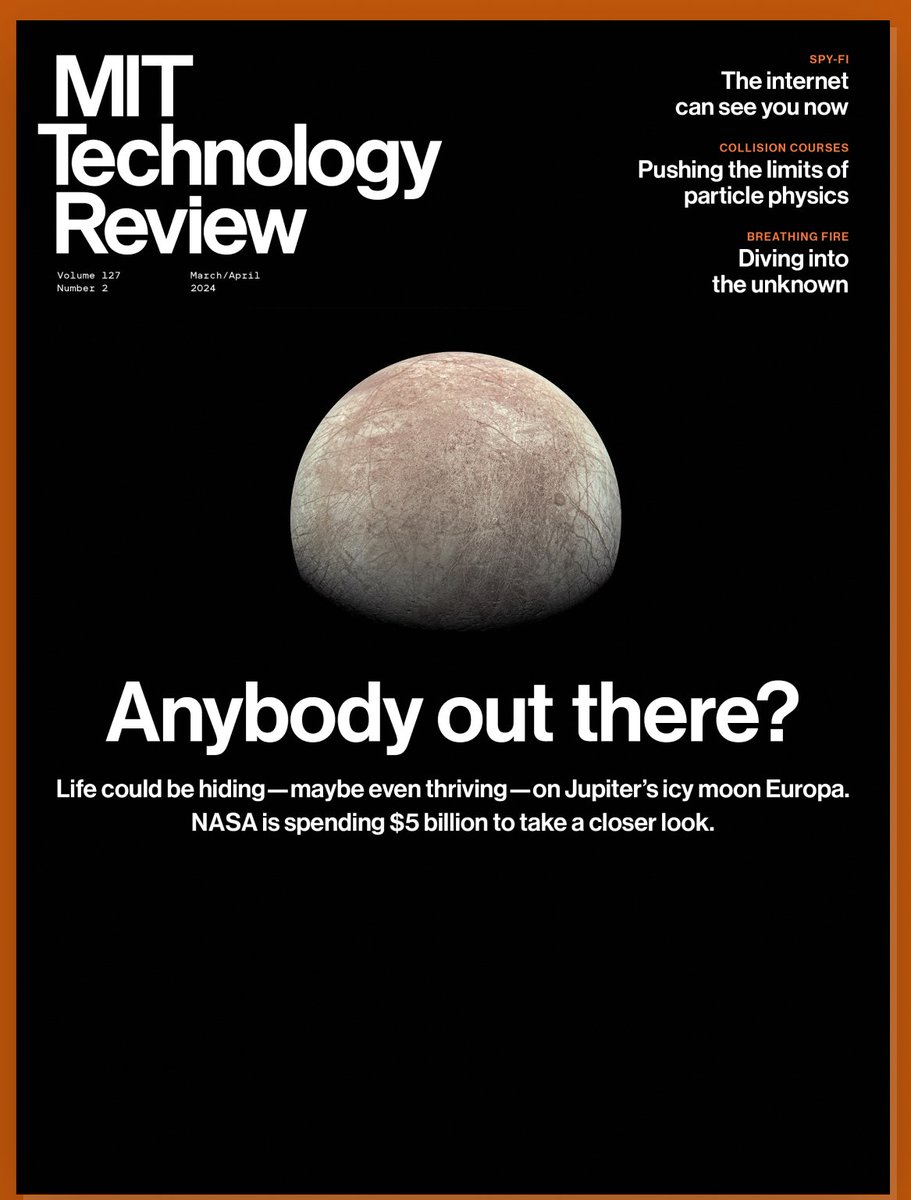
MIT Technology Review (February 29, 2024): The new issue features ‘The Hidden Worlds Issue’ – Is Anybody Out There? Using technology to explore and expose hidden worlds, from enabling deeper dives into ocean depths to journeying to one of Jupiter’s orbiting bodies to pushing the boundaries of particle physics. Plus: wearables for wildlife, Wi-Fi sensing, and a reconsideration of Luddites.

The search for extraterrestrial life is targeting Jupiter’s icy moon Europa

NASA’s Europa Clipper mission will travel to one of Jupiter’s largest moons to look for evidence of conditions that could support life.

Inside the hunt for new physics at the world’s largest particle collider

The Large Hadron Collider hasn’t seen any new particles since the discovery of the Higgs boson in 2012. Here’s what researchers are trying to do about it.

Meet the divers trying to figure out how deep humans can go

Figuring out how the human body can withstand underwater pressure has been a problem for over a century, but a ragtag band of divers is experimenting with hydrogen to find out.

Preview: MIT Technology Review – January 2024

Image

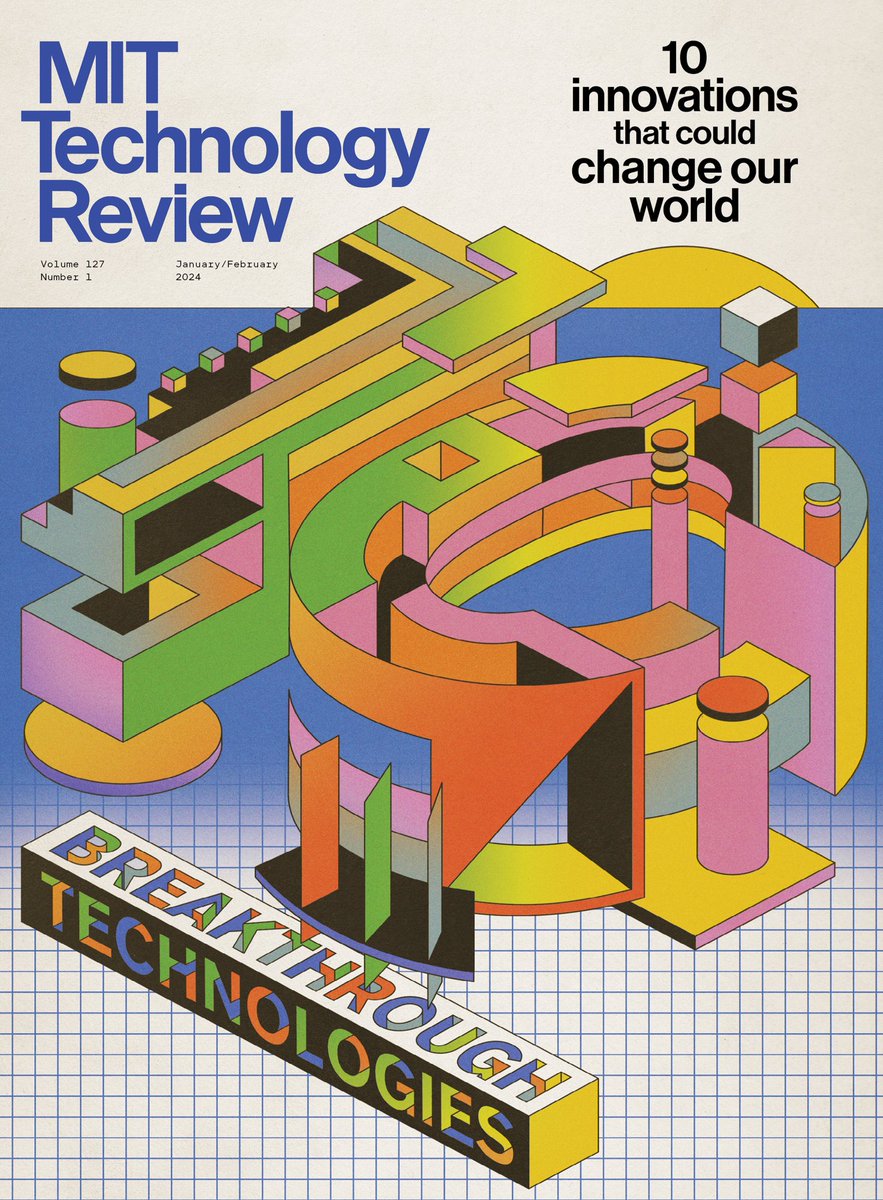
MIT Technology Review (January/February 2024) – The new issue features 10 Innovations that could change our World.

10 Breakthrough Technologies 2024

Every year, we look for promising technologies poised to have a real impact on the world. Here are the advances that we think matter most right now.

AI for everything

Passwordless Login

We now live in the age of AI. Hundreds of millions of people have interacted directly with generative tools like ChatGPT that produce text, images, videos, and more from prompts. Their popularity has reshaped the tech industry, making OpenAI a household name and compelling Google, Meta, and Microsoft to invest heavily in the technology.

Super-efficient solar cells

Solar power is being rapidly deployed around the world, and it’s key to global efforts to reduce carbon emissions. But most of the sunlight that hits today’s panels isn’t being converted into electricity. Adding a layer of tiny crystals could make solar panels more efficient. WHY IT MATTERS

Apple Vision Pro

Apple will start shipping its first mixed-reality headset, the Vision Pro, this year. Its killer feature is the highest-resolution display ever made for such a device. Will there be a killer app? It’s early, but the world’s most valuable company has made a bold bet that the answer is yes. WHY IT MATTERS

Weight-loss drugs

The global rise in obesity has been called an epidemic by the World Health Organization. Medications like Mounjaro and Wegovy are now among the most powerful tools that patients and physicians have to treat it. Evidence suggests they can even protect against heart attacks and strokes. WHY IT MATTERS

Culture & Technology: Wired Magazine – Nov 2023

Image

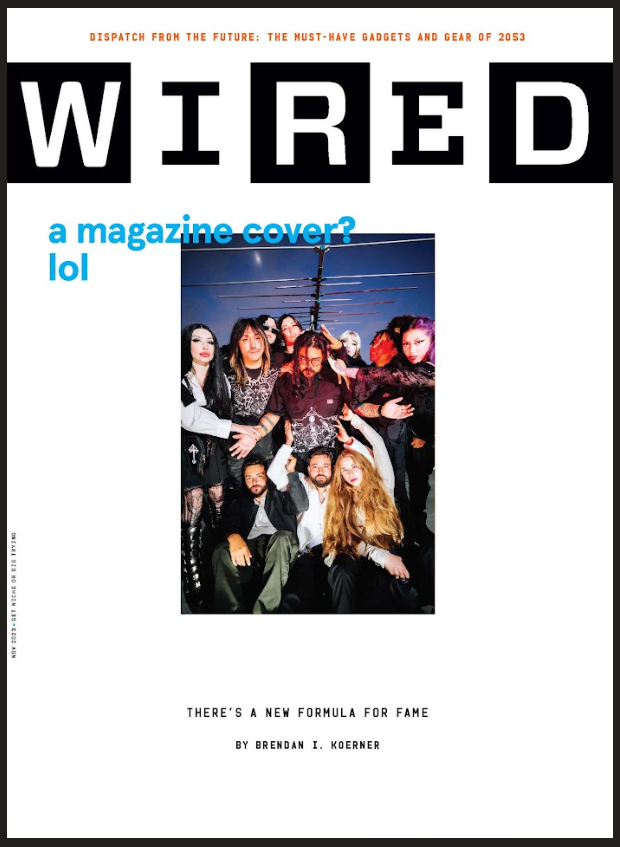
WIRED MAGAZINE (October 31, 2023) – The latest issue features understanding Tik Tok and talent manager Ursus Magana; How Telegram Became a Terrifying Weapon in the Israel-Hamas War; Here’s the Truth Behind the Biggest (and Dumbest) Battery Myths, and more…

Watch This Guy Work, and You’ll Finally Understand the TikTok Era

Watch This Guy Work, and You’ll Finally Understand the TikTok Era

BRENDAN I. KOERNER

The creator economy is fragmented and chaotic. Talent manager Ursus Magana can (almost) make sense of it, with a frenetic formula for gaming the algorithms.

How Telegram Became a Terrifying Weapon in the Israel-Hamas War

Hamas posted gruesome images and videos that were designed to go viral. Sources argue that Telegram’s lax moderation ensured they were seen around the world.

Photoillustration containing a hand holding a smartphone displaying the Telegram app and scenes of the IsraelHamas...

At around 8 am local time the morning of October 7, Haaretz’s cyber and disinformation reporter, Omer Benjakob, was woken by his wife at their home in the historic port city of Jaffa. Something was happening in southern Israel, she said, but Benjakob shrugged it off, presuming “another round of the same shit.” Flare-ups between the Israel Defense Forces (IDF) and militants in southern Israel are not uncommon. “No, no,” Benjakob’s wife insisted. “It’s more serious.”

Review: Skyview 2 Wellness Table Lamp

Skyview 2 lamp

No sunlight? No problem. This wellness lamp brings dim rooms the next best thing to natural light.

Here’s the Truth Behind the Biggest (and Dumbest) Battery Myths

Heres the Truth Behind the Biggest  Battery Myths

Yes, charging your phone overnight is bad for its battery. And no, you don’t need to turn off your device to give the battery a break. Here’s why.

For an object that barely ever leaves our palms, the smartphone can sometimes feel like an arcane piece of wizardry. And nowhere is this more pronounced than when it comes to the fickle battery, which will drop 20 percent charge quicker than you can toggle Bluetooth off, and give up the ghost entirely after a couple of years of charging.

Preview: MIT Technology Review – November 2023

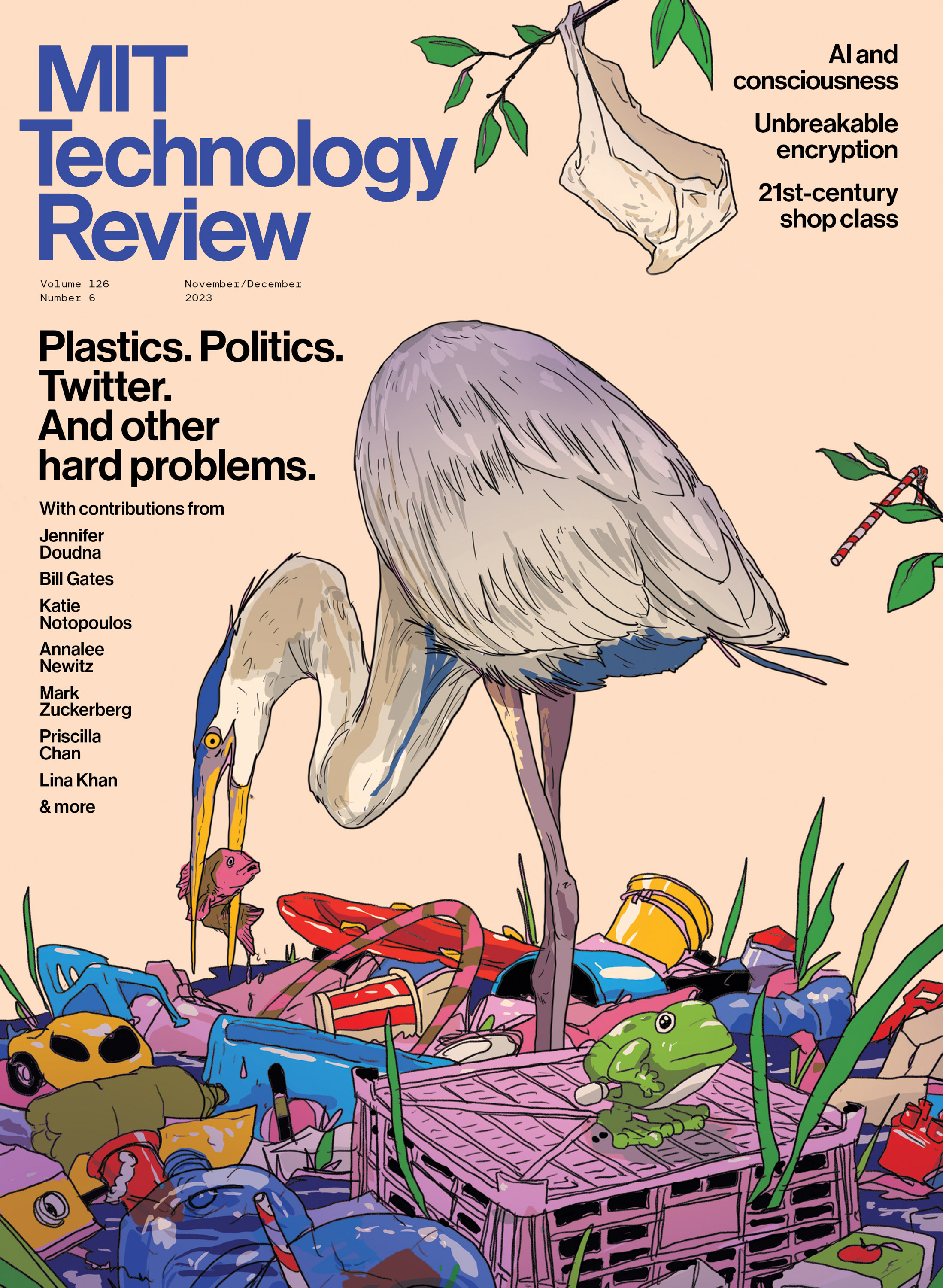
ND23 cover image: a heron plucks a pink plastic fish from a landscape contaminated with plastic trash

MIT Technology Review – November/December 2023: The Hard Problems issue features the Intractable problem of plastics; Fixing the internet; Exploring what it would it take for AI to become conscious. Also, there are so many urgent issues facing the world—where do we begin? Bill Gates, Mark Zuckerberg, Jennifer Doudna, and others offer their ideas.

Think that your plastic is being recycled? Think again.

Kid surrounded by bins and scattered plastic containers proudly holds up a toy figure constructed by plastic parts

Plastic is cheap to make and shockingly profitable. It’s everywhere. And we’re all paying the price.

Plastic, and the profusion of waste it creates, can hide in plain sight, a ubiquitous part of our lives we rarely question. But a closer examination of the situation can be shocking. 

Indeed, the scale of the problem is hard to internalize. To date, humans have created around 11 billion metric tons of plastic. This amount surpasses the biomass of all animals, both terrestrial and marine, according to a 2020 study published in Nature

Currently, about 430 million tons of plastic is produced yearly, according to the United Nations Environment Programme (UNEP)—significantly more than the weight of all human beings combined. One-third of this total takes the form of single-use plastics, which humans interact with for seconds or minutes before discarding. 

Minds of machines: The great AI consciousness conundrum

"'

Philosophers, cognitive scientists, and engineers are grappling with what it would take for AI to become conscious.

David Chalmers was not expecting the invitation he received in September of last year. As a leading authority on consciousness, Chalmers regularly circles the world delivering talks at universities and academic meetings to rapt audiences of philosophers—the sort of people who might spend hours debating whether the world outside their own heads is real and then go blithely about the rest of their day. This latest request, though, came from a surprising source: the organizers of the Conference on Neural Information Processing Systems (NeurIPS), a yearly gathering of the brightest minds in artificial intelligence.