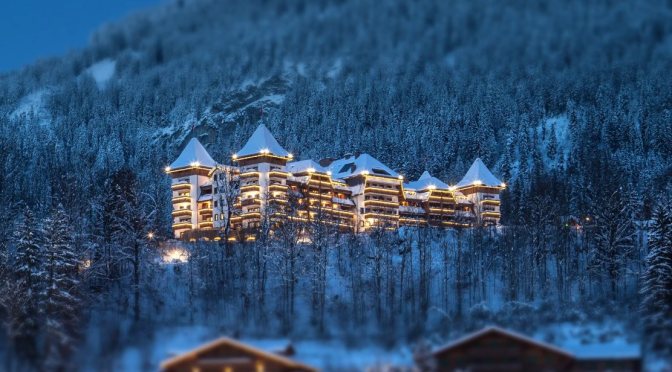
the Luxury Travel Expert (January 27, 2024) – A tour of the The Alpina Gstaad, one of the best 5-star hotels in Switzerland.
Video chapters: 0:00 Intro 2:19 Arrival 3:51 Porte cochere 5:37 Lobby (ground floor) 7:27 Lobby (first floor) 15:41 Boutique & jewelry 19:26 Suite 26:07 Spa 30:30 Indoor pool 39:27 Outdoor pool 45:55 Gstaad village 50:18 Megu Restaurant & Bar 56:01 Sommet by Martin Göschel Restaurant (one Michelin star) 1:01:51 Swiss Stübli Restaurant 1:07:17 Breakfast 1:11:29 Skiing
Built on five acres of the Bernese Oberland, The Alpina Gstaad promises two views: mountain and valley. The first looks onto Gstaad and promises snow-capped sightings of Spitzhorn and Oldenhorn, while the second delivers rippling hilltops and stretches of lake over Schönried village.
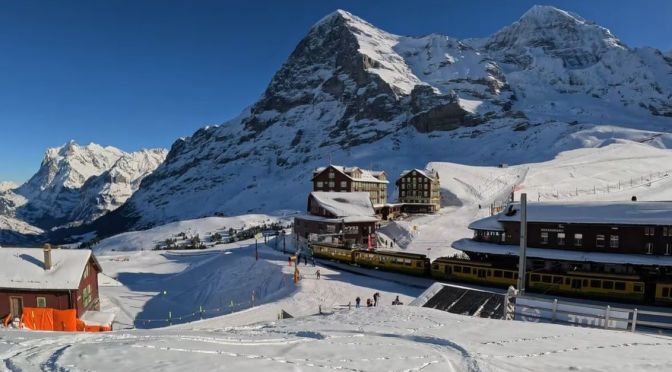
AKSense – Zurich Films (January 13, 2024) – This 4K HDR video features a train driver’s view of the trip to Grindelwald village (3392 ft) from Kleine Scheidegg mountain station (6762 ft).
The Kleine Scheidegg is located directly at the foot of Eiger North Face. It is the watershed between the two Lütschinen valleys. It is a popular starting point for the Jungfrau train to the Jungfraujoch-Top of Europe station, the highest train station of Europe.
AKSense – Zurich (January 6, 2024) – Grindelwald, a village in Switzerland’s Bernese Alps, is a popular gateway for the Jungfrau Region, with skiing in winter and hiking in summer. The First Aerial Cableway is the cableway with six-seater gondolas travelling from Grindelwald up to First via Bort and Schreckfeld.
The gondola cableway has a capacity of up to 1,200 persons per hour with a travelling time of approximately 25 minutes. Aside from the gondola cableway, Firstbahn AG also has three chairlifts and two ski lifts.
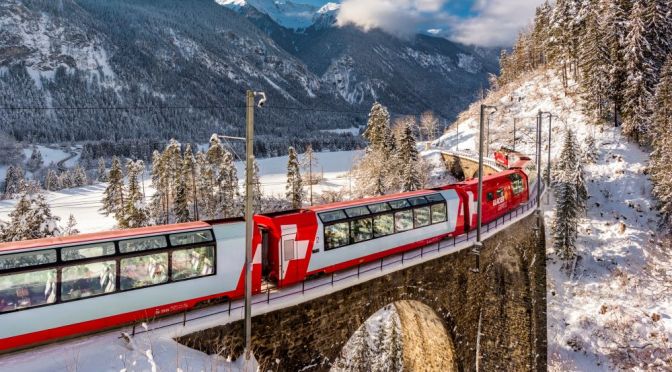
AKSense – Zurich Films (December 24, 2023) – The Glacier Express is the world’s slowest and Switzerland’s most elegant express train. This video is between Brig and Andermatt stations.
The entire route takes around 8 hours, the Glacier Express takes you across the Swiss Alps between St. Moritz and Zermatt regions, passing through narrow valleys, tight curves, 91 tunnels, and over 291 bridges including the unique Landwasser viaduct (UNESCO site).
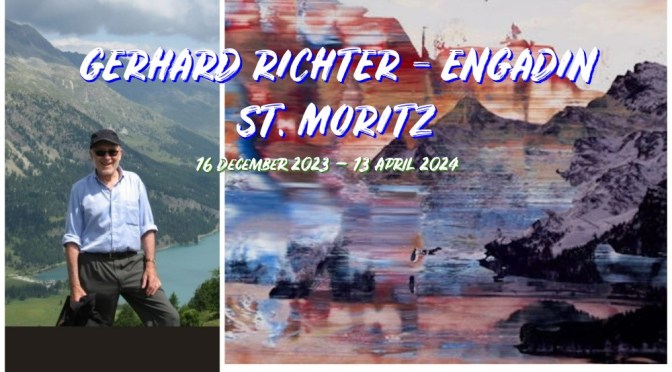
Hauser & Wirth – Art Gallery (November 11, 2023) = Gerhard Richter, born in 1932, is one of the most important and celebrated artists of our time. His works can be found in international collections and have been exhibited in numerous museums and galleries in Europe and the United States. Richter first vacationed in the Swiss Alpine village Sils, located in the Upper Engadin region, in 1989, a location he has regularly visited during both summer and winter holidays for over 25 years.
Curated by Dieter Schwarz and presented across three venues in the Upper Engadin—Nietzsche-Haus, the Segantini Museum and Hauser & Wirth St. Moritz—this momentous exhibition is the first to explore Gerhard Richter’s deep connection with the Engadin’s alpine landscape. More than seventy works from museums and private collections—including paintings, overpainted photographs, drawings and objects—are testament to the artist’s fascination with the Upper Engadin. Opening 16 December 2023, ‘Engadin’ will be on view through 13 April 2024.
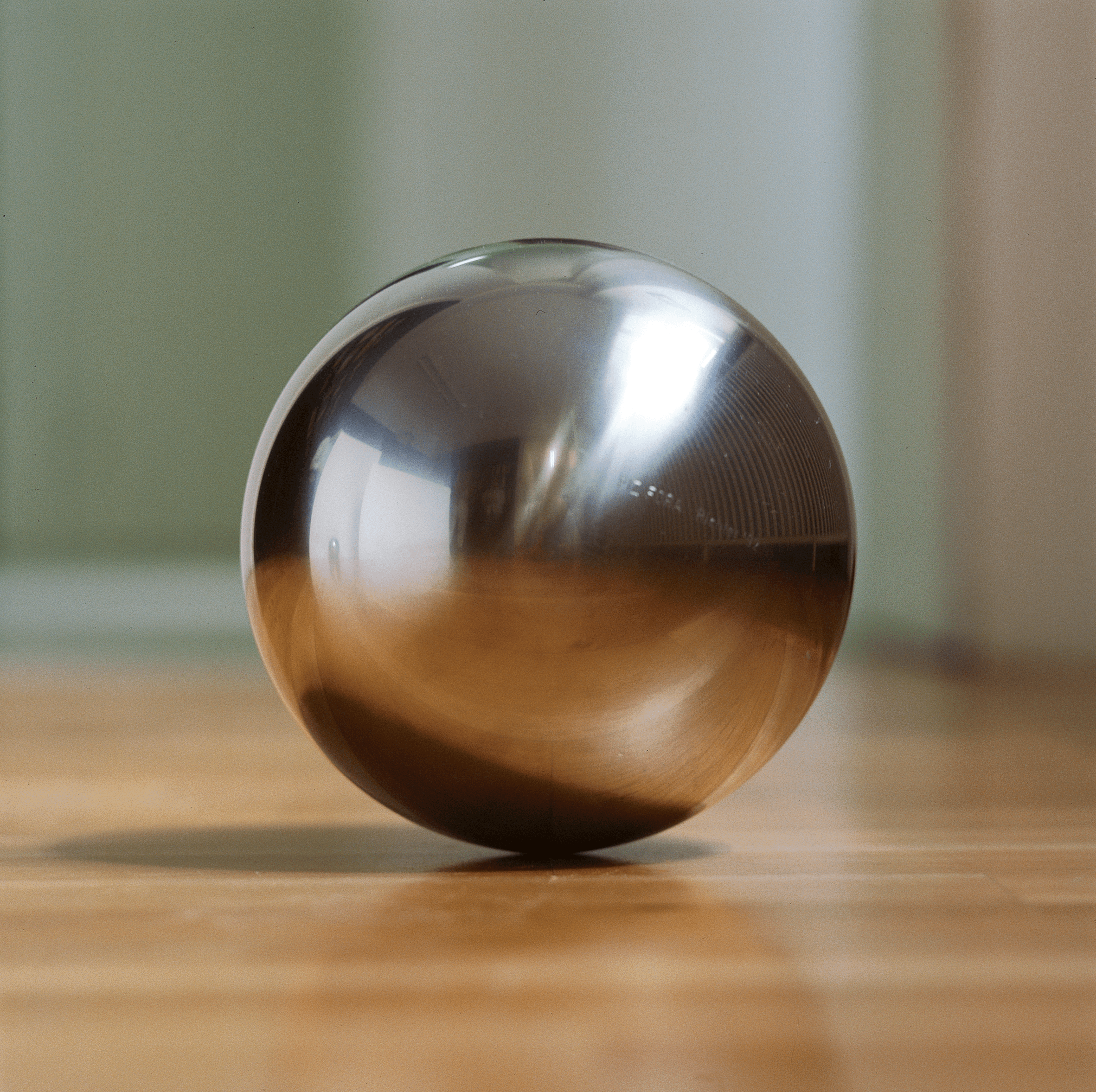
The work connecting the three exhibition venues is a steel sphere that Richter had produced as an edition, on view at each site. He first presented it at Nietzsche-Haus in 1992, in an exhibition curated by Hans Ulrich Obrist. Each unique sphere bears the name of a mountain in the Upper Engadin. The matte, subtly reflective, almost surreal sphere delicately reflects all that surrounds it. It symbolizes the sublime yet inhospitable manifestations of nature, which are especially conspicuous in the mountains.
On view at the Segantini Museum and Hauser & Wirth are paintings that Richter created from photographs taken during his hikes in the Upper Engadin. These works mark a new chapter in his landscape painting—a genre that had always appealed to him for its supposed untimeliness. Richter’s Engadin landscapes are exemplary of the ambiguity in his painting, oscillating between a seductive transfiguration of nature and a reflection of its alienness. Particularly noteworthy is the painting ‘Wasserfall (Waterfall)’ (1997) from Kunst Museum Winterthur, a work that clearly traces Richter’s engagement with 19th-century painting, from romanticism to realism. The artist later overpainted some of the Engadin motifs, including depictions of Piz Materdell and Lake Sils, transforming them into abstract paintings with a melancholic atmosphere that responds to impressions of the landscape.
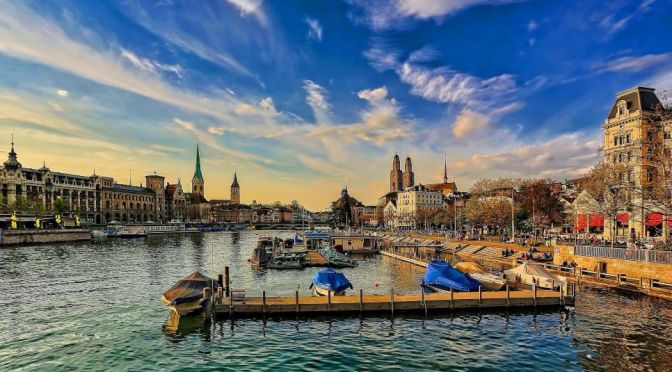
Tourist Car (September 28, 2023) – The city of Zurich, a global center for banking and finance, lies at the north end of Lake Zurich in northern Switzerland. The picturesque lanes of the central Altstadt (Old Town), on either side of the Limmat River, reflect its pre-medieval history. Waterfront promenades like the Limmatquai follow the river toward the 17th-century Rathaus (town hall).
The Traveler (September 17, 2023) – A tour of Zermatt, in southern Switzerland’s Valais canton, a mountain resort renowned for skiing, climbing and hiking. The town, at an elevation of around 1,600m, lies below the iconic, pyramid-shaped Matterhorn peak. Its main street, Bahnhofstrasse is lined with boutique shops, hotels and restaurants, and also has a lively après-ski scene. There are public outdoor rinks for ice-skating and curling.
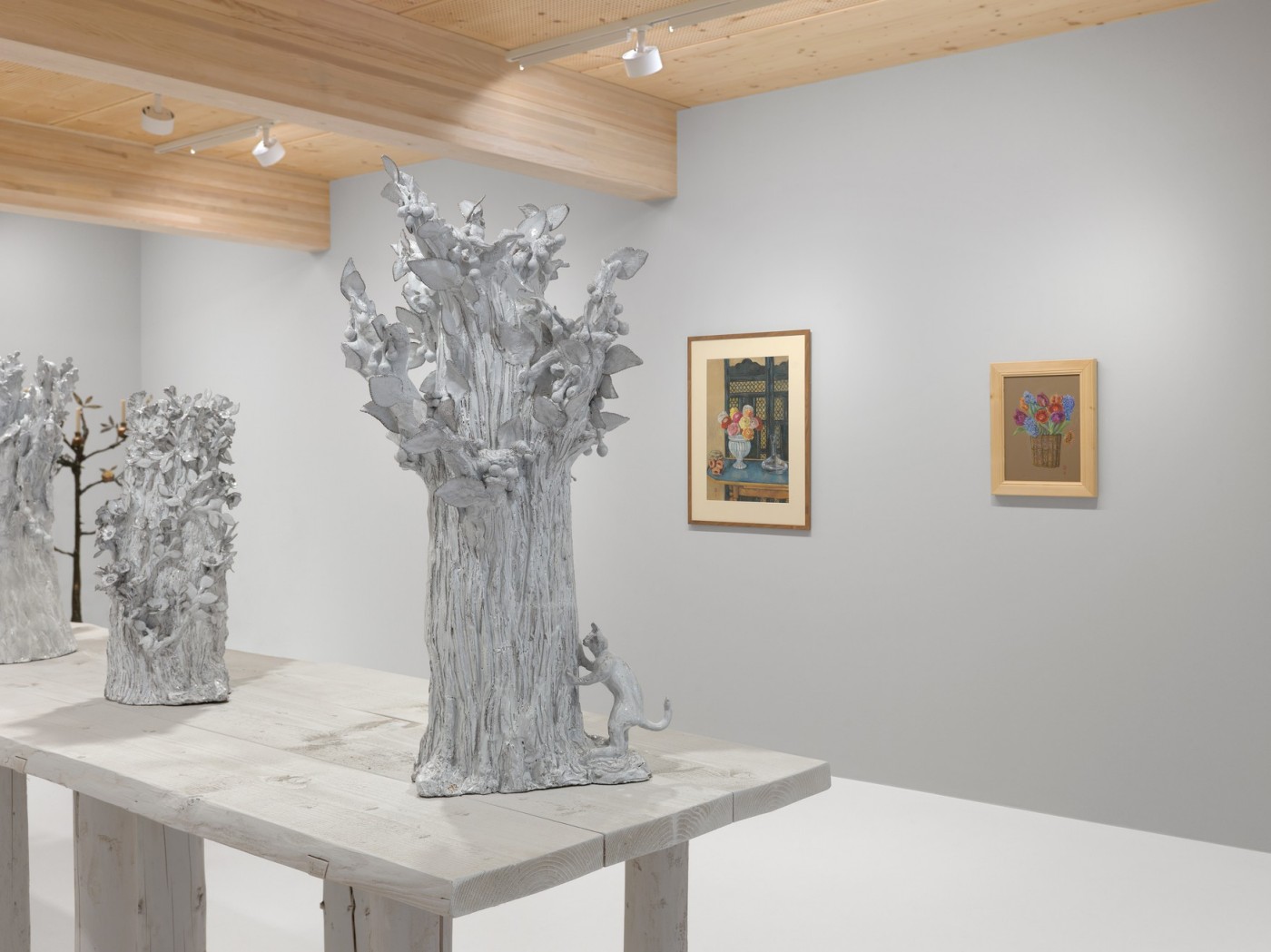
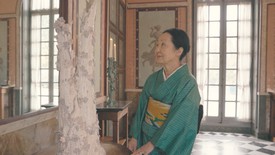
Gagosian Gallery Films (September 1, 2023) – Into Nature is an exhibition of new and recent ceramic and bronze sculptures, paintings, and works on paper by Setsuko at the gallery in Gstaad.
Since 1977, Setsuko has resided in the Grand Chalet of Rossinière, close to Gstaad, making this an opportunity for her to exhibit within reach of her Swiss home. Into Nature furthers the bodies of work presented in Into the Trees, Setsuko’s debut exhibition at Gagosian Paris in 2019, and Into the Trees II, a solo presentation at Gagosian Rome in 2022.
On view in Gstaad are new ceramic sculptures, produced at Astier de Villatte’s Paris workshop and made of terra-cotta glazed in white enamel. Setsuko’s renderings of trees, with their delicately modeled representations of acorns, blooms, foliage, and fruit, emphasize the rooted solidity of their trunks to convey lasting strength and emergent growth. Reminiscent of Japanese ceramics dating back to the age of Jōmon earthenware (c. 10,500–300 BCE), these works also refer to the animistic Japanese religion Shintō, to which trees are of central symbolic importance.
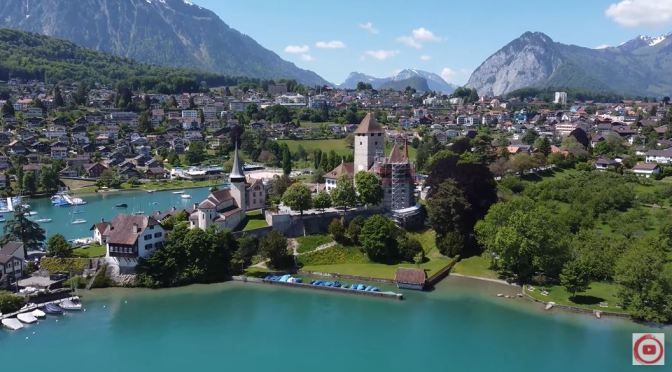
The Flying Dutchman (July 23, 2023) – Spiez is a town and municipality on the shore of Lake Thun in the Bernese Oberland region of the Swiss canton of Bern. It is part of the Frutigen-Niedersimmental administrative district.
Besides the town of Spiez, the municipality also includes the settlements of Einigen, Hondrich, Faulensee, and Spiezwiler.
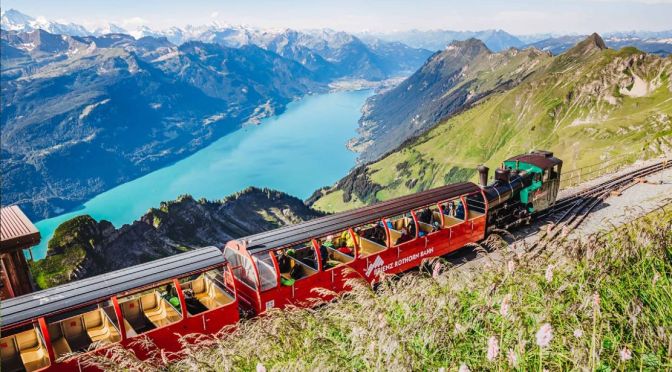
Sylvia Michel Photography (July 12, 2023) – The Brienz Rothorn Railway is a tourist rack railway in Switzerland, which climbs from Brienz, at the eastern end of Lake Brienz, to the summit of the Brienzer Rothorn.


 A
A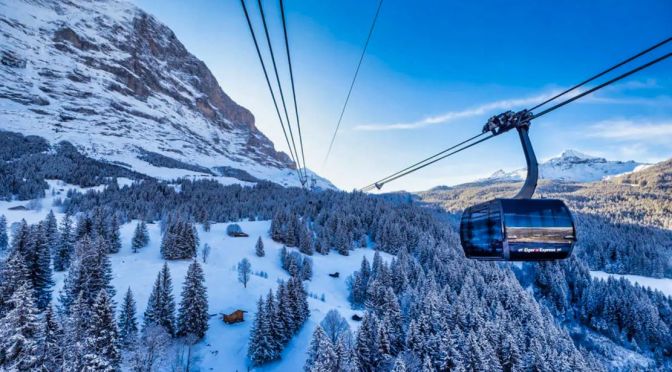
 Hauser & Wirth – Art Gallery


 Tourist Car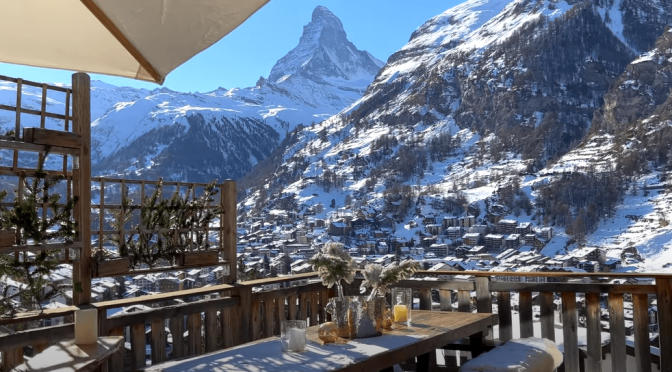
 The Traveler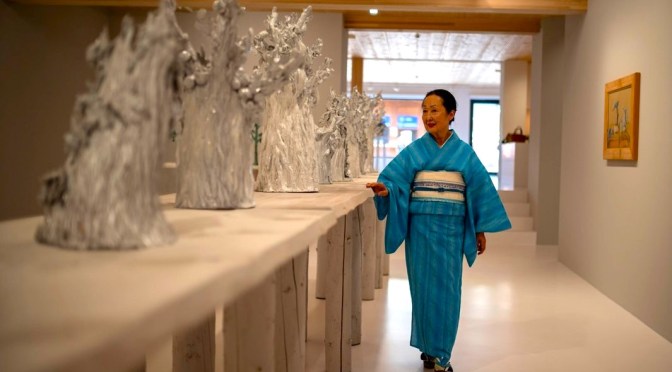


 Boomers Daily