Tag Archives: Science

Research Preview: Science Magazine -January 26, 2024

Image

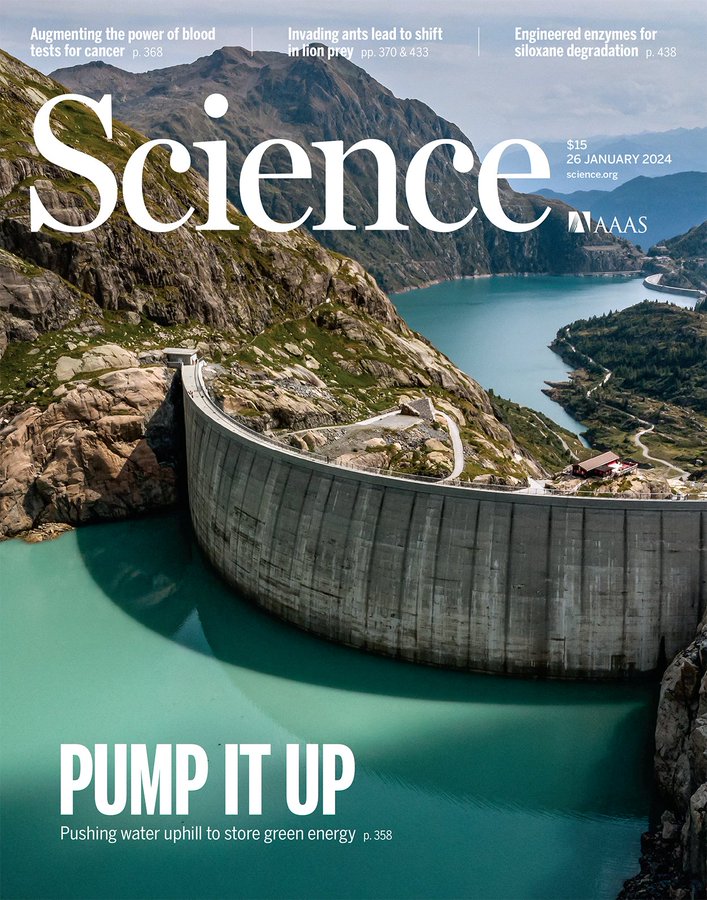
Science Magazine – January 25, 2024: The new issue features ‘Pump It Up’ – Pushing water uphill to store green energy…

How giant ‘water batteries’ could make green power reliable

For times when wind and solar fall short, some utilities are turning to an old technology called pumped storage hydropower

A ghostly quasiparticle rooted in a century-old Italian mystery could unlock quantum computing’s potential

Before he disappeared, Ettore Majorana made a strange prediction. Researchers are still hunting for the truth about him—and his namesake particles

Research Preview: Nature Magazine- January 25, 2024

Volume 625 Issue 7996

Nature Magazine – January 24, 2024: The latest issue cover features ‘Brain Drain’ – A hub for the outflow of Cerebrospinal Fluid…

A quantum fix makes e-commerce more tamper-resistant

Light pulses with specific quantum properties could be harnessed to send digital ‘contracts’ between buyer and seller.

How an exercise habit paves the way for injured muscles to heal

Mice that work out regularly have higher levels of a molecule that promotes muscle regeneration than sedentary mice do.

Flexible geothermal power makes it easier to harness Earth’s inner heat

Next-generation plants that respond to demand could be key to making a low-carbon energy source more economically appealing.

Research Preview: Science Magazine -January 19, 2024

Current Issue Cover

Science Magazine – January 18, 2024: The new issue features ‘Plants And People’ – Global Hotspots of Utilized Plants; Long Covid Markers of Immune Dysfunction; A mammoth’s life story, written in tusk, and more…

Immune damage in Long Covid

Links between the complement and coagulation systems could lead to Long Covid therapies

Second image of ‘shadow’ confirms giant black hole is real

To zoom in farther, Event Horizon Telescope wants to add more radio dishes to its network—and go to space

Research Preview: Nature Magazine- January 18, 2024

Volume 625 Issue 7995

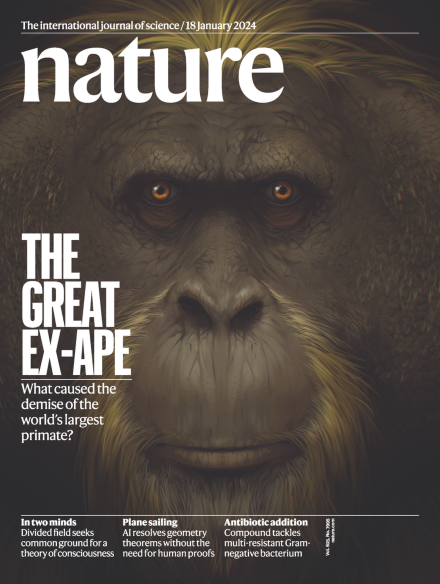
Nature Magazine – January 17, 2024: The latest issue cover features the giant ape Gigantopithecus blacki, thought to be the largest primate that ever lived, which lived in China between 2 million and 300,000 years ago.

Why the immune response to a vaccine varies from person to person

A dormant immune system before receiving the BCG vaccine is tied to a greater innate immune response afterwards.

The Higgs boson is caught in a singular transformation

Detectors at the Large Hadron Collider spot the famed particle decaying into a photon and a ‘Z boson’.

Research Preview: Science Magazine -January 12, 2024

Image

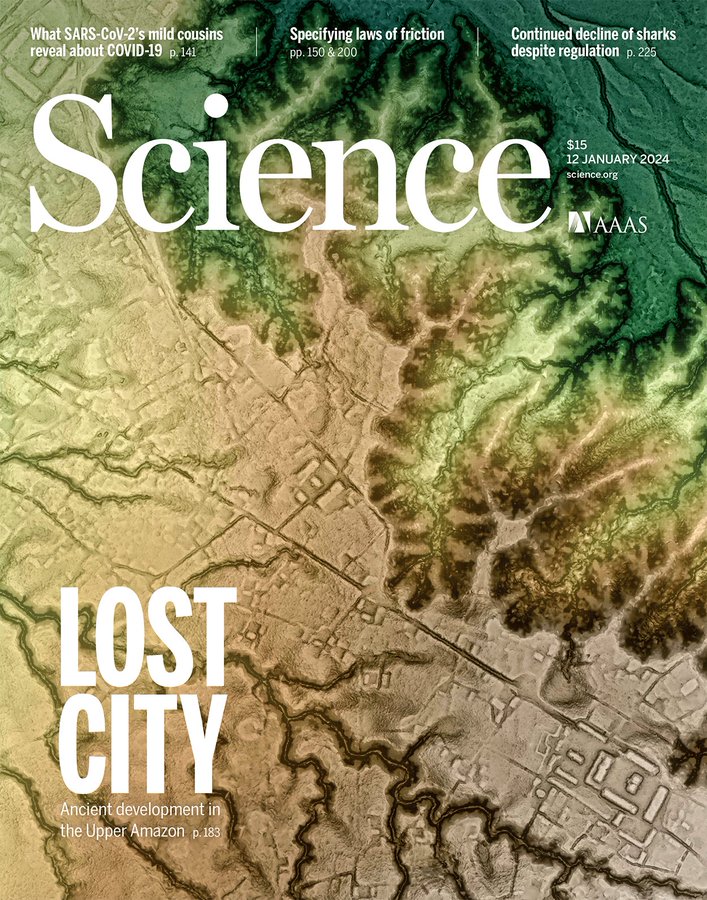
Science Magazine – January 11, 2024: The new issue features ‘Lost City’ – Ancient development in the Upper Amazon; What SARS-CoV-2’s mild cousins reveal about Covid-19; Specifying laws of friction and a Continued decline in sharks despite regulation…

The hottest year was even hotter than expected

Greenhouse gases, El Niño, and cleaner air fueled record heat in 2023

Tectonic plate under Tibet may be splitting in two

Peeled-apart Indian Plate could be affecting earthquake hazards

Research Preview: Nature Magazine January 11, 2024

Volume 625 Issue 7994

Nature Magazine – January 10, 2024: The latest issue cover features Steppe Change’ – Migration and lifestyle shifts in prehistoric Eurasia linked to raised genetic risk of multiple sclerosis.

Cancer-fighting CAR T cells could be made inside body with viral injection

Scientists are devising ways to edit the genomes of immune cells without having to extract them from the people being treated.

Japan earthquakes: the science behind the deadly tremors

A massive quake that triggered tsunamis, fires and multiple aftershocks was the largest on the country’s west coast in more than a century.

Boosting microbiome science worldwide could save millions of children’s lives

Studies of the microbes living on and in our bodies are conducted mainly in a few rich countries, squandering opportunities to improve the health of people globally.

Preview: MIT Technology Review – January 2024

Image

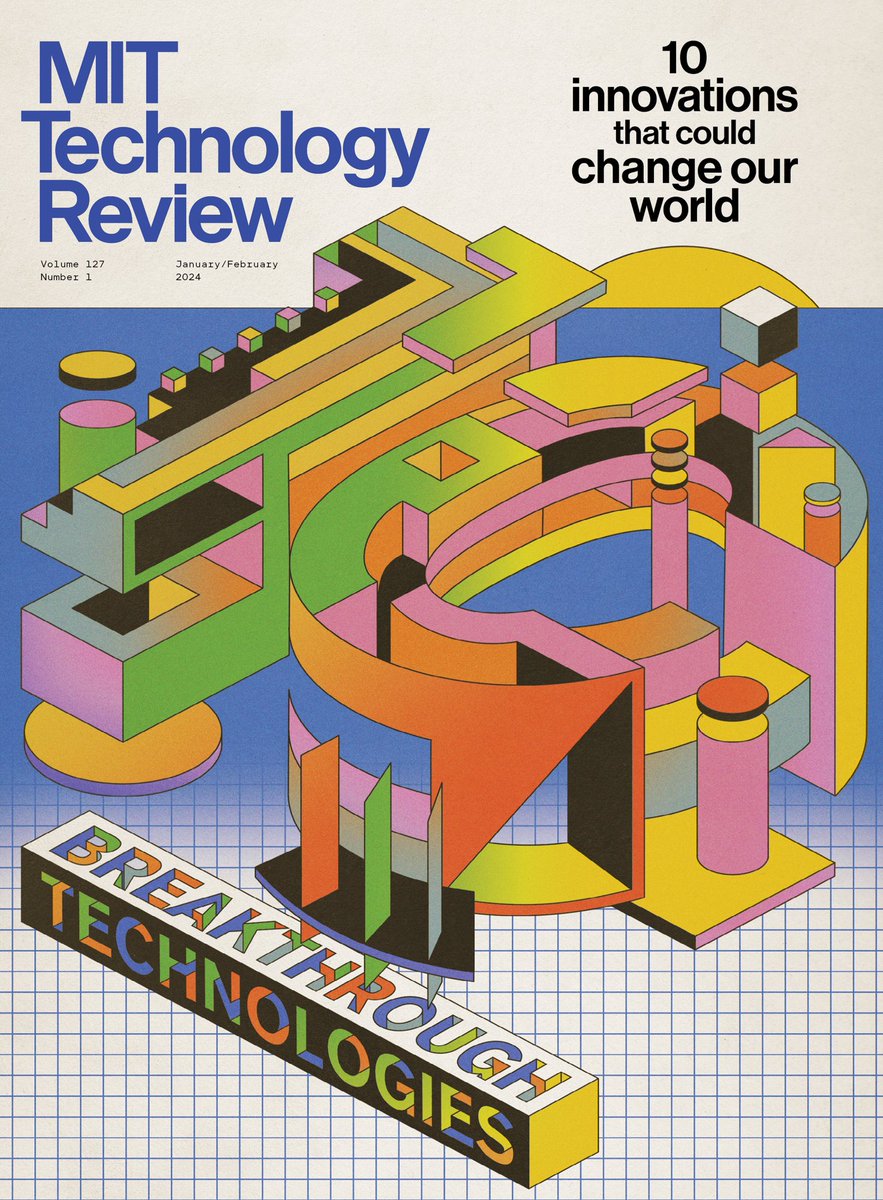
MIT Technology Review (January/February 2024) – The new issue features 10 Innovations that could change our World.

10 Breakthrough Technologies 2024

Every year, we look for promising technologies poised to have a real impact on the world. Here are the advances that we think matter most right now.

AI for everything

Passwordless Login

We now live in the age of AI. Hundreds of millions of people have interacted directly with generative tools like ChatGPT that produce text, images, videos, and more from prompts. Their popularity has reshaped the tech industry, making OpenAI a household name and compelling Google, Meta, and Microsoft to invest heavily in the technology.

Super-efficient solar cells

Solar power is being rapidly deployed around the world, and it’s key to global efforts to reduce carbon emissions. But most of the sunlight that hits today’s panels isn’t being converted into electricity. Adding a layer of tiny crystals could make solar panels more efficient. WHY IT MATTERS

Apple Vision Pro

Apple will start shipping its first mixed-reality headset, the Vision Pro, this year. Its killer feature is the highest-resolution display ever made for such a device. Will there be a killer app? It’s early, but the world’s most valuable company has made a bold bet that the answer is yes. WHY IT MATTERS

Weight-loss drugs

The global rise in obesity has been called an epidemic by the World Health Organization. Medications like Mounjaro and Wegovy are now among the most powerful tools that patients and physicians have to treat it. Evidence suggests they can even protect against heart attacks and strokes. WHY IT MATTERS

Research Preview: Science Magazine – January 5, 2024

Image

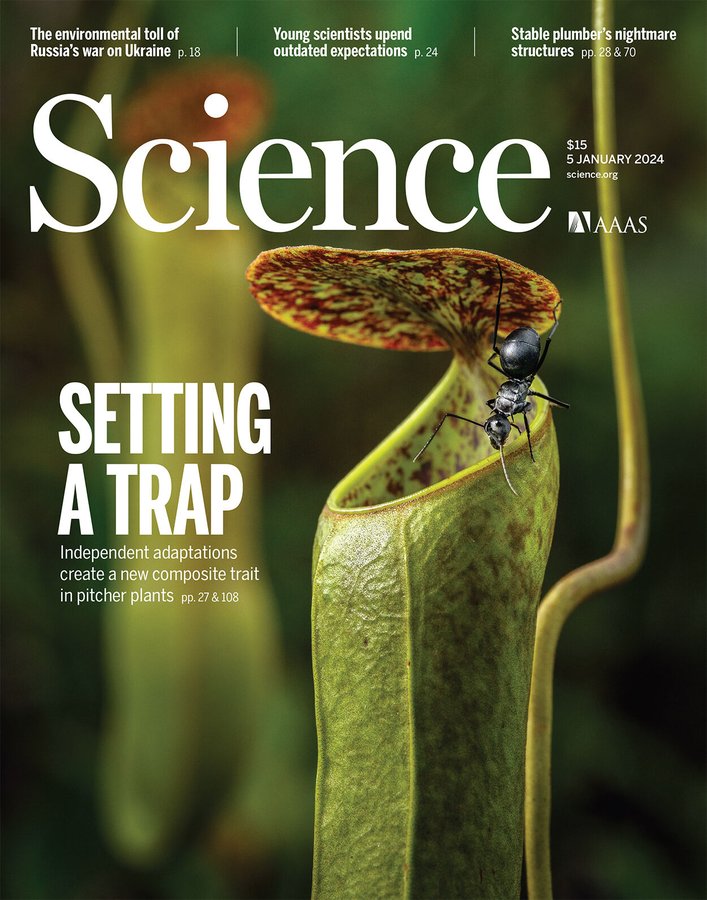
Science Magazine – December 21, 2023: The new issue features a carnivorous Nepenthes gracilis pitcher plant luring an ant into a precarious position under the roof-like trap lid.

Dopamine regulates attitude toward risk

Specific brain pathways can lower or raise the willingness of monkeys to take risks

Magellanic cloud may be two galaxies, not one

Rethink of familiar object may boost odds that its name, offensive to some, will be changed

Research Preview: Nature Magazine January 4, 2024

Volume 625 Issue 7993

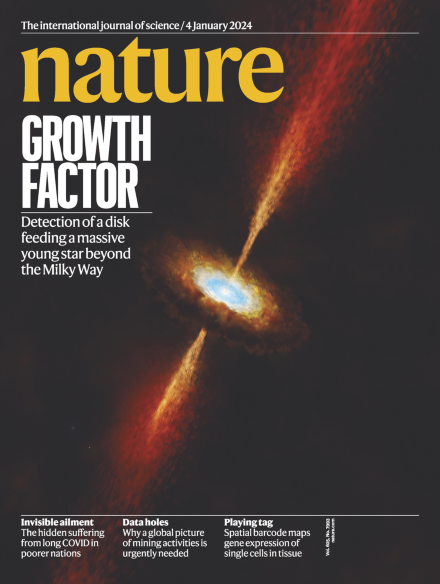
Nature Magazine – January 3, 2024: The latest issue cover features  an artist’s impression of a massive young star in the process of forming.

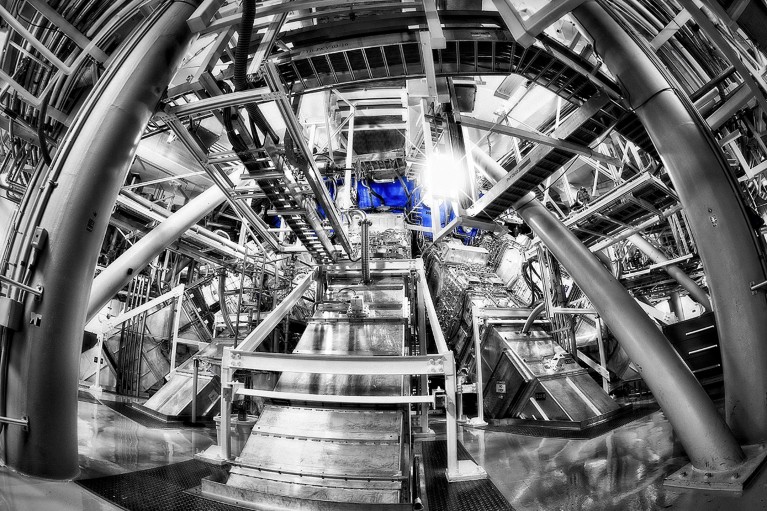
US nuclear-fusion lab enters new era: achieving ‘ignition’ over and over

NIF beamlines entering the lower hemisphere of the NIF Target Chamber, as seen from the ground floor of the Target Bay.

Researchers at the National Ignition Facility are consistently creating reactions that make more energy than they consume.

By Jeff Tollefson

In December 2022, after more than a decade of effort and frustration, scientists at the US National Ignition Facility (NIF) announced that they had set a world record by producing a fusion reaction that released more energy than it consumed — a phenomenon known as ignition. They have now proved that the feat was no accident by replicating it again and again, and the administration of US President Joe Biden is looking to build on this success by establishing a trio of US research centres to help advance the science.

DeepMind AI outdoes human mathematicians on unsolved problem

A player holds a hand of Set game cards over a green table.

Large language model improves on efforts to solve combinatorics problems inspired by the card game Set.

Davide Castelvecchi

The card game Set has long inspired mathematicians to create interesting problems.

Now, a technique based on large language models (LLMs) is showing that artificial intelligence (AI) can help mathematicians to generate new solutions.

Nature Magazine Podcast: ‘A New Kind Of Solar Cell’

nature podcasts (December 29, 2023) – A new kind of solar cell is coming: is it the future of green energy? Firms commercializing perovskite–silicon ‘tandem’ photovoltaics say that the panels will be more efficient and could lead to cheaper electricity.

Rooftop Solar Energy Facility In Yongzhou, China.

On the outskirts of Brandenburg an der Havel, Germany, nestled among car dealerships and hardware shops, sits a two-storey factory stuffed with solar-power secrets. It’s here where UK firm Oxford PV is producing commercial solar cells using perovskites: cheap, abundant photovoltaic (PV) materials that some have hailed as the future of green energy. Surrounded by unkempt grass and a weed-strewn car park, the factory is a modest cradle for such a potentially transformative technology, but the firm’s chief technology officer Chris Case is clearly in love with the place. “This is the culmination of my dreams,” he says.