
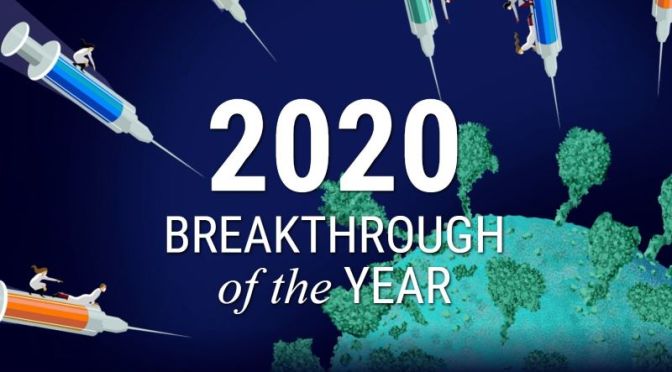
Each year, editors and writers choose a top research achievement as Science’s Breakthrough of the Year. This year, that honor goes to the multiple COVID-19 vaccines that have succeeded in large human trials—and are now being deployed around the world. But there are a lot of other advances to talk about, from figuring out the origin of Fast Radio Bursts to the discovery of the earliest known figurative art. Check out a few of the runners-up candidates—and this year’s Breakthrough of the Year—in this video rundown. Read the stories here: https://scim.ag/37v20ds
Tag Archives: Science Journals
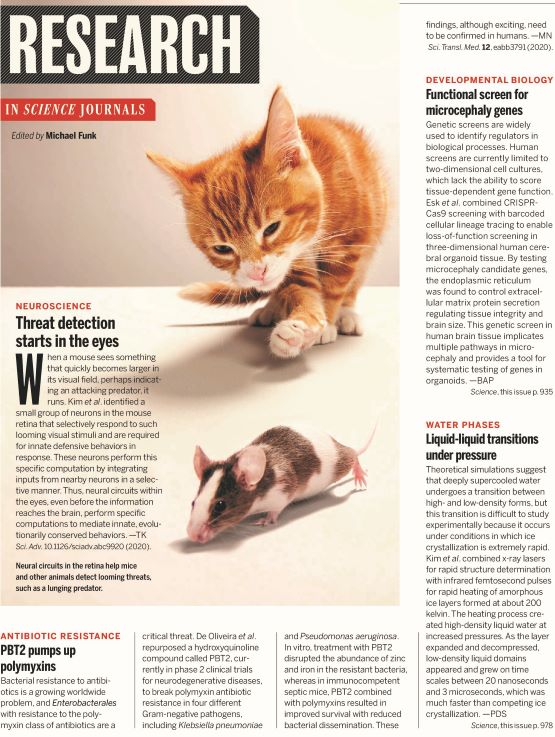
TOP JOURNALS: RESEARCH HIGHLIGHTS FROM SCIENCE MAGAZINE (DEC 18, 2020)


Science Podcast: The Top Stories, Breakthroughs And Books Of 2020

Our last episode of the year is a celebration of science in 2020. First, host Sarah Crespi talks with Online News Editor David Grimm about some of the top online news stories of the year—from how undertaker bees detect the dead to the first board game of death. (It’s not as grim as it sounds.)
Sarah then talks with Online News Editor Catherine Matacic about the Breakthrough of the Year, scientific breakdowns, and some of the runners-up—amazing accomplishments in science achieved in the face of a global pandemic. Finally, Book Review Editor Valerie Thompson joins Sarah to discuss highlights from the books section—on topics as varied as eating wild foods to how the materials we make end up shaping us.
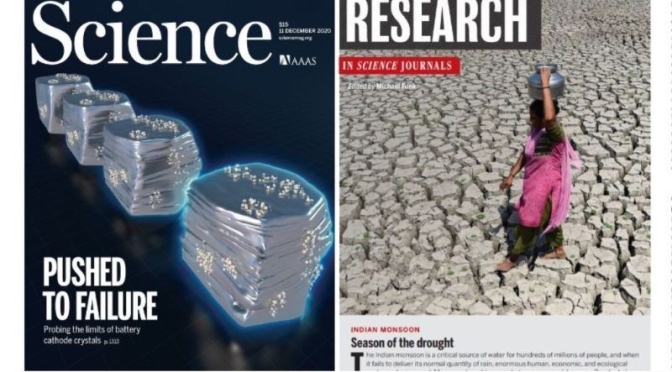
TOP JOURNALS: RESEARCH HIGHLIGHTS FROM SCIENCE MAGAZINE (DEC 11, 2020)
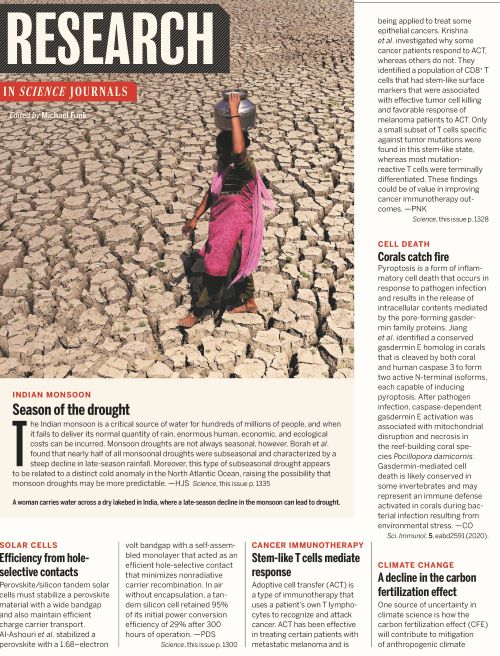

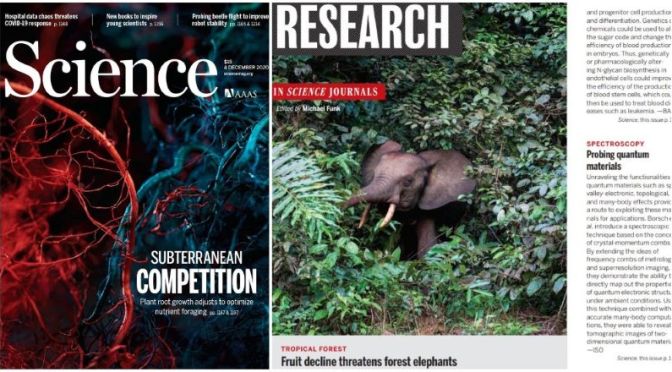
TOP JOURNALS: RESEARCH HIGHLIGHTS FROM SCIENCE MAGAZINE (DEC 4, 2020)


Science Podcast: Covid-19 Vaccine Review And Side Effects, Restoring Vision

Staff Writer Meredith Wadman and host Sarah Crespi discuss what to expect from the two messenger RNA–based vaccines against COVID-19 that have recently released encouraging results from their phase III trials and the short-term side effects some recipients might see on the day of injection.
Sarah also talks with researcher Xing Chen, a project co-leader and postdoctoral scientist at the Netherlands Institute for Neuroscience, about using brain stimulation to restore vision. Researchers have known for about 70 years that electrical stimulation at certain points in the brain can lead to the appearance of a phosphene—a spot of light that appears not because there’s light there, but because of some other stimulation, like pressing on the eyeball. If electrical stimulation can make a little light appear, how about many lights? Can we think about phosphenes as pixels and draw a picture for the brain? How about a moving picture?
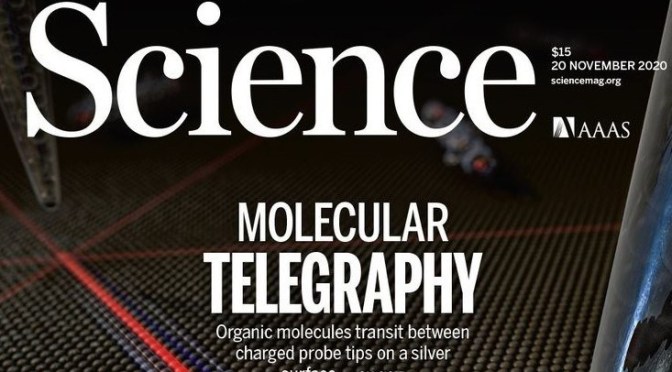
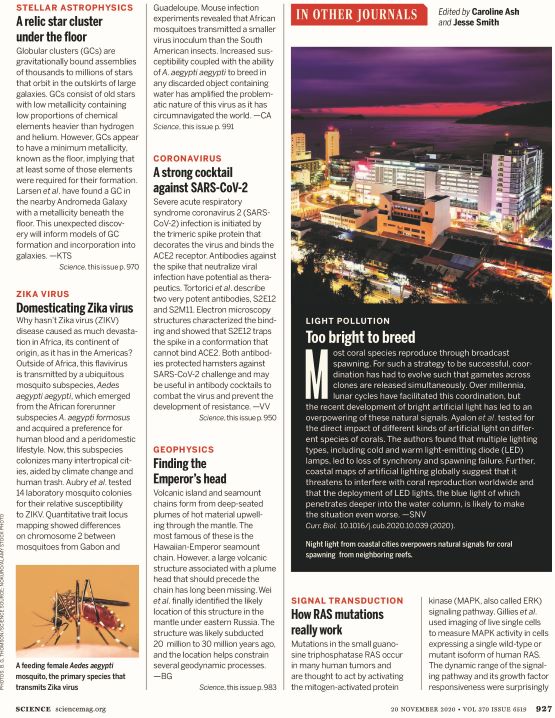
TOP JOURNALS: RESEARCH HIGHLIGHTS FROM SCIENCE MAGAZINE (NOV 20, 2020)
Science Podcast: Extreme Heat & The Human Body, Future Of Cooling Fabrics
This week the whole show focuses on keeping cool in a warming world. First up, host Sarah Crespi talks with Senior News Correspondent Elizabeth Pennisi about the latest research into how to stay safe when things heat up—whether you’re running marathons or fighting fires.
Sarah also talks with Po-Chun Hsu, assistant professor of mechanical engineering and materials science at Duke University, about the future of cooling fabrics for everyday use. It turns out we can save a lot of energy and avoid carbon dioxide emissions by wearing clothing designed to keep us cool in slightly warmer buildings than we’re used to now. But the question is, will cooling clothes ever be “cool”? Visit the whole special issue on cooling.



 Boomers Daily