Tag Archives: Russian Painters

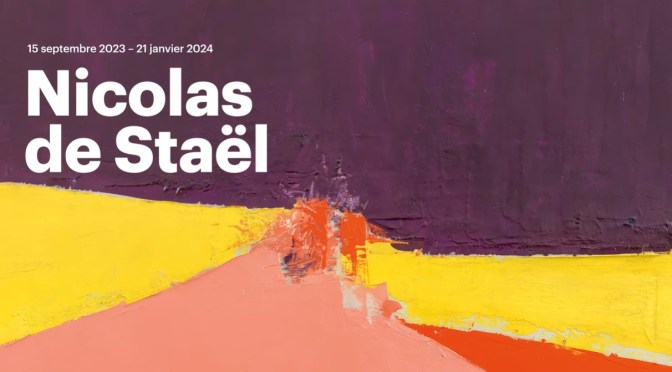
Art Museum Exhibitions: ‘Nicolas de Staël’ In Paris

ART VISION TV / C&B Films (January 13, 2024) – The Musée d’Art Moderne in Paris is devoting a major retrospective to Nicolas de Staël (1914-1955), a French painter of Russian origin known for his use of a thick impasto and his highly abstract landscape painting. He was a key figure on the post-war French art scene.

Twenty years after the one organised by the Centre Pompidou in 2003, this exhibition offers a fresh look at the artist’s work, drawing on more recent thematic exhibitions that have highlighted certain little-known aspects of his career (Antibes in 2014, Le Havre in 2014, Aix-en-Provence in 2018).

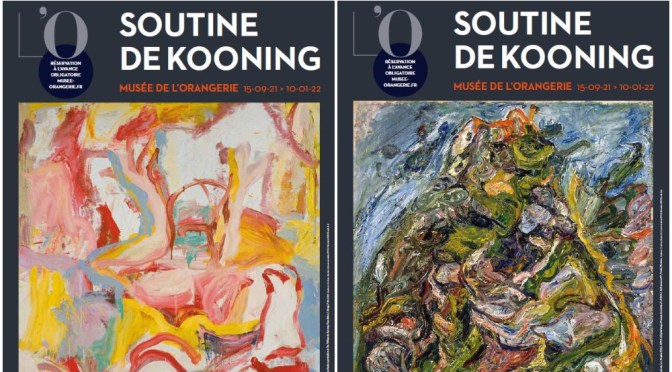
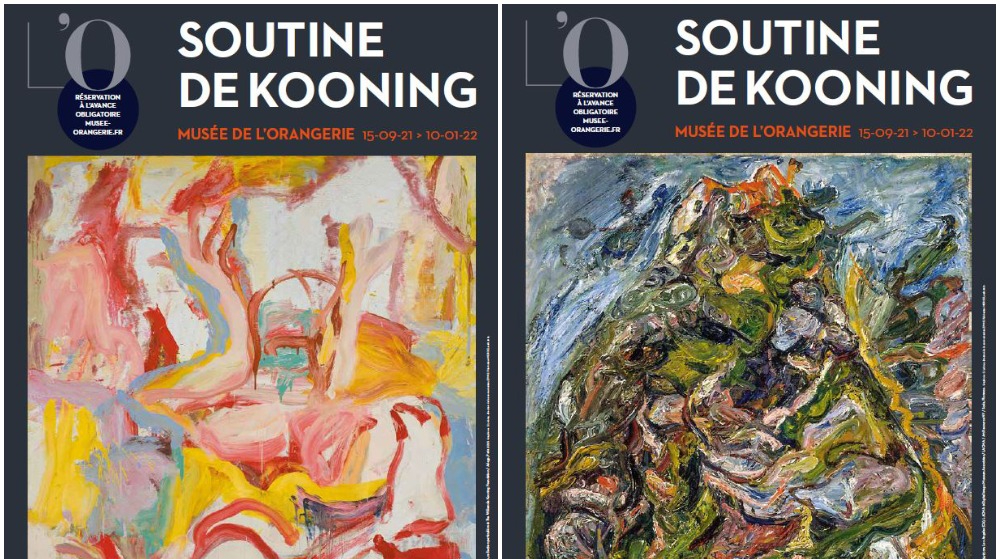
Art Exhibit: ‘Chaïm Soutine / Willem de Kooning’ At The Musée de l’Orangerie

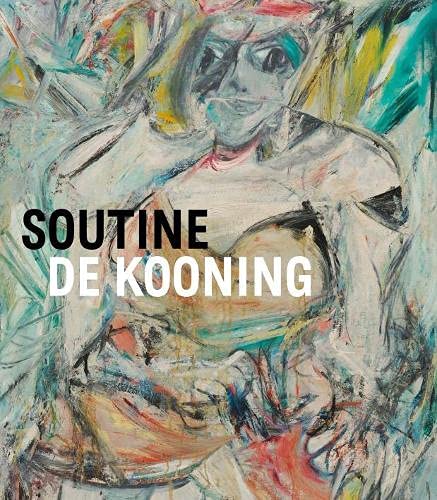
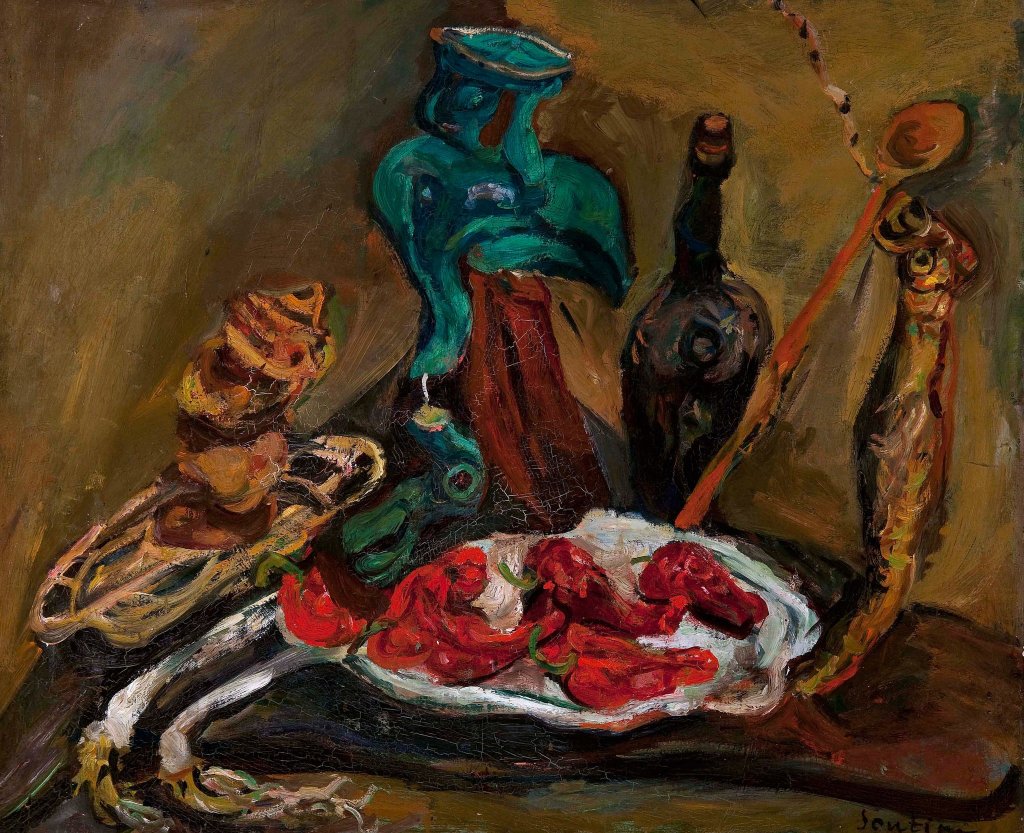
The Musée de l’Orangerie presents an exhibition bringing together the works of Chaïm Soutine (1893–1943), painter of the Paris School of Russian origin (now Belarus) and Willem de Kooning (1904-1997), abstract expressionist American of Dutch origin. 

This exhibition will focus more specifically on exploring the impact of Soutine’s painting on the pictorial vision of the great American painter.

Soutine indeed marked the generation of post-war painters by the expressive force of his painting and his figure of “accursed artist”, grappling with the vicissitudes and excesses of Parisian bohemia. His work was particularly visible in the United States between the 1930s and 1950s, when the figurative artist of European tradition was re-read in the light of new artistic theories. The gestural painting and the pronounced impasto of Soutine’s canvases lead critics and curators to proclaim him a “prophet”, herald of American abstract expressionism.

It was precisely at the turn of the 1950s that Willem de Kooning began the pictorial work of Women, canvases in which a singular expressionism was built, between figuration and abstraction. The development of this new language corresponds to the moment when the painter summons the artistic universe of Chaïm Soutine and confronts it. De Kooning discovered his predecessor’s paintings in the 1930s, then at the retrospective which devoted the painter to the Museum of Modern Art in New York in 1950. He was then particularly marked by the presentation of Soutine’s paintings in the Foundation’s collections. Barnes of Philadelphia, where he visited with his wife Elaine in June 1952.

Read more

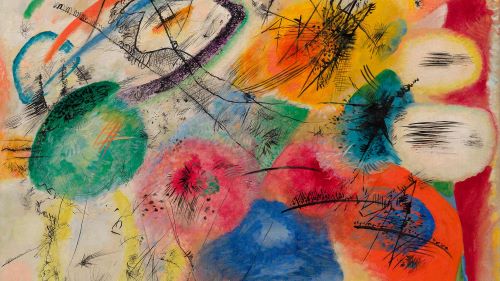
Exhibitions: ‘Kandinsky’ At The Guggenheim Bilbao In Spain (Nov ’20 To May ’21)

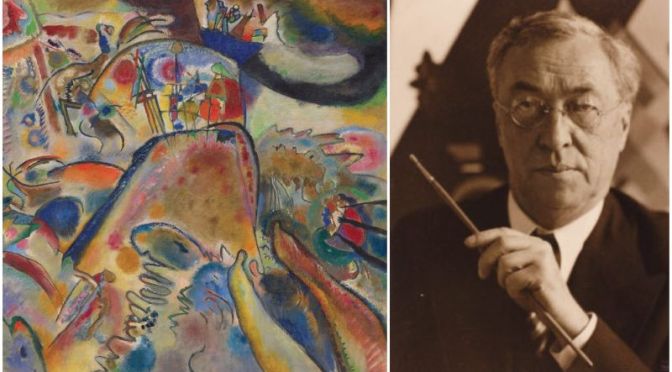
As a pioneer of abstraction and a renowned aesthetic theorist, Vasily Kandinsky (b. 1866, Moscow; d. 1944, Neuilly-sur-Seine, France) is among the foremost artistic innovators of the early twentieth century.

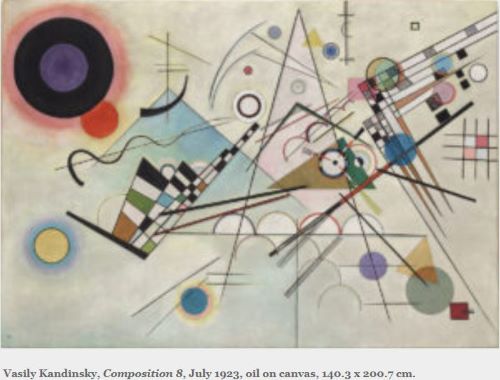
In his endeavor to free painting from its ties to the natural world, Kandinsky discovered a new subject matter based solely on the artist’s “inner necessity” that would remain his lifelong concern.

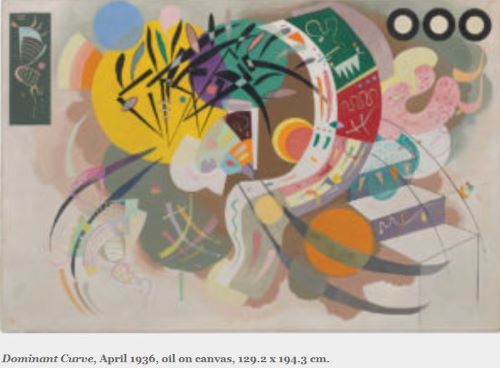
In Munich in the 1900s and early 1910s, Kandinsky began exploring the expressive possibilities of color and composition, but he was abruptly forced to leave Germany with the outbreak of World War I, in 1914. The artist eventually returned to his native Moscow, and there his pictorial vocabulary started to reflect the utopian experiments of the Russian avant-garde, who emphasized geometric shapes in an effort to establish a universal aesthetic language. Kandinsky subsequently joined the faculty of the Bauhaus, a German school of art and applied design that shared his belief in art’s ability to transform self and society. Compelled to abandon Germany again when the Bauhaus closed under Nazi pressure in 1933, he settled outside Paris, where Surrealism and the natural sciences influenced Kandinsky’s biomorphic imagery.

More so than any other artist, Kandinsky is intertwined with the history of the Solomon R. Guggenheim Foundation, established in New York in 1937. Industrialist and museum founder Solomon R. Guggenheim began collecting Kandinsky’s work in 1929 and met him at the Dessau Bauhaus the following year. This exhibition draws from the foundation’s extensive holdings to illustrate the full arc of Kandinsky’s seminal career.

Curator: Megan Fontanella

Organized by The Solomon R. Guggenheim Foundation, New York

Wassily Wassilyevich Kandinsky was a Russian painter and art theorist. Kandinsky is generally credited as the pioneer of abstract art. Born in Moscow, Kandinsky spent his childhood in Odessa, where he graduated at Grekov Odessa Art school. He enrolled at the University of Moscow, studying law and economics.

Website

Artist Profile: Russian Abstract Painter Wassily Kandinsky (Sotheby’s)

Wassily Kandinsky
Wasslily Kandinsky

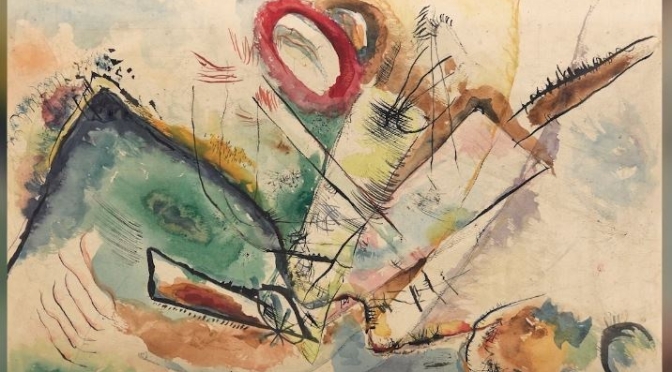
Wassily Kandinsky is widely considered one of the key artists in the development of 20th century abstraction. In this video, discover how an ability to see colours as sounds, and a fascination with spirituality in art, led Kandinsky to his breakthrough. Our upcoming cross-category ‘Rembrandt to Richter’ Evening Sale (28 July | London) features two jewel-like works by Kandinsky. ‘Murnau – Schloss Und Kirche II’ is an oil from Kandinsky’s sought-after 1908-1911 period. ‘Ohne Titel (Komposition)’ from 1914-15, is an exquisite watercolour in which Kandinsky finds harmony in colours that represent spirituality and intense passion. Both works come from an outstanding family collection of works from the European avant-garde.

Wassily Wassilyevich Kandinsky (1866 – 1944) was a Russian painter and art theorist. Kandinsky is generally credited as the pioneer of abstract art. Born in Moscow, Kandinsky spent his childhood in Odessa, where he graduated at Grekov Odessa Art school. He enrolled at the University of Moscow, studying law and economics.

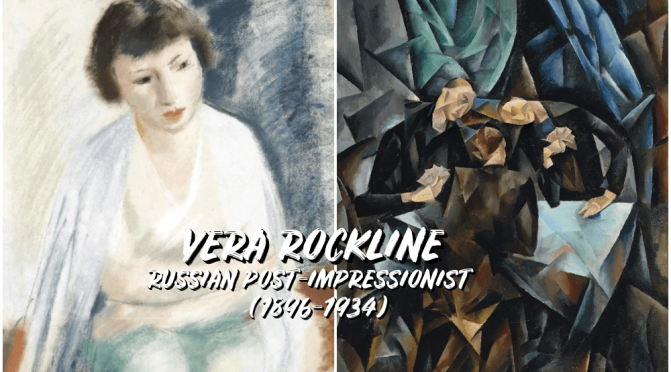
Artist Profile: Russian Post-Impressionist Vera Rockline (1896-1934)

From Christie’s (July 9, 2020):

Vera Rockline (1896-1934), Vue de Tiflis, 1919.

Vue de Tiflis  is a stunning vision of that city, painted in a manner inspired by Exter’s Cubo-Futurism. Tiflis was renowned then, as it still is now, for a combination of narrow medieval streets and Art Nouveau architecture. In this work, Rockline warps and fragments such features to the point of semi-abstraction: planes intersect and overlap, suggesting the restless energy and bohemian buzz of the Georgian capital.

Christie's LogoWhen she died in April 1934, aged just 37, Vera Rockline was at the peak of her fame. The Russian-born emigrée had made quite a name for herself after moving to Paris in 1921. Obituaries spoke of an ‘incomparable loss’ and a ‘prodigious talent’.
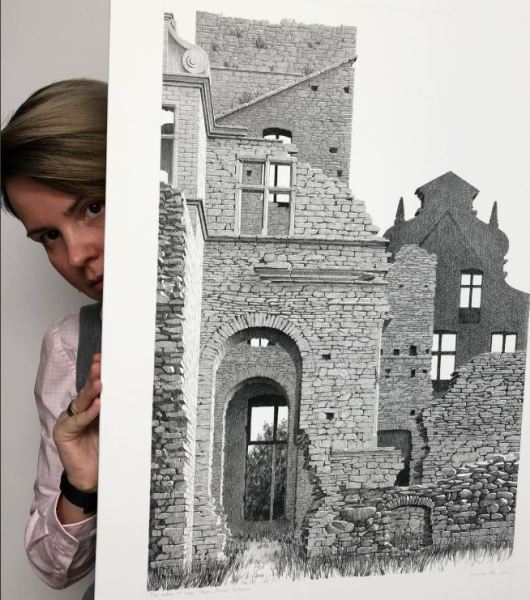
Born in Moscow in 1897 to a Russian father and French mother, Rockline moved to Kiev to apprentice for Aleksandra (or Alexandra) Exter. The latter was a cutting-edge figure whose art fused Cubist and Futurist elements. As civil war racked the former Russian Empire in the wake of 1917’s Bolshevik revolution, however, Vera and her husband fled to Tiflis (modern-day Tbilisi) in Georgia.

Website

Artist Profiles: Russian Watercolor Painter Eleanor Mill – “Exacting”

From MyModernMet (May 25, 2020):

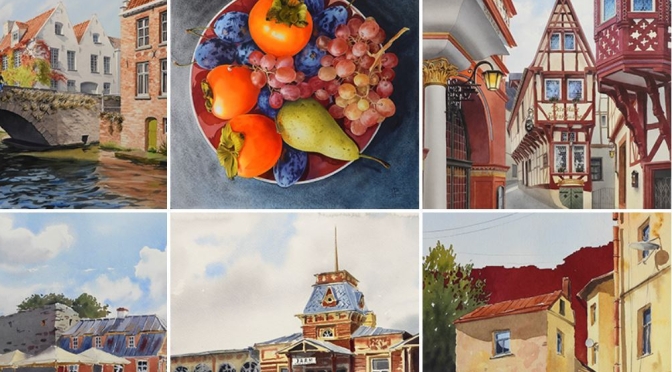
Eleanor Mill Watercolor Artist“Buildings and constructions once created by people but now fallen into oblivion have an inspirational value for me,” Mill tells My Modern Met. “They are silent witnesses of history. These giants towering over densely populated cities preserve the memories from the moment of their creation until the last stone drops off their walls.”
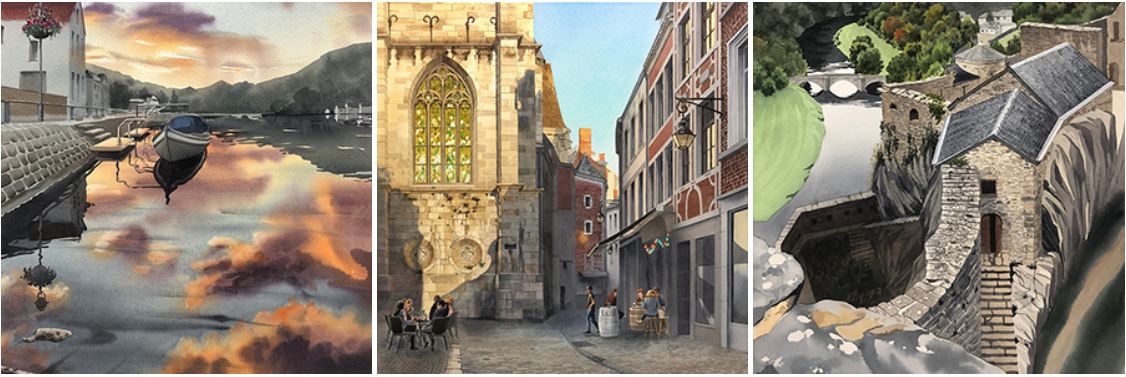
Eleanor Mill Watercolor ArtistRussian graphic designer and watercolor painter Eleanor Mill has a knack for capturing the spirit of place. Through her architectural watercolor sketches, she documents buildings with exacting detail. At the same time, Mill imbues her work with the color and light that gives each environment character. This allows viewers to come along with her as she places the memories of her travels down on paper.

Read more