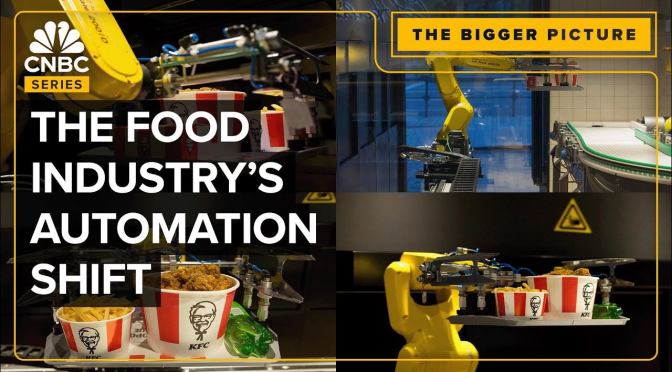
CNBC (July 15, 2024): Fully autonomous fast-food chains to smart carts lining grocery store parking lots, the way the food industry looks is changing due to massive investment in AI technology.
Chapters: 0:00 Introduction 2:34 CH 1. Digitizing food retail 5:35 CH 2. The risk and reward from robots 8:30 CH 3. What’s next?
The American consumer is starting to pull back on spending and rising food and labor costs are causing the food industry to invest more into automation to lower labor costs and improve sales, in order to stay competitive and take advantage of shifting consumer taste.
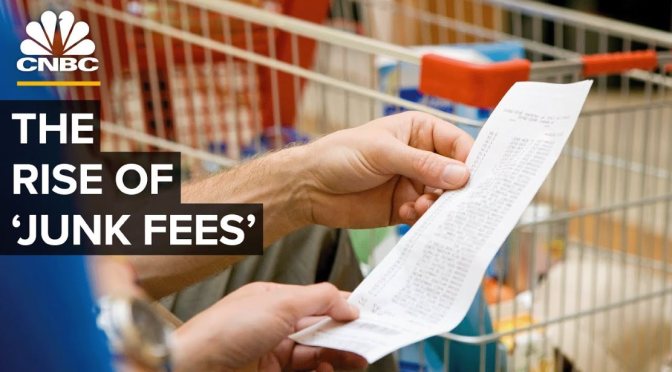
CNBC (April 25, 2023) – Americans are collectively spending nearly $65 billion on sneaky fees, according to the White House. “It really seems like companies have become addicted to junk fees,” Lina Khan, chair of the Federal Trade Commission, told CNBC.
Junk fees are making companies billions of dollars richer. Watch the video above to learn more about where junk fees hide, details of proposed changes, where policy may fall short and whether increased regulatory oversight may be enough to squash junk fees once and for all. Chapters: 0:00 Introduction 1:26 Defining ‘junk’ fees 5:34 Squashing fees 7:52 Policy problems 10:02 The future of fees
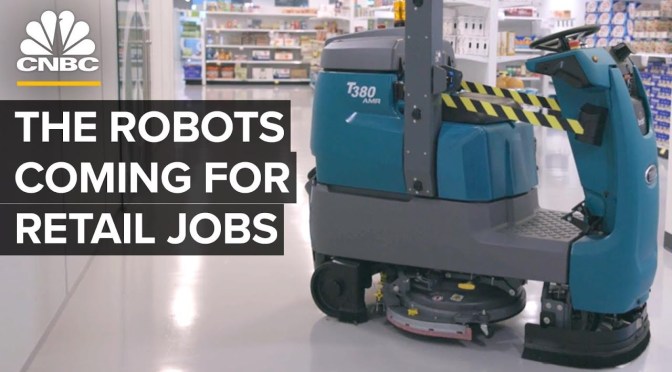
CNBC (April 22, 2023) – Outfitted with cameras and sensors, autonomous inventory robots can verify price signs and look for out-of-stock items. Inventory is one of the biggest challenges retailers face.
Missed sales from empty shelves and out-of-stock items cost U.S. retailers $82 billion in 2021, according to NielsenIQ. But an army of inventory robots is being deployed that could help retailers appease angry customers, boost sales and respond to the ongoing worker shortage.
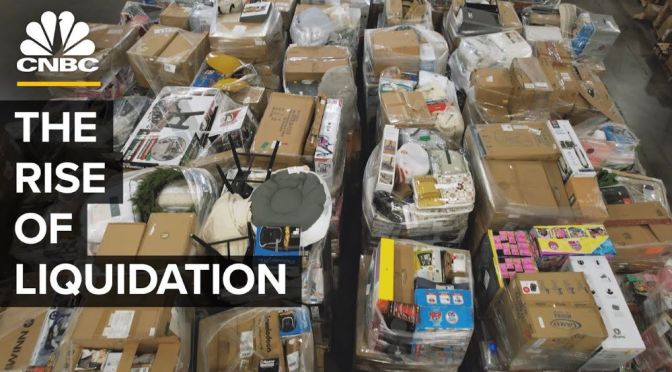
A record number of online returns has created a booming $644 billion liquidation market. As supply chain backlogs cause shortages of new goods and Gen Z shoppers demand more sustainable retail options, pain points for one sector of retail are big business for another. The nation’s only major public liquidator, Liquidity Services, resells unclaimed mail, items left at TSA checkpoints, and outdated military vehicles. It also refurbishes highly sought after electronics, from noise-canceling headphones to the machines that make microchips.
CNBC takes you on an exclusive tour inside a Liquidity Services returns warehouse outside Dallas, Texas, where unwanted goods from Amazon and Target are stacked to the ceiling before being resold on Liquidation.com or a variety of other marketplaces. Inside Liquidity Services’ 130,000-square-foot warehouse in Garland, Texas, the aisles aren’t lined with typical merchandise. Instead, they’re stacked with returns from Amazon, Target, Sony, Home Depot, Wayfair and more, all in the process of being liquidated.
Concerns over prescription drug prices have grown into a big political issue, with nearly one in four Americans saying it’s difficult to afford their medications, according to a March 2019 poll by the Kaiser Family Foundation. Pharmacies technically set their own prices for generic drugs, but there are other players involved that complicate the process. Here’s how the system works and what customers can do to save money.
Chapters 0:00 – Introduction 1:16 – Why pharmacies exist 3:50 – How pharmacies make money 8:51 – Regulations 10:55 – How customers can save money
Inside the company’s automated warehouse in China Chinese e-commerce giant Alibaba is challenging Amazon by promising fast deliveries from China to anywhere in the world. WSJ visits Alibaba’s largest automated warehouse to see how robots and a vast logistics network are helping it expand globally. Composite: Clément Bürge
Across much of the world, covid-19 restrictions are starting to ease. The Economist has crunched the data to calculate how close countries are to pre-pandemic levels of normality—but will life ever be the same again? Read more here: https://econ.st/3AG9siz
In less than six months, Chinese entrepreneur Jack Ma’s Ant IPO, which could have been the world’s largest, was scuttled and his companies brought in line by regulators. The U.S. is also taking aim at big tech, but here’s how China moves faster. Photo illustration: Sharon Shi
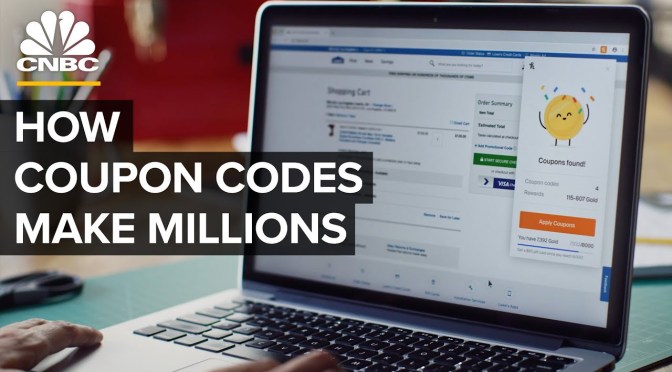
Promo code sites have become big business, with digital coupons surpassing paper for the first time in 2020. Major deal sites make millions based almost entirely on commissions from each sale. They don’t sell shopper data and it’s not a scam. In fact, big companies like PayPal and Rakuten are buying up deal sites for billions.
From Honey to Slickdeals, Rakuten Rewards to Brad’s Deals, CNBC asked the major sites what it takes to find deals that are real and why the business model works. With the huge boost in online shopping during the pandemic, deal-finding sites have become a major business. In 2020, Inmar Intelligence found that digital coupons surpassed printed coupons for the first time ever. Also in recent years, behemoths like Goldman Sachs and PayPal have paid hundreds of millions – or even billions – for sites like Slickdeals and Honey that automatically curate coupon codes or offer shoppers cash back for making purchases through their sites.
Even banks like Capital One are getting into the game. The business model is not a scam. All major deal sites say they don’t sell shopper data. Instead, each sale generates a commission for the deal site and for the middleman known as the affiliate marketer – a company that connects the vast world of retailers with deal sites. With nearly 2,000 businesses in the daily deal site space, it’s a crowded industry filled with legitimate businesses as well as plenty of sites that are riddled with ads and expired coupon codes. That’s because regardless of whether a coupon code works, the site that provided the code will get commission for that sale. When the deals are legitimate, however, it can mean big money for shoppers, retailers, and the deal sites.
From Honey to Slickdeals, Rakuten Rewards to Brad’s Deals, CNBC asked the major deal sites, and shoppers, what it takes to find deals that are real and why the business model works. Watch the video to learn how saving consumers’ money makes big bucks for companies in the vast world of online deal hunting.
The pandemic has upended the way people buy—online retail has soared as high-street shops and malls close. Brands are now racing to exploit one of the most important weapons in the battle for buyers: their customers’ data.





 Boomers Daily