Tag Archives: Quanta Magazine

2023: Top Discoveries In Biology & Neuroscience

Quanta Magazine (December 21, 2023): 2023’s Biggest Breakthroughs in Biology and Neuroscience.

Video timeline: 00:05 The Investigation of Consciousness – Our minds are constantly taking in new external information while also creating their own internal imagery and narratives. How do we distinguish reality from fantasy? This year, researchers discovered that the brain has a “reality threshold” against which it constantly evaluates processed signals. Original paper: “Subjective signal strength distinguishes reality from imagination”

04:30 Microbiomes Evolve With Us – This year, scientists provided clear evidence that the organisms in our microbiome —the collection of bacteria and other cells that live in our guts and elsewhere on our body — spread between people, especially those with whom we spend the most time. This raises the intriguing possibility that some illnesses that aren’t usually considered communicable might be.

08:43 How Life Keeps Time – The rate at which an embryo develops and the timing of when its tissues mature vary dramatically between species. What controls the ticking of this developmental clock that determines an animal’s final form? This year, a series of careful experiments suggest that mitochondria may very well serve dual roles as both the timekeeper and power source for complex cells.

Review: Math & Computer Science Discoveries (2021)

It was a big year. Researchers found a way to idealize deep neural networks using kernel machines—an important step toward opening these black boxes. There were major developments toward an answer about the nature of infinity. And a mathematician finally managed to model quantum gravity. Read the articles in full at Quanta Magazine: https://www.quantamagazine.org/the-ye…

Science: Standard Model Of Physics, Explained

The Standard Model of particle physics is the most successful scientific theory of all time. It describes how everything in the universe is made of 12 different types of matter particles, interacting with 3 forces, all bound together by a rather special particle called the Higgs boson. It’s the pinnacle of 400 years of science, and gives the correct answer to hundreds of thousands of experiments. In this explainer, Cambridge physicist David Tong creates the model, piece by piece, to provide some intuition for how all of the parts fit together to create the fundamental building blocks of our universe. At the end of the video, he also points out what’s missing from the model, and what work is left to do in order to complete the Theory of Everything.

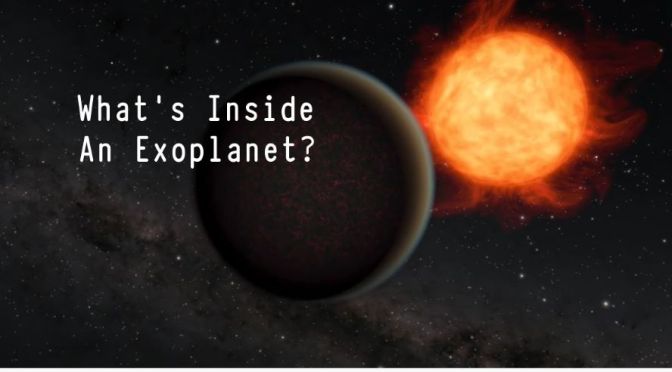
Astronomy: What’s Inside An Exoplanet? (Video)

Out in the vast universe, unknown billions of strange worlds drift around other stars. Many of them are quite unlike anything in our solar system. While astronomers hope to use immense upcoming observatories to get a better look at their outsides, Federica Coppari has been using the world’s largest laser to investigate their insides. Coppari compresses familiar substances, including rocks and water, into new forms. Her work has yielded insights into the inner workings of frozen giants such as Uranus and Neptune, as well as the potential habitability of super-Earths — rocky planets that dwarf our own. Read more at Quanta Magazine: https://www.quantamagazine.org/federi…

Profile: 2004 Nobel Prize Physicist Frank Wilczek – ‘Strong Force Theory’

In 1972, Frank Wilczek and his thesis adviser, David Gross, discovered the basic theory of the strong force — the final pillar of the Standard Model of particle physics. Their work revealed the strange alchemy at work inside the nucleus of an atom. It also turned out to underpin almost all subsequent research into the early universe. Wilczek and Gross went on to share the 2004 Nobel Prize in Physics for the work. At the time it was done, Wilczek was just 21 years old. His influence in the decades since has been profound. He predicted the existence of a hypothetical particle called the axion, which today is a leading candidate for dark matter. He published groundbreaking papers on the nature of the early universe. And just last year, his prediction of the “anyon” — a strange type of particle that only shows up in two-dimensional systems — was experimentally confirmed.

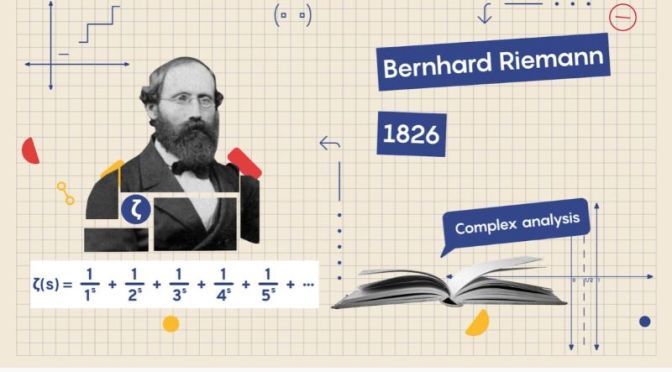
Math 2021: The ‘Unsolved Riemann Hypothesis’ Explained (Quanta Video)

The Riemann hypothesis is the most notorious unsolved problem in all of mathematics. Ever since it was first proposed by Bernhard Riemann in 1859, the conjecture has maintained the status of the “Holy Grail” of mathematics. In fact, the person who solves it will win a $1 million prize from the Clay Institute of Mathematics. So, what is the Riemann hypothesis? Why is it so important? What can it tell us about the chaotic universe of prime numbers? And why is its proof so elusive? Alex Kontorovich, professor of mathematics at Rutgers University, breaks it all down in this comprehensive explainer.

In mathematics, the Riemann hypothesis is a conjecture that the Riemann zeta function has its zeros only at the negative even integers and complex numbers with real part. Many consider it to be the most important unsolved problem in pure mathematics.

Read more at Quanta Magazine: https://www.quantamagazine.org/how-i-…

SCIENCE: ‘THE BIGGEST BREAKTHROUGHS IN Math & Computer Science’ In 2020

For mathematicians and computer scientists, 2020 was full of discipline-spanning discoveries and celebrations of creativity. We’d like to take a moment to recognize some of these achievements.

  • 1. A landmark proof simply titled “MIP* = RE” establishes that quantum computers calculating with entangled qubits can theoretically verify the answers to an enormous set of problems. Along the way, the five computer scientists who authored the proof also answered two other major questions: Tsirelson’s problem in physics, about models of particle entanglement, and a problem in pure mathematics called the Connes embedding conjecture.
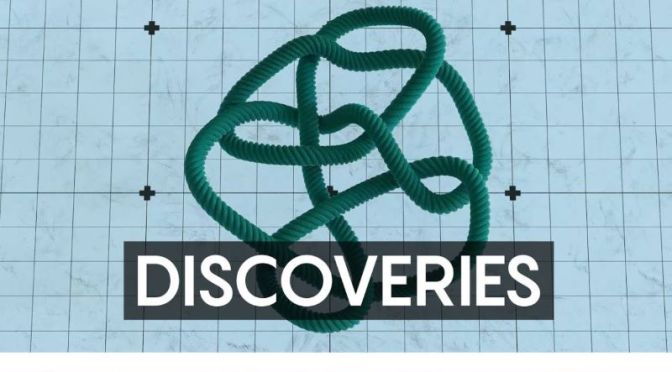
  • 2. In February, graduate student Lisa Piccirillo dusted off some long-known but little-utilized mathematical tools to answer a decades-old question about knots. A particular knot named after the legendary mathematician John Conway had long evaded mathematical classification in terms of a higher-dimensional property known as “sliceness.” But by developing a version of the knot that yielded to traditional knot analysis, Piccirillo finally determined that the Conway knot is not “slice.”
  • 3. For decades, mathematicians have used computer programs known as proof assistants to help them write proofs — but the humans have always guided the process, choosing the proof’s overall strategy and approach. That may soon change. Many mathematicians are excited about a proof assistant called Lean, an efficient and addictive proof assistant that could one day help tackle major problems. First, though, mathematicians must digitize thousands of years of mathematical knowledge, much of it unwritten, into a form Lean can process. Researchers have already encoded some of the most complicated mathematical ideas, proving in theory that the software can handle the hard stuff. Now it’s just a question of filling in the rest.

Science: ‘The Biggest Breakthroughs In Physics In 2020’ (Quanta Video)

This year, two teams of physicists made profound progress on ideas that could bring about the next revolution in physics. Another still has identified the source of a long-standing cosmic mystery.

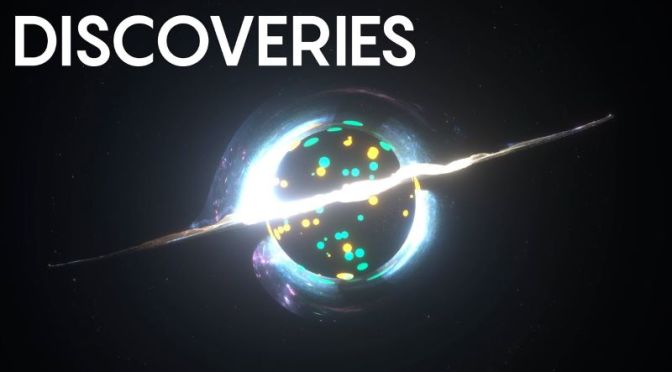
  • 1. Here’s an extremely brief version of the black hole information paradox: Stuff falls into a black hole. Over time — a long, long time — the black hole “evaporates.” What happened to the stuff? According to the rules of gravity, it’s gone, its information lost forever. But according to the rules of quantum mechanics, information can never be lost. Therefore, paradox. This year, a series of tour de force calculations has shown that information must somehow escape — even if how it does so remains a mystery.
  • 2. Levitating trains, lossless power transmission, perfect energy storage: The promise of room-temperature superconductivity has fed many a utopian dream. A team based at the University of Rochester in New York reported that they had created a material based on a lattice of hydrogen atoms that showed evidence of superconductivity at up to about 15 degrees Celsius (59 degrees Fahrenheit) — about the temperature of a chilly room. The only catch: Superconductivity at this temperature only works if the material is crushed inside a diamond anvil to pressures approaching those of Earth’s core. Utopia will have to wait.
  • 3. A dazzling cosmic strobe has ended an enduring astronomical mystery. Fast radio bursts — blips of distant radio waves that last for mere milliseconds — have eluded explanation since they were first discovered in 2007. Or rather, astronomers had come up with far too many theories to explain what are, for the brief time they’re alight, the most powerful radio sources in the universe. But on a quiet morning in April, a burst “lit up our telescope like a Christmas tree,” said one astronomer. This allowed researchers to trace its source back to a part of the sky where an object had been shooting out X-rays. Astronomers concluded that a highly magnetized neutron star called a magnetar was behind the phenomenon.

Science: ‘The Biggest Breakthroughs In Biology In 2020’ (Video)

In 2020, the study of the SARS-CoV-2 virus was undoubtedly the most urgent priority. But there were also some major breakthroughs in other areas. We’d like to take a moment to recognize them.

  • 1. This year, we learned that we had severely underestimated the human brain’s computing power. Researchers are coming to understand that even the dendritic arms of neurons seem capable of processing information, which means that every neuron might be more like a small computer by itself.
  • 2. The new Information Theory of Individuality completely reimagines the way biologists have traditionally thought about individuality. Armed with information theory, the researchers found objective criteria for defining degrees of individuality in organisms.
  • 3. Deprived of sleep, we and other animals die within weeks. More than a century of scrutiny failed to explain why lack of sleep is so deadly. This year, an answer was finally found — not inside the brain, as expected, but inside the gut.