
The Week In Art Podcast (May 10, 2024): We talk to The Art Newspaper’s reporter Sarvy Geranpayeh about her conversations with six Palestinian artists about their daily lives amid Israel’s ongoing military offensive in Gaza.
Frank Stella, one of the key artists in the history of American abstraction, has died, aged 87. We speak to Bonnie Clearwater, the director and chief curator of the NSU Art Museum in Fort Lauderdale, Florida, who worked with Stella on two landmark shows. And as Spring finally arrives in London, this episode’s Work of the Week is, fittingly, Vanessa Bell’s View into a Garden (1926). It features in an exhibition opening next week at the Garden Museum in London, called Gardening Bohemia: Bloomsbury Women Outdoors. Emma House, the curator at the museum, tells me more.
Glory of the World: Color Field Painting (1950s to 1983), NSU Art Museum Fort Lauderdale, US, until 25 August. Frank Stella: Recent Sculpture, Deitch Projects, New York, until 24 May.
Gardening Bohemia: Bloomsbury Women Outdoors, Garden Museum, London, 15 May-29 September.
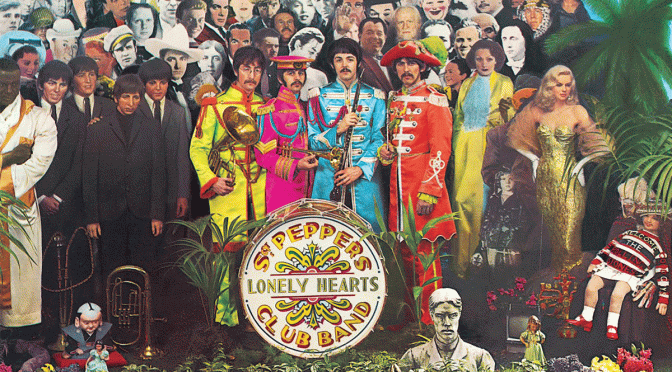
 Rock ’n’ roll, or even popular music, [was] often highly gendered and sexist. It certainly was paternalistic in the ’60s and prior, in terms of songs being directed at women as objects, women as needing to be “counseled” about love, [or] it was about coming on to them, even if it was just something innocent and romantic, “I Want to Hold Your Hand.” And the Beatles very consciously in 1965 began to change their tone. They created a very specific type of female character who would think for herself and did not need a man.
  Looking back at your favorite classic rock songs through the lens of today’s attitudes about women’s empowerment, male privilege, and even sexual violence can be cringeworthy at best. But just as they were trailblazers in music, film, fashion, and popular culture, the Beatles were ahead of their time in embracing feminism, argues Kenneth Womack, a well-known authority on the band and dean at Monmouth University, evolving from early patronizing “hey, girl” entreaties to songs filled with independent women who don’t need a man, not even a Beatle. Ideological Diversity, a Harvard Kennedy School student organization, hosts a free talk with Womack on Thursday about how the group explored issues of feminism, gender, and inclusion in ways few rock bands dared in the 1960s.
 Boomers Daily