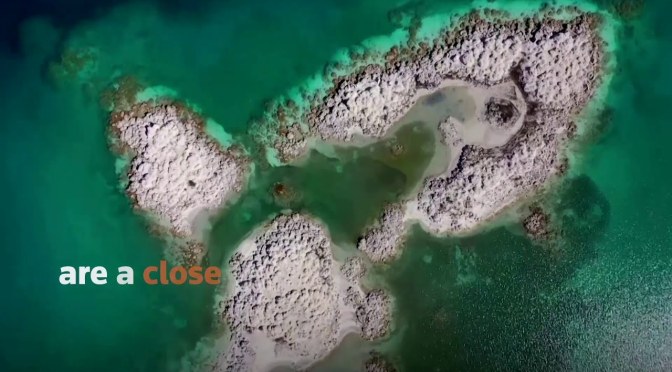
As NASA’s rover Perseverance explores the surface of Mars, scientists hunting for signs of ancient life on the distant planet are using data gathered at a lake in southwest Turkey.
Lake Salda is a mid-size crater lake in southwestern Turkey, within the boundaries of Yeşilova district of Burdur Province. It lies at a distance of about fifty kilometers to the west from the province seat Burdur.
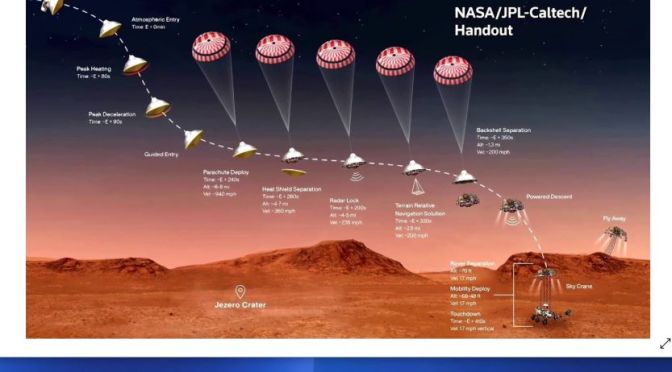
How it looks to land on Mars, previewing space station spacewalks, and supplies and cargo delivered for the station crew … a few of the stories to tell you about – This Week at NASA!
NASA’s science rover Perseverance, the most advanced astrobiology laboratory ever sent to another world, streaked through the Martian atmosphere and landed safely on the floor of a vast crater.
Science Staff Writer Jon Cohen joins host Sarah Crespi to take on some of big questions about the COVID-19 vaccines, such as: Do they stop transmission? Will we need boosters? When will life get back to “normal.”
Sarah also talks with Anders Johansen, professor of planetary sciences and planet formation at the University of Copenhagen, about his Science Advances paper on a new theory for the formation of rocky planets in our Solar System. Instead of emerging out of ever-larger collisions of protoplanets, the new idea is that terrestrial planets like Earth and Mars formed from the buildup of many small pebbles.
China, the UAE and the U.S. all have spacecraft visiting Mars in February to study the Red Planet. WSJ explains how out-of-this-world technology is being used by NASA’s Perseverance and China’s Tianwen-1 in the search for evidence of life beyond our planet. Photo: NASA
DNA clues point to how dire wolves went extinct, and a round-up of the main impacts of Brexit on science.
In this episode:
00:45 Dire wolf DNA
Dire wolves were huge predators that commonly roamed across North America before disappearing around 13,000 years ago. Despite the existence of a large number of dire wolf fossils, questions remain about why this species went extinct and how they relate to other wolf species. Now, using DNA and protein analysis, researchers are getting a better understanding of what happened to these extinct predators.
In December, a last minute trade-deal between the UK and EU clarified what the future relationship between the two regions would look like, after Brexit. We discuss the implications of this trade-deal for science funding, the movement of researchers, and data sharing.
We discuss some highlights from the Nature Briefing. This time, concerns about contaminating water on the moon, and the spy satellites that spied out environmental change.
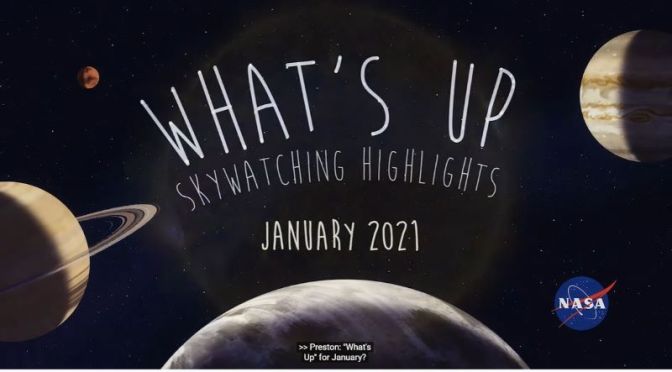
What are some skywatching highlights in January 2021? Mark Earth’s closest approach to the Sun for the year, called perihelion, at the start of the month, then spot a couple of elusive planets: Uranus on Jan. 20th and Mercury throughout the second half of the month. Additional information about topics covered in this episode of What’s Up, along with still images from the video, and the video transcript, are available at https://solarsystem.nasa.gov/whats-up….
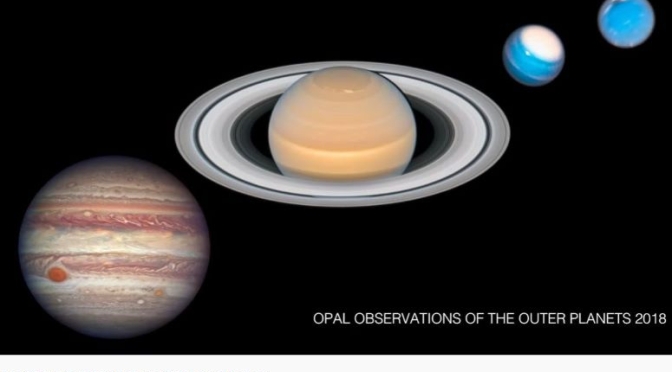
What is OPAL? OPAL (Outer Planet Atmospheres Legacy) is a project to obtain long time baseline observations of the outer planets in order to understand their atmospheric dynamics and evolution as gas giants. The yearly observations from OPAL throughout the remainder of Hubble’s operation will provide an important legacy of time-domain images for use by planetary scientists. Viewers might notice that some of the images of the same planets appear to be different colors. This is due to the fact that over the years, from Voyager to Hubble, many different instruments, and many different filters have been used.
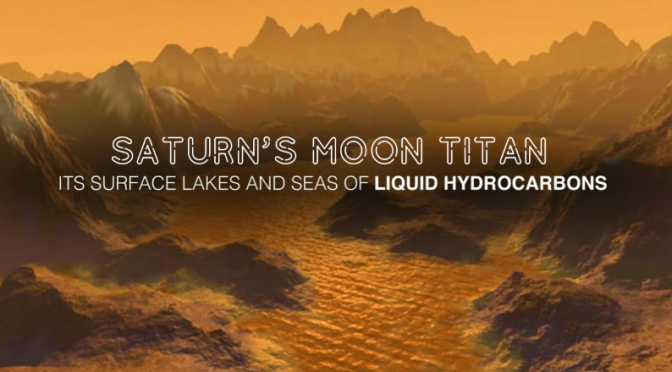
Earth is not the only place in the solar system with rain, rivers, lakes and seas. Saturn’s moon Titan has them, too — not of water, but of liquid methane and ethane. This Earth-like world even hides an ocean of liquid water deep beneath its surface! Find out what you need to know about Titan.
A Perfect Planet is an awe-inspiring exploration of Earth’s power and fragility.
PERFECT PLANET
Planet Earth is perfect. It orbits at the perfect distance from the sun; it tilts at just the right angle and has a decent sized moon to hold it in place. On top of that, the day-to-day workings of the planet naturally serve to nurture animals and plants.
This five part series will show how the forces of nature – weather, ocean currents, solar energy and volcanoes – drive, shape and support Earth’s great diversity of life. In doing so, it will reveal how animals are perfectly adapted to whatever the environment throws at them.
News, Views and Reviews For The Intellectually Curious



 Boomers Daily