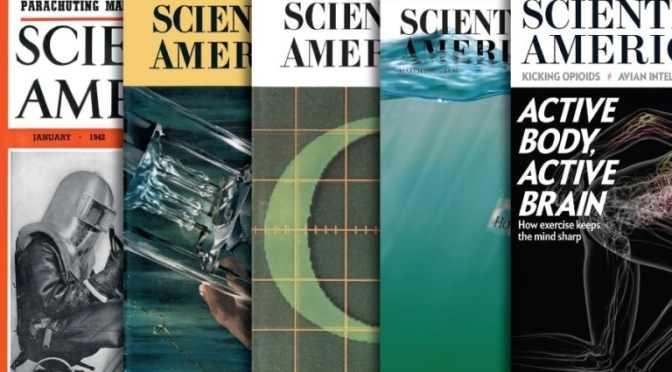
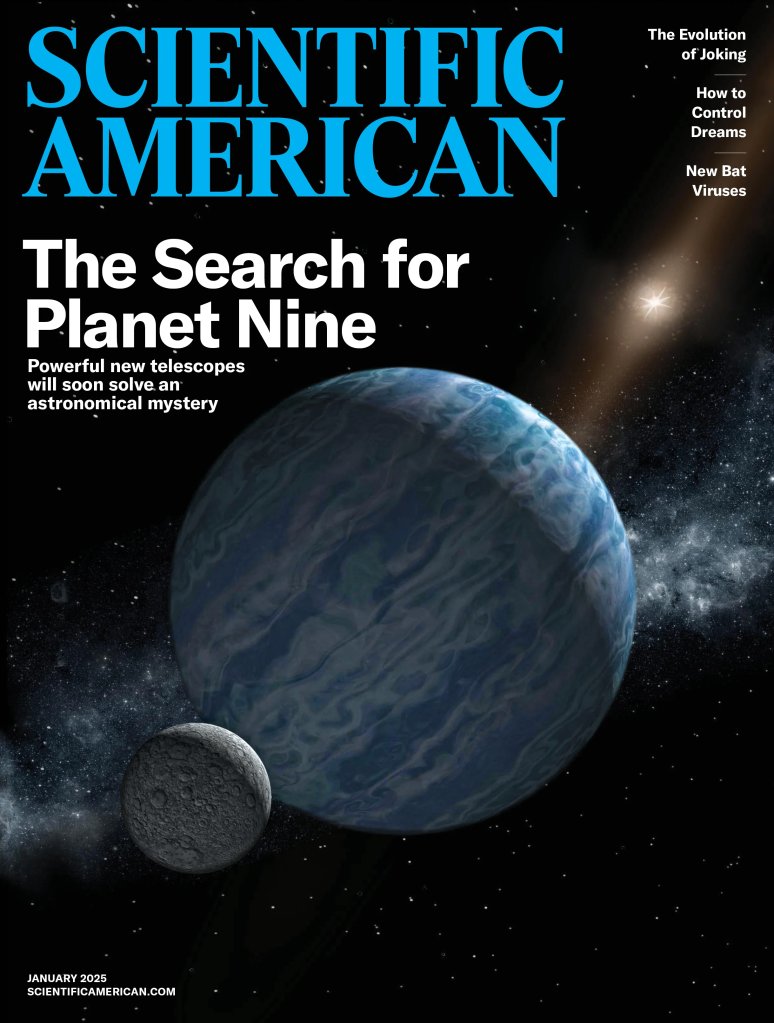

Scientific American (December 17, 2024): The latest issue features ‘The Search for Planet Nine’….
We May Be on the Brink of Finding the Real Planet Nine
If there’s a hidden world in the solar system, a new telescope should find it

Scientific American (December 17, 2024): The latest issue features ‘The Search for Planet Nine’….
If there’s a hidden world in the solar system, a new telescope should find it

OpenAI’s debut of its impressive Sora text-to-video tool has raised important questions.
Semaglutide reduces weight and fat accumulation associated with the antiretroviral regimen that keeps HIV at bay.
A burgeoning technique called time-resolved cryo-EM is granting insights into the tiny motors and devices that power life.

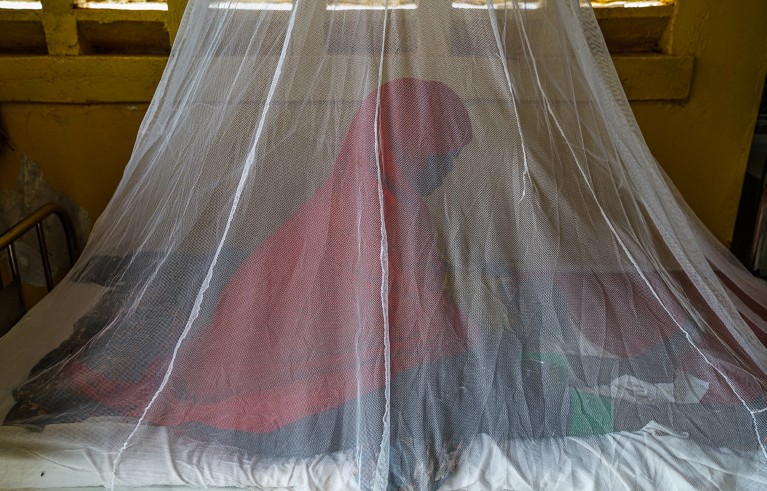
Free-flying mosquitoes gravitate toward pads that emit carbon dioxide, which is found in human breath.
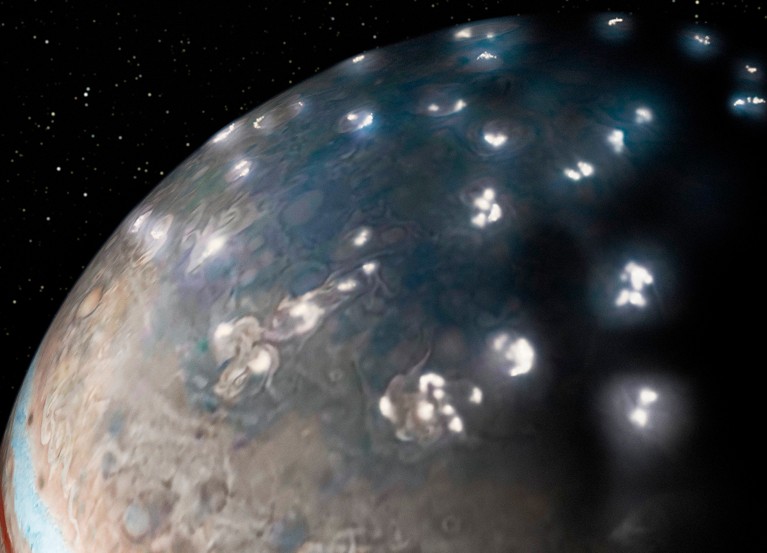
Bolts begin as a series of short pulses both on Earth and on its much bigger, gassier neighbour in the Solar System.
2021 was the busiest year yet for NASA in low-Earth orbit, we also made progress preparing for a flight test around the Moon, and had a very active year exploring space, studying Earth, testing technologies for next generation aircraft, and much more. Here’s a look back at those and other things we did this year at NASA. Download Link: https://go.nasa.gov/3yM3so2
An explanation for giant ice structures on Pluto, and dismantling the mestizo myth in Latin American genetics.
In this episode:
00:46 The frozen root of Pluto’s polygonal patterns
In 2015, NASA’s New Horizons probe sent back some intriguing images of Pluto. Huge polygonal patterns could be seen on the surface of a nitrogen-ice ice filled basin known as Sputnik Planitia. This week, a team put forward a new theory to explain these perplexing patterns.
Research article: Morison et al.
06:15 Research Highlights
How Pamplona’s bull-running defies the dynamics of crowd motion, and self-healing microbial bio-bricks.
Research Highlight: Running of the bulls tramples the laws of crowd dynamics
Research Highlight: It’s alive! Bio-bricks can signal to others of their kind
09:06 How the mixed-race ‘mestizo’ myth has fostered discrimination
The term ‘mestizo’ emerged during the colonial period in Latin America to describe a blend of ethnicities – especially between Indigenous peoples and the Spanish colonizers. But this label is a social construct not a well-defined scientific category. Now researchers are challenging the mestizo myth, which they say is harmful and has a troubling influence on science.
Feature: How the mixed-race mestizo myth warped science in Latin America
17:22 Briefing Chat
We discuss some highlights from the Nature Briefing. This time, how interrupted sleep could be a route to creativity, and the development of vaccines to target respiratory syncytial virus.
New Scientist: Interrupting sleep after a few minutes can boost creativity
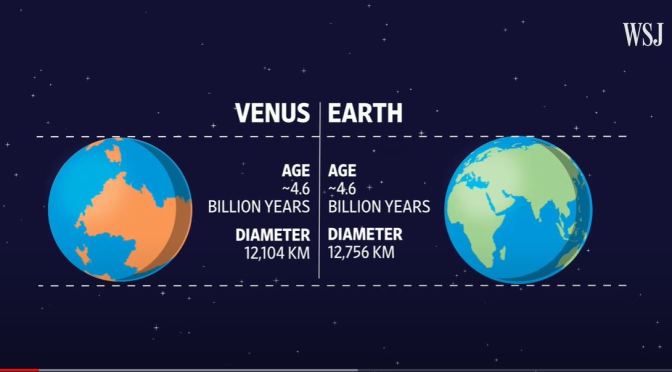
The surface of Venus is completely inhospitable for life: barren, dry, crushed under an atmosphere about 90 times the pressure of Earth’s and roasted by temperatures two times hotter than an oven. But was it always that way? Could Venus once have been a twin of Earth — a habitable world with liquid water oceans? This is one of the many mysteries associated with our shrouded sister world. 27 years have passed since NASA’s Magellan mission last orbited Venus. That was NASA’s most recent mission to Earth’s sister planet, and while we have gained significant knowledge of Venus since then, there are still numerous mysteries about the planet that remain unsolved. NASA’s DAVINCI (Deep Atmosphere Venus Investigation of Noble gases, Chemistry, and Imaging) mission hopes to change that. Video credit: NASA’s Goddard Space Flight Center
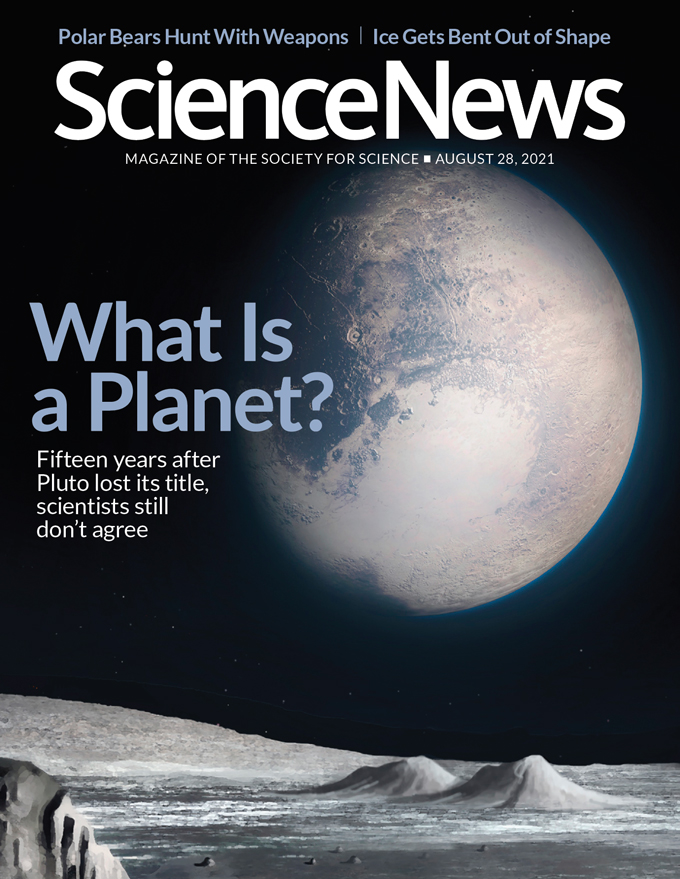
Science News website
NASA is planning two missions to Venus to assess if the now-toxic planet once had an ocean, continents and life. Scientists are beginning the effort on Earth by training sensors and machine learning systems to analyze the building blocks of our own planet. Photo illustration: Laura Kammermann
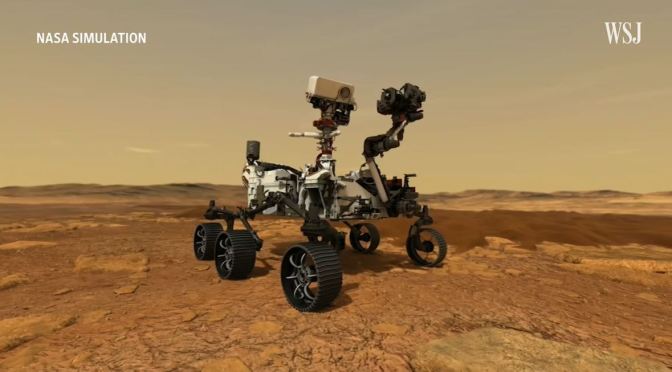
NASA’s Perseverance rover landed on Mars more than two weeks ago. Jennifer Trosper from NASA’s Jet Propulsion Laboratory explains how the rover will explore the Martian landscape and search for signs of life. Photo: NASA



 Boomers Daily