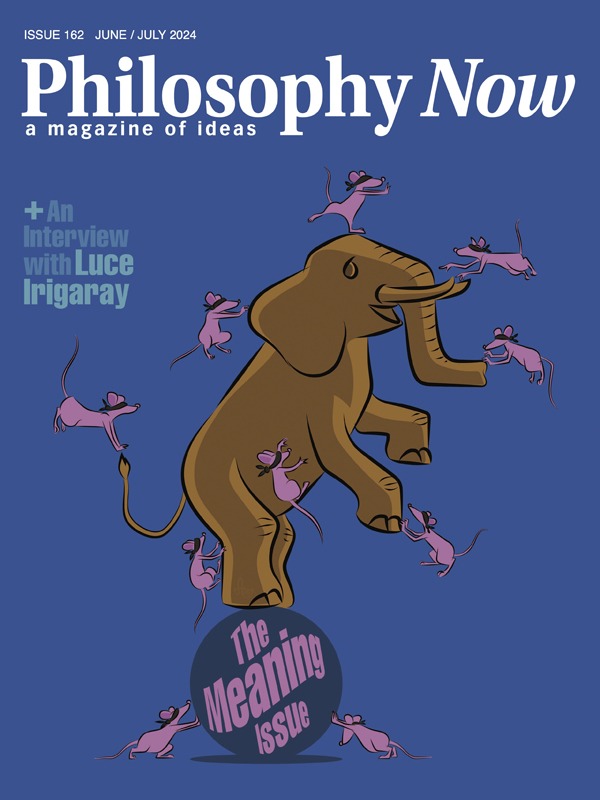
A famous parable dating back to ancient India involves some blind monks encountering an elephant. The monks each touch just one part of the elephant, and afterwards they compare notes. One declares that the creature feels like a snake, another that it has a shape like a tree trunk and so on. Like many parables, you can interpret it in different ways, but it seems to be saying that even for something that is an objectively real part of the world, like an elephant, it is possible to have different subjective views of it, all of which may be valid.
Luce Irigaray interviewed by Octave Larmagnac-Matheron and translated by Mélanie Salvi.
Meena Danishmal asks if Seneca’s account of the good life is really practical.
According to the Oxford English Dictionary, the adjective ‘stoical’ means “resembling a Stoic in austerity, indifference, fortitude, repression of feeling and the like”. This gives us some idea of what it is like to be a Stoic. Indeed, the key teaching, arguably the fundamental point, of Stoicism, is that we should focus on controlling the things that are under our control, such as our thoughts, emotions, and actions, whilst accepting those things we cannot control, such as most things that are happening in the world. How did they get there?
To consider this question let’s look at the ideas of the Roman philosopher and statesman Lucius Annaeus Seneca the Younger (4 BCE-65 CE). As a top advisor to the paranoid and murderous Emperor Nero, he probably found Stoicism a particularly practical guide to life.
As a Stoic, Seneca believed the soul (Latin: anima or animus) to be a finer form of matter than the body; but matter it is. It was also described as a spark of the fire which had consumed the original matter. With such an understanding of the soul, where does the soul reside within the body? Stoics provided a rather simple answer: everywhere. The soul was considered to be a vital force that animates the whole body. The soul was also the source of reason, virtue, and moral character, which is what Stoic philosophy is built upon, as the rational soul guides individuals towards living in accordance with nature.
For us to understand this concept further, it’s vital to grasp the Stoic conception of reality. Stoics see the universe as interconnected and interwoven, and this unified cosmos as governed by rational principles. Within this holistic perspective, the soul is seen as part of the divine rational order of the universe. This understanding forms the basis of Stoic ethics, which emphasises the importance of cultivating reason and virtue in all aspects of life. This encouragement to align thoughts, actions, and desires with principles of reason, is a way for the soul to flourish.
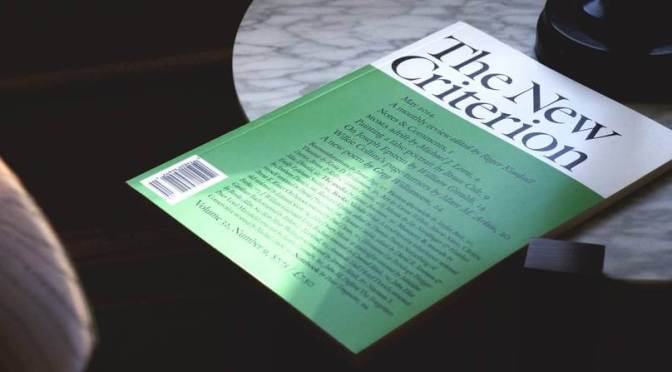
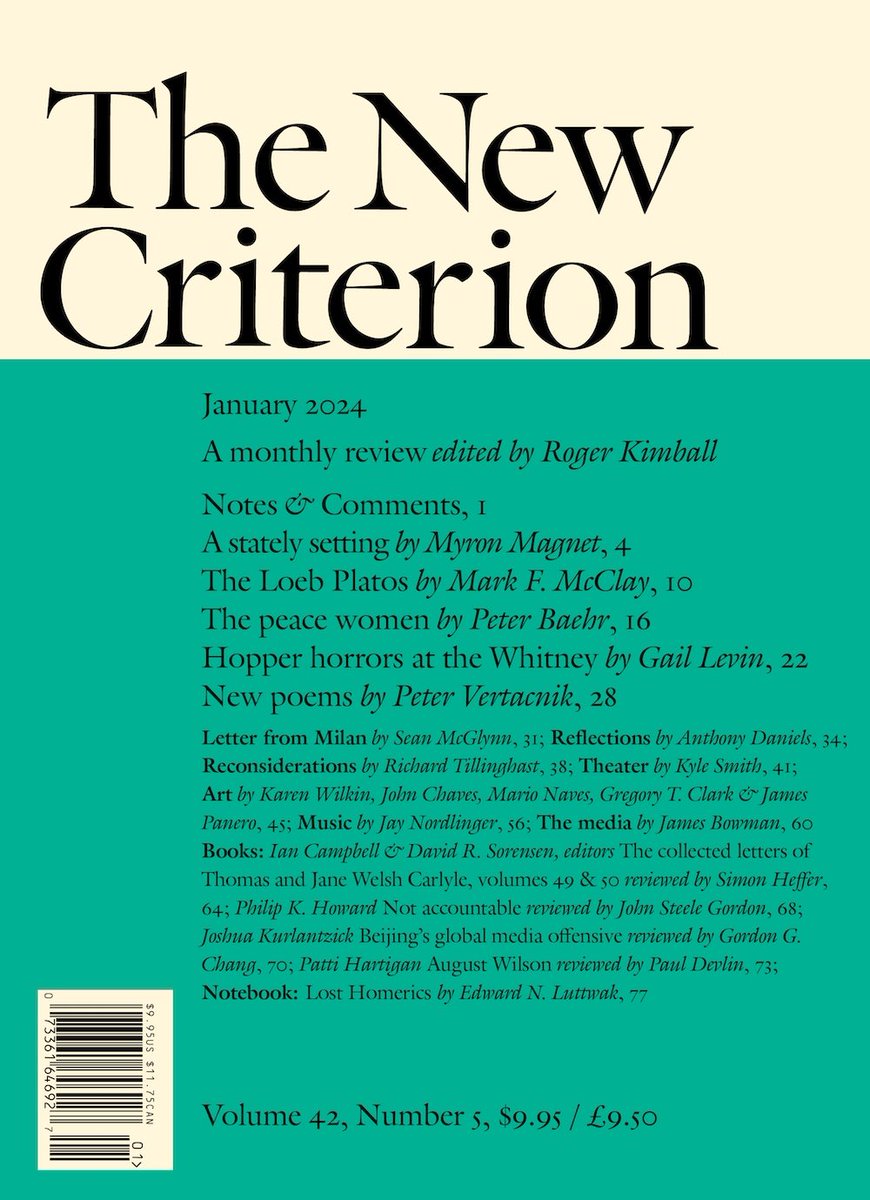
Poetry a special section Black poetry by William Logan Shakespeare’s words by Amit Majmudar Bachmann: the unspeakable spoken by Peter Filkins The new & the old by Katie Hartsock The answer to Lord Chandos by Pascal Quignard
New translations by Ryan Choi, Frederick Amrine, Patrick Whalen & Beverley Bie Brahic
Israel’s eternal dilemma by Victor Davis Hanson Enrique Gómez Carrillo by Anthony Daniels The singularity of speech by Wilfred M. McClay A life in ballet by Peter Martins
New poems by Amit Majmudar, James Matthew Wilson & Michael Casper
Steven Pinker is the Johnstone Family Professor of Psychology at Harvard University, and a popular writer on linguistics and evolutionary psychology. Angela Tan interviews him about politics, language, death, and reasons to be optimistic.
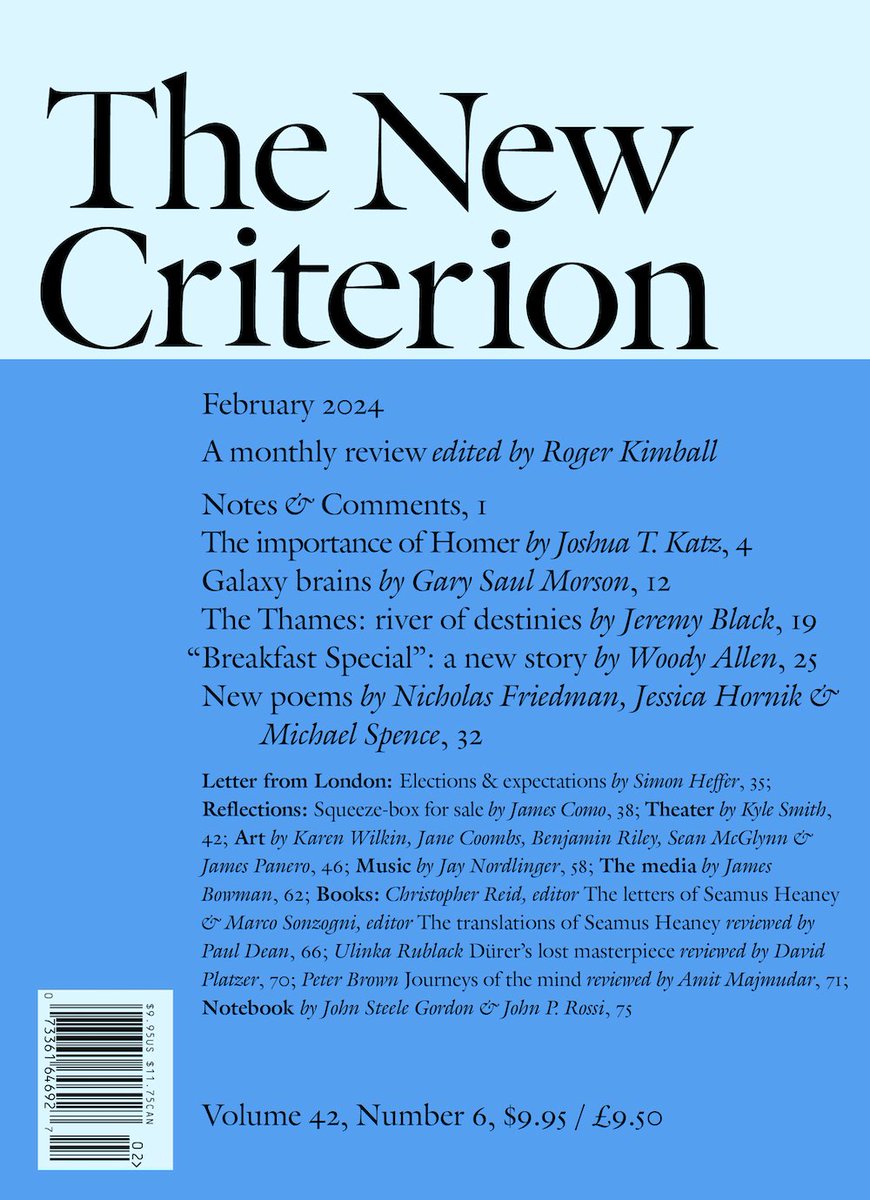
The importance of Homer by Joshua T. Katz Galaxy brains by Gary Saul Morson The Thames: river of destinies by Jeremy Black “Breakfast Special”: a new story by Woody Allen
New poems by Nicholas Friedman, Jessica Hornik & Michael Spence
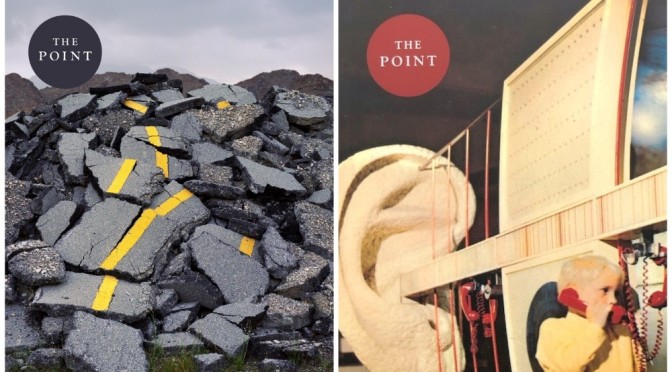
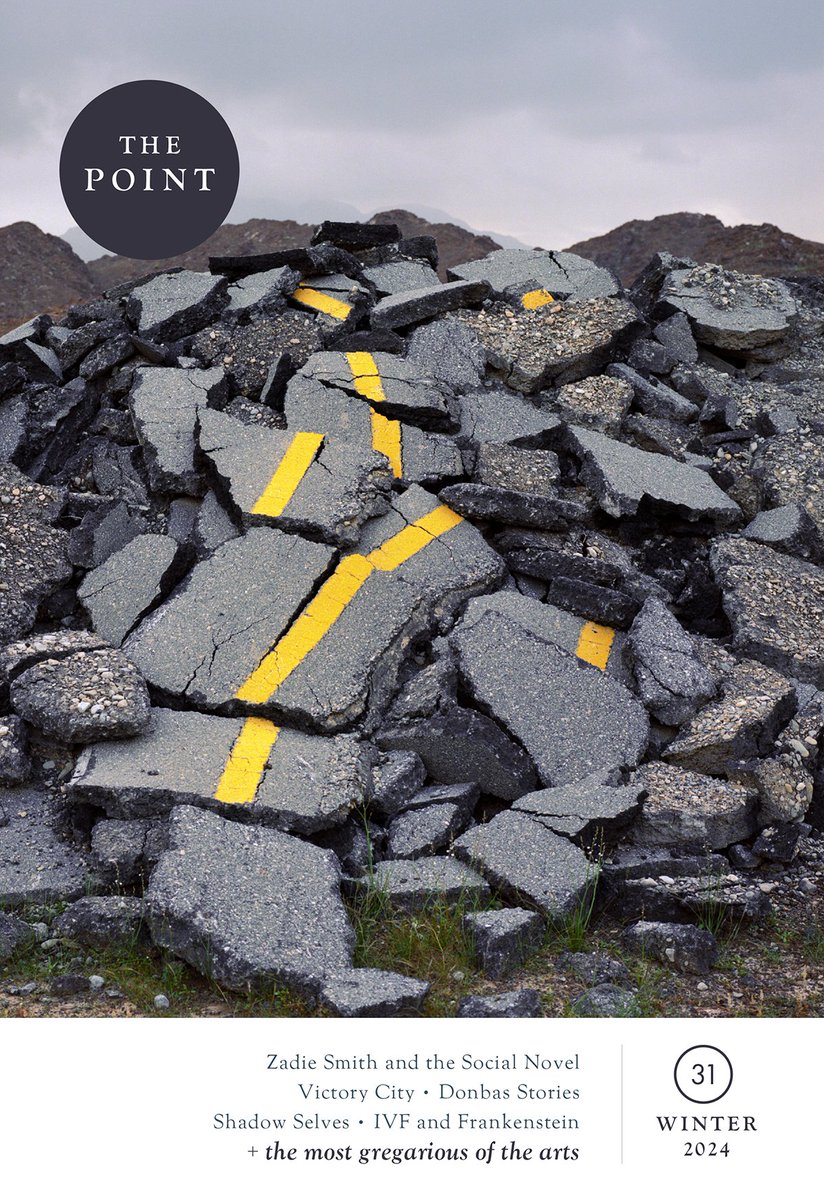
The Point Magazine (December 17, 2023) – The latest issue features ‘Entering History’ – Leave it to Zadie Smith to include a political Rorschach test in her latest novel; ‘Within the Pretense of No Pretense’ – Technology was the wonder of our age. It seemed to promise us power, and we took this power for our own; Venice Architecture Biennale – The city of Venice may very well be, as the architecture theorist Manfredo Tafuri once claimed, “an unbearable challenge to the world of modernity,”, and more….
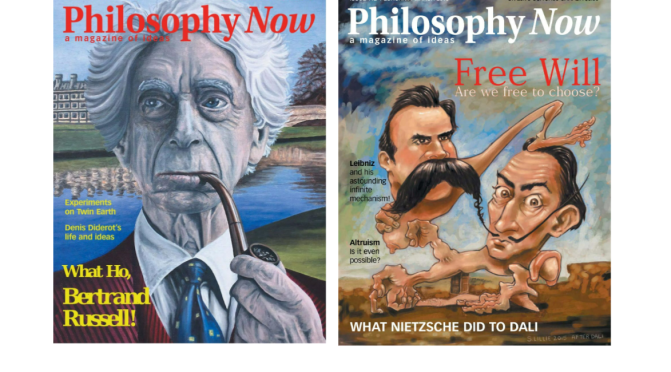
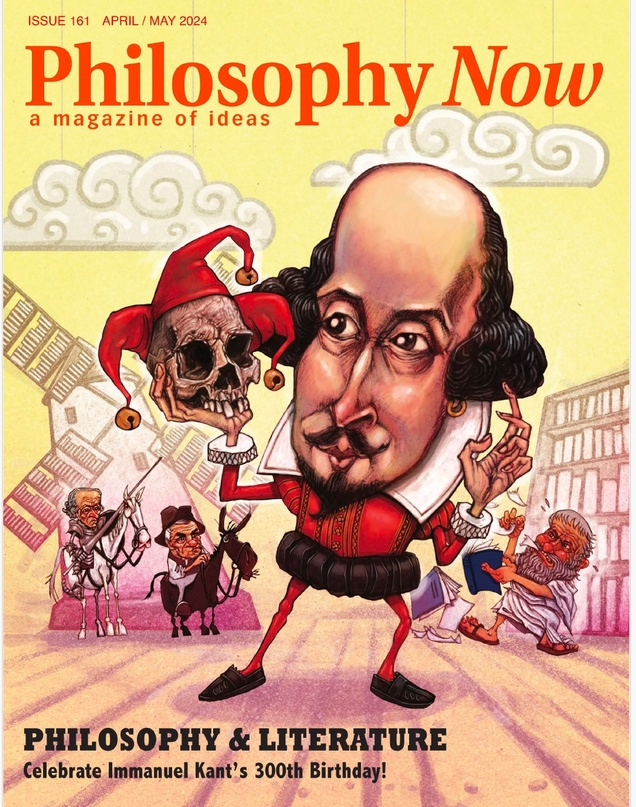
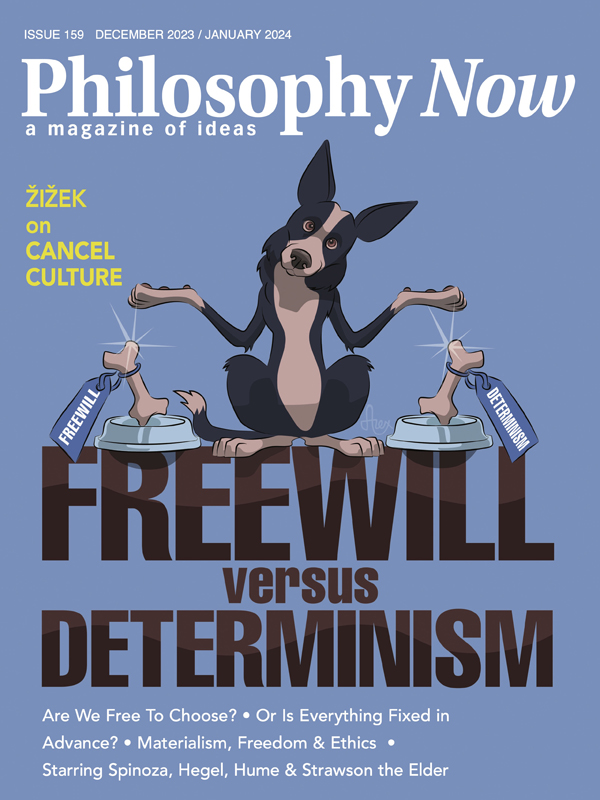
Philosophy Now Magazine (December 2023/January 2024) – The new issue features Freewill versus Determinism – Are we free to choose? Or is Everything Fixed In Advance?; Materialism, Freedom and Ethics; Žižek on Cancel Culture; Spinoza, Hume and other Determinists, and more…







 Boomers Daily