
‘Editor’s Picks’ Podcast (June 12, 2023) – A selection of three essential articles read aloud from the latest issue of The Economist including the trouble with sticky inflation, the challenge of building Ukraine 2.0 and why Modelo Especial is the new king of beers.
The costs of taming price rises could prove too unpalatable for central banks
The trouble is that the inflation monster has not truly been tamed. Britain’s problem is the most acute. There, wages and “core” prices, which exclude energy and food, are rising by around 7%, year on year.
For Russia’s war to fail, Ukraine must emerge prosperous, democratic and secure
Ukraine’s nation-builders face formidable obstacles. The greatest is that, while Mr Putin is in power, this war is unlikely to end with a solid peace treaty. The two sides may talk—if only to avoid being seen as war-crazy.
Move over, Bud Light. Heed the power of the Hispanic market
The king is dead. ¡Viva el rey! That is the cheer ringing through drinking dens this summer as Bud Light, America’s self-styled “king of beers” for 22 years, is dethroned by Modelo Especial, a Mexican brew.
‘Editor’s Picks’ Podcast (June 12, 2023) – Three essential articles read aloud from the latest issue of The Economist. This week, why India is indispensable to America, how to make Britain an AI superpower (10:35) and Lula’s unsustainable plans to save the Amazon (18:45).
India does not love the West, but it is indispensable to America
India’s prime minister has been afforded the honour of a state visit by President Joe Biden. Mr Modi will be one of the few foreign leaders, along with Winston Churchill, Nelson Mandela and Volodymyr Zelensky, to address a joint session of Congress more than once.
Rishi Sunak’s enthusiasm is welcome. But his plans for Britain fall short
Britain, says Mr Sunak, will harness ai and thus spur productivity, economic growth and more. As he told an audience in London this week, he sees the “extraordinary potential of ai to improve people’s lives”.
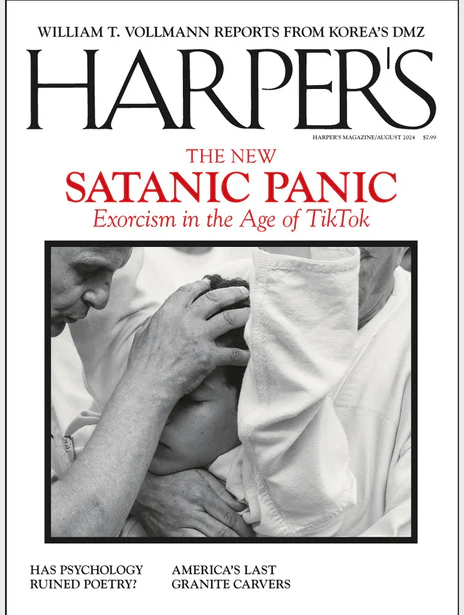
Harper’s Magazine – July 2023 issue: The Protestant Ethic and the Spirit of Wokeness by Ian Buruma; Jackson Lears on Nuclear Insouciance and The World of Homemade Submarines…
Writing about “Woke” has at least two pitfalls. One is that any criticism of its excesses provokes accusations of racism, xenophobia, transphobia, misogyny, or white supremacy. The other problem is the word itself, which has been a term of abuse employed by the far right, a battle cry for the progressive left, and an embarrassment to many liberals.
‘Editor’s Picks’ Podcast (June 12, 2023) – A selection of three essential articles read aloud from the latest issue of The Economist – Ukraine strikes back, why Apple’s new Vision Pro gadget matters (9:00) and the results of our new global cities index (13:35).
The counter-offensive is getting under way. The next few weeks will be critical
Trailed ten days early with a blood-stirring video in which Ukrainian troops asked God to bless their “sacred revenge”, Ukraine’s counter-offensive is under way. For weeks its armed forces have conducted probing and shaping operations along the 1,000km front line, looking for weaknesses and confusing the Russians.
Apple’s message is clear: after desktop and mobile computing, the next big tech era will be spatial computing—also known as augmented reality—in which computer graphics are overlaid on the world around the user.
Our index ranks economic performance over the past three years
In order to assess which are thriving in this new era, The Economist has compiled a rough-and-ready index. It scrutinises a sample of ten locations, looking at changes in four measures—population, economic growth, office vacancies and house prices—over the past three years.
‘Editor’s Picks’ Podcast (June 5, 2023) – A selection of three essential articles read aloud from the latest issue of The Economist. This week, the economic consequences of the global collapse in fertility, Scotland’s holiday from reality (10:10) and the business of the rapper, Bad Bunny (18:10).
Populism can unravel quickly. But its effects are long-lasting
Scotland was the first part of Britain to get high on populist referendums. In 2014, two years before the Brexit vote, the Scottish independence campaign exhorted people to ignore the experts and revel in a glorious national renewal.
‘Editor’s Picks’ Podcast (May 29, 2023) – Three essential articles read aloud from the latest issue of The Economist. This week, why Donald Trump is very likely to be the Republican nominee for president, how to fix Britain’s National Health Service (09:55) and companies’ “away days” are getting unnecessarily creative (17:15).
‘Editor’s Picks’ Podcast (May 22 , 2023) – A selection of three essential articles read aloud from the latest issue of The Economist. This week, Henry Kissinger on the new world order, how the fight for digital payments is going global (10:50) and why the Taliban is going big on animal welfare (17:10).
From Murmansk in the Arctic to Varna on the Black Sea, the armed camps of NATO and the Russian Federation menace each other across a new Iron Curtain. Unlike the long twilight struggle that characterized the Cold War, the current confrontation is running decidedly hot. As former secretary of state Condoleezza Rice and former secretary of defense Robert Gates acknowledge approvingly, the United States is fighting a proxy war with Russia.
I was splitting wood at sunset when the cat jumped up on the chopping block in front of me, arched her back, and took a long piss. My axe hung in the sky. The cat stared at me, tail up. I put my axe down and squatted before her. I hitched my gown to my waist.
The Economist – Special Reports (May 20, 2023): The fight over payments systems is hotting up around the world. There may be surprising winners, says Arjun Ramani.
The fight over payments systems is hotting up around the world. There may be surprising winners, says Arjun Ramani
Payment is one of the most fundamental economic activities. To buy anything, you need something the seller wants. One option is barter, but that is beset by friction (what are the chances of having something your counterparty wants at any exact moment?). Early forms of money, from cowrie shells to beads to metal coins, offered a solution: they were always in demand to settle transactions.