
Georgina Godwin sets the tone for the weekend with the day’s biggest news stories, a look at the newspapers, and our editor in chief Andrew Tuck’s column.
Tag Archives: News
Morning News Podcast: U.S. Economy, Gold Prices & Covid-19 Vaccine Sites
A.M. Edition for April 2. WSJ’s Paul Hannon on the impact the U.S.’s expected economic expansion may have on the global economy this year.
Gold futures have their worst quarter since 2016. Getting a Covid-19 shot is a celebration at some vaccination sites. Keith Collins hosts.

News: Top Stories – April 1
Five stories to know for April 1:
1. The fourth day of the Chauvin trial continues after prosecutors presented jurors with several pieces of video evidence on Wednesday detailing the minutes before and after George Floyd’s death.
2. Four people were killed, one of them a child, in a shooting at an office building in suburban Los Angeles before the suspect, wounded in an exchange of gunfire with police, was taken into custody, police reported.
3. President Joe Biden called for a sweeping use of government power to reshape the world’s largest economy and counter China’s rise in a $2 trillion-plus proposal that was met with swift Republican resistance.
4. Myanmar activists burned copies of a military-framed constitution two months after the junta seized power, as a U.N. special envoy warned of the risk of a bloodbath because of an intensified crackdown on anti-coup protesters.
5. President Emmanuel Macron ordered France into its third national lockdown and said schools would close for three weeks as he sought to push back a third wave of COVID-19 infections that threatens to overwhelm hospitals.
Morning News Podcast: Covid In India, Poaching & Seeing Around Corners
Case numbers are on the rise—at a more worrying rate even than the first wave. We ask why, and what is being done to slow the spread. As revenues at wildlife-tourism spots have dried up, so has security—and now poaching is even more rampant than before.
And scientists’ increasingly audacious bids to see around corners. For full access to print, digital and audio editions of The Economist, subscribe here http://www.economist.com/intelligenceoffer
Morning News Podcast: U.N. Coronavirus Report, China-Iran Agreement
We discuss the UN’s report into the origins of the coronavirus pandemic and hear about a new comprehensive agreement signed between Beijing and Tehran.
Plus: we head to Iceland as the countdown to Eurovision begins.

Analysis: How ‘Physics’ & Rising Tides Freed Cargo Ship In The Suez Canal
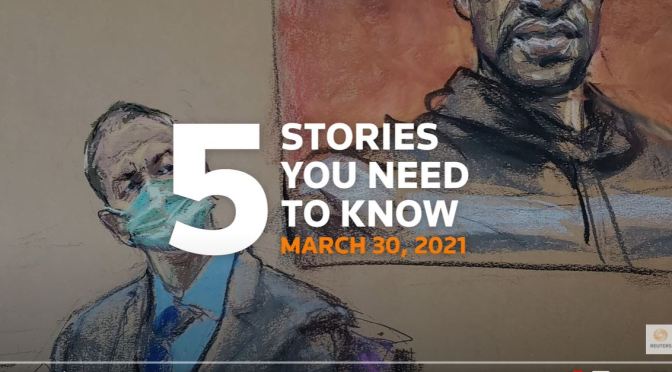
5 Top News Stories (Mar 30)
Five stories to know for March 30: The second day of Derek Chauvin trial, Egypt’s Suez Canal has moving traffic again, Myanmar protesters hold a ‘garbage strike,’ New York will expand its vaccine rollout to people who are 30 and older, and Amazon’s union vote enters the final stretch in a watershed moment for U.S. labor.
1. A professional mixed martial arts fighter who witnessed the deadly arrest of George Floyd is due to return to the stand on for the second day of testimony in the trial of former police officer Derek Chauvin. Watch live: https://www.youtube.com/watch?v=XVzUN…
2. Shipping was on the move again in Egypt’s Suez Canal after tugs refloated a giant container ship which had been blocking the channel for almost a week, causing a huge build-up of vessels around the waterway.
3. Rubbish piled up on the streets of Myanmar’s main city after activists launched a “garbage strike” to oppose military rule as the toll of pro-democracy protesters killed by security forces since a Feb. 1 coup rose to more than 500.
4. New York will expand eligibility for the COVID-19 vaccine to people who are 30 and older, and will make it available to anyone from age 16 and above on April 6, Governor Andrew Cuomo announced.
5. The votes on whether to form a union at Amazon’s sprawling Alabama fulfillment center are set to be reviewed, with momentum for future labor organizing at America’s second-largest private employer hanging in the balance.
Morning News Podcast: China Sanctions Brands, Head Trauma & Audio Apps
Western fashion brands are in Chinese consumers’ crosshairs, the victims of political wranglings over sanctions and human-rights issues—a spat that may soon consume other industries.
A striking number of people in the criminal-justice system have had traumatic brain injuries; our correspondent investigates how much that link has been overlooked. And why the audio app Clubhouse has stormed the Middle East.
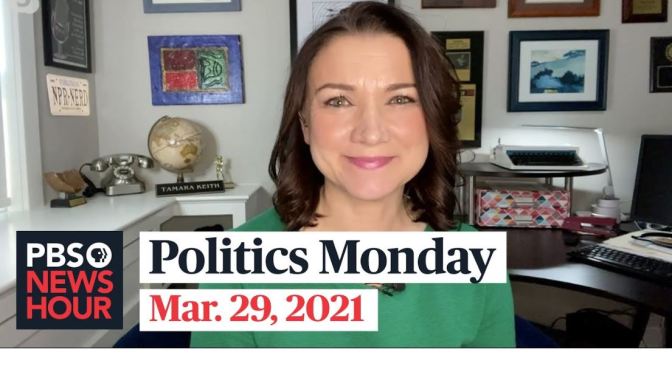
Politics Monday: Tamara Keith And Amy Walter On Gun Control Legislation
NPR’s Tamara Keith and Amy Walter of the Cook Political Report join Judy Woodruff to discuss the latest political news, including the recent mass shootings, the resulting actions towards gun control, and the latest on the government’s efforts to fight COVID-19.
Morning News Podast: George Floyd Murder Trial, Suez Canal Ship
The trial of former police officer Derek Chauvin for the murder of George Floyd begins today in Minneapolis.
The massive cargo ship that’s been stuck in Egypt’s Suez Canal is finally moving. And, Gun control activists want the Biden administration to make the issue a priority.
 Boomers Daily