The Casarabe people lived in southwest Amazonia around AD 500–1400, but understanding of this culture has been limited because the archaeological remains are covered in dense forest. In this week’s issue, Heiko Prümers and his colleagues reveal the discovery of new Casarabe settlements in the Bolivian Amazon. The researchers used lidar to scan the forest, revealing 2 large settlements (each covering more than 100 hectares) and 24 smaller sites, 15 of which had previously been known to exist.
The cover image shows Cotoca, one of the two large settlements, in which earthen mounds (one more than 20 metres high) and long causeways can clearly be seen. The team suggests that these results are the first evidence of agrarian-based, low-density urbanism in western Amazonia. They conclude that the region was not as sparsely populated in pre-Hispanic times as was previously thought.
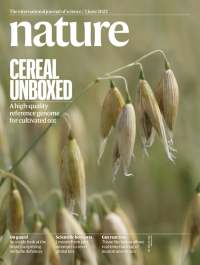
With six sets of chromosomes, the hexaploid cultivated oat (Avena sativa L.) has a complex evolutionary history. In this week’s issue, Nick Sirijovski and his colleagues present a high-quality reference genome for A. sativa alongside those for its close relatives the diploid Avena longiglumis and the tetraploid Avena insularis. By examining the three genomes, the researchers were able to trace genomic reorganizations in the crop’s evolution. They were also able to map the genes for important agronomic traits, highlighting gene families linked to human health and nutrition. With health and sustainability high on global agendas, the team hopes this new resource will bolster genomics-assisted breeding and trait studies to address these challenges and more.
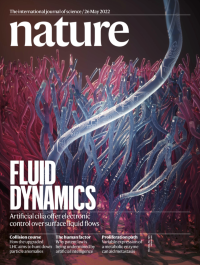
Cilia are characterized by slender, threadlike projections, which are used by biological organisms to control fluid flows at the microscale. Attempts to mimic these structures and engineer cilia-like systems to have broad applications have proved problematic. In this week’s issue, Wei Wang and colleagues present electronically controlled artificial cilia that can be used to create flow patterns in near-surface liquids. The researchers use surface-mounted platinum strips, each about 50 micrometres long, 5 micrometres wide and 10 nanometres thick, and capped on one side with titanium. Applying an oscillating potential with an amplitude of around 1 volt to the cilia drives ions on to and off of the exposed platinum surface. These ions create asymmetric forces that generate a beating pattern that can be used to pump surface liquids in various flow geometries. The cover shows an artist’s impression of the artificial cilia in action.
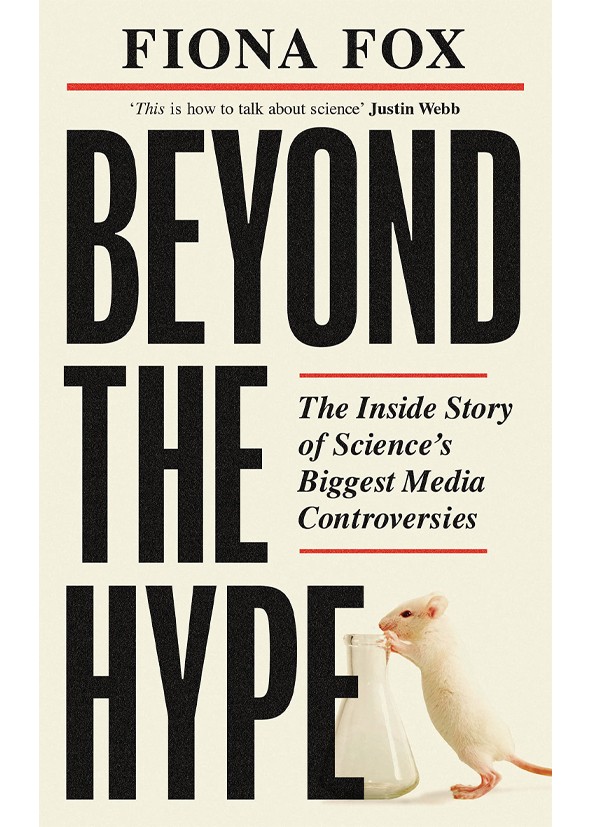
It is 20 years since journalist Fiona Fox set up the influential Science Media Centre in London, to persuade more scientists to engage with the media. This absorbing, detailed book is her memoir of that period — not, as she makes clear, an “objective record”. Separate chapters deal with controversies such as “Climategate”, “Frankenfoods”, the politicization of science, sexism in research and how the current pandemic epitomizes an “age-old dichotomy” between the need for simple public messaging and the messy complexity of science.
Bitch
Lucy Cooke Doubleday (2022)
“Try explaining the need to be passive” to a female spotted hyena (Crocuta crocuta), writes zoologist and author Lucy Cooke, “and she’ll laugh in your face, after she’s bitten it off”. She is dominant in rough play, scent‑marking and territorial defence. By analysing numerous animals, this sparkling attack on scientific sexism draws on many scientists — of multiple genders — to correct stereotypes of the active male versus passive female. Many such concepts were initiated by Charles Darwin, who is nevertheless Cooke’s “scientific idol”.
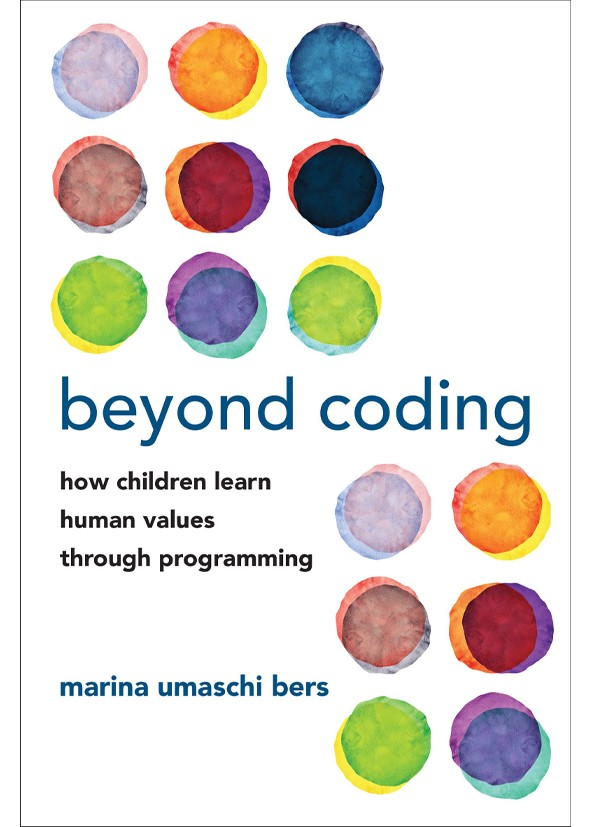
Beyond Coding
Marina Umaschi Bers MIT Press (2022)
Early-childhood technologist Marina Bers developed the KIBO robot, which young children can program with coloured, barcoded wooden blocks to learn computer coding. It is the chief character in her engaging book, which presents four key ways to consider coding for kids: as a “playground”; “another language”; a “palette of virtues”; and a “bridge”. The palette includes infusing ethics and moral education into programming. The bridge involves finding points of connection between diverse cultural, ethnic and religious groups.
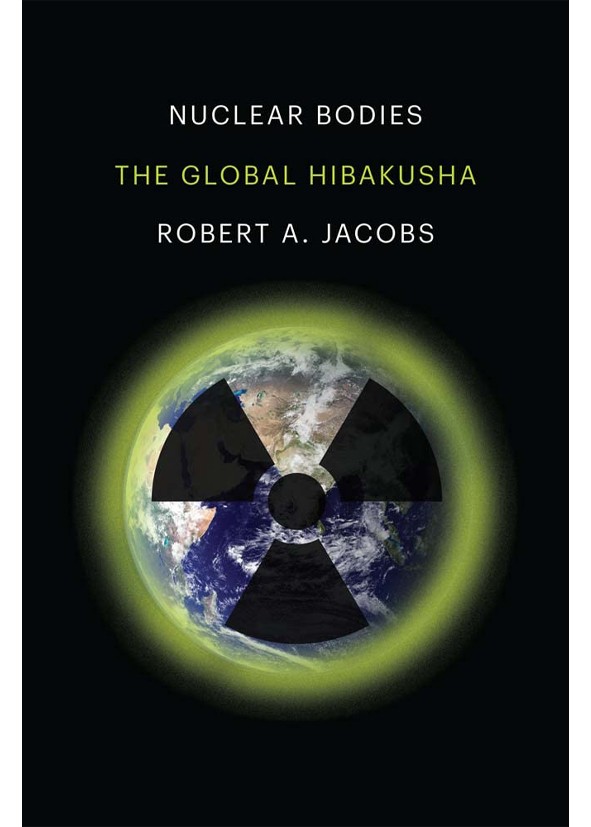
Nuclear Bodies
Robert A. Jacobs Yale Univ. Press (2022)
The Japanese word hibakusha originally described the victims of the atomic bombs dropped on Japan in 1945. Since the 2011 Fukushima nuclear power-plant disaster, the term has been widely extended to denote worldwide victims of radiation exposure. Yet it does not appear in the Oxford English Dictionary: evidence that “these ‘global hibakusha’ have been largely invisible to us”, because of their relative political insignificance, notes Hiroshima-based historian Robert Jacobs in this grimly important analysis of the cold war.
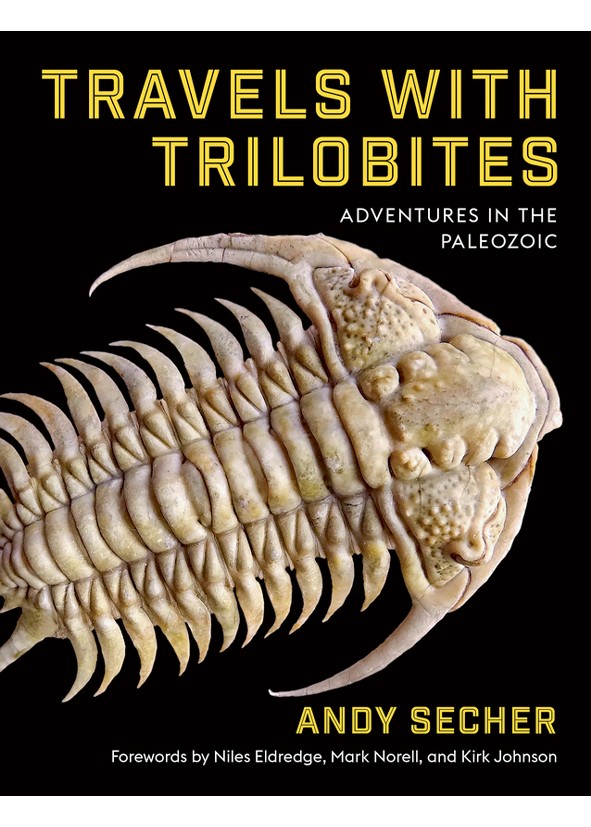
Travels with Trilobites
Andy Secher Columbia Univ. Press (2022)
The fascinating marine invertebrate known as a trilobite belongs to the beginning of complex animal life. It appeared some 521 million years ago, and endured for more than 250 million years, evolving more than 25,000 recognized species. Palaeontologist Andy Secher coedits the trilobite website for the American Museum of Natural History in New York City. He owns more than 4,000 trilobite fossils, many of which are pictured in this paean to “the omnipresent monarchs of the world’s ancient se
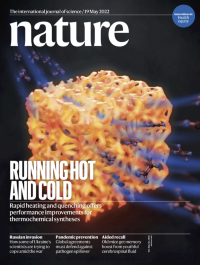
This week in Nature: Running hot and cold – rapid heating and quenching offers performance improvements for thermochemical syntheses. Browse the full issue here: https://t.co/75SVFt4Jgxpic.twitter.com/XBKgp8QFVI
Nature Magazine, May 19, 2022 – At industrial scales, chemical reactions are typically driven by applying continuous heat to the reactants. In this week’s issue, Liangbing Hu and his colleagues show that pulsed heating and quenching can enhance synthetic performance while also saving energy.
The researchers use a programmable electric current to switch between high and low temperatures very quickly — typically 0.02 seconds on, 1.08 seconds off. Rapidly quenching the reaction gives high selectivity, maintains catalyst stability and reduces energy usage. The cover image illustrates the heater in action for the pyrolysis of methane — the model reaction the team tested. Methane molecules travel through the pores of the high-temperature heater and are selectively converted into useful products.
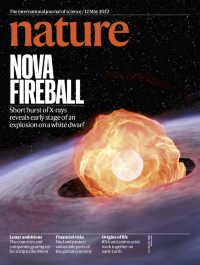
Nova explosions occur when a runaway thermonuclear reaction is triggered in a white dwarf that is accreting hydrogen from a companion star. The massive amount of energy released ultimately creates the bright light source that can be seen with a naked eye as a nova. But some of the energy has been predicted to be lost during the initial stages of the reaction as a flash of intense luminosity — a fireball phase — detectable as low-energy X-rays. In this week’s issue, Ole König and his colleagues present observations that corroborate this prediction. Using scans taken by the instrument eROSITA, the researchers identified a short, bright X-ray flash from the nova YZ Reticuli a few hours before it became visible in the optical spectrum. The cover shows an artist’s impression of the nova in the fireball phase.
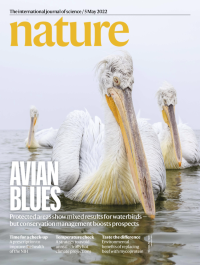
This week in Nature: Avian blues – Protected areas show mixed results for waterbirds, but conservation management boosts prospects. Browse the full issue here: https://t.co/cjlVHmLiBppic.twitter.com/L4fhIEZGvZ
Conservation efforts for waterbirds, such as the Dalmatian pelicans (Pelecanus crispus) pictured on the cover, have centred on creating protected areas to maintain suitable habitats. But it has been unclear to what extent protected areas affect species’ population levels. In this week’s issue, Hannah Wauchope and her colleagues present an analysis that suggests protected areas have a mixed impact on waterbird populations. The researchers examined 1,506 protected areas to assess how they affected 27,055 waterbird populations across the globe. By assessing population levels before and after the implementation of protection, and comparing this change between protected and unprotected areas, the researchers identified the mixed impact, but also saw a strong indication that areas that were managed for waterbirds or their habitats were more likely to benefit populations. As a result, the team suggests that conservation strategies will require not only an increase in the number of protected areas, but active management of those areas to have the best chance of success.
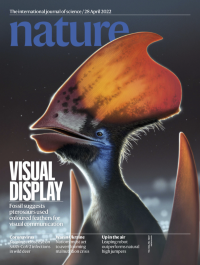
The cover shows an artist’s impression of the pterosaur Tupandactylus imperator. Although feathered pterosaurs have been reported, these claims have been controversial and it has not been clear whether these leathery-winged flying reptiles had feathers of different colours like modern-day birds.
In this week’s issue, Aude Cincotta and her colleagues present evidence that not only did pterosaurs have feathers but that the feathers probably had varied coloration. The researchers analysed a partial skull of Tupandactylus, found in Brazil and dated to around 113 million years ago. They identified two types of feather along the base of the crest, one of which featured branched structures very similar to modern feathers. They also found pigment-producing organelles in both types of feather and the skin on the head crest. The team suggests that these coloured feathers would have been used in visual communication and that their presence in Tupandactylus indicates the ability to manipulate feather colour stretches back farther than was previously realized.
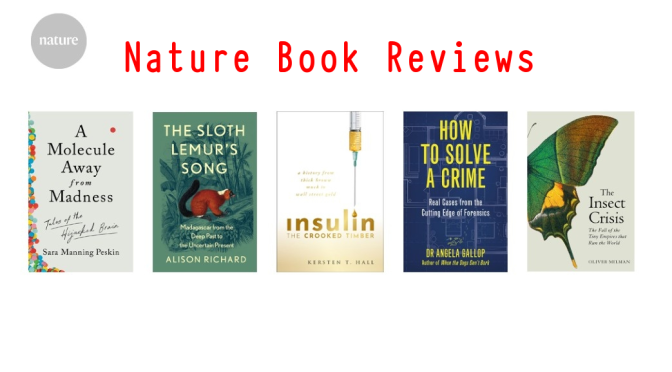
Andrew Robinson reviews five of the week’s best science picks.
Spark
Timothy J. Jorgensen Princeton Univ. Press (2022)
The use of electricity in medicine has long been controversial, notes health physicist Timothy Jorgensen. Eighteenth-century polymath Benjamin Franklin applied shocks to paralysed muscles with temporary success. In the 1930s, neurologist Ugo Cerletti pioneered painful but effective electroconvulsive therapy for schizophrenia and depression. Yet even today, “no one is sure exactly how ECT works”, says Jorgensen in his brilliant book. Now, business magnate Elon Musk plans to implant computer chips to treat brain disorders.
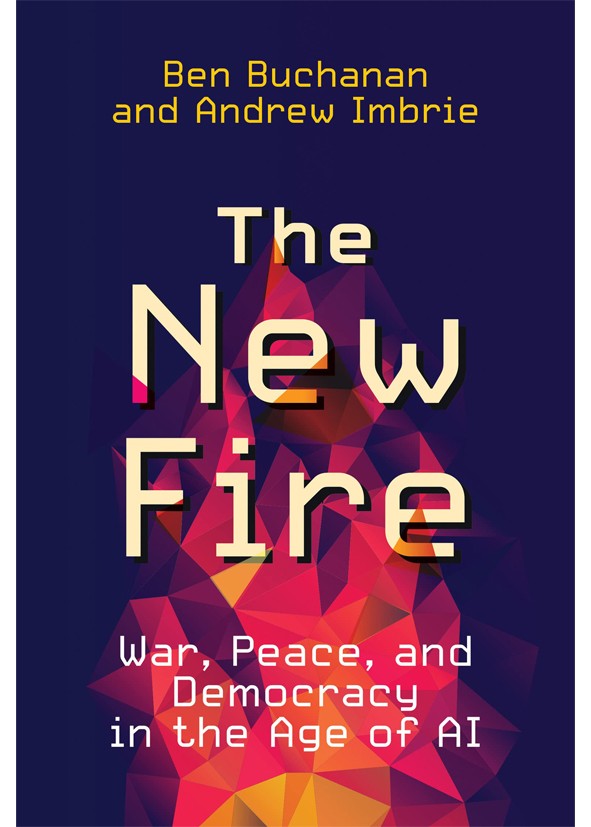
The New Fire
Ben Buchanan & Andrew Imbrie MIT Press (2022)
Artificial intelligence (AI) is not like electricity, but like fire, say Ben Buchanan and Andrew Imbrie — academic specialists in emerging technology — in their authoritative, coruscating analysis of its current and future significance. Its potential impact ranges from illuminating to catastrophic, according to three rival and sometimes overlapping views from observers whom they label “evangelists, warriors and Cassandras”. “Three sparks ignite the new fire,” say the authors: data, algorithms and computing power.
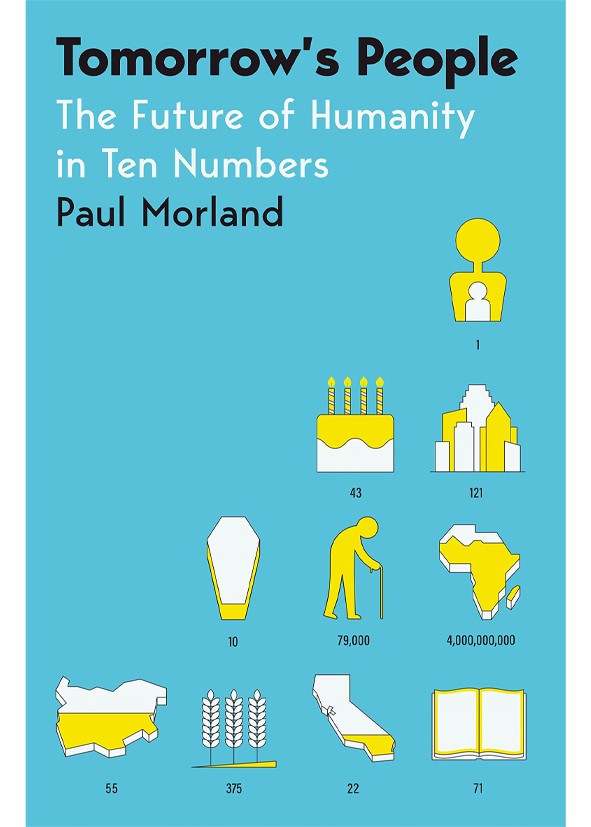
Tomorrow’s People
Paul Morland Picador (2022)
“To most of us, the influence of demography on our future is far from obvious,” writes demographer Paul Morland. City dwellers tend to have low fertility, thereby creating an older population and eventually population decline, which could prompt migration and ethnic change, as in today’s United Kingdom — or might not, as in Japan. Morland’s careful book discusses ten indicators, one per chapter: infant mortality, population growth, urbanization, fertility, ageing, old age, population decline, ethnic change, education and food.
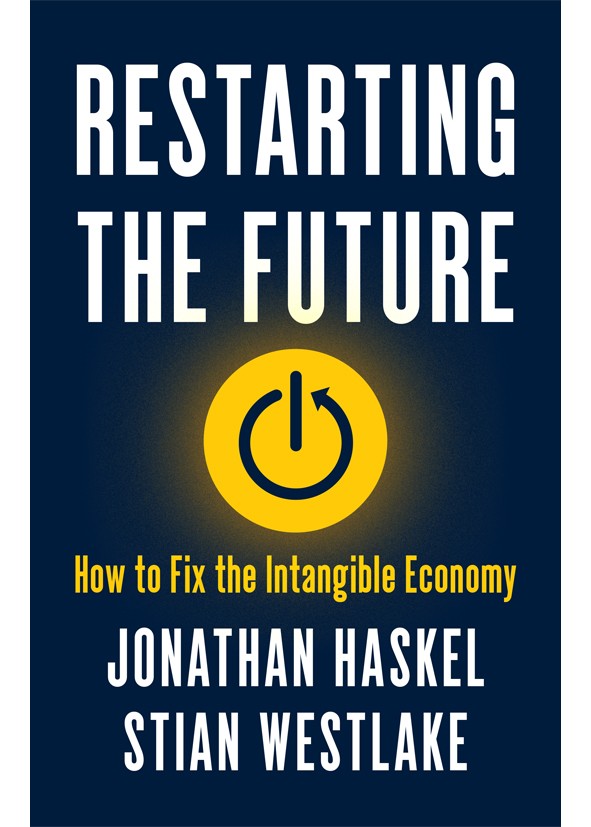
Restarting the Future
Jonathan Haskel & Stian Westlake Princeton Univ. Press (2022)
In the past few decades, growth has stagnated in advanced economies. This is odd, given low interest rates, high business profits and a wide belief that we live with “dizzying technological progress”, write economists Jonathan Haskel and Stian Westlake. They argue that the old economic model based on material production fails when it comes to intangible assets — such as software, data, design and business processes — that hinge on ideas, knowledge and relationships. Financial and state institutions must update to cope.
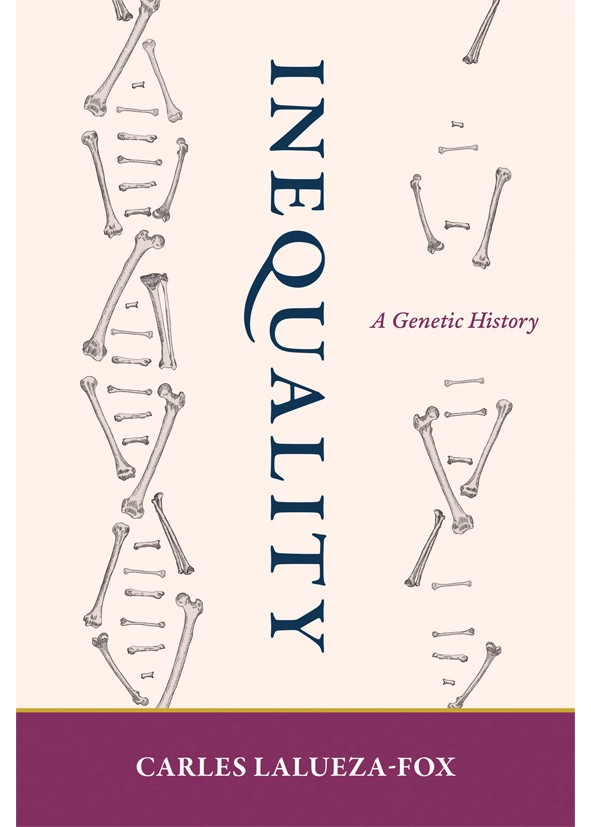
Inequality
Carles Lalueza-Fox MIT Press (2022)
Inequality and its origins will always preoccupy humans. In 2014, biologist Carles Lalueza-Fox led the retrieval of a genome from a European forager’s skeleton more than 7,000 years old; his later studies revealed genetic evidence of “inequality and discrimination in different times and periods”, as he describes in this significant book, written during the pandemic. He concludes by observing that COVID‑19 has had an enhanced impact on poor people, which he anticipates will feature in future genetic studies.
At COP26 countries made a host of promises and commitments to tackle global warming. Now, a new analysis suggests these pledges could limit warming to below 2˚C — if countries stick to them.
03:48 Efficiency boost for energy storage solution
Storing excess energy is a key obstacle preventing wider adoption of renewable power. One potential solution has been to store this energy as heat before converting it back into electricity, but to date this process has been inefficient. Last week, a team reported the development of a new type of ‘photothermovoltaic’ that increases the efficiency of converting stored heat back into electricity, potentially making the process economically viable.
07:56 Leeches’ lunches help ecologists count wildlife
Blood ingested by leeches may be a way to track wildlife, suggests new research. Using DNA from the blood, researchers were able to detect 86 different species in China’s Ailaoshan Nature Reserve. Their results also suggest that biodiversity was highest in the high-altitude interior of the reserve, suggesting that human activity had pushed wildlife away from other areas.
11:05 How communication evolved in underground cave fish
Research has revealed that Mexican tetra fish are very chatty, and capable of making six distinct sounds. They also showed that fish populations living in underground caves in north-eastern Mexico have distinct accents.
14:36 Declassified data hints at interstellar meteorite strike
In 2014 a meteorite hit the Earth’s atmosphere that may have come from far outside the solar system, making it the first interstellar object to be detected. However, as some of the data needed to confirm this was classified by the US Government, the study wasn never published. Now the United States Space Command have confirmed the researchers’ findings, although the work has yet to be peer reviewed.




 Boomers Daily