
Predicting the past. Using #AI deep neural networks to more accurately restore Ancient Greek inscriptions and human history @Naturehttps://t.co/klmnFCl1O2
— Eric Topol (@EricTopol) March 9, 2022
@DeepMind @iassael @TSommerschield @BrendanShilling @itpavlopoulos @ionandrou
@jonprag @NandoDF pic.twitter.com/cbT6pRvx3J
Tag Archives: Nature.com

Science: 2021 Top ‘Flash Fiction’ Short Stories
Cover Preview: Nature Magazine – March 3
This Week
- Editorial | 28 February 2022Wanted: better systems for turning evidence into actionThe pandemic created a colossal demand for scientific evidence to inform decision-making. Now researchers are mapping out what went wrong and what needs to change.
- Editorial | 01 March 2022Nature is trialling transparent peer review — the early results are encouragingLast year, nearly half of Nature authors agreed to publish anonymous referee reports. We hope that more will consider doing so this year.

Views: Top Photographs From Nature Magazine

Cover Preview: Nature Magazine – February 17
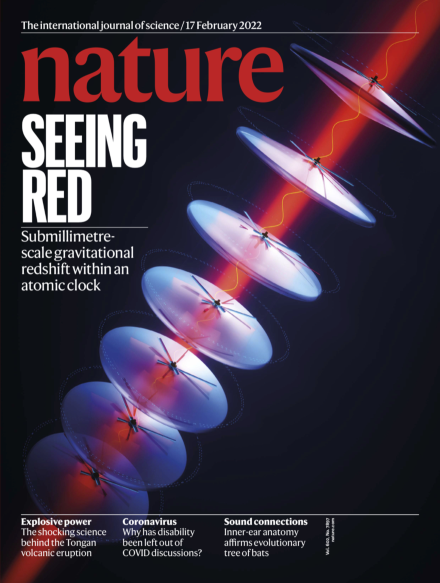
Science: Tonga Volcanic Eruption, Roaming Genes Of Reindeers, Pterosaurs
Scientists scramble to understand the devastating Tongan volcano eruption, and modelling how societal changes might alter carbon emissions.
In this episode:
00:46 Understanding the Tongan eruption
On the 15th of January, a volcano in the South Pacific Ocean erupted, sending ash into the upper atmosphere, and unleashing a devastating tsunami that destroyed homes on Tonga’s nearby islands. Now scientists are trying to work out exactly what happened during the eruption — and what it means for future volcanic risks.
News Feature: Why the Tongan eruption will go down in the history of volcanology
08:49 Research Highlights
The genes associated with reindeers’ roaming behaviour, and how fossilised puke has thrown up new insights into pterosaurs’ stomachs.
Research Highlight: A reindeer’s yearning to travel can be read in its genes
Research Highlight: Petrified puke shows that ancient winged reptiles purged
11:29 Modelling societal changes to carbon emissions
A team of researchers have modelled what humans might do in the face of climate change, and looked at how societal, political and technological changes could alter future emissions.
Research article: Moore et al.
18:12 Briefing Chat
We discuss some highlights from the Nature Briefing. This time, China alters its guidelines for gene-edited crops, and how Guinea worm infections have been driven down from millions of cases a year to just 14.
Nature News: China’s approval of gene-edited crops energizes researchers
Nature News: Just 14 cases: Guinea worm disease nears eradication
Cover Preview: Nature Magazine – February 10
Science: RNA Test Detects Pre-Eclampsia, Machine Vision, Recycling Urine
RNA in blood reveals signs of pre-eclampsia before symptoms occur, and the issue of urine in our sewage and what can be done about it.
In this episode:
00:46 Predicting pre-eclampsia
Cell-free RNA circulates in the blood and can give clues as to what is going on in the body. This can be used to detect disease before symptoms occur. Now researchers have analysed cell-free RNA in pregnant people and have found it can give early warning signs of a serious, and sometimes fatal, disorder of pregnancy — pre-eclampsia.
Research Article: Moufarrej et al.
07:19 Research Highlights
Upgrading machine vision by modelling it on human eyes, and stacked skeletons which could show attempts at repair after European tomb raiders.
Research Highlight: Retina-like sensors give machines better vision
Research Highlight: ‘Spines on posts’ hint at ancient devotion to the dead
09:55 The problems of pee
Sewage and the way it is managed can cause serious problems, for example contaminants in waste can lead to harmful algal blooms. One of the major causes of this is urine, and so some researchers have been promoting a deceptively simple solution — separate out the urine.
News Feature: The urine revolution: how recycling pee could help to save the world
Book Review: Toilets – what will it take to fix them?
16:40 Briefing Chat
We discuss some highlights from the Nature Briefing. This time, how China has planned to make this year’s Winter Olympics carbon neutral, and how a new radio telescope in Namibia will help us understand black holes.
Nature News: China’s Winter Olympics are carbon-neutral — how?
Nature News:
Cover Preview: Nature Magazine – February 3
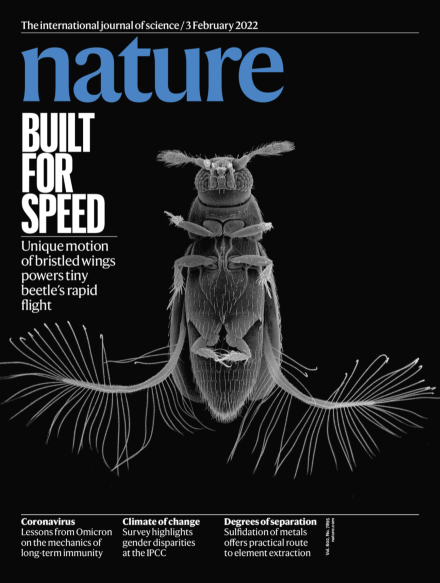
Science: Water Flow And Quantum Friction, Super Soap Bubbles, Hippos
How quantum friction explains water’s strange flows in carbon nanotubes, and the latest from the Nature Briefing.
In this episode:
00:53 A theory for water’s baffling behaviour in carbon nanotubes
At large scales, water flows faster through a wider pipe than a narrower one. However, in tiny carbon nanotubes flow-rate is flipped, with water moving faster through the narrowest channels. This week, researchers have come up with a new explanation for this phenomenon: quantum friction. If validated, it could allow material designers to fine-tune flows through tiny channels, which could be useful in processes such as water purification.
Research Article: Kavokine et al.
06:43 Research Highlights
Creating soap bubbles that last 200,000 times longer, and hippos’ habit of aggressively spraying dung when they hear a stranger.
Research Highlight: No bursting for these record-breaking bubbles
Research Highlight: Hippos know strangers’ voices — and make a filthy reply
09:08 Briefing Chat
We discuss some highlights from the Nature Briefing. This time, a global study reveals how antibiotic-resistant infections have led to millions of deaths, and a genetic mutation that plays a big role in a dog’s size.
Nature News: The staggering death toll of drug-resistant bacteria
Nature News: Big dog, little dog: mutation explains range of canine sizes
Nature Video:
 Boomers Daily