Plus: Israel joins Africa’s largest military exercise in Morocco, the business news and a special interview with Indian diplomat and politician, Shashi Tharoor.
AirPano VR (May 5, 2023) – Surrounded by ancient walls, the Old City of Jerusalem is home to holy sites such as the Western Wall, Dome of the Rock Islamic shrine, and the Church of the Holy Sepulchre, which dates to the 4th century.
Shops and markets selling prayer shawls, rosaries, and ceramics fill busy alleys, while food stalls serve falafel, pita, and fresh-squeezed juice. In a medieval citadel, the Tower of David museum chronicles the city’s history.
DW Documentary (May 1, 2023) – The Dead Sea, shared by Israelis, Jordanians and Palestinians, is drying up. The salt lake, famous for its exceptional geographical location and its healing properties, is the deepest of its kind on earth.
The drying up of the Dead Sea is causing widespread damage, from huge sinkholes to abandoned beaches and collapsed roads. This is not an act of nature. It is the result of overconsumption and poor water management. If something is not done soon, very little of the Dead Sea will remain. In a region marked by ongoing conflict, natural resources are being depleted. To save the Dead Sea, surrounding countries must work together.
Three individuals — a Jordanian, an Israeli and a Palestinian — feel they can’t just sit idly by. They decide to draw the world’s attention to the problem with a heroic act. In an unprecedented and extremely dangerous undertaking, the three decide to swim across the Dead Sea, from Jordan to Israel, to highlight the plight of the dying waters.
The Economist ‘Editor’s Picks’ Podcast (May 1, 2023) – A selection of three essential articles read aloud from the latest issue of The Economist. This week, Israel: the survivor nation at 75, is Sir Keir Starmer ready to govern Britain? (10:25) And why ChatGPT raises questions about how humans acquire language (19:05).
The country needs a new political settlement that diminishes the power of extremists
As israel marks its 75th anniversary, take a moment to admire how it has triumphed against the odds. Before it declared independence in 1948 its own generals warned that it had only a fifty-fifty chance of survival. Today Israel is hugely rich, safer than it has been for most of its history, and democratic—if, that is, you are prepared to exclude the territories it occupies. It has overcome wars, droughts and poverty with few natural endowments other than human grit. It is an outlier in the Middle East, a hub of innovation and a winner from globalisation.
Or Russian fighter jets may win control of Ukrainian skies
As Ukraine prepares its forces for a crucial counter-offensive, the argument among its Western allies about what equipment to provide chunters on. Having finally received the tanks it had been pleading for since last year, Ukraine has increased the intensity of its demands for fighter jets. Yet its pleas are falling on largely deaf ears.
Detectives Art Walkley, left, and Karoline Keith and Sgt. Jeff Covello, crime-scene investigators for the Connecticut State Police.Credit…Elinor Carucci for The New York Times
The crime-scene investigators are the ones who document, and remember, the unimaginable. This is what they saw at Sandy Hook.
The New York Review of Books – May 11, 2023 issue: The Art Issue features Fintan O’Toole on the return of the Trump circus, Susan Tallman on why Piranesi still speaks to us, Joshua Leifer on democracy deferred in Israel, Ingrid D. Rowland on recycling antiquity, and Julian Bell on Adam Elsheimer’s oceanic immensity.
Bachir Mahieddine/Institut du Monde Arabe, ParisBaya: The Yellow Curtains, 1947
An exhibition of the Algerian painter’s work liberates it from the political symbolism of late colonialism.
In November 1947 a fifteen-year-old prodigy from colonial Algeria named Baya, described variously as Kabyle, Berber, Muslim, and Arab, exhibited her gouaches and clay sculptures at the Parisian gallery of the art dealer Aimé Maeght. Yves Chataigneau, the French governor of Algeria, and Si Kaddour Benghabrit, the rector of the Paris Mosque, were the sponsors of the exhibition, and the opening attracted some of the most influential cultural figures of postwar Paris: the writers Albert Camus, François Mauriac, and André Breton; the painters Henri Matisse and Georges Braque; the designer Christian “Bebè” Bérard.
Giovanni Battista Piranesi: Architectural Fantasy with a Colossal Façade, circa 1743–1745; Morgan Library and Museum, New York
For generations, Giovanni Battista Piranesi’s prints of Roman views defined the popular image of the Eternal City. A profusion of new exhibitions and publications shows why he still speaks to us.
Also in the issue: Jacqueline Rose on C. P. Taylor’s final play, Colin B. Bailey on the Impressionists’ decorations, Wendy Doniger on Bengali tales from the mangrove forests, Christopher Benfey on the Black American potters of the nineteenth century, Jed Perl on high-tech high art, poems by Sasha Debevec-McKenney, Mosab Abu Toha, and Cyrus Console, and much more.
The Globalist, April 7, 2023: Ukraine clarifies its stance on Crimea. Plus: an eventful week in Chinese foreign policy, depictions of mafia in the media and the latest theatre news.
Chinese officials rage at what they see as American bullying
You may have hoped that when China reopened and face-to-face contact resumed between politicians, diplomats and businesspeople, Sino-American tensions would ease in a flurry of dinners, summits and small talk. But the atmosphere in Beijing just now reveals that the world’s most important relationship has become more embittered and hostile than ever.
The world’s most important crop is fuelling climate change and diabetes
The green revolution was one of the greatest feats of human ingenuity. By promoting higher-yielding varieties of wheat and, especially, rice, plant-breeders in India, Mexico and the Philippines helped China emerge from a famine and India avoid one. From 1965 to 1995 Asia’s rice yields doubled and its poverty almost halved, even as its population soared.
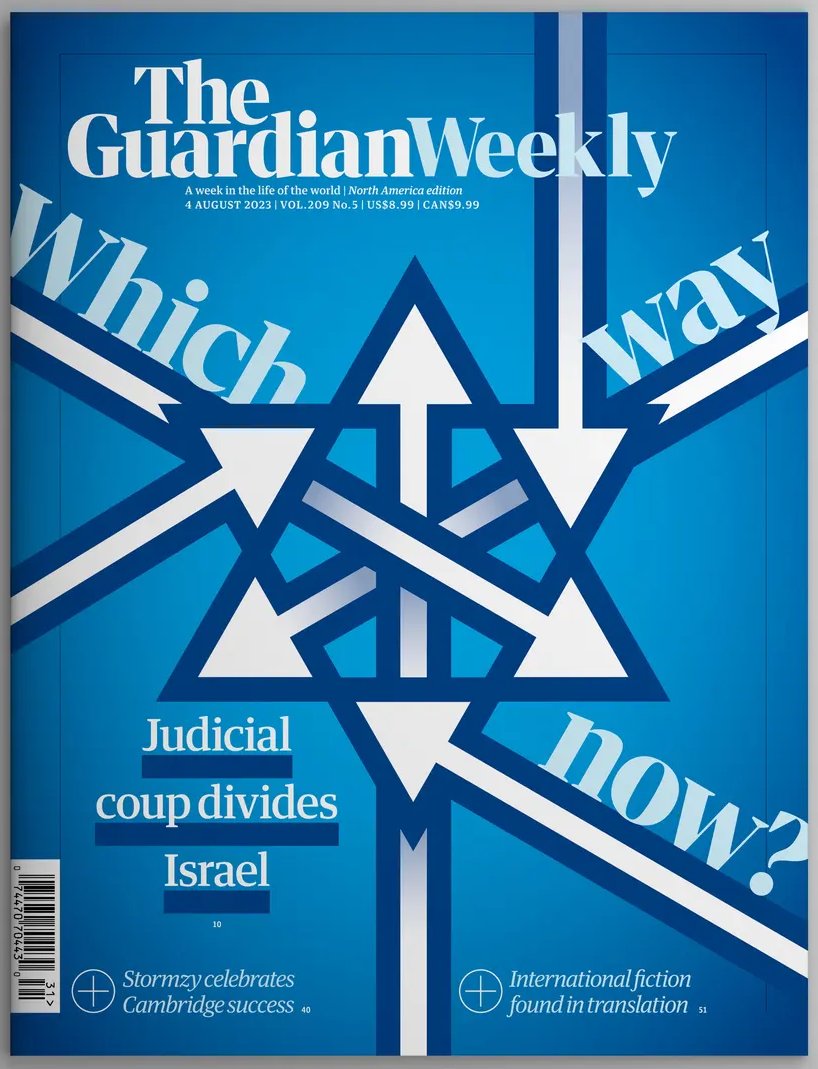
The government’s retreat has pulled Israel back from the brink. But its people remain deeply divided
Israel’s citizens have won a rare victory after marching, week after week, to defend judicial independence and the character of their democracy. On March 27th they forced their prime minister, Binyamin Netanyahu, to suspend his plan to rein in the courts. Yet, although the crisis has abated, it has not passed.
Also in the programme: notorious Russian paramilitary organisation the Wagner Group increases its activities in Africa, while Hungary decides on Finland’s Nato bid. Plus: why Greenland has decided to stick to daylight saving time.
News, Views and Reviews For The Intellectually Curious