
Neil deGrasse Tyson details how and why Bees communicate through math and coordinates.

Neil deGrasse Tyson details how and why Bees communicate through math and coordinates.
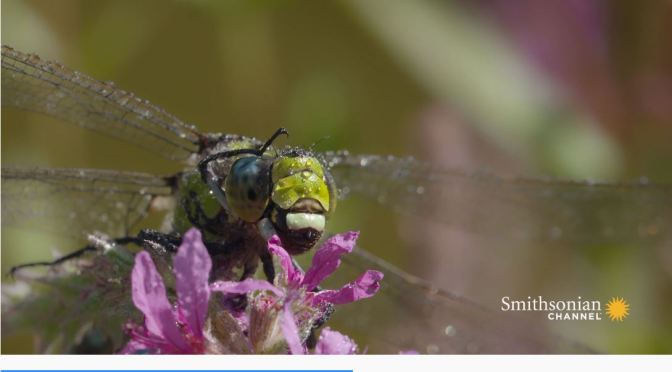
In the ponds of Alhambra, the Iberian bluetail dragonfly reigns supreme. With multi-faceted eyes and physics-defying wing flaps, no insect is safe from its predatory instincts.
From the Series: Wild Castles: Alhambra http://bit.ly/2RDe0BQ
A rising world population means we’ll need more food in the coming years. But much of our food relies on insect pollination, and insects are in decline around the world. Can we make flowers better at being pollinated, to help solve this problem?
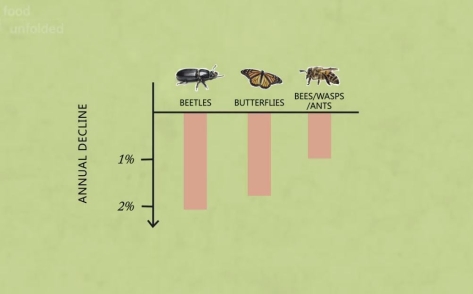
Research from the Glover Lab (https://twitter.com/Beverley_CUBG) in the Department of Plant Sciences (https://twitter.com/PlantSci)
From a Caltech online article:
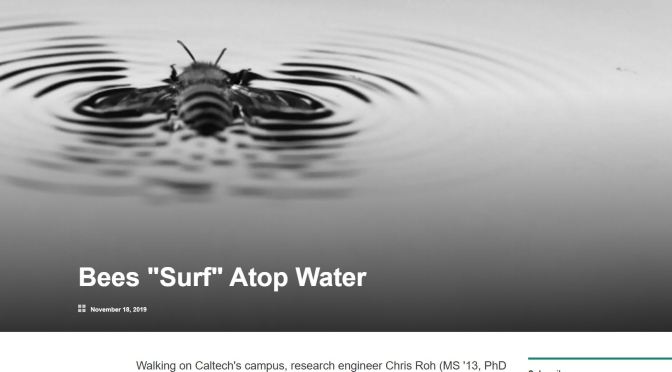
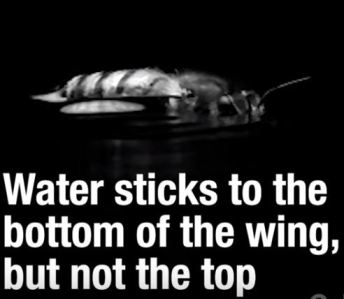 When a bee lands on water, the water sticks to its wings, robbing it of the ability to fly. However, that stickiness allows the bee to drag water, creating waves that propel it forward. In the lab, Roh and Gharib noted that the generated wave pattern is symmetrical from left to right. A strong, large-amplitude wave with an interference pattern is generated in the water at the rear of the bee, while the surface in front of the bee lacks the large wave and interference. This asymmetry propels the bees forward with the slightest of force—about 20 millionths of a Newton.
Walking on Caltech’s campus, research engineer Chris Roh (MS ’13, PhD ’17) happened to see a bee stuck in the water of Millikan Pond. Although it was a common-enough sight, it led Roh and his advisor, Mory Gharib (PhD ’83), to a discovery about the potentially unique way that bees navigate the interface between water and air.
To read more: https://www.caltech.edu/about/news/bees-surf-atop-water

 Boomers Daily