DW Documentary (September 14, 2024): What made our ancestors evolve in such an extraordinary way? This film presents the latest scientific theories on how the human species evolved and looks at the shadow side of our unique abilities.
Some animals see, hear or smell better than humans. Others can find their way in the dark much better than we can. Some can fly. All animals communicate, some have excellent memories and others build complex structures and have highly-developed social skills. So what sets humans apart? Why have humans evolved such highly developed cognitive abilities in comparison to animals?
The documentary sheds light on this major question of human evolution — one of the mysteries that has long puzzled the world of science. What is it that makes humans so fundamentally different from other animal species? And will our extraordinary abilities ultimately lead us to self-destruction?
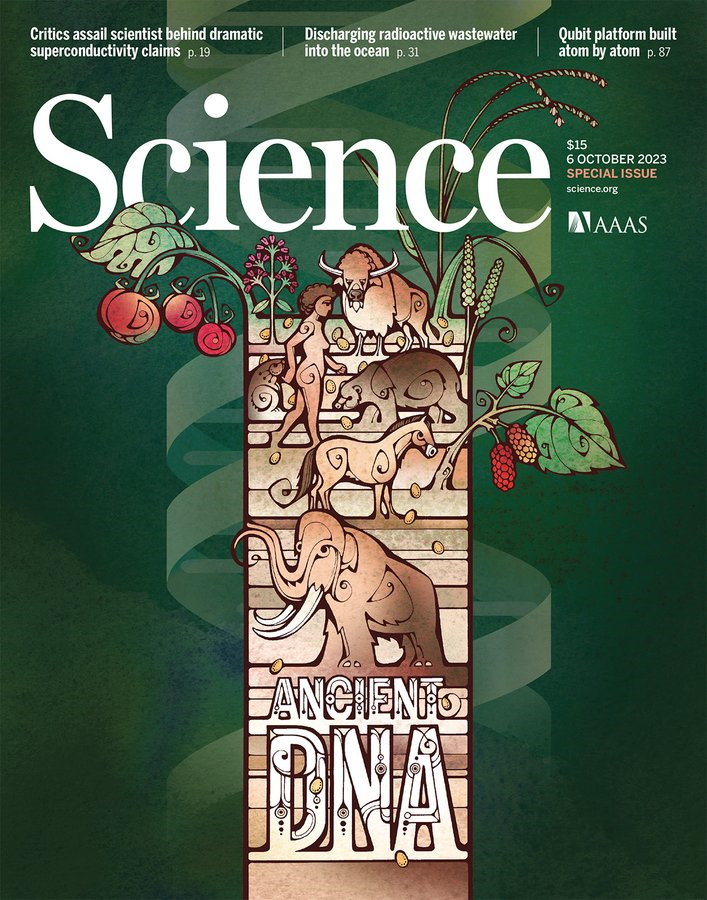
Science Magazine – October 6, 2023: The new issue features Ancient DNA; The risks of radioactive waste water release; Dating the arrival of humans in the Americas; and more…
The wastewater releas e from the Fukushima Daiichi nuclear plant is expected to have negligible effects on people and the ocean
In 2011, the east coast of Japan suffered an earthquake and tsunami that resulted in the meltdown of three of the reactors at the Fukushima Daiichi nuclear plant. This led to an uncontrolled release of large amounts of radioactive material to the surrounding land and to the Pacific Ocean.
A debate about the age of ancient footprints continues
Dating the oldest evidence for the presence of Homo sapiens in the Americas is a matter of ongoing debate. One view is that the earliest such evidence is from 16,000 to 14,000 years ago, after the Last Glacial Maximum (LGM), when people would have crossed the Beringian strait from Siberia over a dry land bridge.
Climate change is causing rising temperatures, extreme weather events and more and more drought. And, in this changing reality, everyone needs more water. Humans are competing with the natural world for water. What does this mean for biodiversity? Fewer and fewer countries still have an abundance of water. The climate crisis, overpopulation and overexploitation are the root of this global problem. And, in a warming world, everyone is using more water: people, agriculture and industry. In Germany, streams and ponds are disappearing, forests and soils are drying out. What does this mean for biodiversity? And how do people cope with drought in countries that have even less water — for example, in the USA or Mexico? What happens when our water dries up?
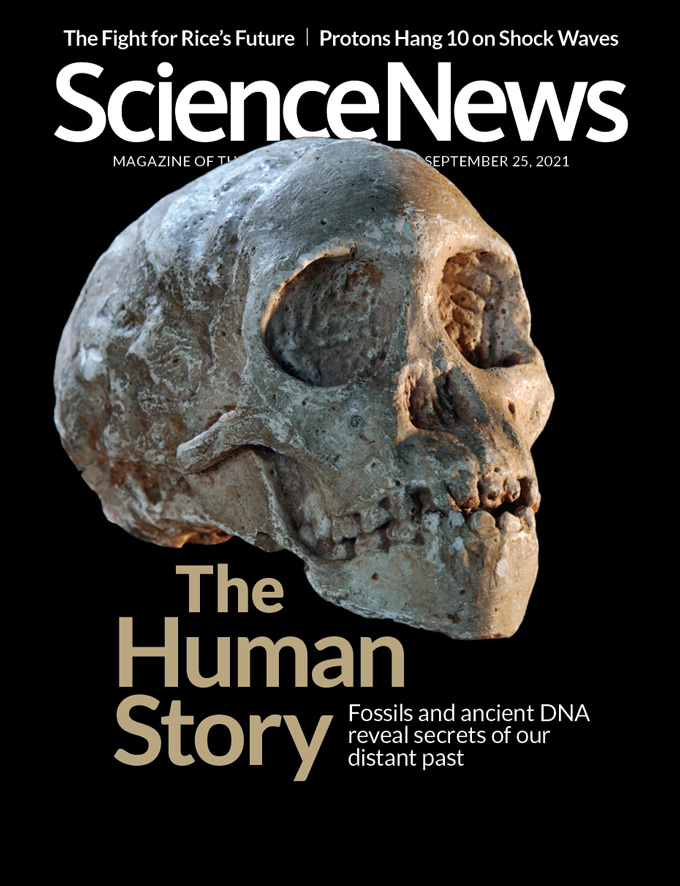
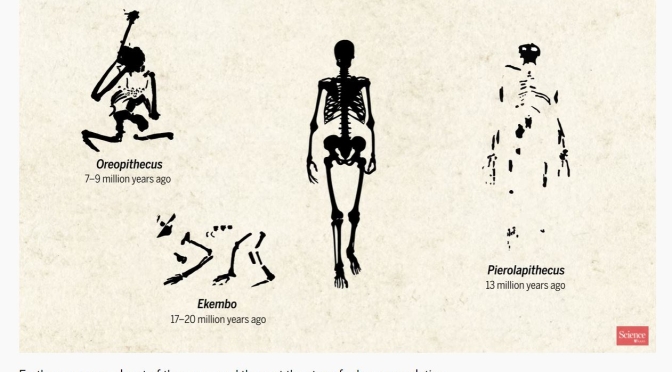
More than ten million years ago, the world was brimming with a wide variety of apes. Scientists studying the ones that are still alive today can learn a lot about human evolution—but they miss out on many clues that can only be found from the apes that went extinct. Watch to learn how fossil apes have strengthened ideas about how humans evolved, and what steps we can take to learn even more about our ancient ancestors. Read the review: https://scim.ag/3hw5PVx
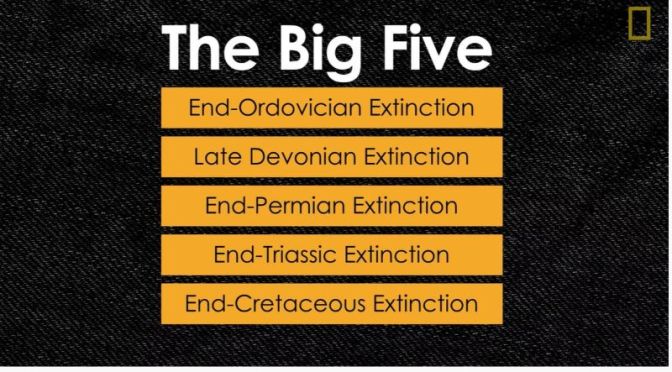
Everybody thinks mass extinctions are a bad thing. As much as they eliminate life, they also helped trigger the creation of new species. By studying fossils from the Big Five mass extinctions, we can learn how life was able to bounce back and see what this could mean for humans in future mass extinctions.
When did people arrive in the Americas? New evidence stokes debate. New evidence may push back the date on human arrival to the Americas, and an examination of science’s flaws.
This week, a new enzyme speeds up the breakdown of plastic bottles, and a method to cool molecules to a fraction above absolute zero.
In this episode:
01:18 A PET recycling enzyme
Researchers have engineered an enzyme that effectively breaks down the plastic PET into its constituent monomers. This could allow for more complete recycling of bottles and clothes. Research Article: Tournier et al.
Researchers have used a technique called ‘collision cooling’ to chill molecules to a few millionths of a degree above absolute zero, which could allow observations of difficult-to-study quantum mechanics. Research Article: Son et al.





 When did people arrive in the Americas? New evidence stokes debate. New evidence may push back the date on human arrival to the Americas, and an examination of science’s flaws.
 This week, a new enzyme speeds up the breakdown of plastic bottles, and a method to cool molecules to a fraction above absolute zero.
 Boomers Daily