
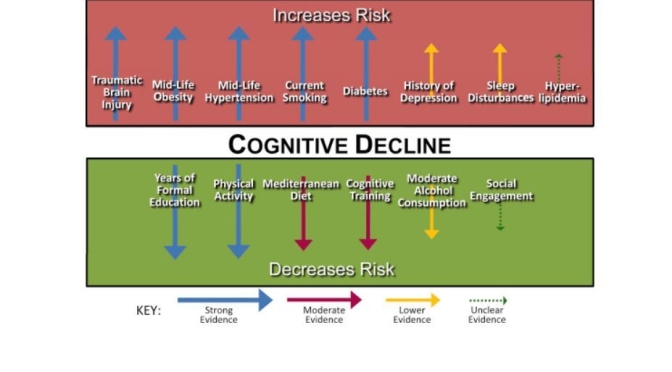
From a MedPage Today online article (April 2, 2020):
 This relationship between higher glucose levels and poorer cognitive functioning extended beyond just CASI z-score, as well, Cukierman-Yaffe noted. Higher HbA1c levels were also tied to significantly poorer performance in other psychological tests, including the clock making test of executive functioning, test of discriminative ability, and for the test of verbal fluency.
Poorer glycemic control was tied to cognitive decline following a lacunar stroke in a prospective cohort study.
Among 942 individuals with type 2 diabetes who had a lacunar stroke, every 1% higher HbA1c was tied to a 0.06 drop in cognitive function at baseline measured by Cognitive Assessment Screening Instrument (CASI) z-score (95% CI -0.101 to -0.018), reported Tali Cukierman-Yaffe, MD, MSc, of Sheba Medical Center and the Sackler School of Medicine of Tel Aviv University in Israel.
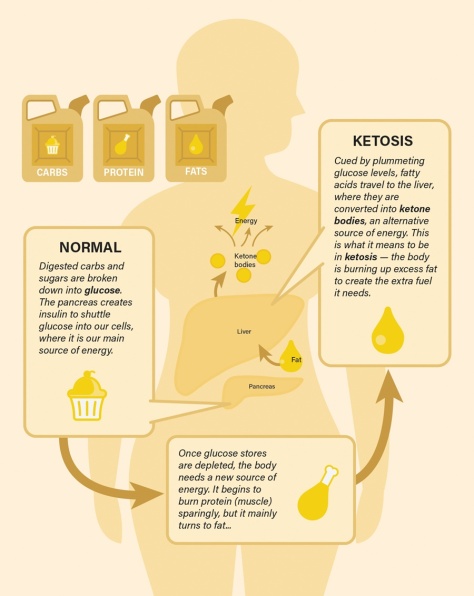
 to a paper Mattson and colleagues published in February in the experimental biology journal FASEB. In humans, fasting for 12 hours or more drops the levels of glycogen, a form of cellular glucose. Like changing to a backup gas tank, the body switches from glucose to fatty acids, a more efficient fuel. The switch generates the production of ketones, which are energy molecules that are made in the liver. “When the fats are mobilized and used to produce ketones, we think that is a key factor in accruing the health benefits,” says Mattson.
 Boomers Daily