Tag Archives: Foreign Affairs Magazine

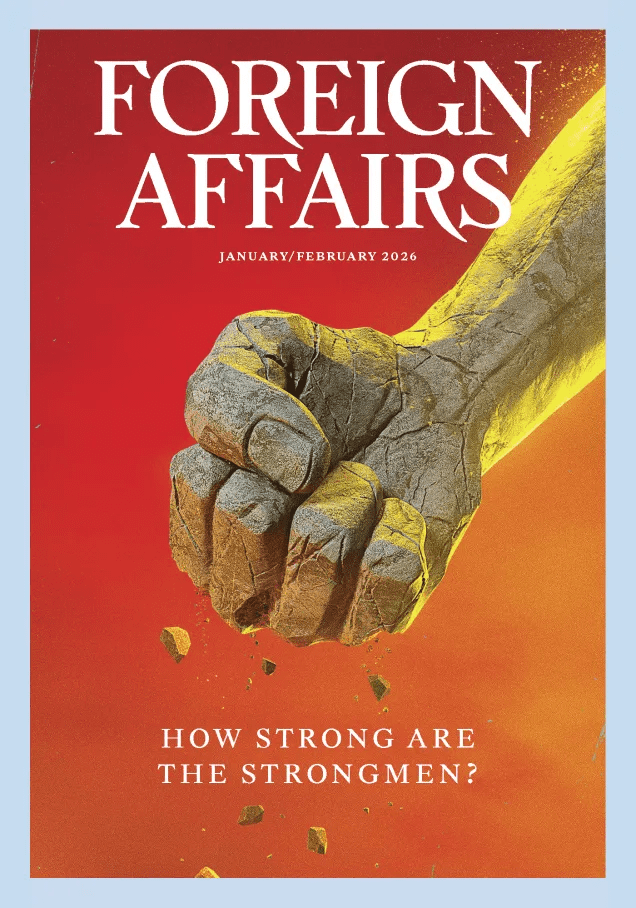
FOREIGN AFFAIRS MAGAZINE JANUARY/FEBRUARY 2026

FOREIGN AFFAIRS MAGAZINE: The latest issue features ‘How Strong Are The Strongmen?’

The Weakness of the Strongmen

What Really Threatens Authoritarians? Stephen Kotkin

The Price of American Authoritarianism

What Can Reverse Democratic Decline? By Steven LevitskyLucan A. Way, and Daniel Ziblatt

The Illiberal International

Authoritarian Cooperation Is Reshaping the Global Order by Nic CheesemanMatías Bianchi, and Jennifer Cyr

How China Wins the Future

Beijing’s Strategy to Seize the New Frontiers of Power by Elizabeth Economy

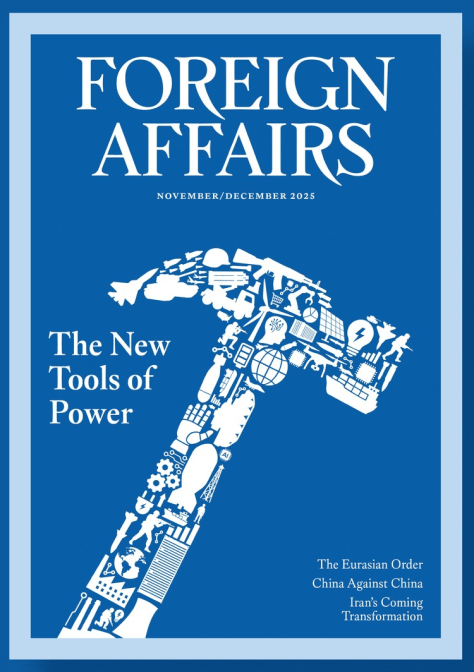
FOREIGN AFFAIRS MAGAZINE NOVEMBER/DECEMBER 2025

FOREIGN AFFAIRS MAGAZINE: The latest issue features ‘The New Tools of Power’

The Stagnant Order

And the End of Rising Powers by Michael Beckley

A Grand Strategy of Reciprocity

How to Build an Economic and Security Order That Works for America by Oren Cass

The New Supply Chain Insecurity

Fortress America Is Not a Safer America by Shannon K. O’Neil

The Return of the Energy Weapon

An Old Tool Creating New Dangers Jason Bordoff and Meghan L. O’Sullivan

FOREIGN AFFAIRS MAGAZINE – SEPTEMBER 2025 PREVIEW

Foreign Affairs-外交事务2025.09&10月号下载PDF电子版网盘杂志订阅-易

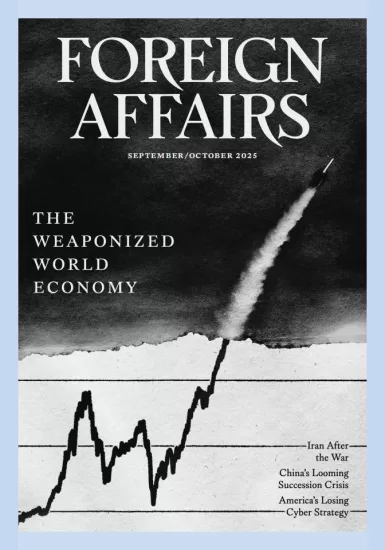
FOREIGN AFFAIRS MAGAZINE: The latest issue features ‘The Weaponized World Economy’

The Weaponized World Economy

Surviving the New Age of Economic Coercion by Henry Farrell and Abraham Newman

The New Economic Geography

Who Profits in a Post-American World? Adam S. Posen

The Real China Model

Beijing’s Enduring Formula for Wealth and Power by Dan Wang and Arthur Kroeber

After the Trade War

Remaking Rules From the Ruins of the Rules-Based System by Michael B. G. Froman

FOREIGN AFFAIRS MAGAZINE – JULY/AUGUST 2025 PREVIEW

FOREIGN AFFAIRS MAGAZINE (June 24, 2025): The latest issue features ‘Who Needs Allies?’….

Dispensable Nation

America in a Post-American World by Kori Schake

Beware the Europe You Wish For

The Downsides and Dangers of Allied Independence by Celeste A. Wallander

The Case for a Pacific Defense Pact

America Needs a New Asian Alliance to Counter China by Ely Ratner

India’s Great-Power Delusions

How New Delhi’s Grand Strategy Thwarts Its Grand Ambitions by Ashley J. Tellis

Foreign Affairs Magazine – May/June 2025 Preview

Semafor Flagship: A launchpad, not a destination | Semafor

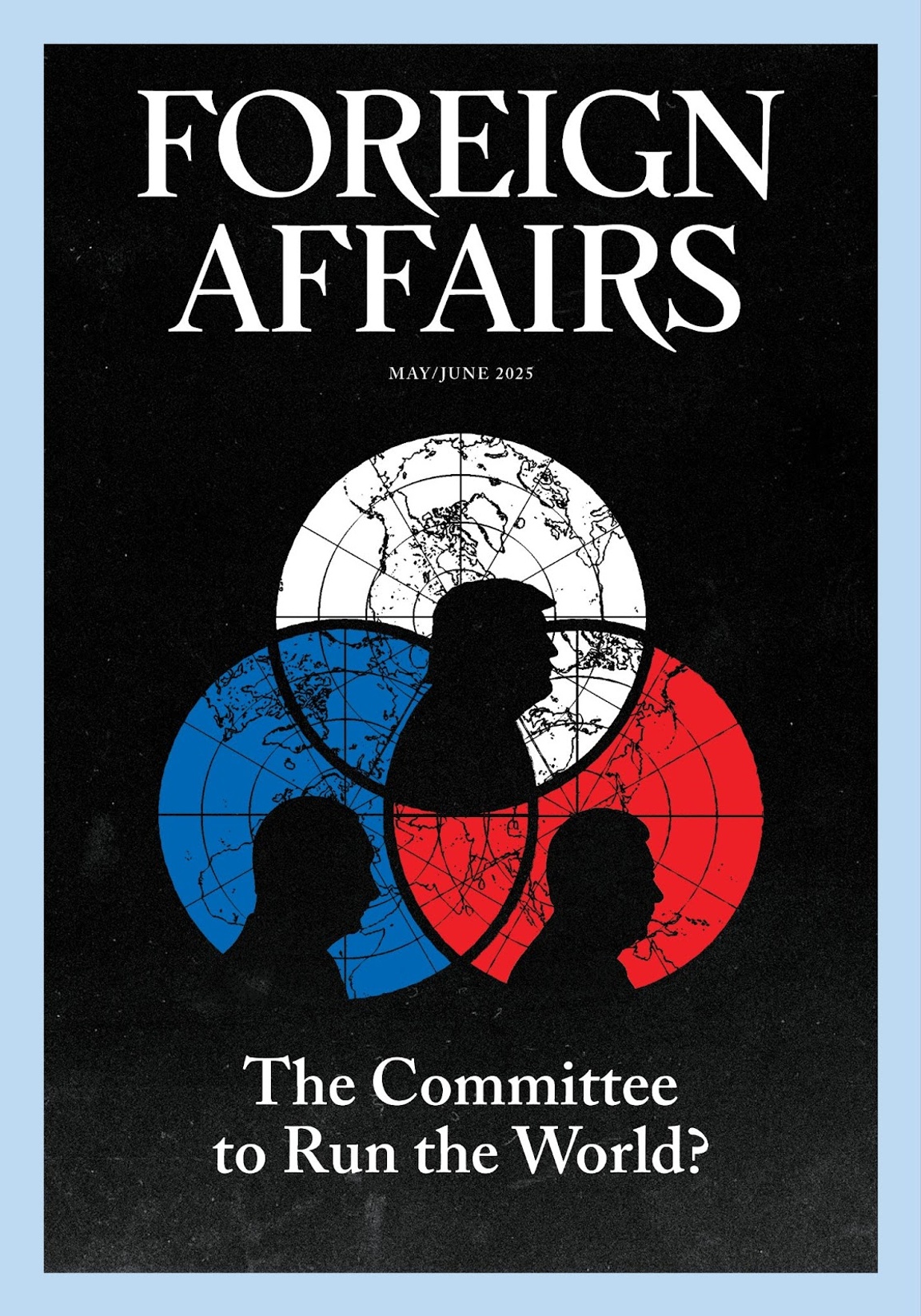
FOREIGN AFFAIRS MAGAZINE (April 22, 2025): The latest issue features ‘The Committee to Run the World?’….

The Rise and Fall of Great-Power Competition

Trump’s New Spheres of Influence by Stacie E. Goddard

The Return of Great-Power Diplomacy

How Strategic Dealmaking Can Fortify American Power by A. Wess Mitchell

The Russia That Putin Made

Moscow, the West, and Coexistence Without Illusion by Alexander Gabuev

The Once and Future China

How Will Change Come to Beijing? by Rana Mitter

Foreign Affairs Magazine – March/April 2025 Issue

Image

FOREIGN AFFAIRS MAGAZINE (February 25, 2025): The latest issue features ‘The Center Will Not Hold’ – How an Order Ends…

The World Trump WantsAmerican Power in the New Age of Nationalism

Michael Kimmage

The Renegade OrderHow Trump Wields American Power

Hal Brands

The Fatal Flaw of the New Middle EastGaza, Syria, and the Region’s Next Crisis

Maha Yahya

Essay: ‘Russia’s Costly Conquest In Ukraine’

FOREIGN AFFAIRS MAGAZINE (February 5, 2025): Today, about 20 percent of southeastern Ukraine is under Russian occupation, including Crimea and large parts of the Donetsk, Luhansk, Kherson, and Zaporizhzhia regions. Russian President Vladimir Putin has painted the war in Ukraine as a nationalist campaign to repel Western advances and reclaim territory that, in his view, rightfully belongs to Russia. But conquest has another motivation: economic gain. If Russia maintains military control over these regions, it may be hoping to reap that benefit. At this stage, however, it is hardly clear that they would become economic assets for Moscow; supporting the war-torn territories could just as easily become a drain on its coffers.

The human costs of this war are enormous. Russian forces are ruling occupied Ukraine with an iron fist, engaging in a ruthless campaign of torture, kidnapping, violence, and arbitrary killing. Any assessment of the war’s economic consequences should not minimize its awful depravity or the immense suffering it has inflicted. But its economic outcome will affect future judgments of Putin’s decision to invade in February 2022. If Russia benefits economically from the occupation of Ukraine, the war may be remembered as a strategic success, albeit a coldblooded one. If Russia instead suffers economically, the invasion will be seen as a self-defeating, barbaric blunder.

Politics: ‘The Path To A Transformed Middle East’

FOREIGN AFFAIRS MAGAZINE (February 3, 2025): Donald Trump begins his presidency with ambitions of being a peacemaker. He laid out this vision in his inaugural address, declaring that his administration “will measure our success not only by the battles we win but also by the wars we end, and perhaps most importantly, by the wars we never get into.” Later that day, he basked in the success of the hostage cease-fire deal in Gaza, including by bringing the families of Israeli hostages to the inaugural parade. “We’re getting a lot of people out in a short period of time,” he proclaimed.

There is no doubt that Trump helped secure the cease-fire deal. But to be a peacemaker who transforms the Middle East, he has more work to do. The main issues he confronts are Gaza and Iran. In Gaza, Israel and Hamas have different views of what is required to achieve the second phase of the deal, which would save the remaining hostages and produce a permanent cease-fire. Iran, meanwhile, is accelerating its nuclear program—with its “foot on the gas pedal” according to Rafael Grossi, the head of the International Atomic Energy Agency. Tehran thus continues to existentially threaten Israel. Both issues are likely to dominate upcoming talks between Trump and Israeli Prime Minister Benjamin Netanyahu at the White House.

DAVID MAKOVSKY is the Director of the Program on Arab-Israel Relations at the Washington Institute of Near East Policy and an Adjunct Professor of Middle East Studies at Johns Hopkins University School of Advanced International Studies. He served as a Senior Adviser to the special envoy of Israeli-Palestinian negotiations in the Office of the Secretary of State during the Obama administration.

DENNIS ROSS is Counselor at the Washington Institute for Near East Policy and a Professor at Georgetown University. A former U.S. Envoy to the Middle East, he served in senior national security positions in the Reagan, George H. W. Bush, Clinton, and Obama administrations.

Share &
Download

Print

Save

Politics: Foreign Affairs Magazine – November 2024

Image

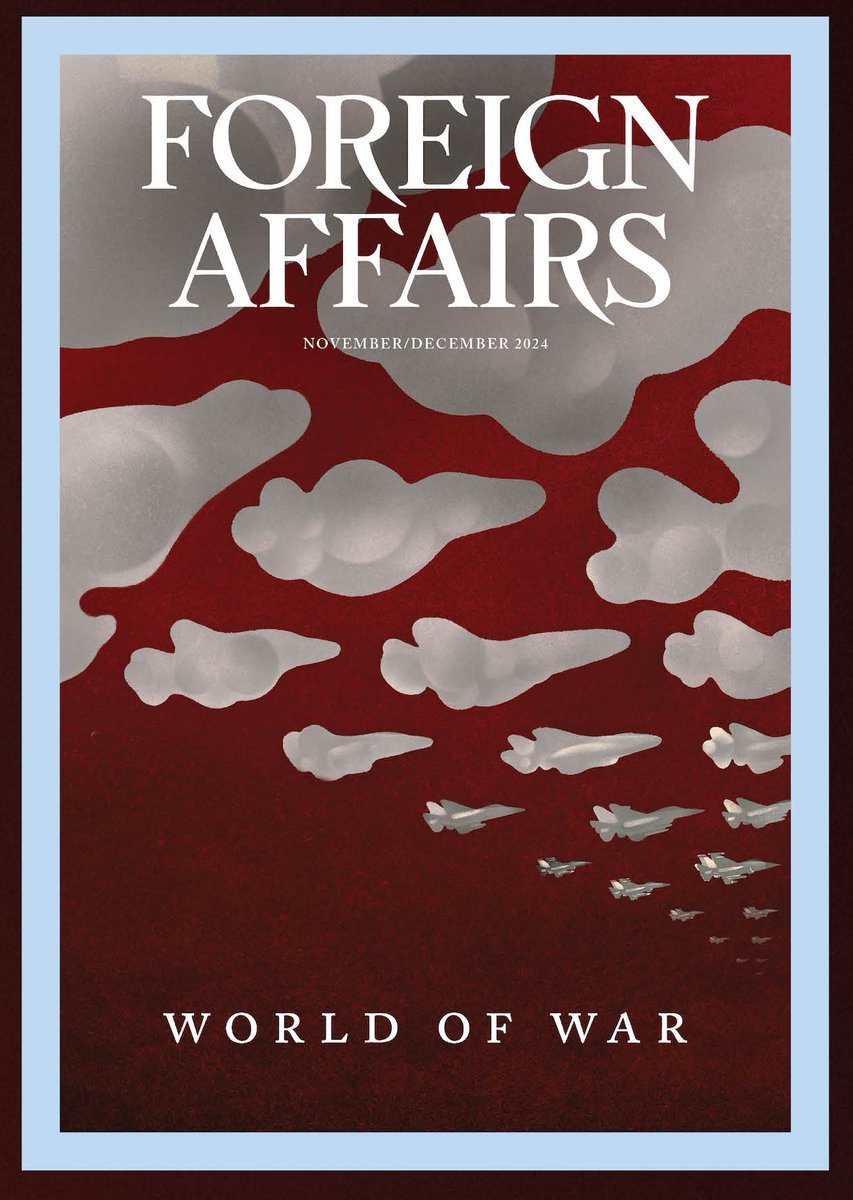
Foreign Affairs (October 27, 2024): The latest issue features ‘World Of War’

The Return of Total War

Understanding—and Preparing for—a New Era of Comprehensive Conflict

By Mara Karlin

Wars Are Not Accidents

Managing Risk in the Face of Escalation

Erik Lin-Greenberg

China’s Agents of Chaos

The Military Logic of Beijing’s Growing Partnerships

Oriana Skylar M

Politics: Foreign Affairs Magazine – Sep/Oct 2024

September/October 2024

Foreign Affairs (August 20, 2024): The latest issue features ‘America Adrift’ ….

The Perils of Isolationism

The World Still Needs America—and America Still Needs the World by Condoleezza Rice

America Isn’t Ready for the Wars of the Future

And They’re Already Here by Mark A. Milley and Eric Schmidt

What Was the Biden Doctrine?

Leadership Without HegemonyJessica T. Mathews