

Silicon Valley venture capital is feeding a budding business in fermented, animal-free proteins, creating bacon, turkey and egg white from yeasts and fungus. San Francisco correspondent Dave Lee considers its potential over a few slices of fungus salami.
Tag Archives: Fermentation
Science Podcast: Unequal Surge In Research Papers, Energy Without Oxygen
The pandemic’s unequal toll on the research community, and a newly discovered mitochondria-like symbiosis.
In this episode:
00:48 The pandemic’s unequal toll on researchers
Although 2020 saw a huge uptick in the numbers of research papers submitted, these increases were not evenly distributed among male and female scientists. We look at how this could widen existing disparities in science, and damage future career prospects.
Editorial: COVID is amplifying the inadequacy of research-evaluation processes
09:18 Research Highlights
How a parasite can make viral infections more deadly, and the first known space hurricane.
Research Highlight: Intestinal worms throw open the door to dangerous viruses
Research Highlight: The first known space hurricane pours electron ‘rain’
11:36 Energy without oxygen
Millions of years ago, a microscopic protist swallowed a bacterium and gained the ability to breathe nitrate. This relationship partially replaced the cell’s mitochondria and allowed it to produce abundant energy without oxygen. This week, researchers describe how this newly discovered symbiosis works.
Research Article: Graf et al.
News and Views: A microbial marriage reminiscent of mitochondrial evolution
19:22 Briefing Chat
We discuss some highlights from the Nature Briefing. This time, the weakening of the Gulf Stream, and a new satellite to monitor deforestation in the Amazon.
The Guardian: Atlantic Ocean circulation at weakest in a millennium, say scientists
Science: Brazil’s first homemade satellite will put an extra eye on dwindling Amazon forests
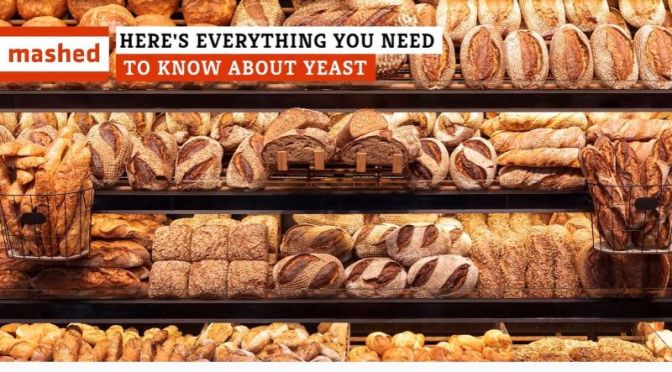
Fermentation: What To Know About ‘Yeast’ (Video)
Whether you’re making a recipe for cinnamon rolls or French bread, yeast factors into the equation. Yeast is a required ingredient for almost all bread recipes. While we typically just buy yeast at the grocery store and toss it in our mixing bowl, yeast has quite an interesting backstory.
Yeast are fungi, living organisms found all around us, floating in the air. According to producer Red Star Yeast, yeast is made up of egg-shaped cells, only visible through a microscope. They’re fungi just like the molds found on blue cheese, mushrooms, or even in antibiotics such as penicillin. However, yeast grows in a different form than other fungi, which are typically composed of tubular chains of cells called hyphae. Yeast is found in small clusters of cells, or as an individual cell. And since it’s alive, yeast can also die.
According to Red Star Yeast, their yeast is stamped with a best by date of two years from when the yeast is packaged. Keeping it in a cool, dry place such as your pantry or refrigerator will ensure it’ll live up to that date. If you’re not sure if your yeast is alive, pour it over warm water with a teaspoon of sugar. If it bubbles, it’s still kicking, The Spruce Eats advises.
Also? Yeast has been around for longer than pretty much any of us. In researching the ancient tomb of the Egyptian ruler Scorpion from around 3100 B.C., archaeologists found 700 jars of resinated wine. According to Scientific American, the resin was used to slow the wine’s natural progression into vinegar. Researchers found evidence of the same species as modern-day brewer’s yeast in the jars. While that isn’t solid evidence the ancient Egyptians knew that the addition of yeast could turn their juice into alcohol, it certainly does show that yeast has been prevalent for a very, very long time.
Timeline: It’s alive, and ancient | 0:00 Hundreds of varieties | 1:52 Commercial production | 2:38 Adult beverages | 3:24 Ooh, that smell | 4:36 The amount makes a difference | 5:30 Yeast-free bread | 6:17 Sourdough starter is DIY yeast | 7:01 2020’s yeast shortage | 7:45
 Boomers Daily