CNBC (January 10, 2023) – This robot named Flippy runs the fry station at a White Castle outside of Chicago. With a mechanical arm and using computer vision technology Flippy can cook everything from french fries and onion rings to cheese sticks. White Castle said it plans to add 100 Flippy’s to its kitchens’ nationwide.
Up to 82% of restaurant positions could, to some extent, be replaced by robots. Automation could save U.S. fast food restaurants over $12 billion in annual wages. And restaurants are also struggling to find workers.
American restaurants are down more than 560,000 jobs or about 4.6% of its workforce from their pre-pandemic levels. So what impact will robots have on the fast food industry and the livelihood of its workers? CNBC got a behind the scenes look at restaurant robot maker Miso Robotics to find out.
“Our findings show dining out is a recipe for unhealthy eating most of the time,” said Dariush Mozaffarian, senior author and dean of the Friedman School.
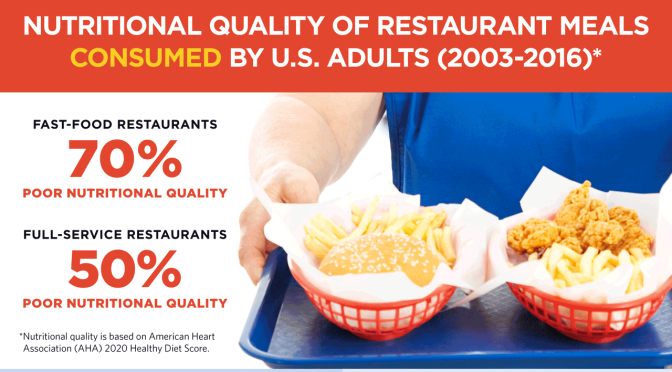
At fast-food restaurants, 70 percent of the meals Americans consumed were of poor dietary quality in 2015-16, down from 75 percent in 2003-04. At full-service restaurants, about 50 percent were of poor nutritional quality, an amount that remained stable over the study period. The remainder were of intermediate nutritional quality.
BOSTON (Jan. 29, 2020, 9:00 a.m. EST)—The typical American adult gets one of every five calories from a restaurant, but eating out is a recipe for meals of poor nutritional quality in most cases, according to a new study by researchers at the Friedman School of Nutrition Science and Policy at Tufts University.
Published today in The Journal of Nutrition, the study analyzed the dietary selections of more than 35,000 U.S. adults from 2003-2016 in the National Health and Nutrition Examination Survey (NHANES) who dined at full-service (those with wait staff) or fast-food restaurants, which included pizza shops and what has become known as fast-casual. The researchers assessed nutritional quality by evaluating specific foods and nutrients in the meals, based on the American Heart Association 2020 diet score.



 calories from a restaurant, but eating out is a recipe for meals of poor nutritional quality in most cases, according to a new study by researchers at the
 Boomers Daily