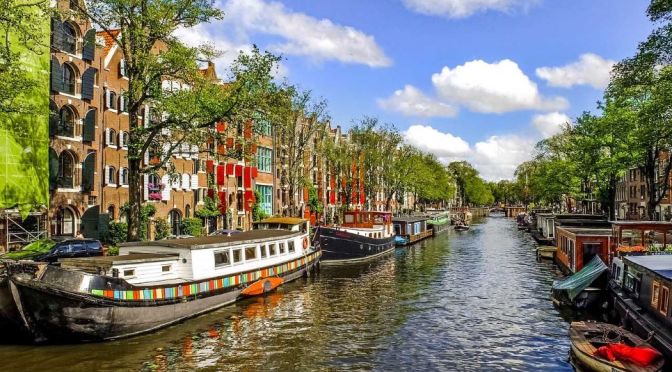
DW Euromaxx (May 25, 2024): Beyond Amsterdam’s famed canals, bikes, coffee shops, and the Red-Light District lies a deeper narrative of what it’s like to grow up and be young in the Dutch capital.
CHAPTERS 00:00 Intro 00:30 Living arrangements 01:56 Education 03:11 Heritage 04:24 Social life & hobbies 05:39 Legal milestones 06:55 Red-Light District 07:25 The pros and cons of living in Amsterdam
Meet Cosmo, a 19-year-old student and native Amsterdammer, as he shares his perspective on life in the city: how he spends his free time, gets around, and how Amsterdam has shaped him. #Amsterdam#Netherlands#YoungEuropeans
As birth rates plunge, many politicians want to pour money into policies that might lead women to have more babies. Donald Trump has vowed to dish out bonuses if he returns to the White House. In France, where the state already spends 3.5-4% of gdp on family policies each year, Emmanuel Macron wants to “demographically rearm” his country. South Korea is contemplating handouts worth a staggering $70,000 for each baby. Yet all these attempts are likely to fail, because they are built on a misapprehension.
Governments’ concern is understandable. Fertility rates are falling nearly everywhere and the rich world faces a severe shortage of babies. At prevailing birth rates, the average woman in a high-income country today will have just 1.6 children over her lifetime. Every rich country except Israel has a fertility rate beneath the replacement level of 2.1, at which a population is stable without immigration. The decline over the past decade has been faster than demographers expected.
At first glance, the world economy looks reassuringly resilient. America has boomed even as its trade war with China has escalated. Germany has withstood the loss of Russian gas supplies without suffering an economic disaster. War in the Middle East has brought no oil shock. Missile-firing Houthi rebels have barely touched the global flow of goods. As a share of global gdp, trade has bounced back from the pandemic and is forecast to grow healthily this year.
Artificial intelligence holds huge promise in health care. But it also faces massive barriers
Better diagnoses. Personalised support for patients. Faster drug discovery. Greater efficiency. Artificial intelligence (ai) is generating excitement and hyperbole everywhere, but in the field of health care it has the potential to be transformational. In Europe analysts predict that deploying ai could save hundreds of thousands of lives each year; in America, they say, it could also save money, shaving $200bn-360bn from overall annual medical spending, now $4.5trn a year (or 17% of gdp). From smart stethoscopes and robot surgeons to the analysis of large data sets or the ability to chat to a medical ai with a human face, opportunities abound.
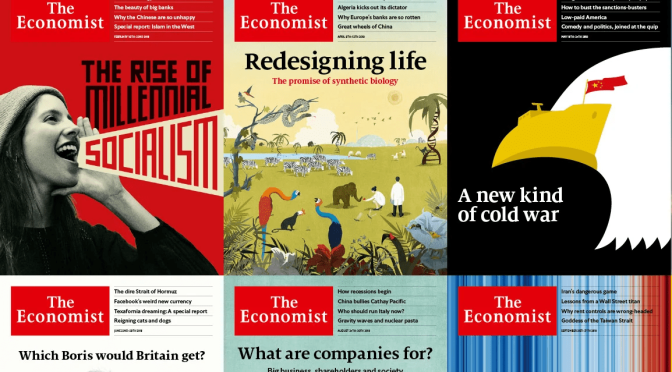
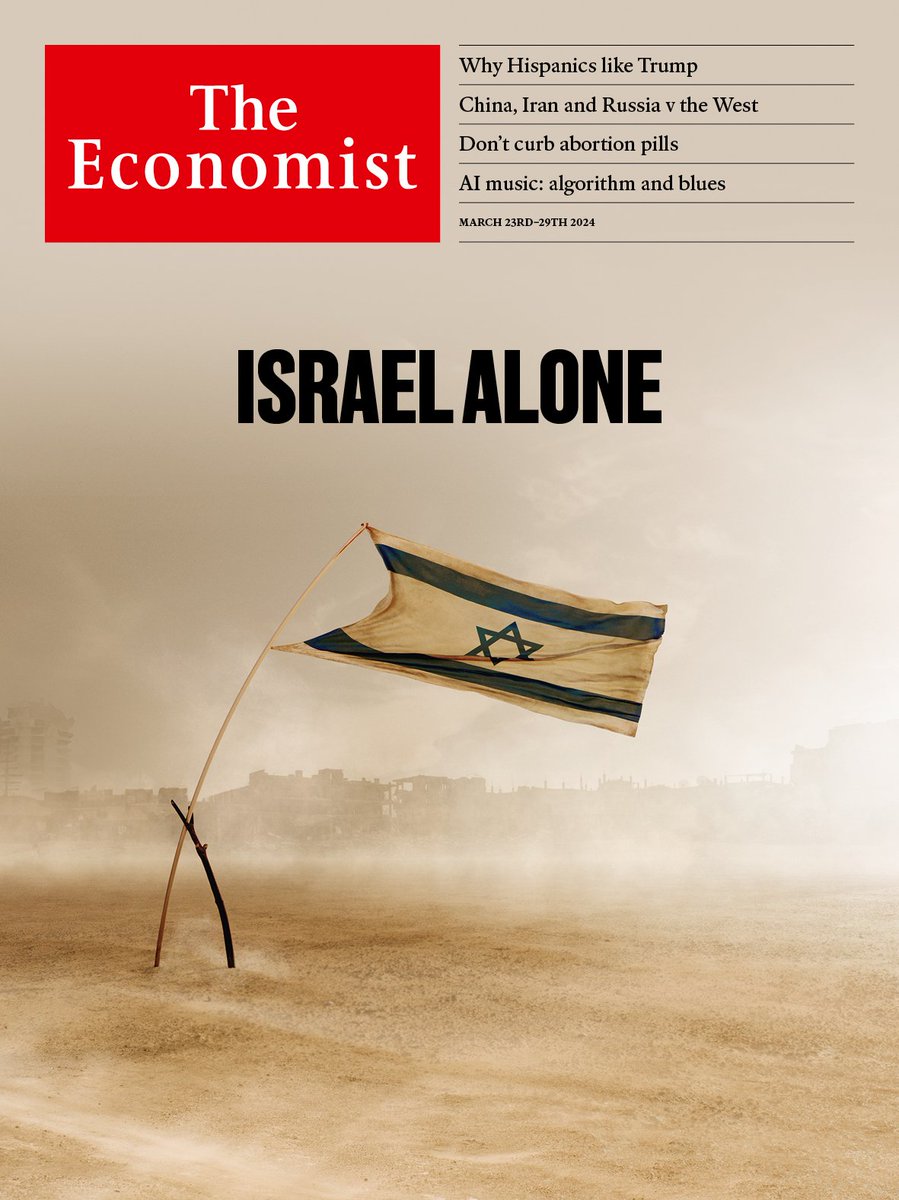
The Economist Magazine (March 21, 2024): The latest issue features ‘Israel Alone’ – At a moment of military might, Israel looks deeply; ‘How To Trade An Election’ – It is getting harder for investors to ignore politics; China, Iran and Russia versus The West – Assessing the economic threat posed by the anti-Western axis…
There is still a narrow path out of the hellscape of Gaza. A temporary ceasefire and hostage release could cause a change of Israel’s government; the rump of Hamas fighters in south Gaza could be contained or fade away; and from the rubble, talks on a two-state solution could begin, underwritten by America and its Gulf allies. It is just as likely, however, that ceasefire talks will fail. That could leave Israel locked in the bleakest trajectory of its 75-year existence, featuring endless occupation, hard-right politics and isolation. Today many Israelis are in denial about this, but a political reckoning will come eventually. It will determine not only the fate of Palestinians, but also whether Israel thrives in the next 75 years.
It is becoming harder for investors to ignore politics
Investors differ in their approach to elections. Some see politics as an edge to exploit; others as noise to block out. Even for those without a financial interest, markets offer a brutally frank perspective on the economic stakes. As elections approach in America and Britain, as well as plenty of other countries, that is especially valuable.
News, Views and Reviews For The Intellectually Curious





 DW Euromaxx




 Boomers Daily