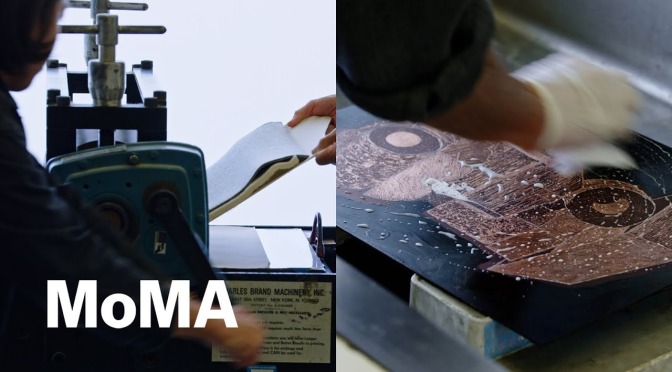
The Museum of Modern Art (October 17, 2023) – What makes a 500-year-old printing process new? Master printer and publisher Jacob Samuel has brought etchings—prints created by transferring ink from a metal plate to paper—into the 21st century through collaborations with more than 60 contemporary artists. In this video, we filmed Samuel making his last print.
As he inks, hand wipes, and rolls his final print through the press, he reflects on his philosophy. “My goal is to leave no fingerprints,” he says. All you see is the artist’s work. I’m just another pencil. I’m just another brush. But I want the pencil to be sharpened really well. I want the brush to be sable. And to do that and be completely spontaneous, I trust the materials.”
Gaby Wood reads her diary from the latest issue of the LRB, in which she tries to draw an albatross using a camera lucida.
By the time I used the camera lucida in the museum, I’d spent several months grappling with the strange proposition offered by its prism. I’d read that the image was sharper if you held it over a dark drawing surface, but that didn’t make any sense to me until the smoked metal etching plate was beneath my hand. Suddenly the albatross skeleton appeared on it: bright, spectral. The process was different from the way I’d imagined it. There was a drag, almost a dance, under the needle – a tiny jump of resistance in the copper. Without seeing what you were doing, you could feel it more keenly. It wasn’t like ice-skating at all.
A camera lucida is an optical device used as a drawing aid by artists. The camera lucida performs an optical superimposition of the subject being viewed upon the surface upon which the artist is drawing. The artist sees both scene and drawing surface simultaneously, as in a photographic double exposure.
News, Views and Reviews For The Intellectually Curious


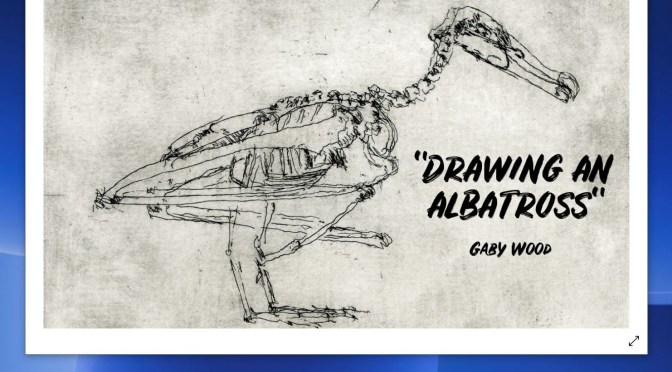
 By the time I used the camera lucida in the museum, I’d spent several months grappling with the strange proposition offered by its prism. I’d read that the image was sharper if you held it over a dark drawing surface, but that didn’t make any sense to me until the smoked metal etching plate was beneath my hand. Suddenly the albatross skeleton appeared on it: bright, spectral. The process was different from the way I’d imagined it. There was a drag, almost a dance, under the needle – a tiny jump of resistance in the copper. Without seeing what you were doing, you could feel it more keenly. It wasn’t like ice-skating at all.
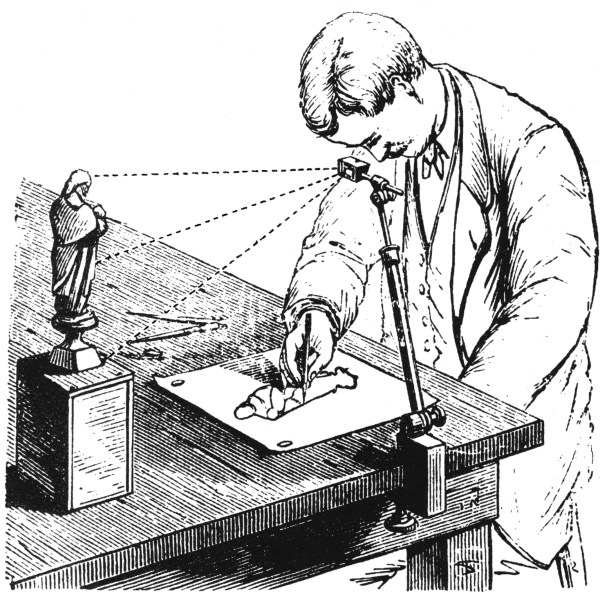 A camera lucida is an optical device used as a drawing aid by artists. The camera lucida performs an optical superimposition of the subject being viewed upon the surface upon which the artist is drawing. The artist sees both scene and drawing surface simultaneously, as in a photographic double exposure.
 Boomers Daily